Building a 30-day content calendar (with a free template)
Build a 30-day social media content calendar step by step: pick content pillars, set posting frequency, batch, approve and schedule. Free template included.
Scheduling
How social media scheduling works in 2026: native schedulers vs tools, API limits, a six-step workflow, queues, time zones, approvals and a checklist.
Social media scheduling means writing posts ahead of time and letting software publish them at a time you choose. You can use each network's built-in scheduler or a third-party tool that publishes to several networks through their official APIs. Either way, it turns posting from a daily chore into a weekly or monthly batch job that is easier to plan, review and measure.
This guide covers how native schedulers and third-party tools compare, what the publishing APIs allow, a six-step workflow, and the mistakes that cause most scheduling problems. Planning a month from scratch? Start with the 30-day social media content calendar template, then come back here for the publishing side.
A scheduled post holds everything the live post needs: the caption, media, link, account, network-specific settings and a publish time. When that time arrives, the network or the tool publishes it.
Most teams schedule for four reasons:
Scheduling does not replace being there. Replies, comments, and reacting to news still need a person watching the account in real time.
Most major networks now offer some built-in scheduling. Here is what the official help pages and announcements confirm, as of October 2026.
| Network | Native option | What the official sources confirm |
|---|---|---|
| Facebook and Instagram | Meta Business Suite | You can create and manage posts for both networks in Meta Business Suite on desktop. For developers, the Pages API only accepts a scheduled publish time between 10 minutes and 30 days after the request. |
| YouTube | YouTube Studio (web and app) | YouTube's help page says to upload the video, open the Schedule card, and set a date, time and time zone. Scheduled videos stay private until they go live. |
| Clock icon in the post composer | LinkedIn's native scheduling launched on desktop and Android, with posts schedulable up to three months ahead. It initially supported text, image and video posts. | |
| X | X Ads composer; in-app scheduling varies by account | X's business help page describes scheduling posts from an ads account up to a year in advance, either as organic or promoted-only posts. Third-party guides disagree on whether free accounts can schedule in the regular app, so check your own composer. |
Native schedulers are free, always support the network's newest features first, and need no extra login. Their limits appear once you manage more than one or two accounts:
A third-party scheduler gives you one calendar, one approval flow and one report across every network. In return you pay a subscription and accept that some formats are only available natively. Our comparison of the best social media scheduling tools for 2026 covers the main options.
A simple rule: if you post to one or two networks on your own, native tools are often enough. Once you have three or more networks, more than one person involved, or clients to report to, a dedicated tool usually saves time.
Third-party tools don't log in as you or simulate clicks. They publish through each network's official API, after you grant permission through the network's own login screen. The tool stores the post and its publish time, then sends it through the API when that time comes. That brings some rules your team should know.
Most brands never get near these caps. Agencies that publish a lot of Stories, or that run bulk imports for one account, can hit them, so a good tool should warn you before a post fails.
Some features are not available through the API at all. Meta's Instagram publishing guide says shopping tags and filters are not supported. It also requires media to sit on a publicly accessible server when the post publishes. If a campaign depends on one of these features, plan to post it natively or set a reminder to finish it by hand.
Scheduling a post doesn't exempt it from platform policy. X's automation rules prohibit posting duplicative or substantially similar posts on one account or across several accounts you operate. Keep that in mind for recycling and for multi-brand setups.
The workflow below works for a solo founder or a ten-person agency. Only the number of people at each stage changes.
Pick three to five themes your audience cares about and you can speak to with authority. For example: product education, customer stories, behind the scenes, industry commentary and offers. Pillars keep the calendar balanced and make brainstorming quicker.
Map pillars to days and networks. Decide how often you'll post on each network, then add fixed dates: launches, events, holidays and campaign windows. Our free social media content calendar generator can draft a first version from your niche and goals. For a longer-term setup, see the content calendar management system guide.
Write and design in blocks: all captions in one session, all graphics in another. Adapt each post to its network instead of pasting the same text everywhere, because a LinkedIn post and an X post need different lengths and hooks. For volume, follow the bulk scheduling guide.
Every post should pass at least one check before it's scheduled. The approval section below covers how to set this up.
Set a time, or add the post to a queue (see the next section). Preview each network's version to check line breaks, image crops and link previews. Image crops are the most common problem, so check dimensions against the 2026 image and video size guide.
Review results weekly or monthly by pillar, format and time slot, not just by individual post. Drop slots and formats that keep underperforming, and give more space to the ones that work. The best times to post on social media in 2026 guide is a sensible starting point until you have your own data.
| Fixed-time scheduling | Queue scheduling | |
|---|---|---|
| How it works | Each post gets an exact date and time | You set recurring time slots; posts fill the next open slot |
| Best for | Launches, events, time-sensitive offers, anything tied to a date | Evergreen tips, blog promotion, steady weekly output |
| Risk | Gaps when nobody plans ahead | Time-sensitive posts may land at the wrong moment |
| Effort | Higher: someone picks every time | Lower: set the slots once |
Most teams use both. Put anything tied to a date on a fixed time, and let a queue handle the rest. When you move a fixed post, check whether the queue posts around it now cluster too close together.
Time zone errors are among the most common causes of a post going out at the wrong time. Watch for these:
For audiences in several regions, either run separate posts per region or choose a slot where the regions' daytimes overlap. Social9 offers time-zone aware scheduling for this.
Reposting your best evergreen content gets more value from work you've already done, but it can go wrong in a few ways:
Approvals catch typos, off-brand claims and compliance problems before your audience sees them. A practical setup:
Agencies have an extra layer: client sign-off. Our guide to how agencies manage client content calendars covers that in detail. The Social9 content calendar includes review stages and approvals inside the calendar view.
Use this list when comparing schedulers:
If you want a tool that also drafts the posts, Social9's social media automation plans, writes, schedules and publishes across 11 networks. More guides are in the scheduling hub.
None of the official help pages cited in this guide say scheduled posts are penalised. The networks build scheduling into their own tools, and third-party tools publish through official APIs. Content quality, timing and engagement matter far more than how a post was published.
It depends on the network and tool. LinkedIn's native scheduler allows up to three months ahead. The Facebook Pages API accepts times between 10 minutes and 30 days ahead. Third-party tools can hold posts longer and send them to the API when it's time to publish.
Not through the API. Meta's content publishing guide covers Instagram professional accounts only, so switch to a business or creator account first.
Meta's content_publishing_limit reference currently lists 50 API-published posts per 24 hours, with a carousel counting as one post.
Use fixed times for anything tied to a date, such as launches, events and offers. Use a queue for evergreen posts that only need to go out steadily. Most teams combine the two.
Review results monthly by time slot, format and pillar, and do a bigger review each quarter. Change one thing at a time so you can tell what made the difference.
Build a 30-day social media content calendar step by step: pick content pillars, set posting frequency, batch, approve and schedule. Free template included.
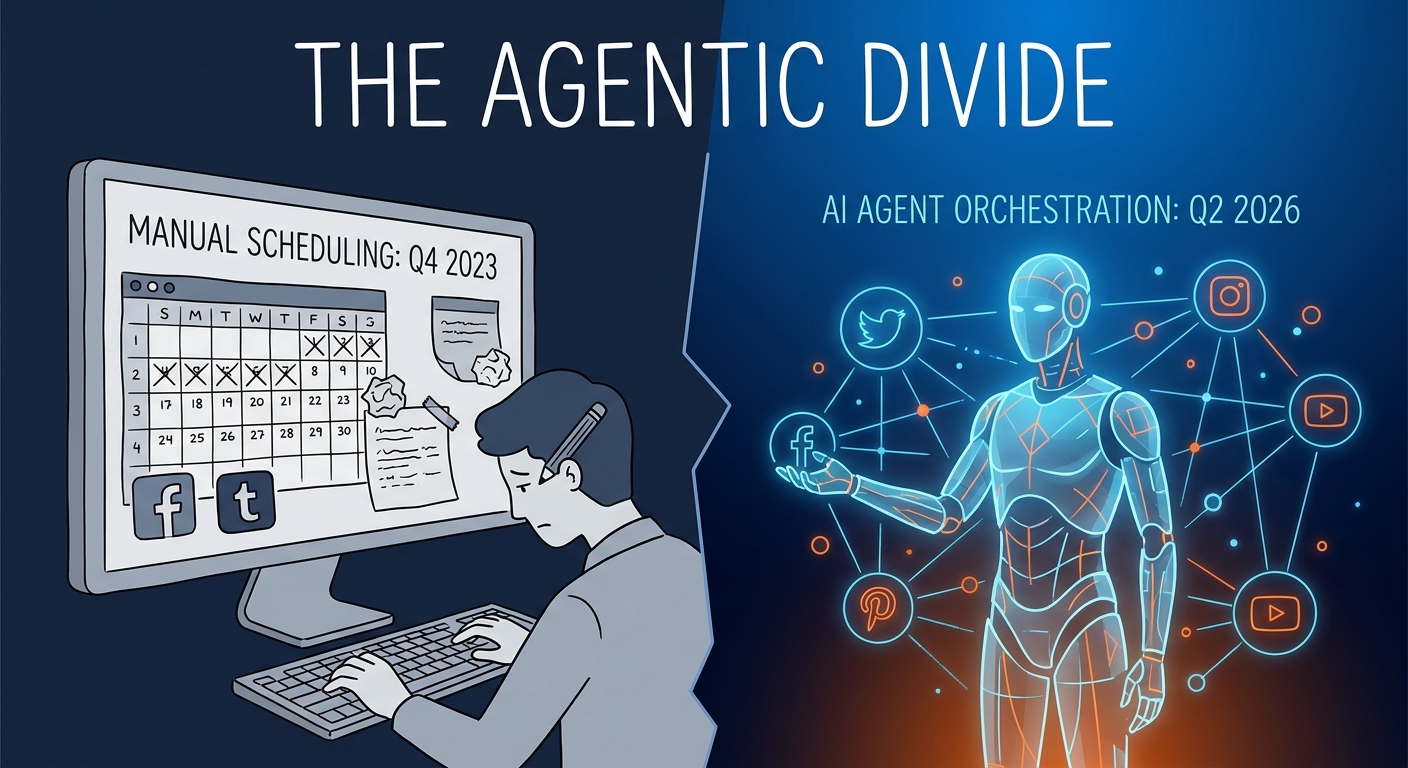
We compared 10 social media schedulers on price, pricing model, free plans, networks, AI writing and approvals. Prices checked October 2026 on vendor sites.
Struggling to pick a social media tool? We compare Hootsuite, Buffer, Sprout Social, and Later to help you find the perfect fit for your 2026 marketing strategy.
Social9 schedules your posts on 11 networks, and Autopilot can draft them in your brand voice for you to approve. Start on the free plan.
We use strictly necessary cookies to run this site. With your permission, we also use analytics cookies to understand how the site is used. We never use advertising cookies. See our Cookie Policy.