Social media scheduling: the complete 2026 guide
How social media scheduling works in 2026: native schedulers vs tools, API limits, a six-step workflow, queues, time zones, approvals and a checklist.
Scheduling
Stop reactive posting. Learn how to build a high-performance content calendar system that scales your output, improves consistency, and drives real ROI. Nikita ShekhawatSocial Media Growth ExpertPublished 6 min read
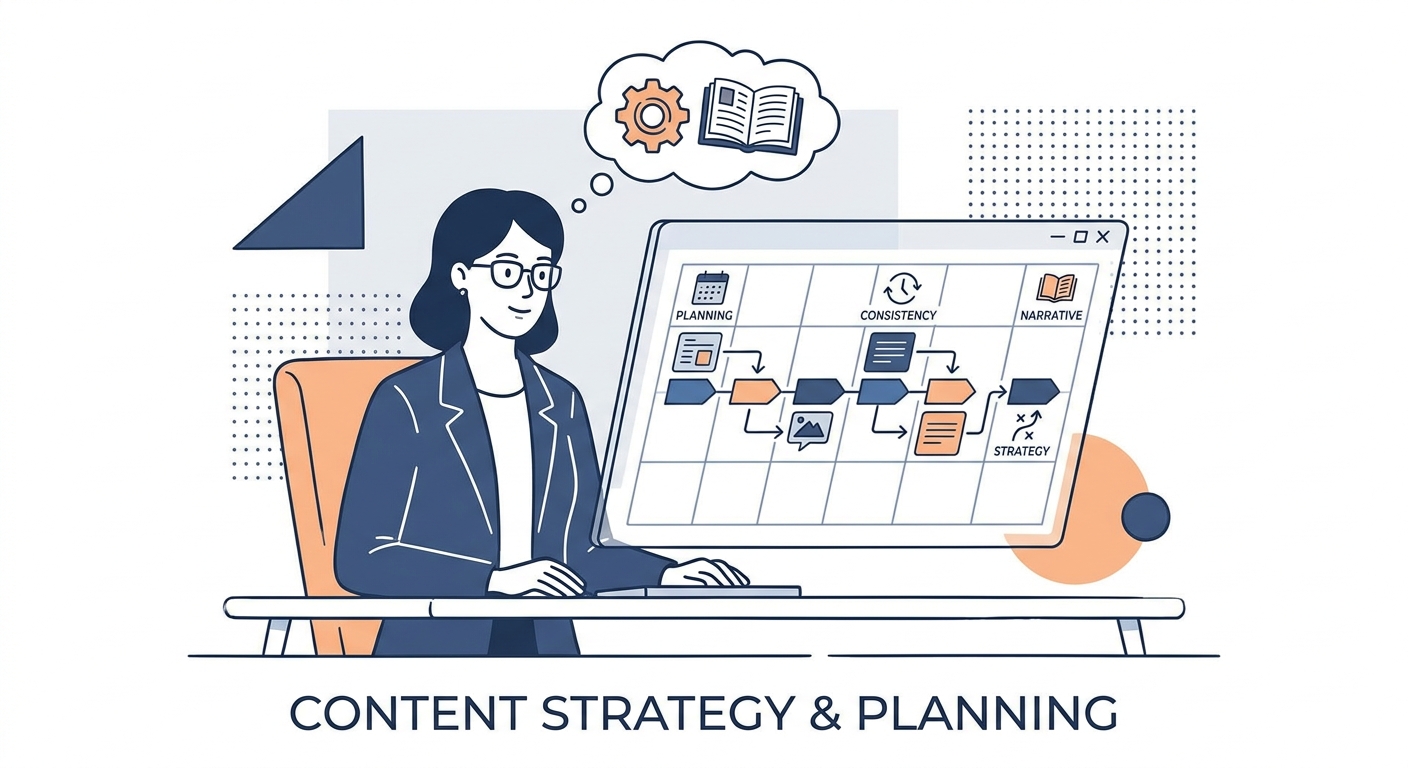
A content calendar isn't just a glorified to-do list. It’s the strategic architecture that keeps your brand from vanishing into the digital abyss. Most companies treat social media like a series of random acts of marketing—scrambling to post something, anything, as deadlines loom. That reactive cycle is the quickest way to kill your engagement.
When you shift to a proactive, structured system, you stop the noise. You start building a narrative. You move from erratic, disjointed updates to a cohesive story that actually earns trust. If you're hitting a wall trying to scale your output, our content marketing services are built to bridge that gap between "just posting" and actually moving the needle.
The culprit? The "Silo Trap."
When marketing, sales, product, and legal teams act like they're in different zip codes, your calendar turns into a graveyard of missed opportunities and repetitive, soulless messaging. Without cross-functional visibility, your social team is stuck in a permanent state of firefighting.
This forces you to prioritize volume over velocity. You aren't building a brand; you’re just filling a grid. As noted in the Sprout Social social media calendar guide, the gap between a successful calendar and a dud is the shift from tactical scheduling to strategic planning. If your calendar isn't tied to your quarterly goals, every post is a gamble. Stop asking, "What can we post today?" and start asking, "How does this piece move the needle on our quarterly objective?"
Before you touch a single cell in a spreadsheet, take a hard look at your baseline. You can’t optimize what you haven’t measured. Start with a "Content Health Check"—a ruthless audit of your last six months.
Be honest. Which assets actually moved the needle? Which were just vanity metrics? If you need a hand here, our guide on how to conduct a social media audit gives you the framework to strip away the fluff. Find the "drainers"—those content types that eat up your team’s time but produce zero engagement—and kill them. Your goal is to build a foundation of high-performing, efficient content that leaves room for the creative, high-impact work that actually matters.
A pro-level calendar is built on the Pillar System. Forget brainstorming infinite, random topics. Define 3-5 core brand pillars that represent your expertise. Every post must map back to one of these pillars.
Once your pillars are set, deploy the Repurposing Matrix. This is your secret weapon against creative burnout. Stop trying to create five unique posts from scratch. Create one "Pillar Asset"—a deep-dive blog, a whitepaper, or a video—and break it down into platform-specific bites.
graph LR
    A[Pillar Asset: Long-form Blog] --> B{Repurposing Matrix}
    B --> C[Twitter Thread]
    B --> D[Instagram Reel]
    B --> E[LinkedIn Carousel]
    B --> F[Email Newsletter]
    B --> G[Poll / Community Engagement]
By treating content as a modular system rather than a series of one-off tasks, you ensure your message hits different audience segments where they live, all while squeezing maximum ROI out of your initial production effort.
We’re currently in a feedback loop of mass-produced, robotic content. It’s creating a paradox: the more we produce, the less distinct our brands become. To stay ahead, adopt an "Anti-AI" creative stance. Use AI for trend prediction, sentiment analysis, and research—but keep it away from the final polish.
Your editorial team is the final gatekeeper. AI is great at spotting the what—the topics gaining heat—but it’s blind to the why—your brand’s unique perspective and human nuance. As the principles of content repurposing suggest, the real value of your content lies in its ability to synthesize information for your specific audience. Use AI to scan the horizon, but trust your humans to translate that data into a voice that actually connects.
If your calendar is automated and unmonitored, it’s a liability. You need a "One-Click Pause" or "Kill Switch." Whether via a SaaS tool or a custom workflow, you must be able to halt all scheduled updates across all channels in one go.
This isn't just about avoiding a social media train wreck; it’s about brand reputation. If a global crisis or a localized disaster hits, you don't want to be the brand posting a lighthearted meme. A kill switch turns your rigid schedule into a living, responsive asset.
Stop scheduling based on "best times to post." Start scheduling based on engagement velocity. Use your analytics to see which topics gain traction fastest. If a blog post from six months ago is still pulling in traffic, that’s a signal to repurpose it.
The Forrester Total Economic Impact Study shows that organizations with integrated workflows gain massive efficiency by aligning planning with real-time performance data. When you link your calendar to your analytics, you stop guessing and start scaling what works. This creates a virtuous loop where your strategy gets sharper, not just busier, over time.
Building a robust system is a three-step dance.
Step 1: Pick your tool. For small teams, a spreadsheet is fine. For scaling teams, move to a dedicated platform that handles automation and cross-functional tagging.
Step 2: Define your metadata. Don't just track dates. Include mandatory fields for "Primary Pillar," "Target Audience," "Call to Action," and "Link/Creative Assets." Every post needs a purpose.
Step 3: Establish the Approval Lifecycle. This is where most teams crash and burn. You need a clear, visual path for content to travel from idea to publication.
graph TD
    subgraph Content Lifecycle
    A[Ideation] --> B[Drafting]
    B --> C{Legal/Stakeholder Approval}
    C -- Rejected --> B
    C -- Approved --> D[Scheduling]
    D --> E[Performance Review]
    end
Formalizing this path kills the "where is this post?" conversation and ensures that everyone—from legal to the creative lead—knows exactly when their input is required. Once you have this locked down, you can scale your output without losing your mind. Download our actionable content calendar template here to get started.
As your team grows, the biggest challenge is keeping a consistent brand tone. The fix? A "Single Source of Truth" that brings product, sales, and legal into the visibility layer.
Don't treat these departments as roadblocks. Treat them as contributors. When sales sees the calendar, they can feed you real-time intel on what prospects are actually asking. When product sees it, they can make sure feature launches are supported by social content. Break down the silos, and you’ll find your content isn't just consistent—it’s actually useful to your customers.
A social media schedule is the tactical "when"—the dates and times your content goes live. A content calendar is the strategic "what" and "why"—it includes the themes, the goals, the repurposing strategy, and the alignment with your broader business objectives.
High-performing content should be repurposed on a 30/60/90-day cycle. By revisiting top-performing posts, you can refresh them with new data or a different format (e.g., turning a popular post into a carousel) to reach audience segments that missed it the first time.
A spreadsheet is best for agility and total customization in the early stages. However, as your team grows beyond three people or you manage more than three platforms, a dedicated tool becomes necessary to handle automated scheduling, approval workflows, and cross-functional visibility.
The key is to use AI for the "scaffolding"—outlining, trend identification, and research—while keeping the "flesh"—the actual voice, empathy, and unique point of view—human-led. Always require a human editor to sign off on any AI-assisted draft to ensure it aligns with your established brand guidelines.
How social media scheduling works in 2026: native schedulers vs tools, API limits, a six-step workflow, queues, time zones, approvals and a checklist.
Build a 30-day social media content calendar step by step: pick content pillars, set posting frequency, batch, approve and schedule. Free template included.
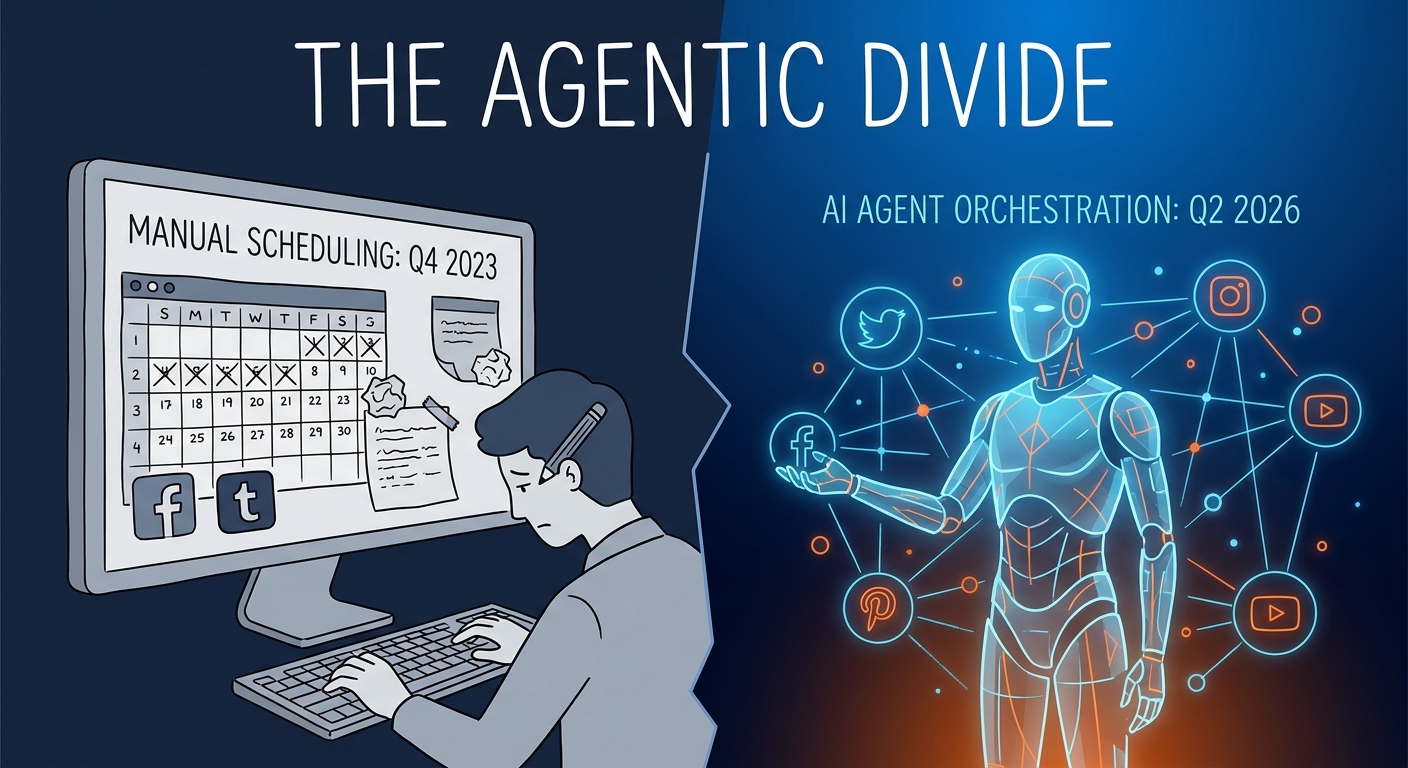
We compared 10 social media schedulers on price, pricing model, free plans, networks, AI writing and approvals. Prices checked October 2026 on vendor sites.
Social9 schedules your posts on 11 networks, and Autopilot can draft them in your brand voice for you to approve. Start on the free plan.
We use strictly necessary cookies to run this site. With your permission, we also use analytics cookies to understand how the site is used. We never use advertising cookies. See our Cookie Policy.