How agencies manage 20+ client calendars without burning out
A playbook for agencies running 20+ client calendars: workspace setup, a capacity formula, a monthly cadence, approval SLAs, safe access and burnout rules.
Playbooks
Stop the content chaos. Learn how to build a scalable social media content pillar framework to define your brand authority and streamline your team's workflow. Nikita ShekhawatSocial Media Growth ExpertPublished Updated 6 min read
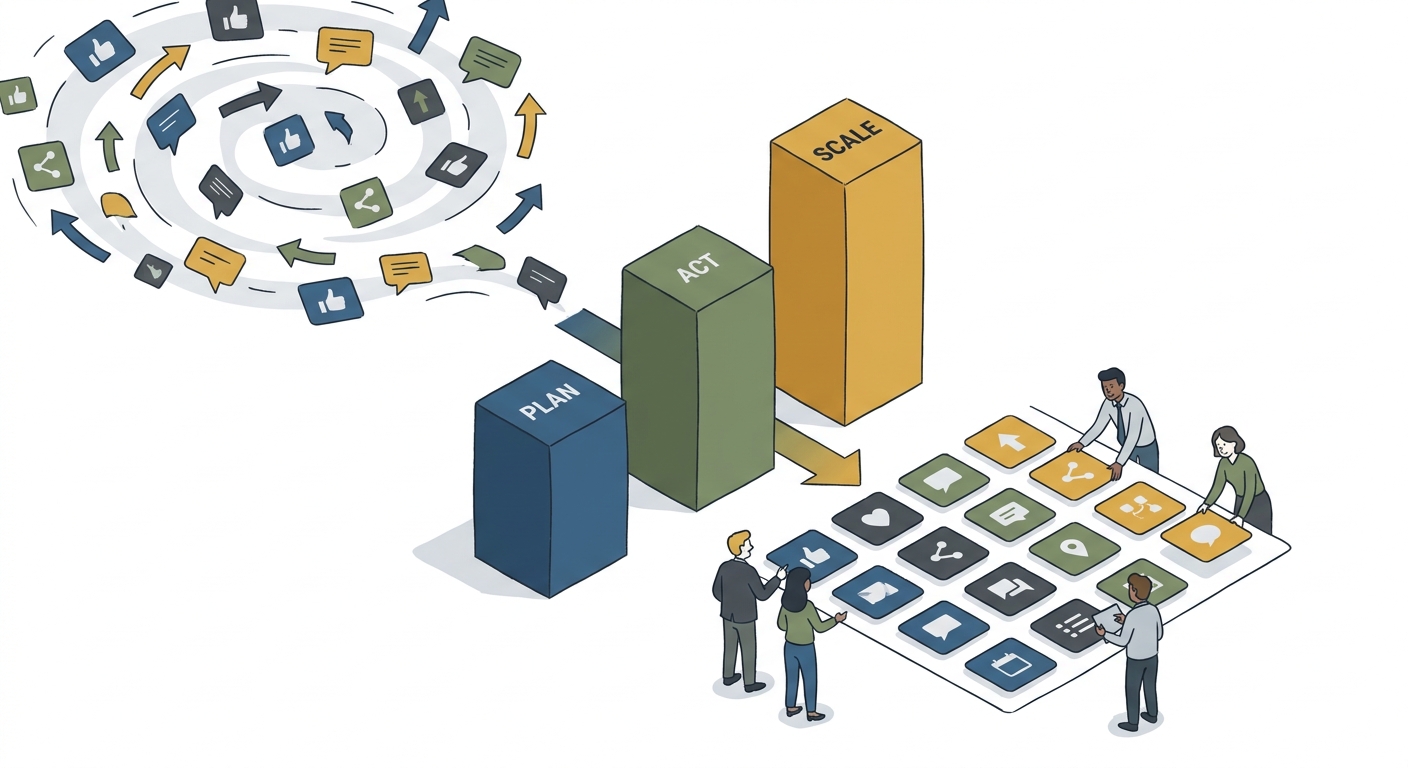
Most social media strategies don't die from a lack of creativity. They die from a lack of boundaries.
If your brand is chasing every fleeting trend—jumping from AI-generated memes to unpolished "behind-the-scenes" reels without a common thread—you aren't building a community. You’re just adding to the digital noise.
Content pillars are the strategic filter that turns a chaotic, stress-inducing posting schedule into a disciplined, scalable machine. By locking into three to five core subjects your brand actually owns, you stop waking up and asking, "What on earth should we post today?" Instead, you start asking, "How does this specific post move the needle for our business?"
We’re living in an era where volume is cheap. Thanks to generative AI, any intern or agency can pump out a dozen posts a day. But in 2026, the brands that win aren't the ones with the most noise. They’re the ones that prioritize "Human-Centric" content.
When you chase every algorithm update, you sacrifice your authority. You become a mimic, not a leader.
The "Anti-Trend" approach isn't about ignoring what's popular; it’s about ignoring what doesn't align with your mission. Your pillars are your gatekeepers. If a viral audio trend doesn't fit within your established pillars? You skip it. That restraint is exactly what builds trust. When your audience knows what to expect from your feed, they don't just follow you—they rely on you. By treating your pillars as a filter, you cut the dead weight of endless ideation and keep your team focused on high-impact production.
Let’s be clear: your "Content Strategy" and your "Content Pillars" are not the same thing.
Your strategy is the why—your long-term business objectives and the brand voice you’ve meticulously defined, which you can refine further by establishing your brand voice here.
Your pillars, conversely, are the what. They are the specific buckets of information that house your content.
The biggest killer of social media performance is "Decision Fatigue." When every single post requires a round of Slack messages and approval loops just to determine if it’s "on-brand," your output slows to a crawl. Pillars solve this. When your team knows every post must fall under "Product Education" or "Community Success," the decision-making process is automated. You aren't just posting anymore; you are fulfilling a mandate.
To move beyond generic, forgettable themes, you need a framework that anchors content to actual business outcomes. We recommend adapting the SPACES model, which organizes your efforts around Support, Product, Acquisition, Contribution, Engagement, and Success.
Think of your pillars not as static filing cabinets, but as a living loop. A business goal dictates the pillar, which generates a specific community outcome, which produces the data that refines your next goal.
graph LR
    A[Business Goal] --> B[Content Pillar]
    B --> C[Community Outcome]
    C --> D[KPI Measurement]
    D --> A
By mapping your content to these functions, you ensure that every asset has a clear purpose. If it doesn’t support the customer journey or drive community interaction, it’s just filler. Kill it.
Your pillars should reflect your industry's unique demands. Don't copy-paste someone else's strategy.
For a B2B SaaS company, your library might look like this:
For a B2C E-commerce brand, the focus shifts:
If you find yourself struggling to categorize your current output or need a fresh assessment of your brand’s direction, you can find expert help building your brand pillars here.
The trap of the AI era is the loss of "Company-Specific Anecdotes." AI can write a generic post about "the importance of productivity," but it cannot talk about the time your lead engineer fixed a critical bug at 3 AM.
Your workflow should be "AI-Assisted, Human-Led." Use AI to draft the structure of your post based on your pillar constraints—for example, prompting it to "write a LinkedIn post about [Product Feature] using a professional, empathetic tone focused on our 'Product Education' pillar."
But the final 30% of the content—the specific imagery, the internal joke, the client quote—must come from your team. As noted in this analysis on the future of authenticity, the brands that win will be the ones that use technology to scale their reach while doubling down on human-to-human connection.
Scaling requires a "Pillar Audit" checklist. Every quarter, sit down with your team and grade your content. Is 30% of your output dedicated to "Product Education"? Is 20% dedicated to "Thought Leadership"? If your feed is 90% sales pitches, your pillars are out of balance.
Standardize your workflow by moving away from "What should we post?" to "Which pillar does this satisfy?" When your content calendar requires a "Pillar Tag" for every entry, you force the team to think strategically before they even open a design tool.
If you are still obsessing over likes, you are playing a losing game. According to the latest industry benchmarks, the most successful brands are those tracking "Community Contribution" and "Product Feedback Loops."
Are your posts generating comments that lead to feature requests? Are your educational posts reducing the number of support tickets your team receives? These are the metrics that prove your content pillars are impacting the bottom line.
graph TD
    A[Input: Content Pillar] --> B[Execution: Team Workflow]
    B --> C[Data: KPIs]
    C --> D[Feedback: Quarterly Pillar Refinement]
    D --> A
Content pillars should never be set in stone. They are a living strategy that should be reviewed quarterly. If a pillar isn't driving the community outcomes you expected, cut it. If a new opportunity emerges in the market, add a new one. Start your internal audit today—look at your last 30 days of content and tag every post by its pillar. You will quickly see where you are over-indexing and where your strategy is drifting.
The "3-5 rule" is the golden standard. If you have fewer than three, your content will feel repetitive and narrow. If you have more than five, you risk diluting your brand identity and confusing your audience. Stick to 3-5 to ensure you maintain focus while still providing enough variety to keep the conversation fresh.
You know they are working when your engagement shifts from "vanity" to "utility." Are people saving your posts? Are they asking questions in the comments that lead to meaningful dialogue? When your pillars are effective, your social media presence stops being a megaphone for broadcasts and becomes a two-way street for community growth and product feedback.
Absolutely. Your pillars should be reviewed every quarter. Use your data to decide what stays and what goes. If a pillar consistently underperforms in terms of engagement or business ROI, it’s time to pivot. A strategy that doesn't evolve based on performance is not a strategy; it’s a habit.
The key is to use AI for the "bones" and humans for the "heart." Use AI to generate outlines, repurpose long-form content, or brainstorm hooks based on your pillar guidelines. But always layer in original photography, specific company anecdotes, and the unique voice of your founders or team members. If it feels like a robot wrote it, your audience will scroll past it. Use AI to be faster, but use your team to be real.
A playbook for agencies running 20+ client calendars: workspace setup, a capacity formula, a monthly cadence, approval SLAs, safe access and burnout rules.
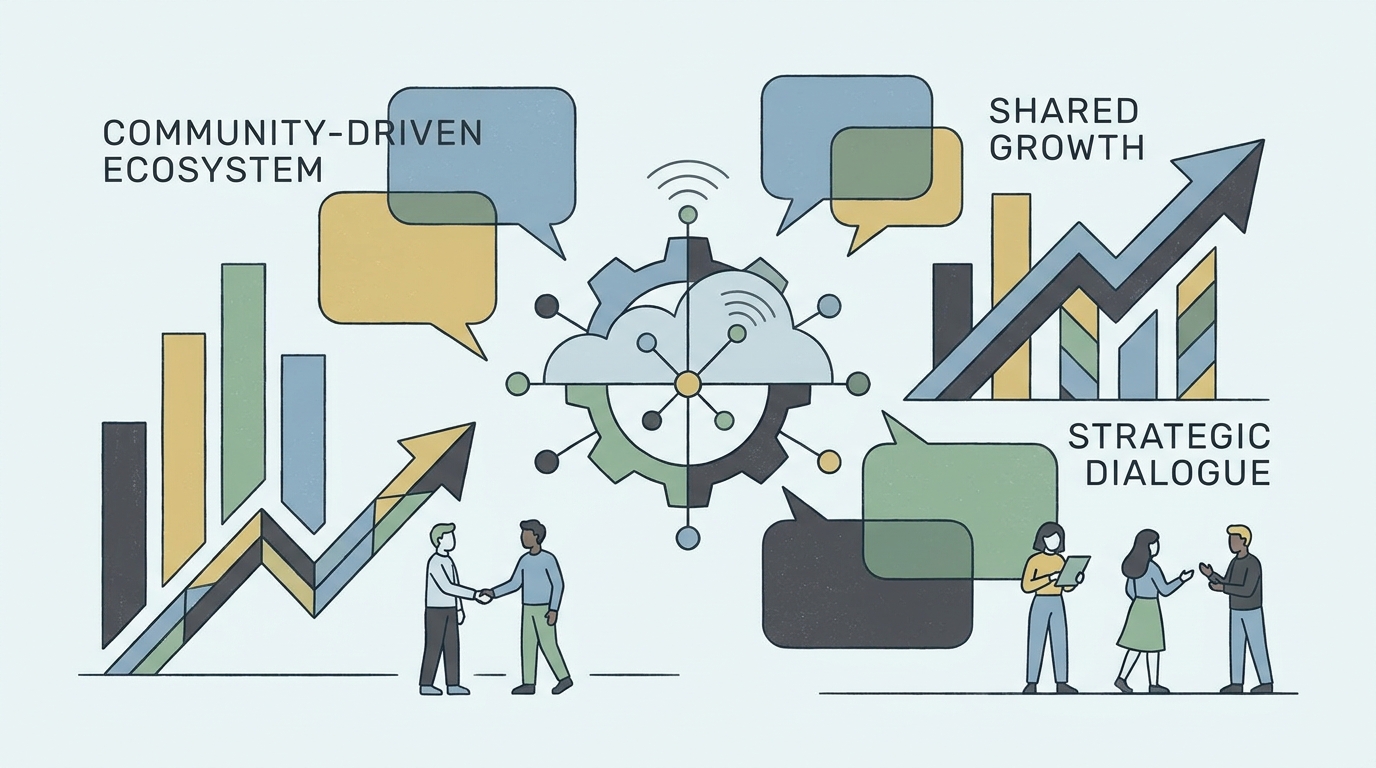
Stop chasing viral trends. Learn how to build a social media content strategy that prioritizes community, human authenticity, and measurable business revenue.

Stop the chaos. Discover how to build a high-output, AI-human hybrid social media workflow that converts and scales in 2026. Read the handbook.
Social9 schedules your posts on 11 networks, and Autopilot can draft them in your brand voice for you to approve. Start on the free plan.
We use strictly necessary cookies to run this site. With your permission, we also use analytics cookies to understand how the site is used. We never use advertising cookies. See our Cookie Policy.