What is social media autopilot? How AI posting works (and where to keep a human)
Social media autopilot uses AI to plan, draft, schedule and publish posts. Learn how the loop works, platform AI rules, and where a human must stay in charge.
Autopilot & AI
Stop manual editing. Learn how to use AI-driven content repurposing tools to transform one long-form video into a month of high-intent social media posts. David KimAI EngineerPublished Updated 6 min read
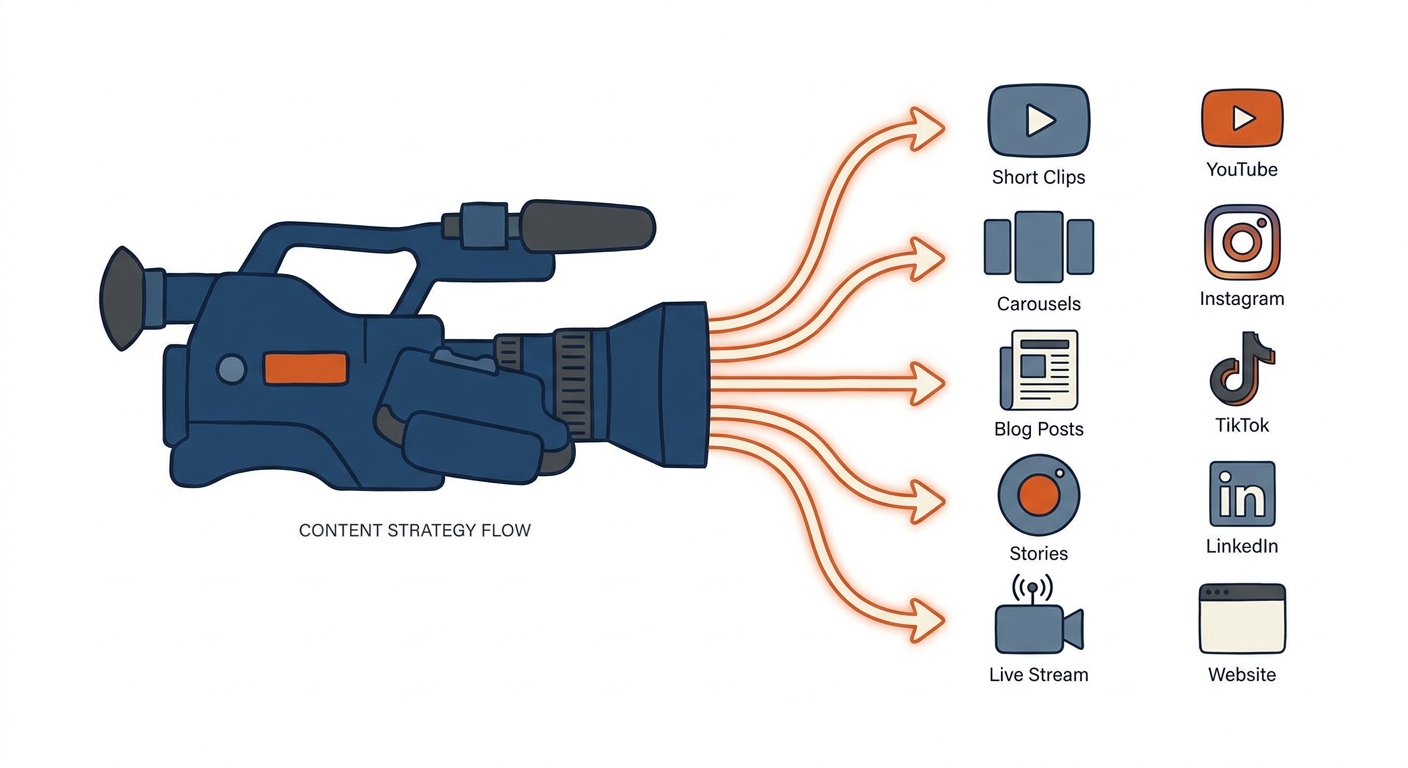
If you’re still manually chopping up video clips like it’s 2015, stop. You’re burning daylight, budget, and brain cells all at once. In 2026, the game isn't about working harder; it’s about becoming a content orchestrator. You don't need to be a manual laborer—you need to be a strategist.
By using the right AI-driven workflows, you can turn a single anchor asset into 30 days of high-intent social content without losing your mind. The Wyzowl State of Video Marketing 2024 report makes one thing clear: the hunger for video is at an all-time high. But here’s the catch—audiences have developed a sixth sense for low-effort junk. They don't want "syndication." They want native, context-aware value.
Let’s be real. Syndication is just laziness disguised as efficiency. It’s taking a raw video file and dumping it onto LinkedIn, TikTok, and X without a second thought. It feels robotic. It looks out of place. And most importantly, it flops.
Repurposing is the polar opposite. It’s the art of taking a core message and translating it into the specific dialect of each platform. Think of it as a remix, not a copy-paste.
A 40-minute webinar on industry trends? That’s not one piece of content. That’s a goldmine. It’s a punchy 60-second vertical video for Instagram, a sharp, contrarian thread for X, and a detailed carousel for LinkedIn. This is the "1-3-10" framework: take 1 anchor asset, distill it into 3 core formats (video, text, visual), and blast it across 10+ platform-specific variations.
Not every video deserves a second life. If you try to repurpose everything, you’re just adding to the digital noise. Instead, focus on the "High-Intent Anchor" philosophy.
What’s a high-intent asset? It’s a webinar, a deep-dive product demo, or a Q&A session where you tackle real customer pain points. These videos are valuable because your audience has already signaled they care.
Before you dive in, run a Social Media Audit Guide to see which of your past videos actually moved the needle. Look for shares and saves. If a video didn't perform as a long-form piece, don't expect it to magically go viral just because you chopped it into 30-second bits.
Never open an AI tool without a plan. If you go in blind, you get "blank page" syndrome. The "Clip Map" is your roadmap. It’s a simple time-stamped document where you identify the hooks, the "aha!" moments, and the call-to-action (CTA) points within your source material.
graph TD
    A[Source Video/Anchor Asset] --> B{Identify Timecodes}
    B --> C[Extract Clips]
    C --> D[Assign Platform Angles]
    D --> E[Export to AI Tools]
    E --> F[Refine & Humanize]
    F --> G[Native Platform Distribution]
By mapping your video before you touch an AI clipper, you stay in the driver's seat. You decide the hook. You choose the transition. Don't let an algorithm decide the best part of your video—it usually gets it wrong.
The market has evolved. We’ve moved past basic trimmers into full-blown orchestration engines.
The biggest trap? The "AI-generic" gray sludge. If your content sounds like a soulless bot wrote it, your audience will tune out in half a second.
This is why the "Human-in-the-Loop" is non-negotiable.
Think of AI as your intern, not your ghostwriter. Let the machine handle the heavy lifting: the transcription, the time-stamping, and the rough caption drafts. Then, you step in for the "Hook Pass." Rewrite the first three seconds of the video. Tweak the first sentence of the caption to add some actual human grit. For a deeper look at how to maintain your brand integrity, check out Our Content Creation Workflow.
You wouldn't wear a tuxedo to a beach party, right? Don't post the same content everywhere.
Stop obsessing over vanity metrics like total views. They’re a trap. Your primary KPI should be "Reach per Hour Spent Editing." As noted by the Content Marketing Institute Statistics, companies that automate their scaling see massive efficiency gains without ballooning their overhead.
According to the HubSpot Video Marketing Report, short-form video is the king of ROI, but only if it finds its people. If you spend two hours creating 15 pieces of content that generate 5,000 views each, you’re winning. Compare that to spending five hours on one polished video that only hits 1,000 views. Doing the math makes the repurposing strategy a no-brainer.
Copy and paste this into your project management tool to get moving:
| Source Video Title | Timeframe | Target Platform | Hook Angle | Platform CTA |
|---|---|---|---|---|
| Q1 Strategy Webinar | 04:12 - 05:00 | "The biggest lie in marketing..." | Read the full report | |
| Q1 Strategy Webinar | 12:30 - 12:55 | TikTok | "Stop doing this in 2026" | Link in bio for tips |
| Q1 Strategy Webinar | 20:00 - 21:00 | X (Thread) | "How to rethink your funnel" | Follow for more insights |
Syndication is the automated, mindless cross-posting of the exact same asset to multiple channels. Repurposing is the intentional act of reformatting and recontextualizing content to suit the native language and user expectations of a specific platform.
A high-quality 30-to-60-minute video should yield at least 10–15 pieces of content: 5–8 short-form video clips, 3–5 quote or text-based posts, 2–3 carousels, and one comprehensive blog summary.
Only if you treat AI as a "set it and forget it" solution. AI should handle the mechanical labor (transcription, clipping, resizing), while you must provide the creative oversight and final polish to ensure the tone remains authentic to your brand.
Not anymore. The 2026 market is dominated by all-in-one orchestration platforms that allow you to manage multi-platform distribution from a single dashboard. Focus on finding one that integrates well with your existing video storage workflow.
Look for videos where you solve specific problems, answer common customer questions, or provide deep technical expertise. These "high-intent" moments perform better because they provide immediate utility, which users are more likely to bookmark and share.
Social media autopilot uses AI to plan, draft, schedule and publish posts. Learn how the loop works, platform AI rules, and where a human must stay in charge.
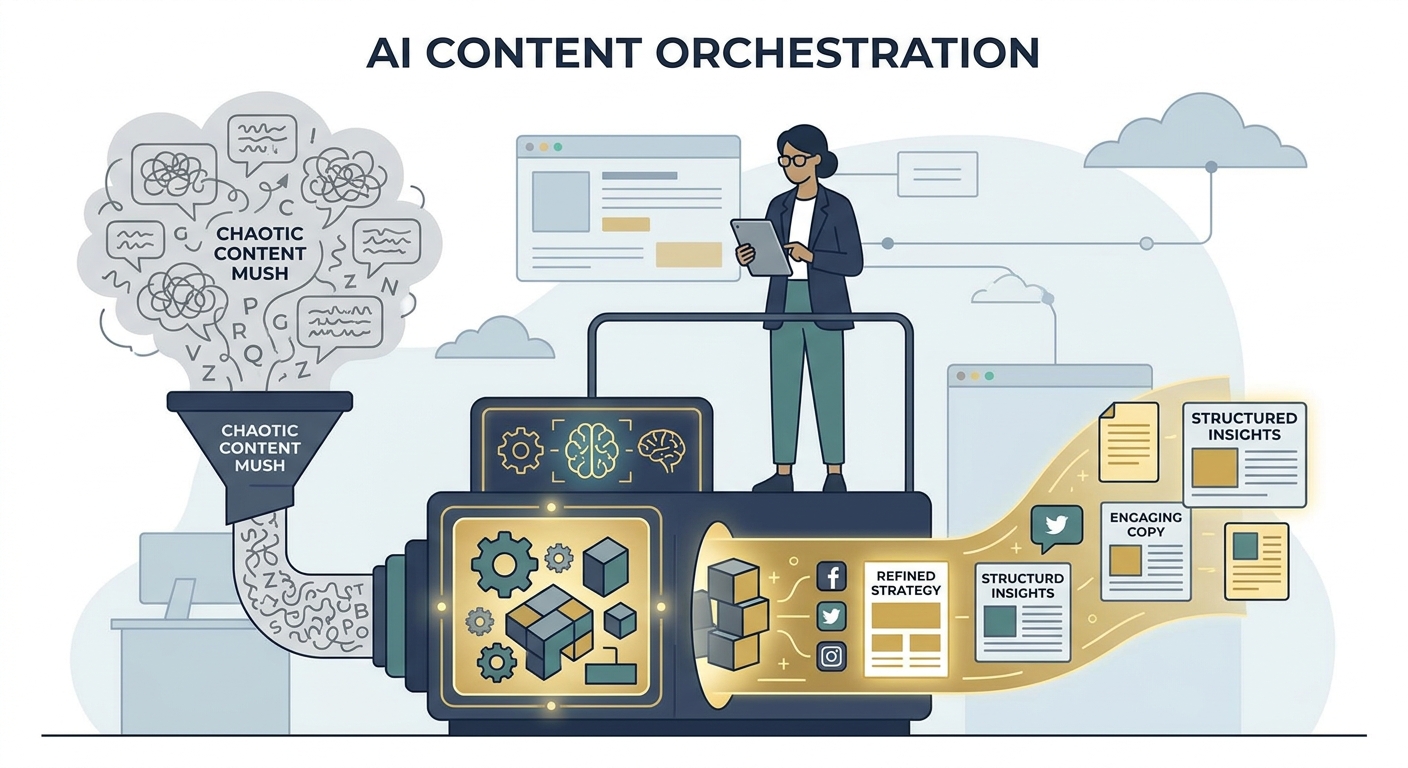
Stop 'prompting and praying.' Learn how to master agentic workflows and human-centric AI strategies to scale your content marketing efforts in 2026.
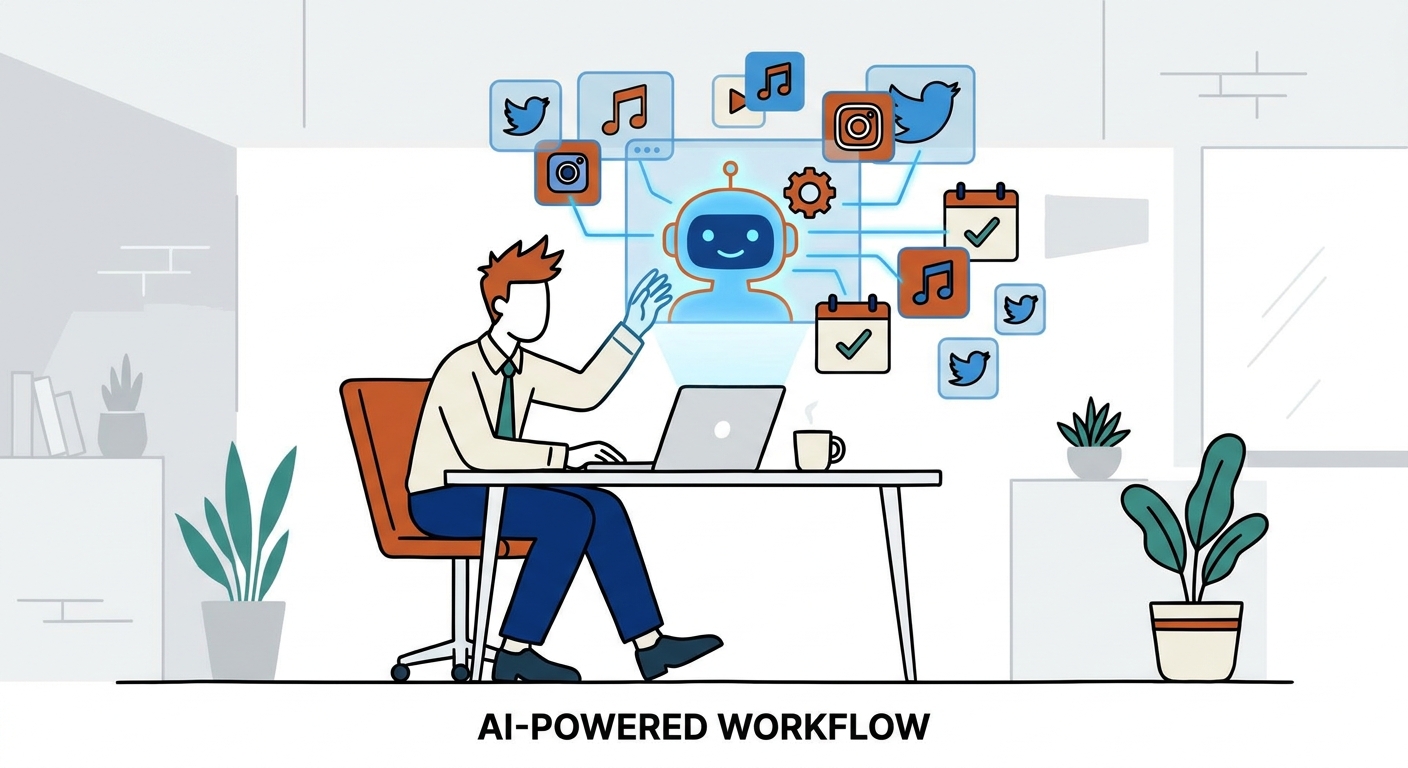
Stop manually crafting posts. Learn how to build an AI-integrated social media workflow that cuts production time by 60% while maintaining your brand voice.
Social9 schedules your posts on 11 networks, and Autopilot can draft them in your brand voice for you to approve. Start on the free plan.
We use strictly necessary cookies to run this site. With your permission, we also use analytics cookies to understand how the site is used. We never use advertising cookies. See our Cookie Policy.