Social media image and video sizes for every network (2026)
Official image and video specs for Facebook, Instagram, Threads, LinkedIn, X, TikTok, YouTube, Pinterest, Google Business Profile, Bluesky and Mastodon.
Networks
Stop the content grind. Learn how to repurpose content into platform-native assets using the Anchor Content strategy to scale your reach effectively in 2026. Alex ChenAI Content StrategistPublished 6 min read
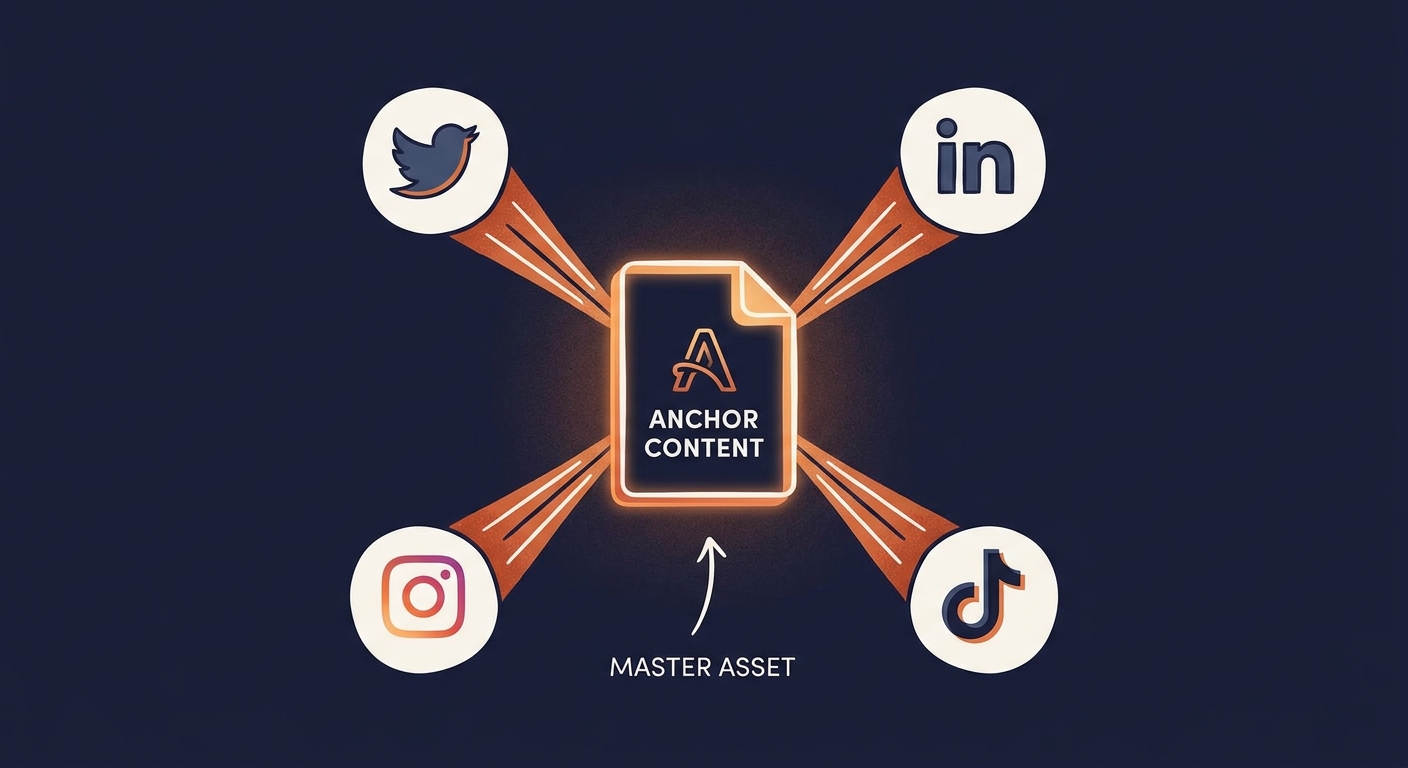
Stop trying to feed the content beast by cranking out a dozen random posts every week. It’s a losing game. The most successful creators in 2026 have ditched the "volume at all costs" grind in favor of one high-leverage move: the "Anchor Content" strategy.
Instead of burning yourself out on ten mediocre posts, you build one master asset. You kill the soul-crushing blank page syndrome. You stop the "generic content" penalty that tanks your reach when you prioritize quantity over quality. According to the 2026 Social Media Trends Report, audiences are tired of the noise. They want depth. They want authority. Your ROI isn’t tied to how much you post anymore—it’s tied to how effectively you turn your best ideas into a presence across every channel where your audience lives.
The Content Pillar strategy is the cure for the chaotic, fragmented mess that kills most social media efforts. It’s simple: you create one piece of high-value "Anchor Content"—a long-form video, a deep-dive blog post, or a solid podcast episode—and treat it as your source of truth. From that one asset, you carve out micro-assets tailored to the specific vibe of each platform.
graph TD
    A[Anchor Content: Long-form Video/Blog] --> B(Micro-Asset: Short-form Clips)
    A --> C(Micro-Asset: Educational Threads)
    A --> D(Micro-Asset: Carousel Slides)
    A --> E(Micro-Asset: Newsletter Summary)
    B --> F[TikTok/Reels/Shorts]
    C --> G[X/Threads]
    D --> H[LinkedIn/Instagram]
    E --> I[Email Subscribers]
This "One-to-Many" workflow ensures every post you publish carries a unified message, but it feels native—like it belongs exactly where it’s posted. You aren’t just copy-pasting. You’re translating your core message into the local language of your audience.
Pick the medium where you feel most at home. If you’re a natural talker, start with a 20-minute video or audio recording. If you’re a writer, start with a 2,000-word deep-dive. The goal is to choose a format that lets you actually be comprehensive.
Once you’ve settled on your medium, split your topics into "evergreen" or "trending." Evergreen stuff—think "The Fundamentals of SEO"—is your long-term insurance policy. Trending topics are how you grab immediate attention. If you’re struggling to stay on track, How to Build a Content Calendar can help you map out these pillars so you aren't waking up on a Tuesday morning staring at a blinking cursor.
The era of "auto-sharing" is dead. If you use a tool to blast the exact same caption and image to LinkedIn, X, and Instagram, you’re broadcasting your laziness to the world. Algorithms catch on to that lack of effort instantly. And your users? They’re way too smart to fall for it. They’ll scroll right past you without a second thought.
"Platform-native" means reformatting your core message to fit how people actually use that specific app:
Automation is the engine, but you are the driver. The internet is drowning in "AI Spam"—content that feels hollow, robotic, and totally disconnected from real life. If your repurposed content lacks a specific opinion, a personal story, or a local context, it’s going to fail.
Never automate the final editorial pass. Before you hit publish, read it out loud. Does this sound like me? If you see generic filler, kill it. Inject your own brand of humor, skepticism, or professional insight. If you need help streamlining production, there are plenty of AI Tools for Content Creators that can handle the grunt work of transcription and summarization. But they are only as good as the human guiding them. Your unique voice is the only competitive advantage you have left.
We’re in the era of Social Media SEO. People aren’t just scrolling anymore; they’re using TikTok and Instagram like a search engine. If your content isn't optimized for discovery, you’re leaving thousands of impressions on the table.
Include primary keywords in your captions and on-screen text. Use ALT-text to describe your images and videos—that stuff is indexed by the discovery algorithms. Stop using generic, high-volume hashtags that clutter your post. Instead, use tags that describe the intent of the video. Think like a user typing a query: "How to fix X" is infinitely more valuable than a trending hashtag that has nothing to do with your niche.
Consistency isn't about willpower. It’s about a system. To scale, you need a rigid production cycle. Batch your Anchor Content creation—record four videos in one afternoon. Once the footage is captured, push it into your editing pipeline.
If the operational load is still too high, our Content Marketing Services are built to handle this transition, moving you from manual chaos to a predictable content machine. For the DIY crowd, The Ultimate Guide to Content Repurposing is a great blueprint for setting up your internal systems.
And never forget the feedback loop. Your comments section is a goldmine. When someone asks a smart question or challenges a point, that’s a signal. Write those questions down. They are the seeds for your next piece of Anchor Content.
Stop obsessing over vanity metrics like raw follower growth. Focus on "intent metrics" that actually signal business health: saves, shares, and search visibility. These are the actions that prove your content is providing real value.
Use the "30-day rule." If an asset hits, wait 30 days and refresh it. Can you turn that popular carousel into a video? Can you take that thread and turn it into a newsletter deep-dive? Recyclability is the hallmark of evergreen success. Track which formats drive the most meaningful engagement, prune your strategy, and double down on what works while cutting the dead weight.
No, the algorithm doesn't punish the idea; it punishes low-effort delivery. If you copy-paste the exact same caption and video file across platforms, you lose. If you re-format that content to fit the native UX of each platform—like changing the aspect ratio for Reels or re-writing the copy to suit the professional tone of LinkedIn—you effectively bypass duplicate content filters and improve your chances of success.
The key is the "Human-in-the-loop" review process. AI is great at summarizing, but it lacks the nuance of your personal brand. After an AI generates a draft, you must rewrite the hook, add a personal anecdote, or insert a controversial opinion that aligns with your brand. If you don't inject your own personality, the content remains soulless and forgettable.
Long-form video or deep-dive blog posts are the most versatile sources. A 15-minute video can be broken into five clips, three carousels, and two newsletter issues. It provides the largest "surface area" of information, giving you the most raw data to work with when it comes time to repurpose.
You can repurpose content as long as it remains relevant. Use the "30-day rule": once an asset has had time to breathe and gather data, revisit it. If it was a top performer, find a new way to package that same insight. However, avoid the trap of "diminishing returns"—if a piece of content is clearly not landing, don't keep forcing it into new formats; move on to the next pillar.
The most common mistake is the "lazy copy-paste" approach. Creators assume their audience follows them on every platform and will see their content multiple times. In reality, your audience is fragmented. The failure lies in not adjusting for platform-specific UX—like posting a link in an Instagram caption where it isn't clickable, or posting a text-heavy image on a platform designed for fast-paced video. Always format for the user experience of the specific app.
Official image and video specs for Facebook, Instagram, Threads, LinkedIn, X, TikTok, YouTube, Pinterest, Google Business Profile, Bluesky and Mastodon.
Stop spamming and start connecting. Learn how to use LinkedIn automation tools to amplify your personal brand without losing your authentic voice in 2026.
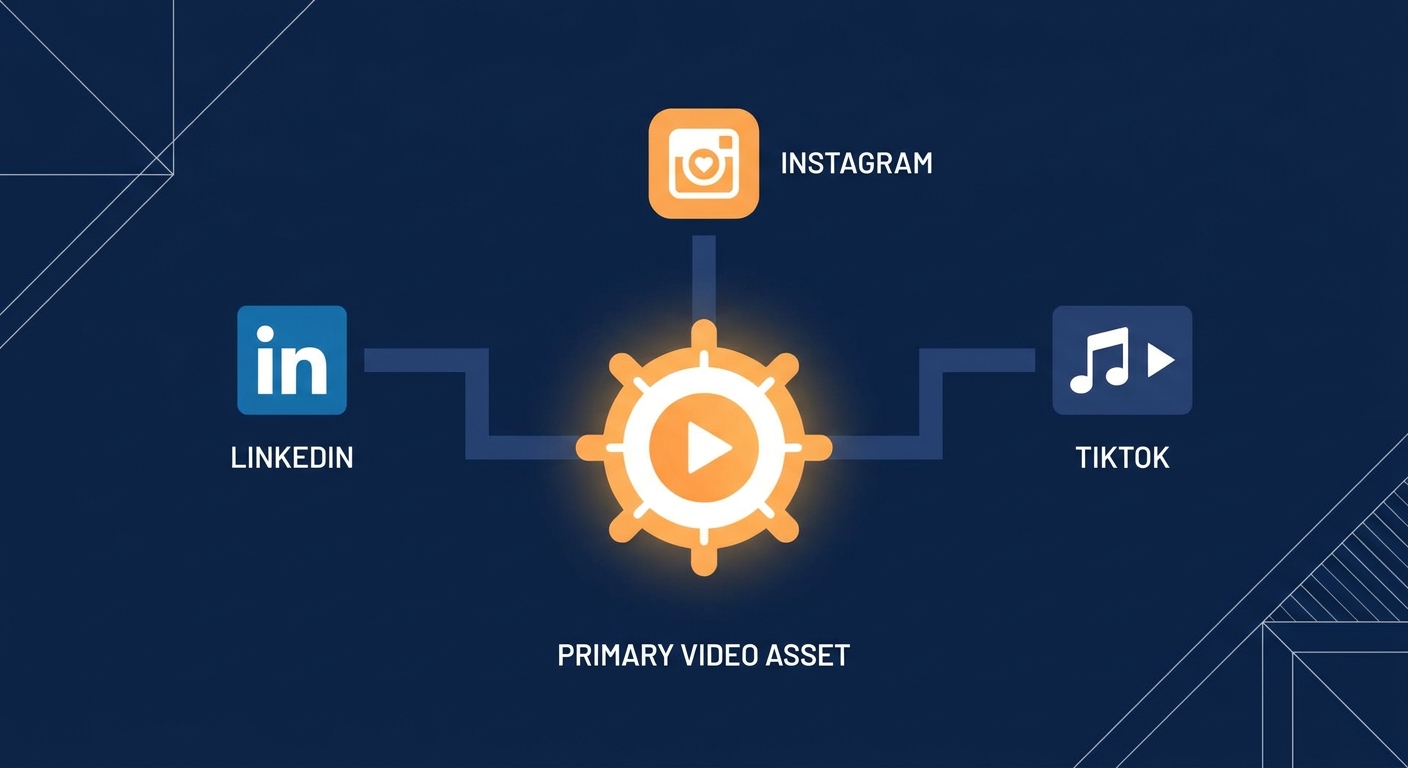
Stop blasting identical content across social media. Learn the Core-to-Satellite model to adapt your content for maximum engagement on LinkedIn, Reels, and TikTok.
Social9 schedules your posts on 11 networks, and Autopilot can draft them in your brand voice for you to approve. Start on the free plan.
We use strictly necessary cookies to run this site. With your permission, we also use analytics cookies to understand how the site is used. We never use advertising cookies. See our Cookie Policy.