Social Media Analytics Tools Free vs. Paid: What Your Business Needs in 2026

TL;DR
- ✓ Move from vanity metrics to revenue-focused analytics for 2026 business growth.
- ✓ Use free native tools for granular data within specific platform walled gardens.
- ✓ Upgrade to paid third-party tools to consolidate cross-platform performance data.
- ✓ Identify your upgrade threshold by measuring time lost on manual data reporting.
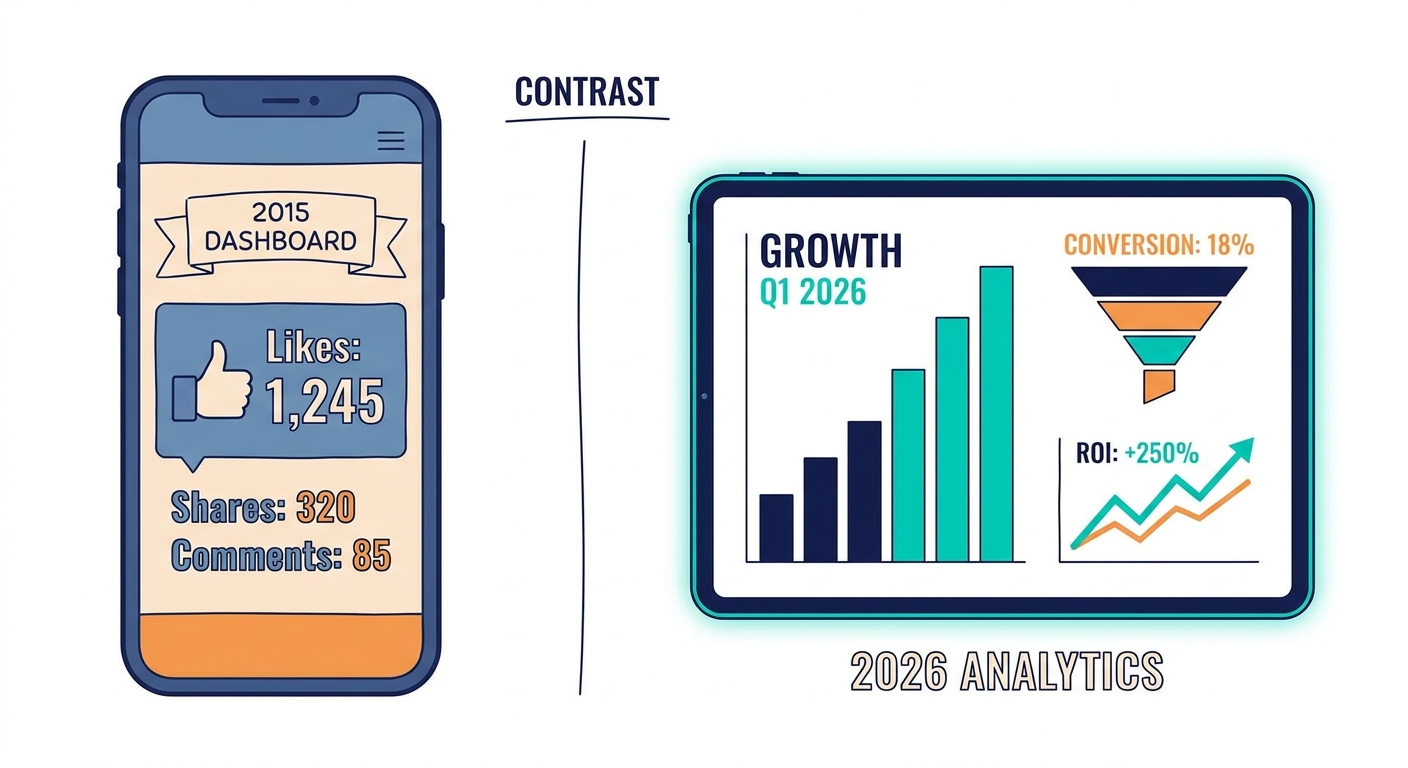
If you’re still counting "likes" to measure your social media success, you’re essentially driving a 2026 business with a 2015 dashboard. It’s time to stop chasing vanity metrics—those hollow numbers that look great in a slide deck but do absolutely nothing for your bottom line. The real shift this year isn’t about algorithms; it’s about moving from a "reach-at-all-costs" mindset to a conversion-first strategy.
Whether you should stick with the free native tools provided by the platforms or shell out for a paid third-party suite depends on one thing: are you playing for ego, or are you playing for revenue?
For many, the journey begins with our guide to social media strategy, which hammers home a simple truth: data is only as good as the action it inspires. In 2026, the gap between "free" and "paid" isn't just a line item on your budget. It’s the difference between staring at a rearview mirror and having a GPS that tells you exactly where to turn next.
The Shift: Why 2026 Analytics Are About Revenue, Not Reach
The era of "viral vanity" is dead. Today, the C-suite doesn't care about your follower count. They care about lead attribution, customer acquisition cost (CAC), and pipeline influence. Social media has graduated from being the "awareness megaphone" to acting as a bottom-of-funnel conversion engine.
We’ve moved past simple engagement rates. Now, we demand predictive modeling. Why? Because the modern buyer journey is a tangled web across a dozen touchpoints. If your analytics tool can’t map a click from a LinkedIn post to a demo request in your CRM, you’re flying blind.
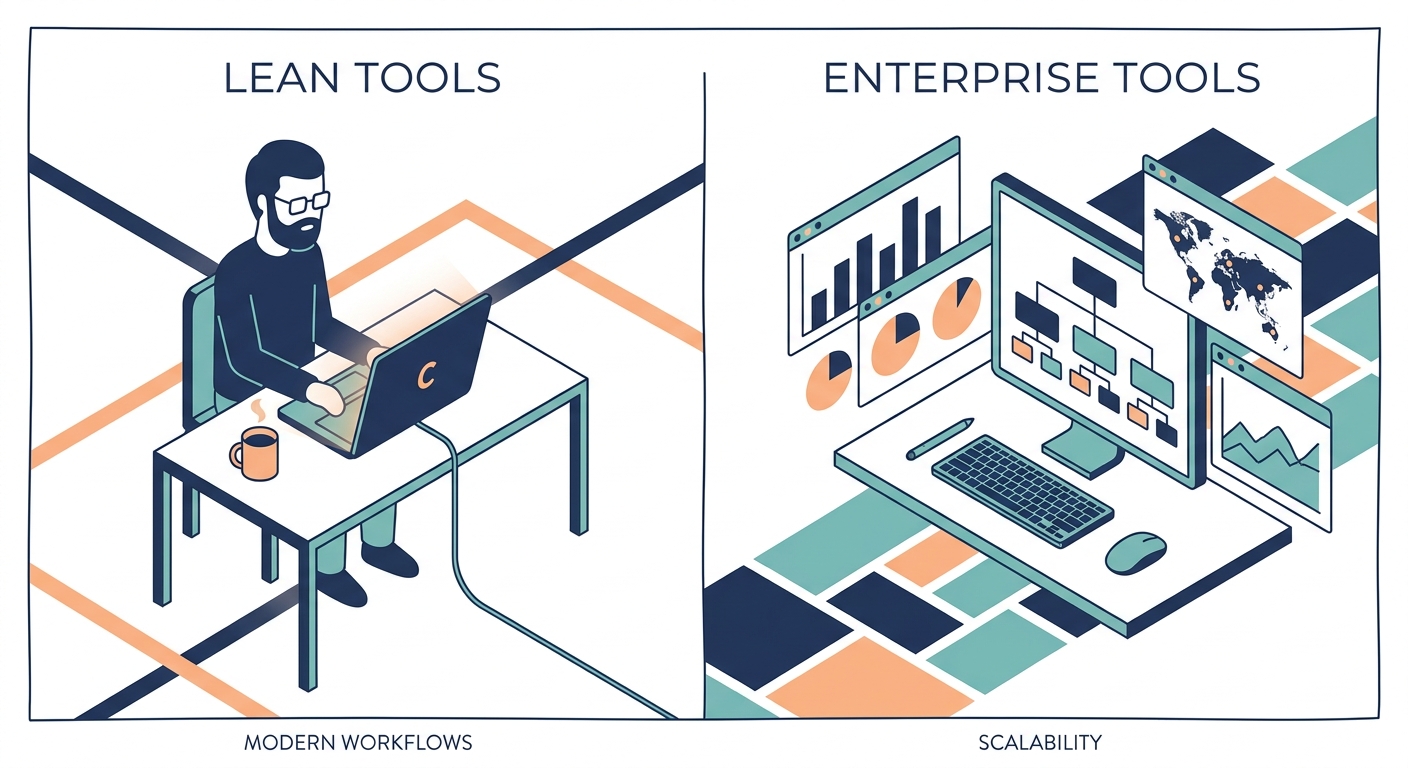
What is the Real Difference Between Native and Third-Party Analytics?
Native tools—Meta Business Suite, LinkedIn Analytics, X Analytics—are your home base. They’re granular, they’re accurate, and they’re free. But here’s the catch: they’re designed to keep you inside their walled garden. They want you trapped on their platform, which is why they offer zero cross-platform benchmarking.
Want to know how your Instagram Reels compare to your LinkedIn carousels when it comes to actual site traffic? Good luck. With native tools, you’re stuck manually exporting CSVs and wrestling with Excel to normalize the data. It’s a soul-crushing process that eats up hours of high-value time. As highlighted in Buffer’s analytics guide, the real cost of "free" isn't money—it's the operational friction that kills your team’s ability to actually execute.
Third-party tools act as a single pane of glass. They consolidate the mess, giving you a clear view of your performance across the entire digital spectrum.
When Should You Outgrow Your Free Native Tools?
The "Upgrade Threshold" isn't a date on the calendar; it’s a breaking point in your workflow. If you’re managing more than two channels, you’re likely wasting time switching tabs like a frantic air traffic controller. If your weekly reporting cycle takes more than two hours of manual data entry, you’re throwing away a full work week every month on admin work.
Pro-Tip: If your business goal has shifted from "growing an audience" to "generating leads," you need the historical data storage that only paid tools provide. Native platforms often purge or limit access to old data. You need a permanent record to spot the long-term trends that actually move the needle.
How Do You Choose the Right Tool for Your Growth Stage?
The market is flooded with options, but don't overcomplicate it. The right choice depends on your primary output.
- For Creators: Focus on hook retention—the first three seconds of your video—and audience sentiment. You need tools that visualize exactly where viewers drop off.
- For Small Business: Prioritize an "all-in-one" workflow. You don't need a standalone analytics suite; you need a platform that schedules, monitors, and reports on ROI in one seamless flow.
- For Agencies: You’re in the business of client retention. Your tool must offer white-label reporting that looks professional and allows for deep-dive historical analysis to prove your value month after month.
As noted in Sprout Social’s insights on metrics, success is measured by the metrics that align with your specific objectives, not the ones that happen to be easiest to track.
How Can AI-Powered Insights Save You Time?
The biggest leap in 2026 is moving from reactive reporting ("what happened?") to predictive modeling ("what should I do?"). We aren't just asking, "How did this post perform?" anymore. We’re asking the AI, "Based on my last six months of data, when should I post this specific asset to maximize conversion?"
AI-powered tools can forecast engagement and suggest optimizations before you hit publish. This is the difference between guessing and strategy. By integrating these tools, you move away from the "post-and-pray" method and toward a data-backed content engine. For those looking to streamline the creative side of this process, check out our top 10 content creation tools for 2026.
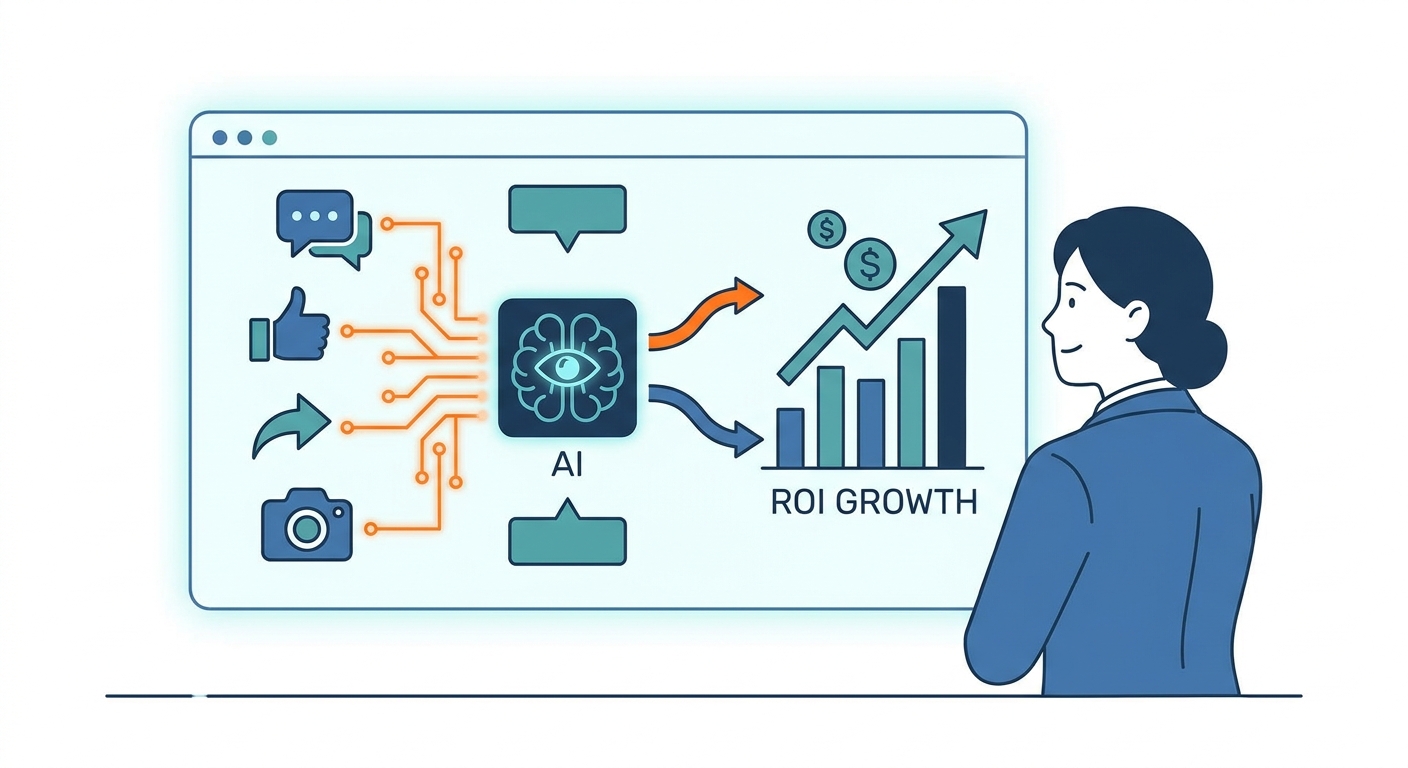
How to Track Social Media ROI in 2026
If you aren't using UTM parameters, you aren't tracking ROI—you’re guessing. Every single link you share must be tagged with source, medium, and campaign parameters that feed directly into your CRM.
Pro-Tip: Stop obsessing over "last-click" attribution. Most buyers interact with your brand via social long before they ever click a link. Look for tools that offer multi-touch attribution, which gives credit to the social touchpoints that moved the prospect into the funnel, even if they didn't click immediately. For a deeper dive into the math behind this, refer to our guide on how to calculate social ROI.
Avoiding "Analysis Paralysis": A Strategic Workflow
The most dangerous thing you can do is sign up for five different analytics platforms. This leads to tab fatigue and, eventually, complete abandonment of the data. You need a closed-loop system where data informs content, and content informs data.
Pro-Tip: Consolidate your tech stack. If a tool doesn't serve a specific, actionable purpose in the workflow above, cut it. Your goal is to spend 10% of your time collecting data and 90% of your time acting on it.
Industry Trends: What Does the Future Look Like?
Privacy is no longer a "nice to have"; it’s the foundation of modern analytics. With stricter cookie laws and platform-level privacy restrictions, the industry is shifting toward "first-party data" reliance. As explored in the latest Hootsuite 2026 social trends, brands that prioritize ethical, transparent data collection are gaining a massive competitive advantage. Expect to see more "clean room" reporting where social data is anonymized but remains highly effective for conversion tracking.
Frequently Asked Questions
Are free native analytics from Instagram and LinkedIn enough for my business?
If you’re a solopreneur or a tiny team focused on one channel, yes. But the moment you scale to multiple platforms, the time you spend manually aggregating data becomes way more expensive than the monthly subscription fee of a professional tool.
How do I track actual ROI from social media in 2026?
You must use UTM parameters on every outbound link and integrate your social management platform with your CRM (like Salesforce, HubSpot, or Pipedrive). This allows you to track a lead from the first social interaction all the way to a closed deal.
What is the biggest mistake businesses make with social media analytics?
Vanity metric obsession. Tracking likes, shares, and followers without mapping them to business outcomes like website traffic, lead generation, or sales is a recipe for wasted effort.
How often should I review my social media analytics?
You should have a "pulse check" weekly to adjust content schedules, but a deep-dive "strategy review" should happen monthly. This keeps you focused on long-term trends rather than getting distracted by the daily noise of algorithm fluctuations.