Social Media ROI Tracking: How AI-Powered Analytics Tools Change the Game

TL;DR
- ✓ Move beyond vanity metrics to autonomous, AI-driven social media performance tracking.
- ✓ Replace manual spreadsheets with predictive algorithms that optimize ad budgets in real-time.
- ✓ Eliminate the ROI gap by mapping non-linear customer journeys across all social platforms.
- ✓ Abandon broken last-click attribution models for sophisticated AI-powered conversion tracking.
Social media ROI tracking used to be a graveyard for vanity metrics. You’d spend hours pulling reports just to show your boss that "engagement was up 5%." That’s not marketing—that’s busywork.
Today, the game has changed. We’ve moved from retroactive reporting to live-fire, autonomous optimization. If you’re still treating social media as a separate silo from your bottom line, you’re leaving money on the table. The shift from manual spreadsheets to AI-powered execution layers is the biggest jump in marketing since the first digital ad auction.
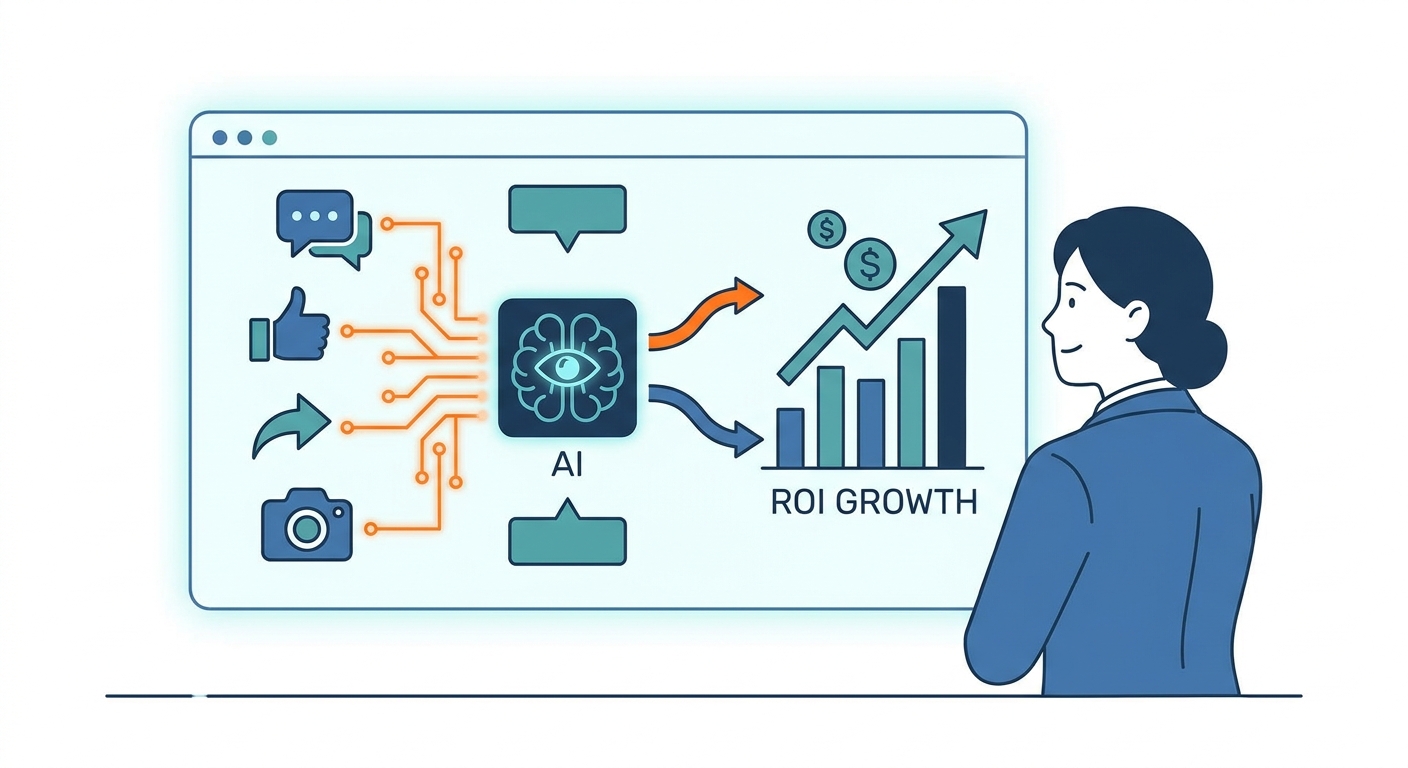
We aren't just looking at descriptive dashboards anymore. We’re using predictive algorithms to shift budgets, swap out creative, and target audiences in real-time. We are finally closing the gap between a "like" on Instagram and a deposit in the bank.
Why Your Current Analytics Dashboard is a Rearview Mirror
If your team spends the first three days of every month wrestling with CSVs from native platform insights, you’re living in the past. We are seeing a massive Social Media Analytics Market Growth, and it’s happening because the sheer volume of data is now impossible for humans to process manually.
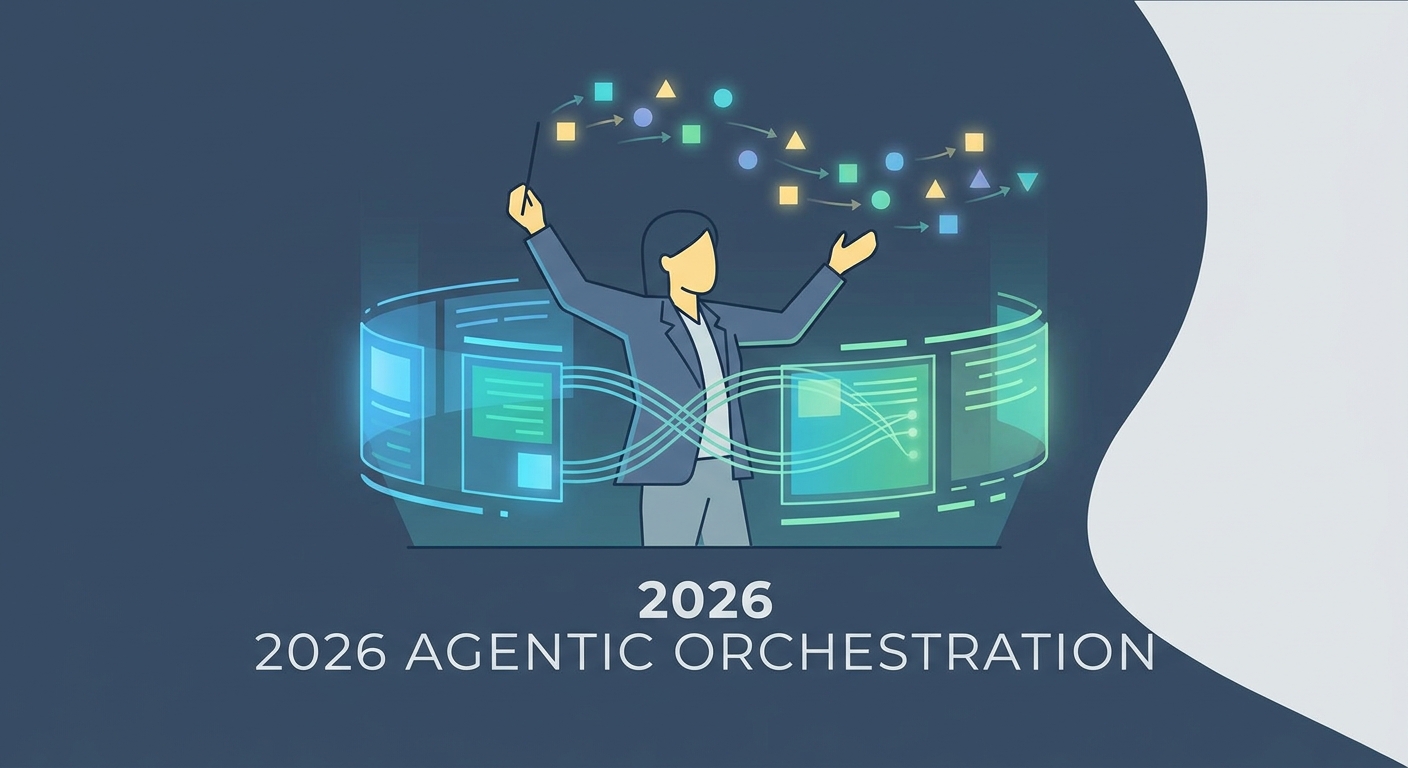
Traditional dashboards are rearview mirrors. They tell you that a post did well last Tuesday, but they don't tell you why. More importantly, they offer zero help in replicating that success tomorrow. By 2026, the industry standard has shifted toward "execution layers." These are tools that don't just display data—they act on it. If your dashboard isn't integrated directly into your ad-buying flow, it’s not an analytics tool. It’s a digital graveyard for metrics that no longer influence your strategy.
Closing the "ROI Gap"
The "ROI Gap" is that persistent, annoying void between social media activity and actual conversion. For years, marketers have been laughed at for claiming that a "like" drives a sale. But early adopters of AI-driven analytics are seeing a 20% performance boost by ditching descriptive reporting in favor of predictive modeling.
According to the latest Hootsuite Social Trends 2026, the digital landscape is so fragmented that tracking the customer journey by hand is a fool’s errand. AI bridges this by spotting patterns invisible to the human eye. It doesn't just ask "what happened?" It asks, "What will happen if we move $5,000 from this awareness campaign into a conversion-optimized sequence?" That is the difference between guessing and engineering growth.
Solving the Multi-Touch Attribution Headache
"Last-click" attribution is a relic. It’s a broken model that sabotages your social performance by giving all the credit to the final link a user clicked. It ignores the weeks of brand discovery, the video consumption, and the social proof that actually built the trust to make the sale.
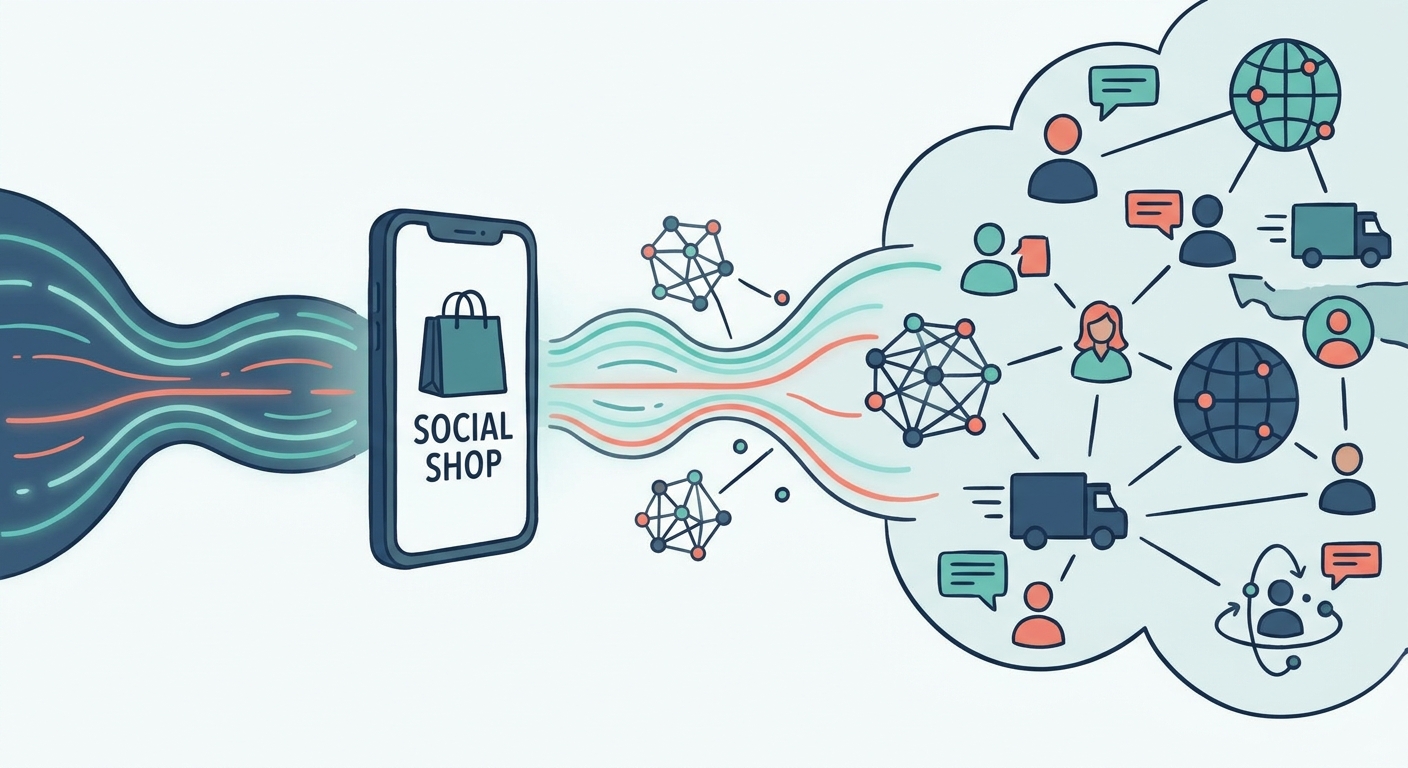
AI solves this by mapping non-linear journeys. Think about your own habits: you might discover a brand on TikTok, research them on LinkedIn, and then finally convert after seeing a retargeting ad on Instagram. AI attribution engines assign fractional value to every single one of those touchpoints. Finally, your top-of-funnel social efforts get the credit they deserve for driving long-term acquisition.
The "Anti-Dashboard" Philosophy
The most dangerous mistake a marketer can make is confusing a pretty chart with a strategy. A passive dashboard is a vanity project. An AI execution layer is a system that does things.
If your analytics tool notices a drop in sentiment or a spike in cost-per-acquisition, it should be able to pause that creative automatically. It should shift spend toward the high-performing segments without waiting for a human to sign off on a Slack message.
When you plug these systems into your broader strategy—like our Content Marketing Services—you stop managing individual posts. You start managing an autonomous ecosystem. You aren't just reporting on the fire; you’re the engineer adjusting the airflow to keep the flame steady.
The AI-Driven ROI Calculation Framework
To calculate true ROI in an AI-dominated world, you have to move beyond the basic (Revenue - Cost) / Cost formula. You need to pull in "Trust Metrics" and "Sentiment Depth" as leading indicators for future revenue.
- Calculate the Weighted Touchpoint Value: Use your AI attribution tool to assign a value to every interaction based on its proximity to the final sale.
- Apply the Sentiment Multiplier: Adjust your lead value based on the sentiment depth score. A lead from a high-trust, positive interaction is worth far more than a lead from a lukewarm one.
- Factor in LTV (Lifetime Value) Projection: Use predictive analytics to estimate what the customer will be worth over time, not just what they spent on their first purchase.
For a look at how this plays out in the real world, check out our Case Study: ROI Optimization.
Which AI Analytics Tools Should You Actually Use?
Choosing a tool is a balancing act between ease of use, raw predictive power, and integration depth.
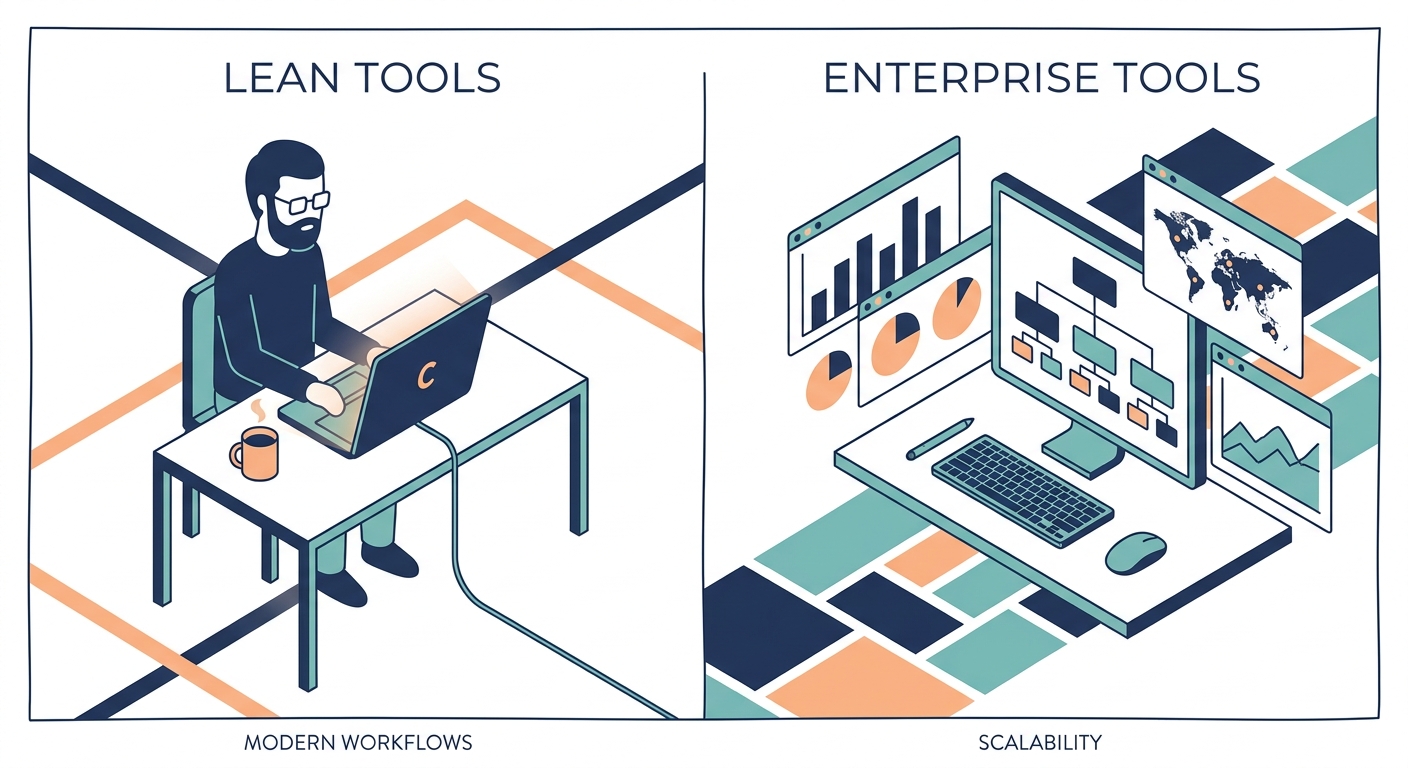
Prioritize "API-first" architectures. If a tool can’t push data directly into your CRM, it’s a silo—not an asset. Enterprise brands need multi-model attribution; smaller teams should focus on tools that simplify the "execution layer" by automating content distribution.
Connect AI to Your Bottom Line
Proving revenue impact requires a closed-loop system. Connect your social signals directly to your CRM (Salesforce, HubSpot, etc.). When a lead hits your system, the CRM should automatically tag the specific social touchpoint that started the conversation.
According to Marketing Analytics Statistics 2026, companies that integrate social signals with their CRM see a 30% increase in lead-to-customer conversion rates. This isn't just about engagement—it’s about visibility. You need to know exactly how much revenue started on LinkedIn or Instagram.
The Ethics of Automation
As we lean into hyper-personalization, the ethical boundaries matter. Don't be creepy. Your goal is to predict user needs, not to track their every move. The most successful brands in 2026 are the ones using AI to serve the customer better. Transparency is the foundation of the trust that AI eventually helps you measure.
Future-Proofing: The Autonomous Agent
We are approaching the era of the autonomous social media agent. In the near future, you won't just use AI to analyze performance; you’ll deploy agents that act as brand ambassadors—creating, posting, and optimizing content in real-time based on live market feedback.
The role of the human professional is shifting. You are no longer the "tactical executioner." You are the "strategic architect." You set the guardrails, define the brand voice, and make the high-level calls, while the machine handles the infinite complexity of the social landscape.
Frequently Asked Questions
How does AI accurately attribute revenue to social media activity?
AI moves away from "last-click" attribution by using multi-touch models. It tracks a user’s journey across multiple platforms and devices, assigning a fractional value to every engagement—from the first discovery click to the final conversion—ensuring that every part of the funnel receives credit for its contribution to the final sale.
What is the difference between social media "performance" and "ROI"?
Performance metrics are "vanity" indicators like likes, shares, and follower counts, which show how content is resonating. ROI is a business metric that measures the actual financial impact, such as Customer Lifetime Value (LTV), conversion rates, and the cost-to-acquire ratio, derived from the revenue generated by social-led leads.
Can AI replace a human social media manager?
No, but it will change the role. AI replaces the manual, repetitive tasks of data entry and basic scheduling, allowing the human to function as an "AI-augmented professional." The human provides the creative strategy, brand voice, and high-level decision-making, while the AI manages the autonomous tactical execution and real-time optimization.
How do I prove the ROI of "brand awareness" campaigns?
You prove it by using sentiment analysis, share-of-voice data, and brand trust scores as leading indicators. AI allows you to correlate increases in these metrics with long-term revenue growth, effectively demonstrating that as brand sentiment rises, the cost-per-acquisition for future conversion campaigns inevitably drops.