How to Master AI-Powered Content Creation: The Ultimate Guide for 2026

TL;DR
- ✓ Transition from reactive chatbots to proactive multi-agent content workflows.
- ✓ Prioritize human-in-the-loop verification to maintain brand authority and quality.
- ✓ Use proprietary data to escape the trap of generic synthetic content.
- ✓ Build specialized AI systems for research, writing, and auditing processes.
If you’re still treating AI as a fancy typewriter, you’ve already lost.
By 2026, "AI-assisted writing" isn't a competitive edge—it's the baseline. The real game? Orchestrating autonomous agents that function like a high-octane creative team. Forget the "prompt engineering" hype. That ship has sailed. We are now in the age of Agentic Content Operations, and the distance between generic, sludge-like output and high-authority, human-verified strategy has turned into a canyon.
If you want to survive, stop using AI as a glorified autocomplete. Start using it as a specialized, compliant, and scalable engine that powers your brand everywhere it touches a customer.
The State of AI in 2026: From Novelty to Necessity
Let’s be honest: the internet is drowning in synthetic mediocrity. When every competitor can churn out a 2,000-word blog post in ten seconds, the market value of "generic content" drops to absolute zero.
According to recent B2B content marketing trends research, the winners aren't the ones chasing volume. They’re the ones doubling down on "Human-in-the-Loop" (HITL) quality.
We’ve seen a brutal shift from "Search-to-Answer." Users are done clicking ten blue links to assemble their own answers. They want the truth, delivered instantly, right in the interface they’re using. As highlighted in The State of AI in Marketing Report, the primary differentiator in 2026 is simple: can you infuse AI output with proprietary data, real-world case studies, and the kind of sharp, contrarian perspective that a machine simply can’t manufacture?
If the answer is no, you’re just noise.
Transitioning from Chatbots to Agentic Workflows
A chatbot is a reactive tool. You ask, it answers, and the conversation dies. That’s not a workflow; that’s a bottleneck.
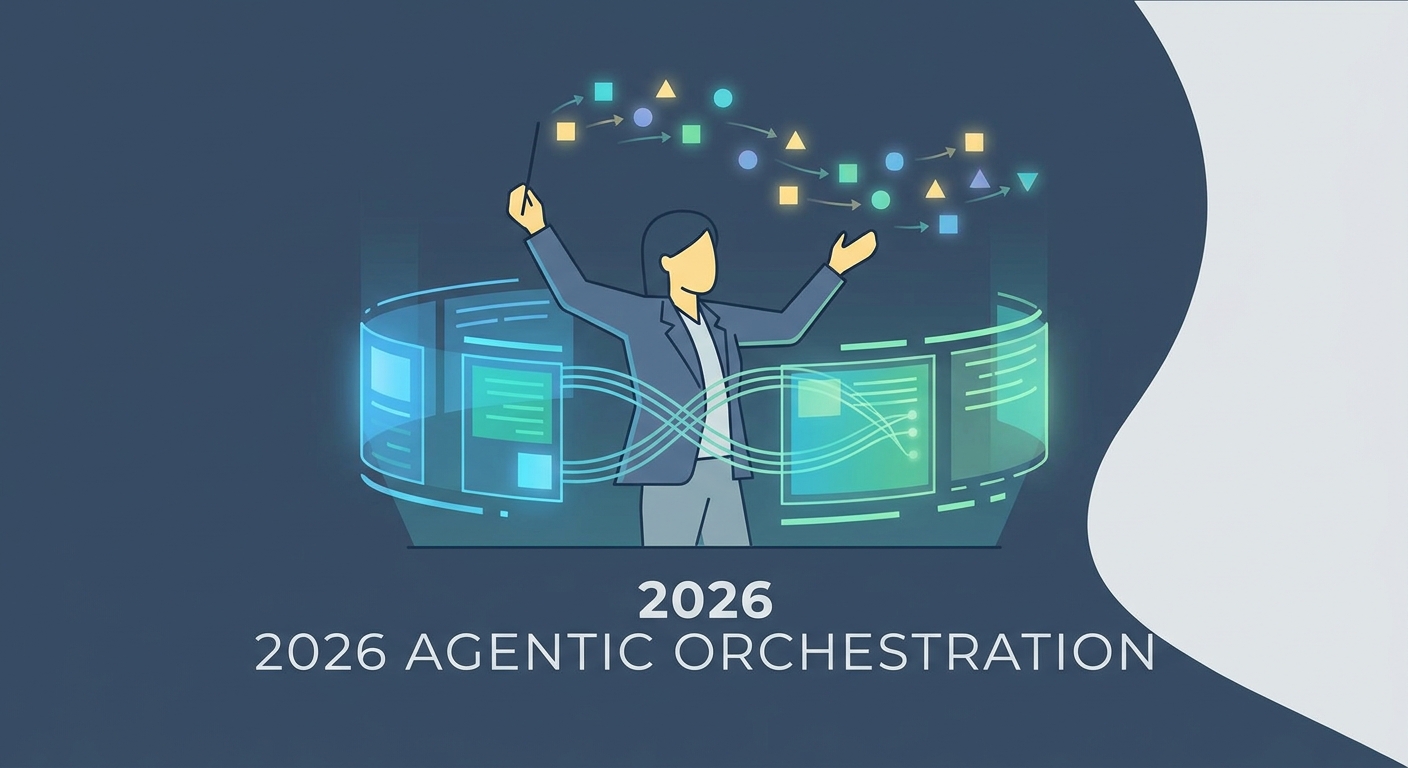
An AI agent, on the other hand, is a proactive worker. It has a goal, a toolkit, and the autonomy to iterate until the job is done. To scale, you need to stop thinking about "writing" and start building a multi-agent system. Think of it as a factory floor: you need a Researcher, a Writer, and a Reviewer.
In this setup, your Researcher Agent scans your private databases and live web data to find sources that actually matter. It hands that intel to the Writer Agent, which is kept on a tight leash by your specific style guidelines. Then, the Audit layer—the heartbeat of the whole operation—is where your human experts (SMEs) stress-test the logic.
This is where the "soul" of your brand stays intact.
Killing the "Robotic" Trap
Why does AI content sound so soulless? Because you didn't give it a personality. It’s a failure of governance, nothing more. If your content sounds like everyone else, it’s because you’re letting the AI use its "default" voice.
You need "Brand Voice Guardrails." These are technical constraints that force the AI to respect your specific vocabulary, your sentence rhythms, and your point of view.
Move beyond "be professional" prompts. That’s useless. Instead, feed your agents your best-performing long-form content, your internal memos, and your raw customer interview transcripts. This is the "SME injection" phase. By training your agents on your unique organizational secrets, you create a moat that competitors can't cross. For a deeper look at how to structure this, see our Ultimate Guide to Brand Voice.
The "Trust Layer" is Your Only Currency
In 2026, trust is the only thing you have that counts. With AI-generated misinformation running rampant, your audience is hunting for signals of authenticity.
The "Trust Layer" is your promise to the reader: We verified this. This means clearly labeling AI-assisted assets. It means backing every single claim with a verifiable source.
Google is crystal clear on this: they don't care if a robot wrote the first draft. They care deeply if it's helpful and accurate. As per Google's Official Guidance on AI Content, content produced to manipulate rankings will get hammered. Prioritize value-add insights over keyword density every single time. If your AI isn't helping the user solve a problem, delete it.
Mastering Answer Engine Optimization (AEO)
The era of optimizing for blue links is fading. Welcome to the age of Answer Engine Optimization (AEO). When a user asks an AI-integrated search engine a question, they want a direct, concise, and entity-rich answer.
You aren't writing for a crawler anymore. You’re writing for an LLM that needs to index your expertise to serve it to a human. This means using clean schema markup, logical headings, and high-density summaries at the start of every piece. For a deep dive into the technical side of this transition, check out our AI-Driven SEO Strategy.
The 2026 AI Content Tech Stack
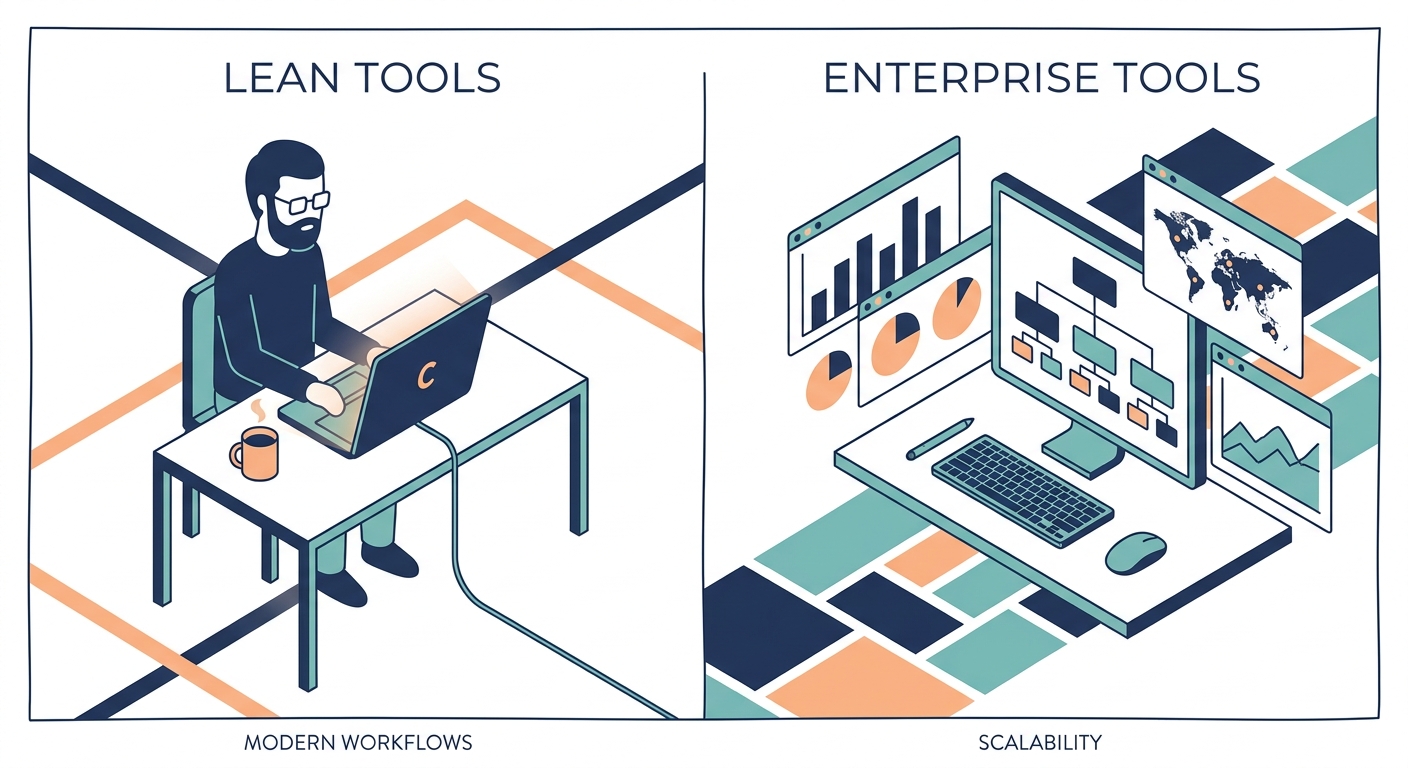
Don't buy an "all-in-one" tool that does everything poorly. Build a modular stack. Here’s what the winning setup looks like:
- The Research Layer: Tools that use RAG (Retrieval-Augmented Generation) to pull from your internal CRM and proprietary data.
- The Generation Layer: Specialized agents (think Claude or GPT-o1) configured with your strict brand guardrails.
- The Multimodal Layer: Tools that instantly flip your text into video snippets or audio summaries.
- The Analytics Layer: Systems that track "precision metrics" rather than vanity traffic. Look for engagement depth and trust-score sentiment.
If your tools don't talk to each other, you aren't scaling. You’re just creating more silos.
How to Measure ROI
Stop measuring success by the number of posts published. That’s a vanity metric that leads to burnout and spam.
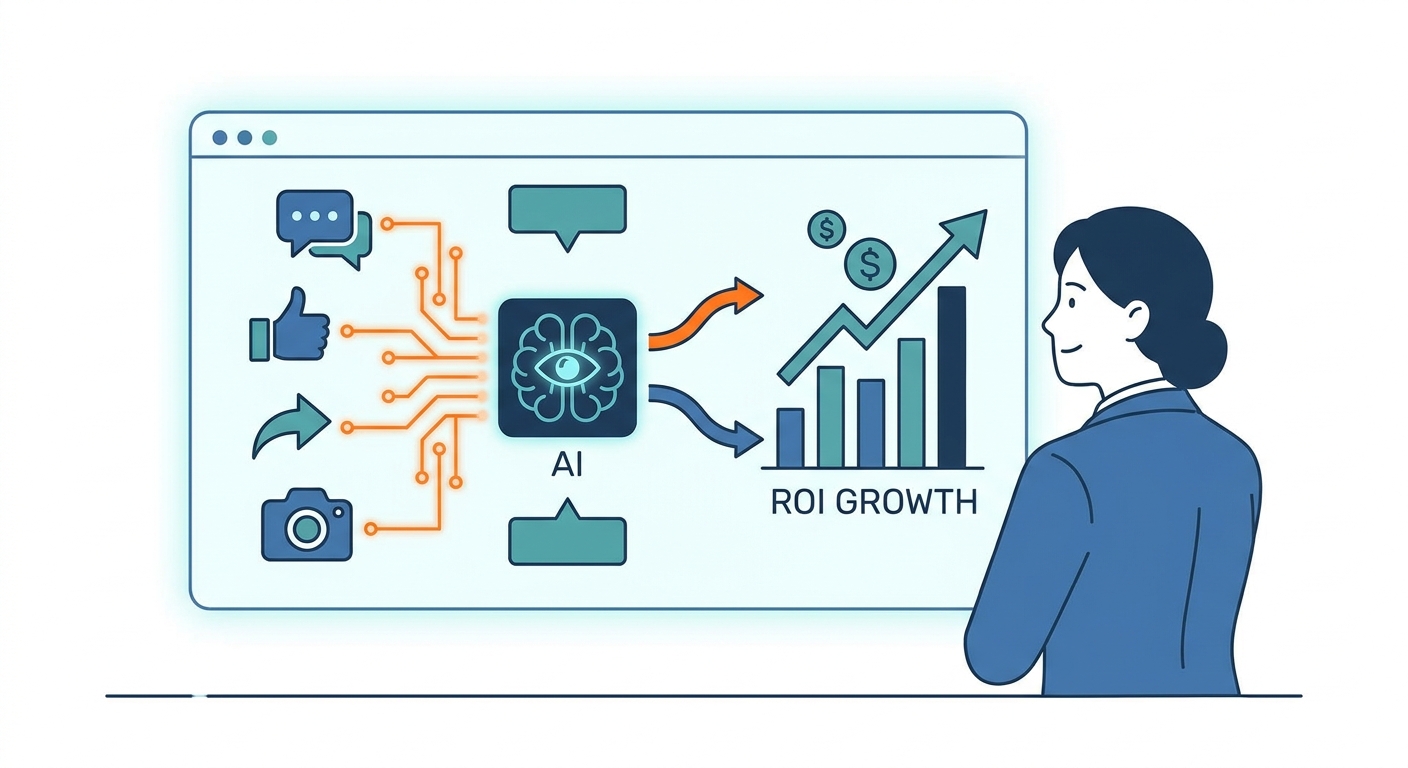
In 2026, track "precision metrics." How many pieces of content directly pushed a lead to book a demo? How much has your cost-per-acquisition (CPA) dropped because your AI agents are handling the heavy lifting?
Measure the "Human-in-the-Loop" time. If your editors are spending less time fixing structural errors and more time adding strategic insight, you’ve won. You aren't just saving money—you’re buying back the time your team needs to focus on high-level strategy.
Future-Proofing Your Strategy
Regulation is coming. Whether it’s mandatory watermarking or tighter data privacy laws, you need to be ready. Keep your data clean, keep your sources cited, and always maintain a human audit trail.
Scaling personalization is the final frontier. Use real-time social listening and CRM data to help your agents tailor the tone and focus of your content on the fly. We’re moving from "broadcasting" to "narrowcasting" at scale.
Conclusion: The Hybrid Future
The future of content isn't AI versus human. It’s AI-enabled humans winning against everyone else. AI is an amplifier, not a replacement.
By mastering the agentic workflow, maintaining a rigorous trust layer, and optimizing for the way people actually search today, you can build a content engine that actually moves the needle. If you're struggling to build this infrastructure, our team offers Content Marketing Services designed to help you integrate these advanced workflows into your existing operations.
Frequently Asked Questions
How do I prevent my AI-generated content from sounding robotic or generic?
The key is to move away from generic prompts. Use "style-transfer" prompting where you provide the AI with your own high-performing content as a reference. Always include a "Human-in-the-Loop" editing phase where an SME injects personal anecdotes, unique opinions, and industry-specific context that the AI cannot replicate.
What are the legal risks of using AI-generated content in 2026?
The primary risks involve copyright infringement and data privacy. Ensure that the AI models you use are enterprise-grade, meaning they do not train on your proprietary input data. Always verify facts to avoid defamation or misinformation, and ensure you have clear disclosure policies for AI-assisted content to remain compliant with evolving transparency regulations.
What is the difference between a "Chatbot" and an "AI Agent" in a marketing workflow?
A chatbot is a passive interface that responds to one-off prompts. An AI agent is an autonomous entity with a defined goal (e.g., "research a topic, outline an article, and write a draft"). Agents can chain multiple tasks together, handle error correction, and execute complex workflows without constant human intervention.
How can I measure the ROI of AI-powered content creation?
Shift your KPIs from "output volume" (how many posts) to "output quality" and "business impact." Measure the reduction in time spent on initial drafting, the increase in content-driven conversions, and the improvement in engagement depth. Track the Cost-Per-Lead (CPL) specifically for content-nurtured prospects to see the true value of your AI-driven precision.
Does Google penalize AI-generated content in 2026?
Google does not penalize content solely because it is AI-generated. They penalize content that is low-quality, unoriginal, or created solely for search engine manipulation. If your content is helpful, human-verified, and provides unique value to the reader, it will perform well regardless of the tools used to assist in its production.