What is social media autopilot? How AI posting works (and where to keep a human)
Social media autopilot uses AI to plan, draft, schedule and publish posts. Learn how the loop works, platform AI rules, and where a human must stay in charge.
Autopilot & AI
Stop churning out generic AI fluff. Learn how to build a full-stack content workflow that scales your unique human expertise and builds reader authority. Nikita ShekhawatSocial Media Growth ExpertPublished 6 min read

Stop looking for the “magic button” that turns a prompt into a hit article. If you’re still using AI to churn out mass-produced, mediocre fluff, you’ve already lost. In 2026, the game has changed. The competitive advantage no longer belongs to the person who can generate the most words per hour; it belongs to the operator who uses AI to scale their own unique, human expertise.
Think of AI as your high-speed intern. It’s excellent at heavy lifting—researching, structuring, and organizing raw data—but it’s terrible at having a pulse. Your job isn't to let the machine do the work; it’s to build a workflow where the machine handles the grunt work so you can double down on the strategic storytelling and proprietary insights that only you can provide.
For years, the industry was obsessed with speed. We raced to the bottom, flooding the internet with hollow, generic content that search engines eventually learned to ignore. We’ve officially moved past the "gee-whiz" phase of generative AI.
The reality of 2026 is blunt: Authority is the only currency that matters.
If your content doesn't offer a specific perspective, lived experience, or a unique data set, it’s invisible. The goal isn't "writing faster"—it’s scaling expertise. This isn't about letting a chatbot write your blog posts. It’s about building a system where AI processes information and spots patterns, while you provide the editorial teeth that actually build trust with your readers.
Most creators fail because they treat AI like a grab-bag of isolated tools. A prompt here for an outline, a different tool there for an image. That’s not a strategy; that’s a mess. A "full-stack" approach treats content creation as an interconnected ecosystem.
graph TD
    A[Data Input] --> B[AI Research & Synthesis]
    B --> C[Human Editorial Layer]
    C --> D[Multi-channel Distribution]
    D --> E[Performance Feedback Loop]
    E --> A
When you connect these nodes, your content stops feeling like a collection of disparate parts and starts feeling like you. When you feed your brand’s historical data into your research layer, the resulting drafts don't just sound "correct"—they sound consistent. If you’re having trouble bridging the gap between these silos, you might want to explore our Content Strategy Services to refine how your team manages this end-to-end flow.
Call it the "Anti-Slop Manifesto." Whatever you call it, it’s the cornerstone of modern content integrity.
View every AI-generated draft as nothing more than a sophisticated skeleton. The human value add—the emotional resonance, the strategic framing, the proprietary data—is the difference between a brand that thrives and one that gets flagged as spam.
When you use AI, you must hold it to the standard of Google’s E-E-A-T Guidelines. If a machine writes a deep-dive technical article, it’s missing the "Experience" component that Google explicitly prioritizes. You have to inject your own case studies, your internal failures, and your critical analysis. Without that, you’re just adding to the digital noise. AI can summarize a concept; only you can explain why it matters to your specific customer.
We’ve moved from "Search Engine Optimization" to "Answer Engine Optimization" (AEO). This is the defining pivot of 2026. Users don't want to dig through ten blue links. They want a synthesized, direct answer from an AI interface. To win here, your content must be structured for machine clarity.
Stop keyword-stuffing. Start focusing on "semantic density." You need to anticipate the user's intent so clearly that an AI model can pull your paragraph as the definitive answer to a query. Search Engine Journal’s technical guides on AEO highlight that AI models prioritize structural hierarchy—clear headings, concise definitions, and punchy bulleted summaries. When you write for the machine, you’re actually writing for the user who is in a massive hurry.
Your stack should match your operational maturity. A solopreneur doesn't need the same heavy machinery as an enterprise marketing department.
| Tool Category | Solopreneur Requirement | Enterprise Requirement |
|---|---|---|
| Research | Aggregator tools/Browsing AI | Proprietary Data/Vector Databases |
| Drafting | LLM-based writing assistants | Fine-tuned, brand-specific models |
| Visuals | Prompt-based image generators | Consistent asset/style-guide AI |
| SEO/AEO | Keyword/SERP analysis tools | AI-driven content performance platforms |
For the individual creator, the focus is on low-code, intuitive interfaces that automate the "grunt work" of formatting. Enterprise teams, conversely, must prioritize security, version control, and brand consistency, often necessitating custom-built pipelines that wrap around foundational AI models.
Generic content is a relic. Today, AI allows for audience-segmented content that feels bespoke. By analyzing historical behavior—what your audience reads, where they drop off, and the questions they raise—you can use AI to tailor the tone, depth, and format of your content to specific personas.
According to the latest Content Marketing Institute AI Trends Report, marketers who leverage AI to create personalized content paths see significantly higher engagement. Instead of one article for everyone, use AI to generate three variations of the same core message, each optimized for different stages of the buyer’s journey.
We are moving toward an era of "intelligent content," where text, visuals, and interactive elements are generated in real-time to meet the specific needs of the reader. The future of search isn't a static page; it’s a living conversation.
In this environment, brand integrity is your ultimate competitive advantage. While everyone else uses the same base models to produce the same average content, the brands that maintain a distinct, human-centric voice will stand out as reliable beacons of expertise. For a deeper look at how these broader shifts are changing the industry, check out The Future of Digital Marketing Blog.
The tools will change. The algorithms will evolve. But the demand for human insight? That remains constant.
Consistency is maintained by creating a "Brand Knowledge Base"—a collection of your best-performing content, style guides, and preferred terminology. By using this as a system prompt or a fine-tuned model reference, you ensure the AI mimics your specific cadence and vocabulary rather than defaulting to generic "AI-speak."
No, provided the content is helpful. Search engines do not penalize content based on its origin; they penalize content that fails to meet E-E-A-T (Experience, Expertise, Authoritativeness, and Trustworthiness) standards. If your AI-assisted content provides genuine value and unique insights, it will rank just as well as—or better than—manually written content.
The most critical step is the "Experience Injection." This is where you manually add proprietary data, personal anecdotes, or specific industry observations that the AI lacks. An AI can explain "how" to do something, but only you can explain "why" someone should care based on real-world outcomes.
Start with low-code, intuitive interfaces like modern writing assistants that offer "chat-to-draft" functionality. You do not need to know how to code to leverage AI; you only need to learn how to communicate your intent clearly through well-structured prompts that define the goal, audience, and desired tone.
Standard SEO focuses on ranking for blue links to drive traffic to a website. Answer Engine Optimization (AEO) focuses on structuring your content so that AI-driven search engines (like ChatGPT or Perplexity) can extract your information as the definitive, concise answer to a user's query, often appearing within an AI-generated summary.
Social media autopilot uses AI to plan, draft, schedule and publish posts. Learn how the loop works, platform AI rules, and where a human must stay in charge.
Stop the content grind. Learn how to use AI to atomize your long-form video into a month of high-authority social media posts without losing your brand voice.
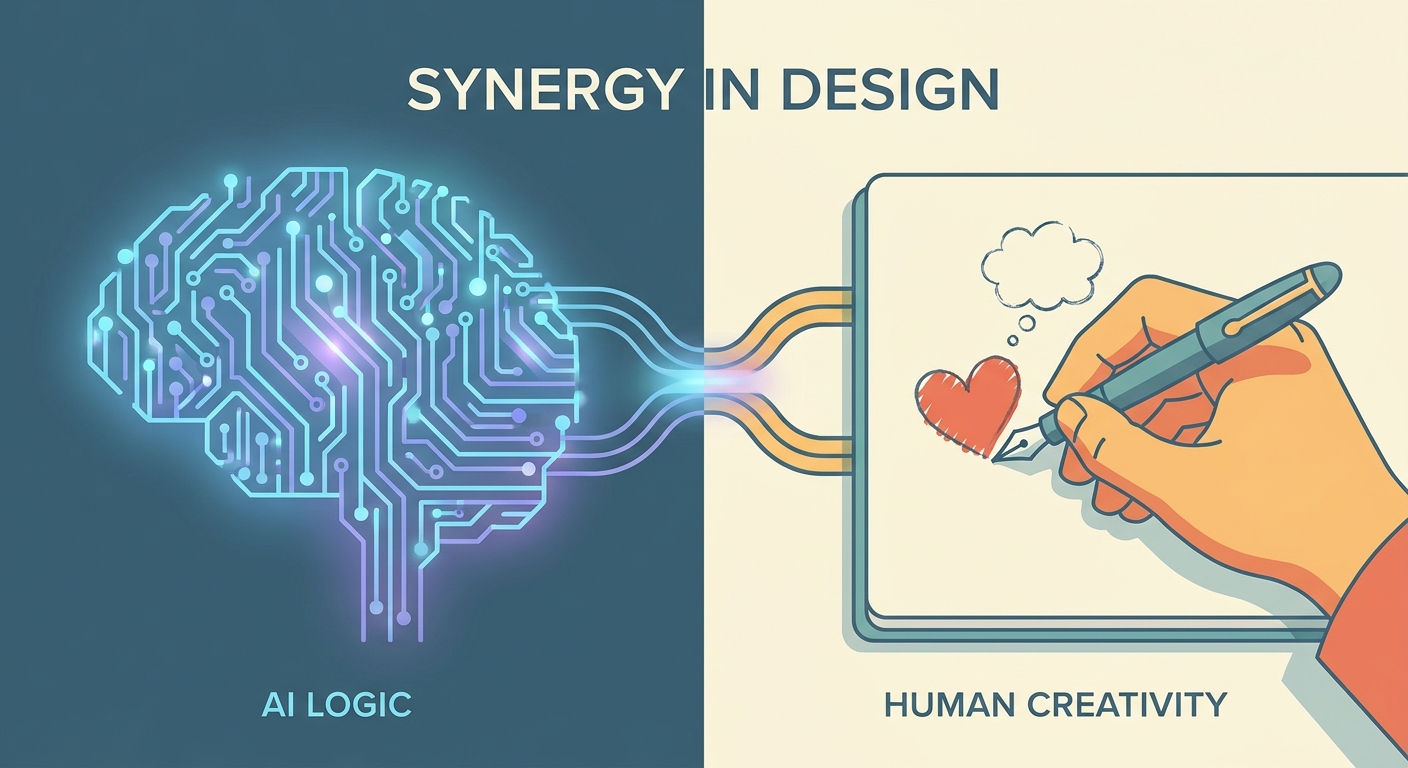
Stop choosing between speed and soul. Learn the AI-augmented, human-led workflow to boost social media engagement without losing your brand's authentic voice.
Social9 schedules your posts on 11 networks, and Autopilot can draft them in your brand voice for you to approve. Start on the free plan.
We use strictly necessary cookies to run this site. With your permission, we also use analytics cookies to understand how the site is used. We never use advertising cookies. See our Cookie Policy.