What is social media autopilot? How AI posting works (and where to keep a human)
Social media autopilot uses AI to plan, draft, schedule and publish posts. Learn how the loop works, platform AI rules, and where a human must stay in charge.
Autopilot & AI
Stop choosing between speed and soul. Learn the AI-augmented, human-led workflow to boost social media engagement without losing your brand's authentic voice. Jessica ThompsonBrand Strategy & Community ExpertPublished Updated 6 min read
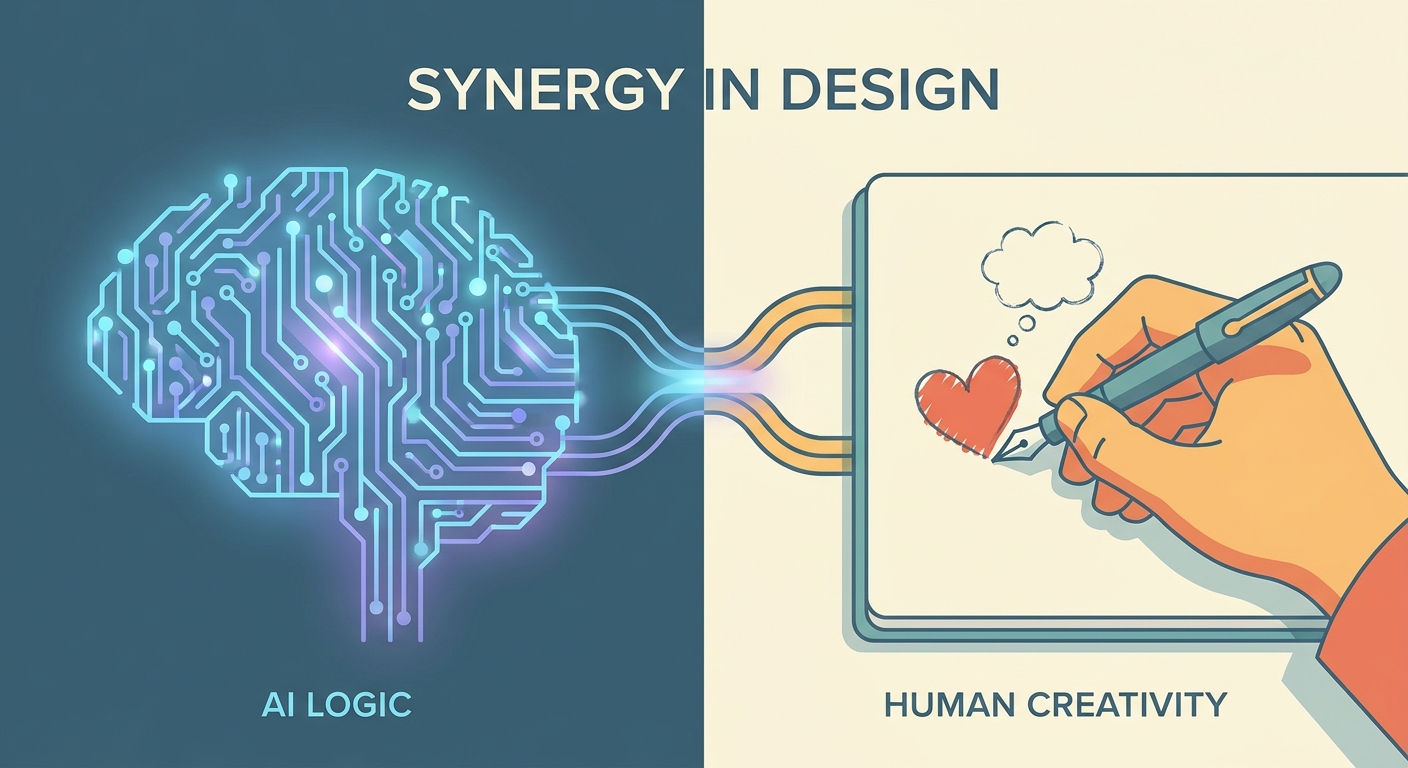
The war between "efficiency" and "humanity" is over. The dust has settled, and the verdict is in: nobody cares about your efficiency. They care about how you make them feel.
In 2026, the brands winning the social media game aren't the ones pumping out the most content. They’re the ones who treat AI as their engine room and human intuition as the steering wheel. If you try to automate your soul, your audience will smell the synthetic rot instantly. But ignore the sheer, terrifying speed of AI? You’ll be obsolete before you finish your morning coffee. The sweet spot isn't a choice between the two—it's an "AI-augmented, human-led" framework. Let the machines handle the grit; save the friction for yourself.
We’re drowning in digital noise. For years, the marketing world chased the mirage of the "perfect" post—AI-generated captions, stock photos that look like they belong in a dentist’s waiting room, and hashtags that scream "bot."
The pendulum has finally swung back. As Hootsuite’s Social Media Trends 2026 report highlights, we’re seeing a massive migration toward "cozy" and "lo-fi" aesthetics. People are exhausted by the uncanny valley of corporate polish.
"Human-made" is the new luxury. It’s a signal of trust in a marketplace flooded with low-effort junk. When everything is perfect, nothing matters. The problem with modern content isn't the volume—it's the lack of texture. If your feed looks like it was spit out by a machine, it’ll be treated like one: scrolled past, ignored, and forgotten. The tipping point isn't about the decline of AI; it’s about the rising premium on the stutters, the flaws, and the raw perspectives that only a human can provide.
Stop treating AI like a "content creator." It’s a terrible artist. Treat it like a "content architect" instead. AI is at its best when it’s handling the heavy lifting that makes humans want to pull their hair out.
First, look at data synthesis. AI can chew through thousands of comments and engagement metrics in seconds to find "Creative Pattern Analytics." It can tell you why a specific tone clicked with your audience last quarter, helping you replicate the vibe without copying the template.
Second, use it for structural scaffolding. Staring at a blank page is the quickest way to kill creativity. Use an LLM to outline ten angles for a campaign or to structure a complex video script. Finally, lean on it for the mechanical grind: A/B testing, scheduling, and chopping long-form videos into bite-sized clips. These are your "AI-Table Stakes." They don't make you a creator; they just clear the table so you can actually do the work that matters.
Integration shouldn't be about replacement. It should be about transformation. You need a "human-in-the-loop" cadence that protects your brand identity at every turn.
graph TD
    A[Data Input & Research] -->|AI| B(Structural Draft & Outline)
    B -->|AI| C{Human Intervention}
    C -->|Human| D[Voice & Personality Injection]
    D -->|Human| E[Final Edit & Nuance Check]
    E -->|Human| F[Deployment & Engagement]

    style A fill:#f9f9f9,stroke:#333
    style B fill:#f9f9f9,stroke:#333
    style C fill:#e1f5fe,stroke:#0277bd
    style D fill:#fff3e0,stroke:#ef6c00
    style E fill:#fff3e0,stroke:#ef6c00
    style F fill:#e8f5e9,stroke:#2e7d32
Follow this flow, and you ensure the AI provides the logic while you provide the soul. The draft is just a skeleton; your job is to drape it in the language, lived experiences, and cultural context that make your brand yours.
There are three places where AI should be barred from the room: emotional storytelling, crisis management, and niche cultural nuance.
AI can mimic empathy, but it can’t feel it. When you’re writing about a brand milestone, a customer struggle, or a community initiative, the words must come from a place of genuine experience. If you’re struggling to bridge the gap between AI efficiency and your brand’s personality, you probably haven't defined your voice well enough. Learning how to build a brand voice is the only way to ensure your AI-assisted drafts don't sound like a generic brochure.
Imperfection is the engine of engagement. A video shot on an iPhone, with natural lighting and unscripted pauses, will almost always crush a high-production, AI-polished ad. Why? Because it feels like a conversation, not a broadcast. People want to connect with people, not with a perfectly optimized prompt.
To scale without losing your identity, adopt the 80/20 rule: 80% AI-assisted production, 20% human-led creative direction.
The 80% covers the grunt work—the research, the formatting, and the initial drafting. The 20% is where you spend your time: injecting personal anecdotes, verifying facts, adding emotional depth, and performing the final "gut check."
Consider the "Imperfection Case Study." We recently compared two campaigns: one was a slick, AI-generated graphic set; the other was a raw, human-shot video of a founder talking about a failure. The raw video saw 40% higher engagement. As noted in ScienceDirect’s research on AI in health communication, AI is a fantastic booster for interaction—but only when it supports the human element, not when it attempts to replace it. When you inject that final 20% of "soul," you turn a machine-assisted draft into a human-led connection.
Leadership in the age of AI isn't about buying more software. It’s about managing "AI anxiety." When your team fears for their jobs, they stop innovating and start hiding.
Shift the narrative. Stop calling them "content creators" and start calling them "creative directors." Your team should be spending less time typing and more time curating. As discussed in the Harvard Business School analysis on AI trends and change fitness, the most successful organizations are those that build "change fitness"—the ability to adapt to new tools while doubling down on the human skills that AI can't touch, like strategic thinking and complex project management. When your team views AI as a junior assistant that handles the boring stuff, they become empowered to focus on the high-level strategy that actually drives revenue.
Audit your process today. Ask yourself: Is my team spending 90% of their time on the 80% of tasks that a machine could do? If the answer is yes, you are overpaying for execution and under-investing in strategy.
If your brand voice is getting lost in the shuffle of automated content, it might be time for an objective set of eyes to help you recalibrate. For brands looking to bridge this gap, our team specializes in content marketing services that prioritize human-led strategy over automated volume. The future belongs to the hybrids—those who use the machine to clear the path, but walk it with human intent.
Not inherently, but algorithms are becoming increasingly sensitive to "low-effort" content. If your AI-generated posts lack unique value, personal anecdotes, or genuine engagement, the algorithm will detect that lack of quality and suppress your reach.
Start by creating a "Brand Voice Directive" that you feed into your AI prompts. This should include your specific vocabulary, sentence structure preferences, and "banned" words. Most importantly, always treat the AI output as a draft, never a final product—the human-in-the-loop edit is where your brand identity is truly applied.
Aim for an 80/20 split: 80% AI-assisted (data synthesis, research, scheduling, and structural drafting) and 20% human-led (strategic creative direction, emotional storytelling, and community-specific nuance).
If your content feels "polished" to the point of being sterile, or if it lacks a specific point of view, it is probably too AI-like. Look for the "fatigue" factor—if you find yourself scrolling past your own posts, your audience likely is, too. Inject a personal story, a controversial opinion, or a raw, unedited image to break the pattern.
Use AI tools to perform "Creative Pattern Analytics" on your historical engagement data. Instead of just looking at vanity metrics, ask the AI to identify common themes in your top-performing comments or to summarize the "emotional arc" of your most viral posts. This allows you to replicate the feeling of your best work without simply copying the format.
Social media autopilot uses AI to plan, draft, schedule and publish posts. Learn how the loop works, platform AI rules, and where a human must stay in charge.

Stop churning out generic AI fluff. Learn how to build a full-stack content workflow that scales your unique human expertise and builds reader authority.
Discover how multimodal AI is revolutionizing social media engagement. Learn to create captivating content, automate tasks, and analyze performance with AI. Level up your social media strategy!
Social9 schedules your posts on 11 networks, and Autopilot can draft them in your brand voice for you to approve. Start on the free plan.
We use strictly necessary cookies to run this site. With your permission, we also use analytics cookies to understand how the site is used. We never use advertising cookies. See our Cookie Policy.