What is social media autopilot? How AI posting works (and where to keep a human)
Social media autopilot uses AI to plan, draft, schedule and publish posts. Learn how the loop works, platform AI rules, and where a human must stay in charge.
Autopilot & AI
Stop generic AI output. Learn how to use few-shot prompting and character studies to train AI to capture your unique brand voice and maintain consistency. Emily RodriguezContent Marketing SpecialistPublished 6 min read
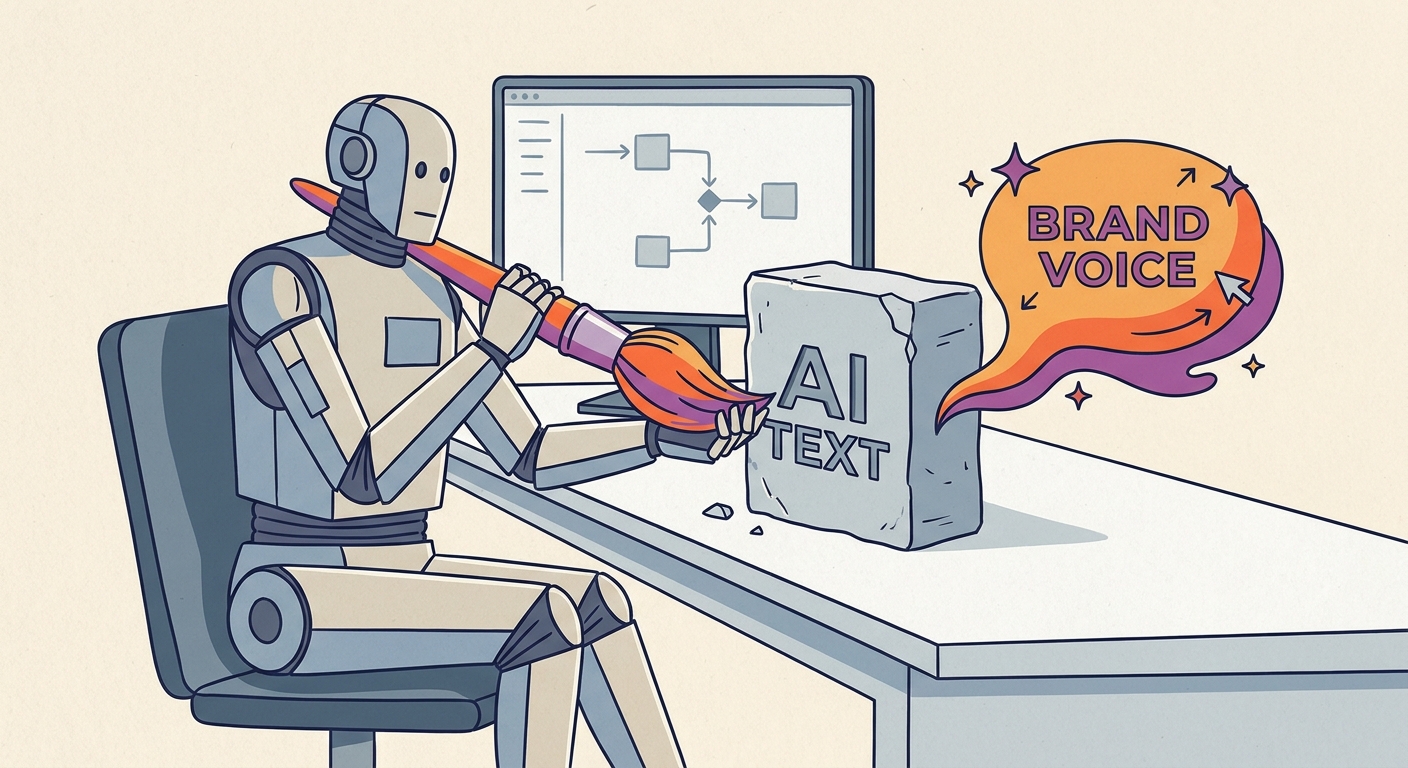
If your AI-generated content reads like a beige wall of text—polite, predictable, and utterly forgettable—you’re not alone. You’re suffering from the "Blandness Epidemic." Most businesses treat AI like a magic button that spits out answers. But here’s the reality: an unguided model will always regress to the mean. It defaults to the average of its training data, which is essentially the internet’s "average" opinion. It’s the digital equivalent of lukewarm water.
To move beyond this, stop treating your AI like a writer. Start treating it like a talented actor. It needs a script, a character study, and a director to keep the performance from going off the rails.
Generic AI output is a silent conversion killer. When your brand voice shifts from authoritative on your homepage to robotic in your blog posts and frantic in your emails, you shatter the trust you’ve spent years building. According to research on brand consistency, maintaining a unified brand presence can increase revenue by up to 33%. Yet, most teams let AI dilute that identity with every single prompt.
The core issue is the "Black Box" nature of Large Language Models. When you ask an AI to "write in a professional tone," you’re asking it to interpret a subjective concept based on a massive, messy dataset. It doesn't know your professional. It knows the internet’s version of professional—which is usually sterile, hollow, and boring.
The conflict arises because descriptive prompts—words like "witty," "authoritative," or "empathetic"—are inherently lazy. "Witty" to a hedge fund is not "witty" to a lifestyle brand. To bridge this gap, you have to stop relying on adjectives and start using "few-shot" prompting. Give the model concrete examples of your brand identity, not abstract instructions.
graph TD
    A[Human Input/Brand Guidelines] --> B{AI Processing}
    B --> C[Generic Model Default]
    B --> D[Brand-Specific Training/Few-Shot]
    C --> E[Generic AI Output]
    D --> F[Brand-Aligned AI Output]

    style E fill:#f9f9f9,stroke:#333,stroke-dasharray: 5 5
    style F fill:#e1f5fe,stroke:#0277bd,stroke-width:2px
To train an AI effectively, you have to separate the two pillars of communication. Think of your brand voice as your DNA—it’s the static, unchanging core of your personality. Whether you’re writing a technical whitepaper or a snarky tweet, your voice is the "who" behind the message. It stays the same.
Tone, on the other hand, is the outfit. It’s how you dress up your voice for the occasion. A funeral director and a stand-up comedian might both have a "compassionate" voice, but their tone shifts wildly depending on the room. Most AI models fail because they try to apply a static prompt to a dynamic situation. If you ask an AI to be "professional but funny," it will likely ping-pong between stiff jargon and forced, awkward humor. It lacks the guardrails to manage that shift. You have to teach the model how to adjust its "outfit" while keeping the "DNA" intact.
Forget the 50-page PDF guidelines. AI doesn't "read" a PDF the way a human designer does. It needs a machine-readable instruction set. You need to distill your brand identity into a concise, actionable schema.
A true AI-ready profile consists of three distinct parts:
For deeper mastery over how these instructions interact with the model, refer to our complete guide to prompt engineering.
If instructions are the "what," then few-shot examples are the "how." Providing 1,000 words of descriptive guidelines is far less effective than feeding the AI three to five examples of your absolute best-performing human content.
When you provide "few-shot" examples, you aren't just telling the AI to be "professional"; you’re showing it the exact cadence, vocabulary, and rhythm of a piece you’ve already vetted. The model performs pattern matching against these examples. It mimics your style instead of guessing at your intent. Select content that has historically crushed it with your audience. Strip away the fluff and present these as "Golden Samples" in your system prompt.
Even the best-trained AI is prone to "Instruction Drift." As a model processes a long-form article, it starts to lose its way. By the time it hits the 1,500-word mark, it has "forgotten" the specific stylistic constraints you established in the first paragraph. It slowly reverts to its generic baseline.
To fight this, use "Anchor Prompting." Instead of one massive prompt at the start, break your content creation into chunks. At the beginning of each major section, re-inject your brand identity markers. Remind the AI: "Maintain the [Brand Name] voice: direct, punchy, and data-focused." This acts as a reset button for the model’s context window.
Also, keep Google’s E-E-A-T guidelines in mind. If the voice drifts into generic territory, your content loses the unique "experience" markers that search engines—and human readers—now value above all else.
If you aren't testing your AI output, you’re flying blind. The most effective way to verify consistency is the "Blind Comparison Test." Take a piece of your best human-written content and a piece of AI-generated content. Anonymize them and have your editorial team try to identify the human writer.
If your team can instantly spot the AI—or worse, if they can’t tell the difference because your human writing has become as boring as the AI—you have a problem. Use sentiment analysis tools to measure the "human thumbprint" metrics like sentence length diversity and vocabulary complexity. If the AI output shows a rigid, robotic frequency in sentence structure, you need to tighten your structural constraints.
AI is not a ghostwriter. It’s a high-speed intern with a massive vocabulary but zero intuition. When you treat it like a ghostwriter, you get "AI-generated" content—bland, derivative, and disposable. When you treat it like an intern that you are actively mentoring through few-shot examples and constant anchor prompting, you get "brand-powered" content.
The strategy is simple: stop asking for "better writing" and start defining the parameters of your brand’s personality. Audit your current outputs today, identify where the voice drifts, and implement a few-shot framework that forces the model to mirror your best work. Your brand is not a commodity; stop letting your content sound like one.
The issue is usually "Instruction Drift." AI models prioritize their base training data over your guidelines unless you provide "few-shot" examples that force the model to mimic specific stylistic patterns rather than just following general rules.
Think of voice as your brand's personality—the core identity that remains constant. Tone is the situational adjustment; it is how you adapt that personality based on the user's emotional state or the platform (e.g., a serious tone for a whitepaper vs. a playful tone for social media).
Implement a "Blind Comparison Test." Have your team review a piece of content without knowing if it was written by a human or an AI. If your editors cannot distinguish the two—or if the AI version consistently fails to mirror your legacy "best-in-class" content—your training parameters need tightening.
Yes, provided you use "Brand Voice Profiles." By utilizing custom GPTs or system-level instructions, you can isolate specific stylistic constraints for different personas, ensuring that the model switches "modes" based on the specific project requirements.
Google’s E-E-A-T (Experience, Expertise, Authoritativeness, and Trustworthiness) guidelines prioritize content that demonstrates a unique point of view. AI-generated content that lacks a distinct, human-centric voice is often flagged as low-value, leading to lower search visibility. As noted in The Psychology of Brand Voice, audiences form deeper connections with entities that exhibit consistent, recognizable personality traits.
Social media autopilot uses AI to plan, draft, schedule and publish posts. Learn how the loop works, platform AI rules, and where a human must stay in charge.

How to connect Claude or ChatGPT to your social media with an MCP server: what MCP is, setup steps, prompts that work, and how to stay in control.
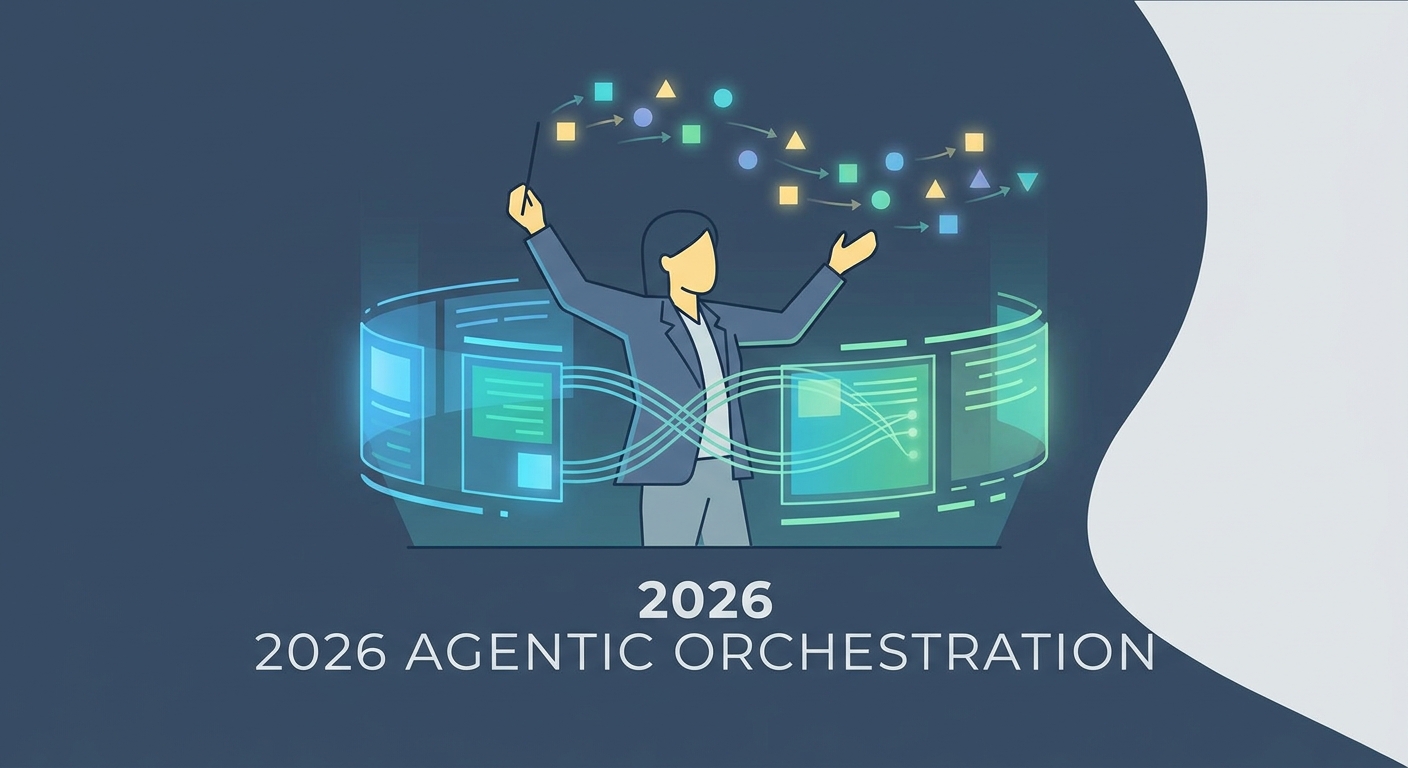
Stop using AI as a typewriter. Learn to build agentic workflows that scale high-authority content and beat synthetic mediocrity in 2026.
Social9 schedules your posts on 11 networks, and Autopilot can draft them in your brand voice for you to approve. Start on the free plan.
We use strictly necessary cookies to run this site. With your permission, we also use analytics cookies to understand how the site is used. We never use advertising cookies. See our Cookie Policy.