What is social media autopilot? How AI posting works (and where to keep a human)
Social media autopilot uses AI to plan, draft, schedule and publish posts. Learn how the loop works, platform AI rules, and where a human must stay in charge.
Autopilot & AI
Stop posting AI-slop. Learn how to build a Zero-Touch content pipeline that automates social media strategy using your own proprietary data and insights. Nikita ShekhawatSocial Media Growth ExpertPublished 6 min read
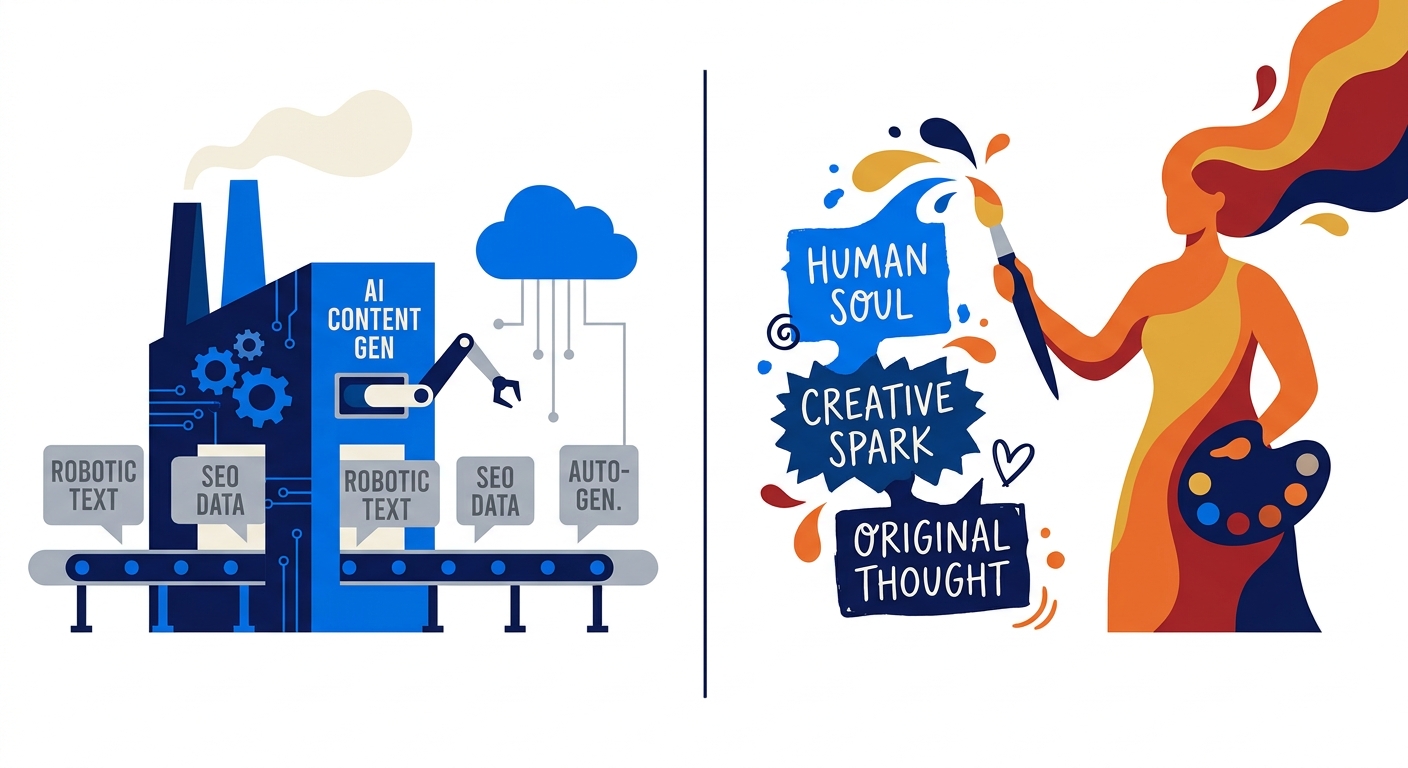
Look at your social feed. Does it feel like a graveyard of robotic, copy-pasted summaries? You aren’t imagining it. By 2026, the internet is becoming a landfill of "AI-slop"—content churned out by generic prompts that lack soul, nuance, and the jagged, beautiful edges of real human experience.
If your strategy is tanking, it’s not because your tools are broken. It’s because you’re treating them like magic wands instead of the high-octane engines they actually are. The secret to winning isn't "prompt engineering." It’s "Input Engineering." To stop the scroll, you have to stop simply "generating" text and start building a "Zero-Touch" pipeline fueled by your own proprietary data. If you’re wondering how this fits into your wider marketing ecosystem, check out our comprehensive content strategy guide to get the full picture.
Most creators get stuck in the "Messy Middle." That’s the friction-filled void between having a brilliant, half-baked idea in the shower and actually hitting "Publish."
For years, companies obsessed over "scheduling"—the act of timing a post to go live. That’s table stakes. That’s the bare minimum. The real battle today is won in the synthesis. You have hours of gold-standard expertise locked away in voice notes, Slack threads, and those frantic Zoom calls where you actually said something smart. The "Messy Middle" is the process of extracting that raw ore and refining it into something your audience actually wants to read. Automation shouldn't mean letting a bot write from scratch; it’s about building a system that transcribes and organizes your real-time insights so that your authentic voice is the starting point, not an afterthought.
"Zero-Touch" isn't about being lazy. It’s about protecting your most precious asset: your cognitive bandwidth. A proper workflow looks like this: Input (Notes/Meetings) -> Synthesis (LLM Processing) -> Refinement (Human-in-the-loop) -> Distribution (Zapier/Scheduler).
graph LR
    Input[Raw Input: Notes/Meetings] --> Synthesis[Synthesis: LLM Processing]
    Synthesis --> Refinement[Refinement: Human-in-the-loop]
    Refinement --> Distribution[Distribution: Zapier/Scheduler]
    Distribution --> Social[Social Media Platforms]
    style Synthesis fill:#f9f,stroke:#333,stroke-width:2px
    style Refinement fill:#bbf,stroke:#333,stroke-width:2px
By connecting these nodes, you ensure your content isn't just "generated"—it’s distilled from your actual life’s work.
The era of the "blank prompt" is dead. If you ask an AI to "write a post about marketing," you’ll get a beige, forgettable response that will sink like a stone. Input engineering requires a Personal Knowledge Management (PKM) system. You need a repository for your best ideas.
Use platforms like Sublime to curate a library of your past wins, industry observations, and data points. When you feed your AI a curated document of your own high-performing content, you aren't asking it to guess. You’re asking it to analyze your patterns of success. Suddenly, the AI isn't a generic chatbot anymore; it’s a specialized brand assistant that knows your history, your vocabulary, and your specific point of view.
The "AI-sounding" trap—that overly polished, bullet-pointed, emoji-heavy fluff—is just laziness. To kill it, master the "Style Context" technique.
Before you ask for a single draft, feed the AI your top 10 performing posts. Tell it: "Analyze the sentence structure, the use of active vs. passive voice, the rhythm of these examples, and the way I transition between thoughts."
When you provide this level of context, you force the model to adopt your cadence. If you haven't defined your brand’s core identity yet, take a beat to master your brand voice here before you touch the AI. Without a clear voice, you’re just automating mediocrity at scale.
Stop looking for the "all-in-one" platform that does everything poorly. Build a stack of specialists.
Automation handles the formatting and the scheduling. It cannot handle the soul. We follow the 30-50% rule: AI does 50% of the heavy lifting (transcription, structure, formatting), but the human must intervene for the remaining 30-50%.
That’s where you inject the emotional hooks, the fact-checks, and the "spiky" opinions that make a brand memorable. Blind automation leads to brand dilution. If every post on your feed is written by a machine, your audience will tune you out. The human element—the opinion that might be controversial, the story you actually lived yesterday, the vulnerability—is the only thing keeping the algorithm from burying you as "just another content farm."
Don't reinvent the wheel. Leverage the Repurposing Flywheel. Start with one "hero" asset—a long-form blog or a deep-dive podcast—and feed it into your AI-assisted workflow.
graph TD
    LF[Long-Form Asset: Podcast/Blog] --> Snippets[Social Snippets/Quotes]
    LF --> Carousel[Carousel Posts]
    LF --> Newsletter[Newsletter Highlights]
    Snippets --> LF
    Carousel --> LF
    Newsletter --> LF
    style LF fill:#fdfd96,stroke:#333,stroke-width:4px
By breaking one high-value asset into snippets, carousels, and newsletter highlights, you create a cohesive narrative across every platform. You look ubiquitous. You look like you’re everywhere. And you only did the heavy lifting once.
There’s a pervasive myth that platforms "penalize" AI content. This is largely false. Platforms don't care where the content came from; they care about engagement. If your AI-generated post is boring, people scroll past it, and the algorithm buries it. If your AI-assisted post is provocative, well-structured, and genuinely valuable, people engage, and the algorithm boosts it.
Focus on the quality of the signal, not the tool that helped you transmit it. In 2026, transparency is a badge of honor for some, but for most, the result is all that matters. Don't hide the use of AI, but don't use it as an excuse for low-effort output.
No. Platforms optimize for user engagement (dwell time, comments, shares). If your content provides value, it will perform well. The "penalty" comes from low-quality, repetitive content, regardless of whether a human or an AI wrote it.
Stop using generic prompts. Feed the AI your best-performing content as "style context" and provide explicit instructions on your brand’s tone, vocabulary preferences, and sentence length constraints.
There isn't one. The most effective strategy involves building a "stack" of best-in-class tools (like Claude for writing, OpusClip for video, and Zapier for workflow) connected by your own input engineering process.
You should aim for 30–50% human intervention. The AI creates the structure and drafts the copy, but the human must handle the emotional resonance, fact-checking, and unique, high-level insights that define your brand.
Input engineering is the practice of curating high-quality, proprietary information (notes, past posts, data) to feed into your AI. It matters more than prompting because even a perfect prompt cannot compensate for a lack of unique, high-quality source material.
Social media autopilot uses AI to plan, draft, schedule and publish posts. Learn how the loop works, platform AI rules, and where a human must stay in charge.
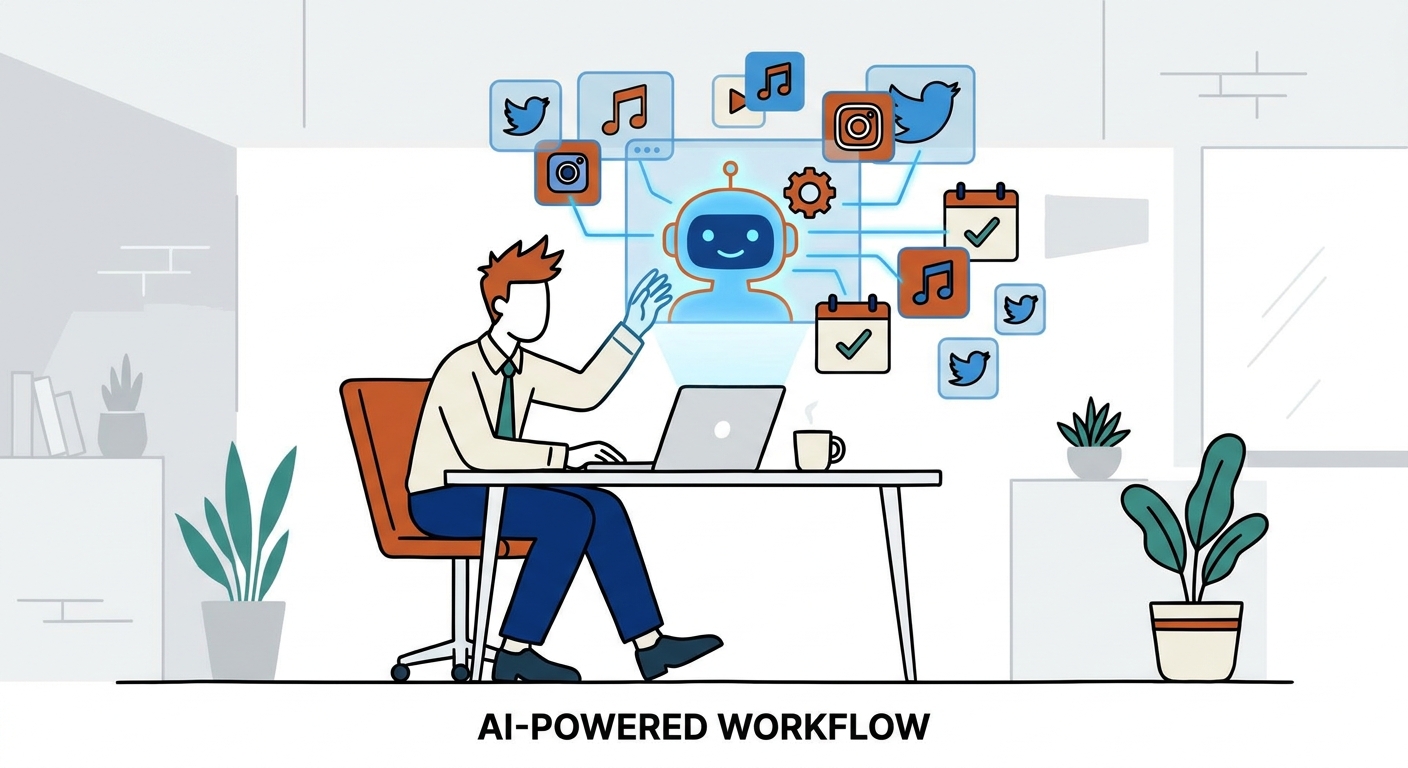
Stop manually crafting posts. Learn how to build an AI-integrated social media workflow that cuts production time by 60% while maintaining your brand voice.
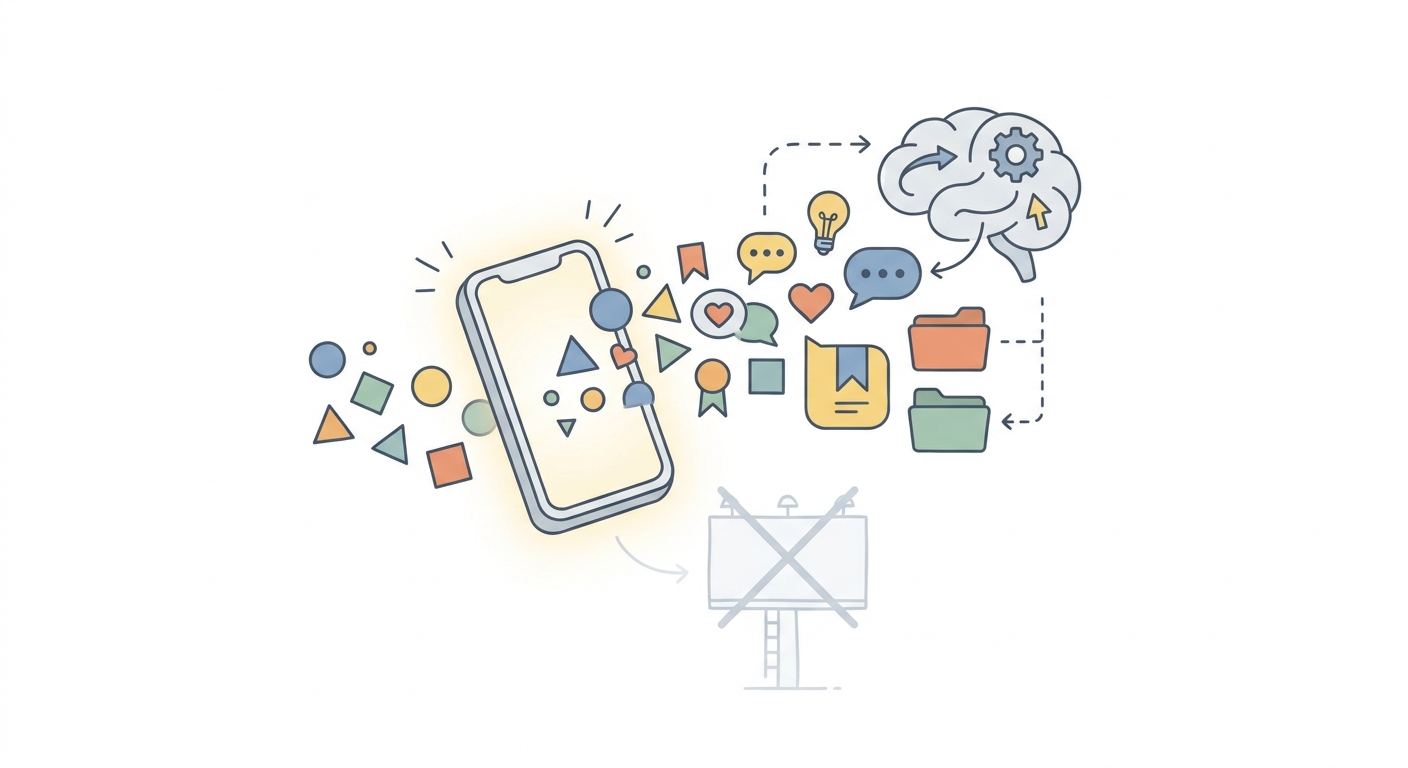
Learn how to use an AI Instagram content generator to streamline your workflow, boost meaningful engagement, and build a loyal audience in 2026.
Social9 schedules your posts on 11 networks, and Autopilot can draft them in your brand voice for you to approve. Start on the free plan.
We use strictly necessary cookies to run this site. With your permission, we also use analytics cookies to understand how the site is used. We never use advertising cookies. See our Cookie Policy.