What is social media autopilot? How AI posting works (and where to keep a human)
Social media autopilot uses AI to plan, draft, schedule and publish posts. Learn how the loop works, platform AI rules, and where a human must stay in charge.
Autopilot & AI
The real risks and rewards of AI-powered content creation: where AI saves time, where it hurts trust and SEO, and a human-in-the-loop workflow that works. Social9 TeamProduct, content and engineering team at Social9Published Updated 5 min read

AI-powered content creation pays off when AI handles the scaffolding (research, outlines, first drafts and reformatting) and humans own the argument, the voice and the facts. It goes wrong when teams publish raw output at volume: content gets generic, errors slip through, and audiences and search engines both learn to ignore it. The risks are manageable, but only if you plan for them before you scale.
Generating a draft now costs almost nothing. Earning someone's attention costs more than ever. This guide sets out the real rewards, the hidden risks, and a workflow that gets you the first without the second.
AI is fastest at turning one good idea into many formats. A single strategic brief can become a blog outline, a LinkedIn post, a short video script, a thread and a set of captions in minutes. The value isn't just more content. It's staying consistently present on every channel your audience uses without rebuilding each piece from scratch. Our guide to automating content creation with AI walks through that workflow step by step.
With your own audience insights in the prompt, AI can adapt one message for different segments, stages of the buying journey or regions, including writing in other languages. Relevance usually beats reach, and AI makes producing relevant variants far cheaper.
Research summaries, outlines, headline options and first-draft formatting are grunt work that eats a team's week. Handing that to AI frees writers to edit and strategists to think. Done well, AI turns writers into editors and editors into strategists.
Language models are trained on the whole internet, so they naturally produce the most statistically likely way to say something. Ask for "the future of marketing" and you get the average of everything already written about it: familiar clichés, safe transitions, no edge.
When everyone uses the same models with the same generic prompts, brands start to sound the same. A brand that sounds like everyone else is easy to forget.
AI can sound authoritative while being completely wrong: inventing statistics, misquoting people, citing sources that don't exist, or getting a technical detail backwards. On a professional channel that isn't a quirky bug. It's a credibility problem. "The AI made it up" won't satisfy a client who acted on bad advice.
Fast drafts hide a cost. For anything factual, someone still has to verify every claim, trace every statistic to its source and rewrite passages that sound mechanical. For high-stakes topics, that review can take as long as writing from scratch. Teams that don't budget for it either slow down or quietly skip it, and skipping it is where the damage happens.
Google's guidance on creating helpful, reliable content stresses experience, expertise, authoritativeness and trust. AI can summarize what others have written, but it has no first-hand experience: no failed project, no customer conversation, no proprietary data. Content that is only a synthesis of existing pages offers nothing new.
Google has said plainly that it doesn't penalize content because AI helped make it. It does demote unhelpful, unoriginal content and treats mass-produced pages made mainly to manipulate rankings as scaled content abuse. Low-effort AI output tends to land on the wrong side of that line.
As synthetic content floods every feed, readers have grown quick to spot it: the over-polished tone, the generic listicle, the 800-word summary of search results. Each disappointing click teaches them your brand has nothing unique to say, and that lost attention is hard to win back.
Copyright gaps, biased outputs, privacy problems and misuse of real people's likeness are risks of their own. We cover them in detail in our guide to AI content ethics for social media.
Boundary of utility: good uses for AI
Boundary of risk: keep these human-led
The fix isn't to avoid AI. It's to put people at the points where judgment matters.
graph TD
    A[Strategic brief] --> B[AI research and outline]
    B --> C[Human writes the core argument]
    C --> D[AI assists with drafting and formats]
    D --> E{Human fact-check and brand edit}
    E -->|Fails| C
    E -->|Passes| F[Approve and publish]
    F --> G[Performance data]
    G --> A
Before publishing anything AI-assisted, add at least one thing a model couldn't have produced:
Generic prompts produce generic output. Give the model three to five examples of your best work, a written voice guide, banned phrases and the facts it's allowed to use. Our guide to AI brand voice training covers this in depth. Tools can help too: Social9's Autopilot writes posts from your brand profile and voice, respects blocked words, and can hold every draft for approval before it publishes.
More people now get answers from AI assistants and search summaries. Content that gets cited there tends to give direct answers, clear definitions and well-sourced claims, which is the same discipline that keeps AI-assisted content trustworthy.
AI-powered content creation is a lever, not a substitute for having something to say. Use it to reclaim time from research and formatting, then spend that time on what audiences actually reward: original insight, real experience and a voice they recognize. To put this into practice, start with our getting started guide to AI-powered content creation.
Not by itself. Google's guidance says it rewards helpful, original content regardless of how it was produced. What struggles is unedited, generic AI output that adds nothing new, because it rarely shows the experience and expertise Google looks for.
Losing trust. That happens in two ways: publishing confident factual errors (hallucinations), and sounding so generic that readers stop seeing a reason to follow you. Both are avoidable with human editing and fact-checking before anything is published.
For research, outlines, first drafts and reformatting, usually yes. The saving shrinks for factual or high-stakes content, because every claim still has to be verified and generic passages rewritten. Budget for that review time instead of assuming the draft is finished.
Swap your brand name for a competitor's. If the post still makes perfect sense, it's too generic. Other signs are stock phrases, advice that would fit any company, and no examples, data or opinions only your team could have written.
Final tone and opinion pieces, high-stakes advice in health, finance or law, crisis communication, and anything that quotes or depicts real people. AI can help prepare these, but a person should write the core argument and approve the result.
Social media autopilot uses AI to plan, draft, schedule and publish posts. Learn how the loop works, platform AI rules, and where a human must stay in charge.
How to use AI for content creation without publishing generic filler: the workflow, brand voice, AI search, social media, tools, ethics and ROI.
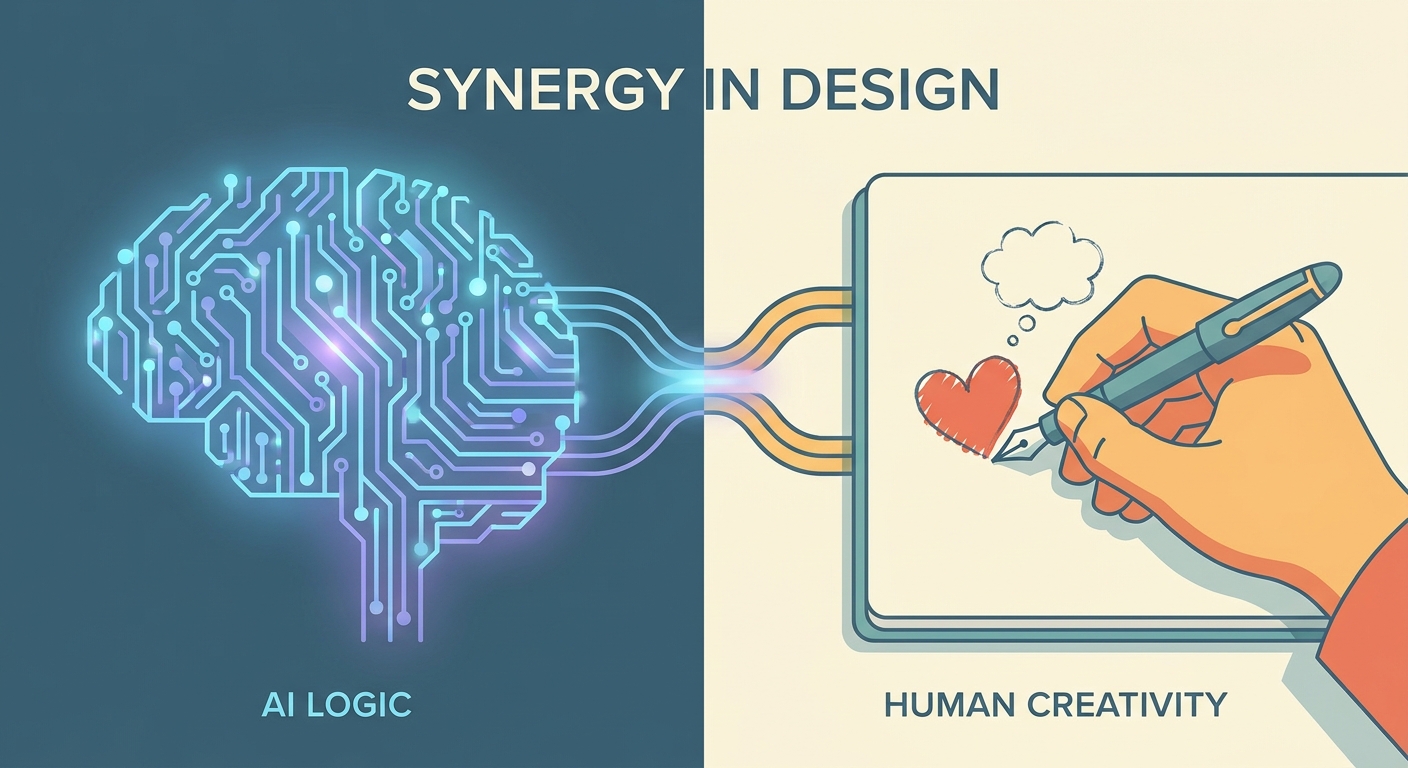
How to balance AI and human content on social media: what to automate, what must stay human, an 80/20 workflow, brand voice guardrails and review steps.
Social9 schedules your posts on 11 networks, and Autopilot can draft them in your brand voice for you to approve. Start on the free plan.