How agencies manage 20+ client calendars without burning out
A playbook for agencies running 20+ client calendars: workspace setup, a capacity formula, a monthly cadence, approval SLAs, safe access and burnout rules.
Playbooks
Stop the burnout cycle. Learn how to scale your small business social media marketing using AI automation to create consistent content without the manual grind. Nikita ShekhawatSocial Media Growth ExpertPublished 7 min read

Scaling your social media presence without burning out relies on one uncomfortable truth: you aren't a content factory, and you shouldn’t try to be one.
We’ve all seen the "90-day fade-out." It’s that familiar cycle where a business owner launches with high-octane energy, posts religiously for a few weeks, and then—poof. Silence. They abandon the account three months later. It’s almost never a lack of passion that kills the momentum; it’s a failure of process.
You need to stop treating social media as a manual, "hustle-first" daily chore. By using AI as your force multiplier, you can build a system that runs itself. This keeps your brand front-and-center, meeting the requirements of 2026 social media statistics—which prove that social platforms are now the primary discovery engine for products—while giving you back the hours you actually need to run your business.
Most small businesses lose the social media game because they confuse "production value" with "impact."
Here’s a secret: You don’t need a film crew or a high-priced agency to win. Your greatest asset isn't a polished aesthetic; it’s your structural advantage: authenticity. People are tired of that fake, corporate veneer. They want to see the person behind the logo. They want to see the messy workshop, the late-night packing sessions, and the real, unfiltered hurdles of running a business.
The goal of automation isn't to replace your voice. It’s to automate the 80% of the work that drains your battery—the scheduling, the repurposing, the repetitive triage—so you can pour your human energy into the 20% that actually builds community. When you stop viewing social media as a chore, you stop treating it like a burden. It becomes an asset that works for you while you sleep.
Stop thinking about "posts" and start thinking about "workflows." You want a closed loop where you stay in the driver's seat, but the machine handles the heavy lifting of distribution.
Never stare at a blinking cursor again. Use AI as a sounding board. Feed it your recent sales data, customer questions, and product launch dates. Ask it to generate 30 days of content themes based on those inputs. It’s not about letting the bot write your life; it’s about having a partner that helps you organize your thoughts into a coherent calendar.
Use AI tools to transcribe your raw video, clip it into vertical snippets, and generate captions. If you’re a service provider, use AI to turn your long-form blog posts into bite-sized carousel graphics. You’re taking one "pillar" piece of content and extracting a dozen smaller assets from it. That’s efficiency.
Once the content is ready, use scheduling tools to push it out. The key here is avoiding "copy-paste" laziness. Use AI to tweak the hook of a post so it hits differently on LinkedIn (where people want professional value) versus Instagram (where they want a visual hook).
graph TD
    A[Owner Ideation] --> B[AI Draft Generation]
    B --> C[Owner Review/Edit]
    C --> D[Automated Scheduling]
    D --> E[AI-Assisted Community Response]
    E -->|Complex Issues| F[Human Escalation]
    F --> C
If you’re posting at random, you’re throwing money into a bonfire. You need a structured framework that guides your audience through the customer journey. For a deep dive into how this fits into your broader growth plan, check out our Ultimate Guide to Content Strategy.
We recommend a 40/30/30 split:
Short-form video is still the king of ROI. It’s what the algorithms favor, and it’s the fastest way to convey personality. If you aren't prioritizing video, you are voluntarily handicapping your growth.
The biggest fear owners have? That automation will make them sound like a robot. The solution is the "Triage Model." Use AI to handle the initial interactions—answering FAQs, providing shipping status updates, or acknowledging comments with personalized, brand-aligned responses.
But be careful. Responsiveness is the primary driver of customer retention. According to recent AI trends for small business marketing, brands that fail to engage quickly lose customers to more agile competitors. The rule is simple: AI handles the first touch, but you must reserve the ability to jump in manually for complex, sensitive, or high-value inquiries. When a customer has a legitimate problem, they don't want a bot. They want an owner.
The "Two-Platform Rule" is the best way to avoid burnout. Do not try to be everywhere. You will fail at all of them. Pick the two platforms where your customers actually transact. If you sell high-end B2B consulting, LinkedIn and a newsletter are your home. If you sell direct-to-consumer goods, TikTok and Instagram are your storefronts.
Social commerce isn't a "nice-to-have" anymore; it’s the primary way to convert passive scrollers into active customers. Focus on platforms that allow for seamless checkout experiences. Your goal is to shorten the distance between the "like" and the "buy."
Consistency is just a system that makes it impossible to fail. Use these templates to kickstart your monthly planning.
Template 1: The Behind-the-Scenes (BTS) Post Prompt: "Write a 150-word Instagram caption about [Day-to-day task, e.g., packing orders]. Use a tone that is [e.g., warm, professional, witty]. Focus on the effort we put into quality control. Include a call to action asking followers to share their favorite way to use our product."
Template 2: The Customer Q&A Prompt: "Analyze these five common questions I receive from customers: [Insert Questions]. Write a series of three short, punchy LinkedIn posts, each addressing one of these questions. Make the advice actionable and emphasize our unique expertise in [Industry]."
Template 3: The Product Spotlight Prompt: "Draft a short-form video script for a 30-second clip showcasing [Product Name]. Highlight the main benefit: [Benefit]. Include a hook that addresses a specific pain point. Keep the tone energetic and end with a clear instruction to click the link in our bio."
For those looking for the best tools to house these automations, this review of AI social media management tools is a great starting point for selecting your tech stack.
Automation is a tool, not a substitute for judgment. When using AI to generate content, you must ensure brand guardrails are in place. Always include your brand guidelines—your mission statement, your "no-go" words, and your preferred tone—in every prompt.
Legal compliance is non-negotiable. If you are using AI to write posts about health, finance, or legal services, you must have human oversight to ensure that the content remains accurate and compliant with industry regulations. If you find the regulatory landscape daunting, consider engaging Our Social Media Management Services to ensure your automated strategy is both effective and legally sound.
If you are tracking "likes" and "views," you are tracking vanity metrics. They feel good, but they don't pay the bills. To scale, you must track business outcomes:
Audit your system every 30 days. If a specific type of automated post isn't driving results, kill it. If a specific topic is driving sales, move it to the front of your content calendar. This "content drift" audit prevents you from pushing out content that looks busy but isn't actually moving the needle.
Focus on "Prompt Engineering with Context." Include your brand's unique tone, past successful posts, and specific "no-go" words in your system instructions. AI is a mirror; provide it with the right reflection of your values, and it will output content that feels human-led.
Prioritize the two platforms where your target audience spends the most time and where the native tools offer the best social commerce integration. Don't chase trends; chase your customer's intent to purchase.
It only hurts relationships if it acts as a "dead end." Use AI for initial triage—answering FAQs, status updates, or routing questions—and program it to flag complex or sensitive issues for immediate human intervention.
Aim for the 80/20 balance. Automate 80% of your production, scheduling, and basic engagement triage. Reserve 20% of your time for high-touch, human-only interactions, creative brainstorming, and strategic pivots based on performance data.
A playbook for agencies running 20+ client calendars: workspace setup, a capacity formula, a monthly cadence, approval SLAs, safe access and burnout rules.
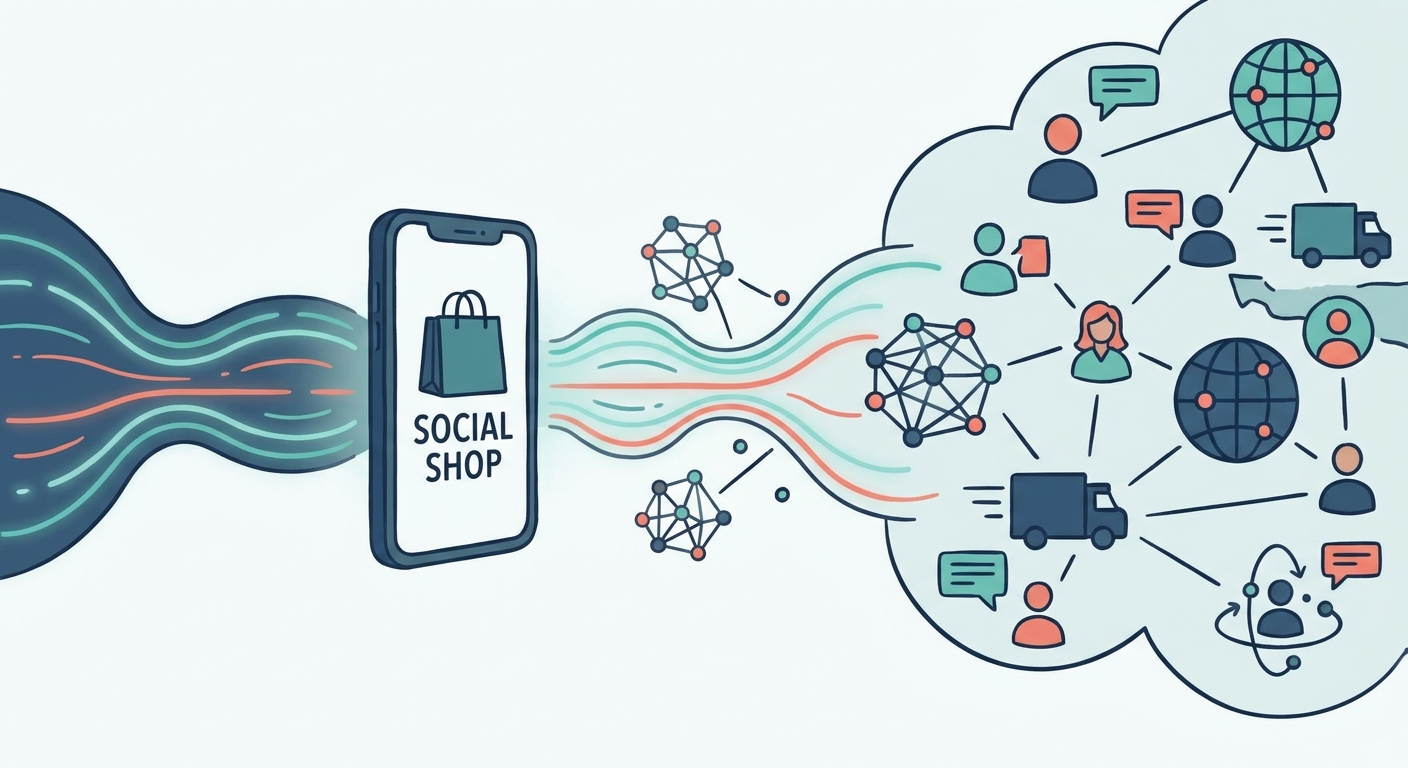
Stop manual workflows. Learn how AI integration APIs and headless architecture are transforming social commerce into an autonomous, high-conversion engine.

Stop the chaos. Discover how to build a high-output, AI-human hybrid social media workflow that converts and scales in 2026. Read the handbook.
Social9 schedules your posts on 11 networks, and Autopilot can draft them in your brand voice for you to approve. Start on the free plan.
We use strictly necessary cookies to run this site. With your permission, we also use analytics cookies to understand how the site is used. We never use advertising cookies. See our Cookie Policy.