How agencies manage 20+ client calendars without burning out
A playbook for agencies running 20+ client calendars: workspace setup, a capacity formula, a monthly cadence, approval SLAs, safe access and burnout rules.
Playbooks
Learn how to scale social media workflows using AI-integrated strategies. Maintain authentic community engagement while boosting output by 300% in 2026. Jessica ThompsonBrand Strategy & Community ExpertPublished 6 min read
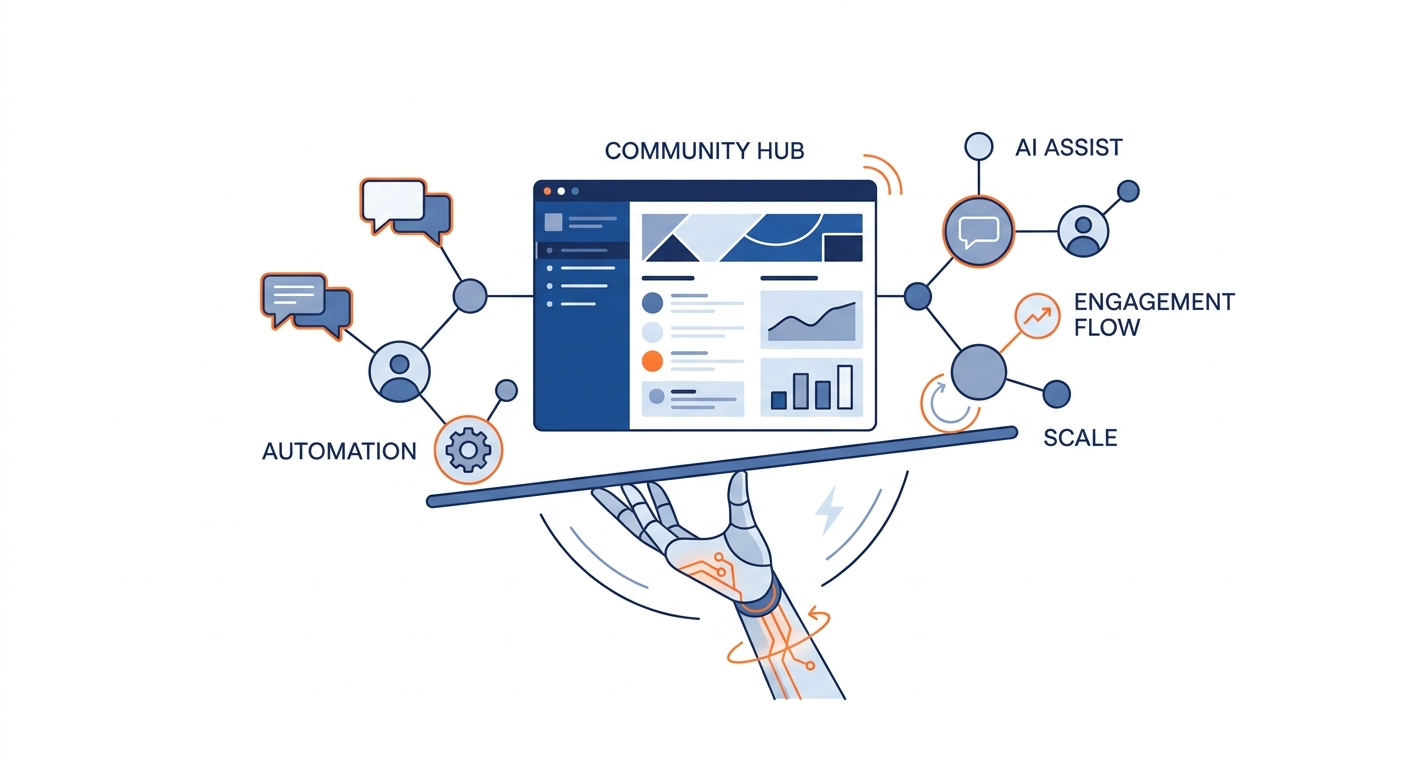
Managing social media at scale in 2026 isn't about how fast you can hit "publish." It’s about infrastructure. If you’re still treating your social calendar like a digital bulletin board—pinning assets and praying for a miracle—you’re losing. The brands winning today aren't "broadcasting"; they’re holding conversations.
With 97% of marketing leaders now using AI to power their operations, the game has changed. It’s no longer about volume. It’s about maintaining authentic human connection while moving at machine speed. To scale, you have to stop the manual grind. You need an AI-integrated workflow that treats every platform like a unique ecosystem, not a dumping ground for the same recycled video.
The "set it and forget it" era? It’s dead. In 2024, teams fell in love with cross-posting. They’d take one asset, slap a minor caption tweak on it, and blast it to LinkedIn, X, and Instagram. Today, that looks lazy. Algorithms have wised up, too—they punish content that doesn't respect the platform's native vibe.
Audiences today are hyper-sensitive to corporate-speak. They smell a bot from a mile away. They crave the raw, the unpolished, and the weirdly specific. If your workflow treats a LinkedIn industry analysis exactly like a chaotic TikTok trend, your engagement will flatline. Human intervention is more critical than ever. AI should handle the heavy lifting—the data crunching, the first drafts, the sentiment tagging—but humans must reclaim the "creative soul" of the brand. Otherwise, you aren't building a presence; you’re just scaling noise.
Stop the manual entry nightmare. Modern workflows start with a centralized Integrated Content Calendar. Think of this as your single source of truth. When you plug your AI tools directly into this hub, you finally kill the silos between your creative team, the data nerds, and the community managers.
The "Human-in-the-Loop" protocol is your ultimate safeguard. Use AI for ideation and adaptation, but keep it away from the "publish" button. Your workflow needs a hard gate: AI writes the draft, but a human editor must verify the voice, sniff out hallucinations, and ensure the tone fits the current cultural mood. This isn't just about quality; it’s about brand safety. Treat AI like a junior partner, not an autonomous employee, and you’ll see your output grow 300% without losing your mind.
The "one-size-fits-all" post is a relic. The smartest teams are adopting a YouTube-first mindset. With 68% of marketing leaders identifying YouTube as their primary business driver, it’s clear: long-form, value-driven storytelling is the new anchor.
Don't start with a social post. Start with a "Master Concept." Let’s say you’re launching a product. Your YouTube video is the source. From there, your AI workflow should extract the gold: a LinkedIn carousel for the professionals, a raw, handheld TikTok breakdown for the creators, and a series of punchy threads for X.
graph TD
    A[Master Concept/Core Campaign] --> B{AI Adaptation Modules}
    B --> C[LinkedIn Module]
    B --> D[TikTok Module]
    B --> E[YouTube Module]

    C --> C1[Professional Text/Carousel]
    D --> D1[Short-form/Raw Video]
    E --> E1[Long-form/Storytelling Video]

    C1 --> F[Human Review & Polish]
    D1 --> F
    E1 --> F

    F --> G[Platform-Native Distribution]
Remixing isn't cloning. When you adapt to the platform, you don't look like a spammer—you look like an authority. LinkedIn users want insights; TikTok users want humanity; YouTube users want depth. Give them what they came for.
Engagement isn't just replying to every comment. It’s about proactive listening and participating in "chaos culture." According to Social Media Trends 2026, the winners are the brands that can pivot within minutes of a trend breaking.
Ditch the reactive replies. Move to a tiered engagement model. Not every comment deserves a paragraph. Use AI to triage: urgent customer frustrations go straight to a human, while a "Great video!" can get a brand-aligned, automated acknowledgment. Keep your team’s energy focused on the high-value conversations that actually move the needle.
User-Generated Content (UGC) is your most valuable currency. It’s social proof you can’t buy. But chasing down mentions and asking for permission? That’s a logistical nightmare.
Automate it. Deploy tools that scan for your brand mentions and hashtags, verify the quality, and flag them for your team. Once verified, these assets belong in your content library. Just follow the legal checklist: get permission, respect the creator's intent, and don't make it look like a corporate ad.
If your dashboard is still obsessed with "Likes," you’re staring at vanity metrics while your business is trying to grow. In 2026, we track Sentiment Analysis and Community Health Scores. Are people talking about you? Are they defending you?
Connect the dots between a comment and a sale. When a user moves from an X thread to a demo request, that’s your real data. For a deeper look at how to track these metrics, check out Our Guide to Social Media Analytics.
Scaling requires the right tools, but don't overcomplicate it. You need a stack that balances scheduling, listening, and AI-creative work. If your tools don't talk to each other, your data is just fragmented garbage. For a look at the current landscape of tools, refer to these Best Social Media Management Tools 2026.
Centralize your assets. If you have ten people posting to ten channels, they should all be using the same library of approved visuals and tone-of-voice guidelines. Consistency is non-negotiable.
AI is brilliant, but it hallucinates. A bot misinterpreting sarcasm can trigger a PR nightmare in minutes.
Your workflow must have a "Human-in-the-Loop" kill switch. If the sentiment tool flags a conversation as "High Risk," the automation stops cold and alerts a human. Keep your Ultimate Brand Voice Checklist updated and accessible. Move fast, but never lose your anchor.
Social commerce is becoming the foundation of the web. Soon, the checkout happens right in the feed. No friction. No website hops. Your social profile is your storefront.
Niche, decentralized platforms are also on the rise. Don't build for the platforms of today. Build for the ability to adapt to the platforms of tomorrow. Agility is your greatest asset.
Consistency requires training. Use custom AI brand voice models that are fed your existing style guides and high-performing historical content. Never let the AI publish directly; enforce a "Human-in-the-Loop" editing process where a brand manager reviews every piece of output against your core voice pillars.
Deploy AI-powered sentiment analysis to triage comments into tiers. "High-priority" comments (complaints or complex questions) are routed to human moderators, while "low-priority" engagement is handled by automated, pre-approved brand responses or simple social acknowledgments.
Stop cross-posting. Adopt a "Content Remix" strategy. Take the core value proposition of your master asset and re-frame it through the linguistic norms of the platform. A deep-dive article on LinkedIn becomes a punchy carousel, while the same concept becomes a fast-paced, high-energy narrative for TikTok.
Move beyond vanity metrics like "Likes." Focus on "Sentiment Score" (the net positive/negative tone of mentions), "Community Advocacy Rate" (how many users are actively defending or promoting your brand), and "Conversion-Driven Engagement" (tracking the specific journey from a social interaction to a business revenue event).
A playbook for agencies running 20+ client calendars: workspace setup, a capacity formula, a monthly cadence, approval SLAs, safe access and burnout rules.
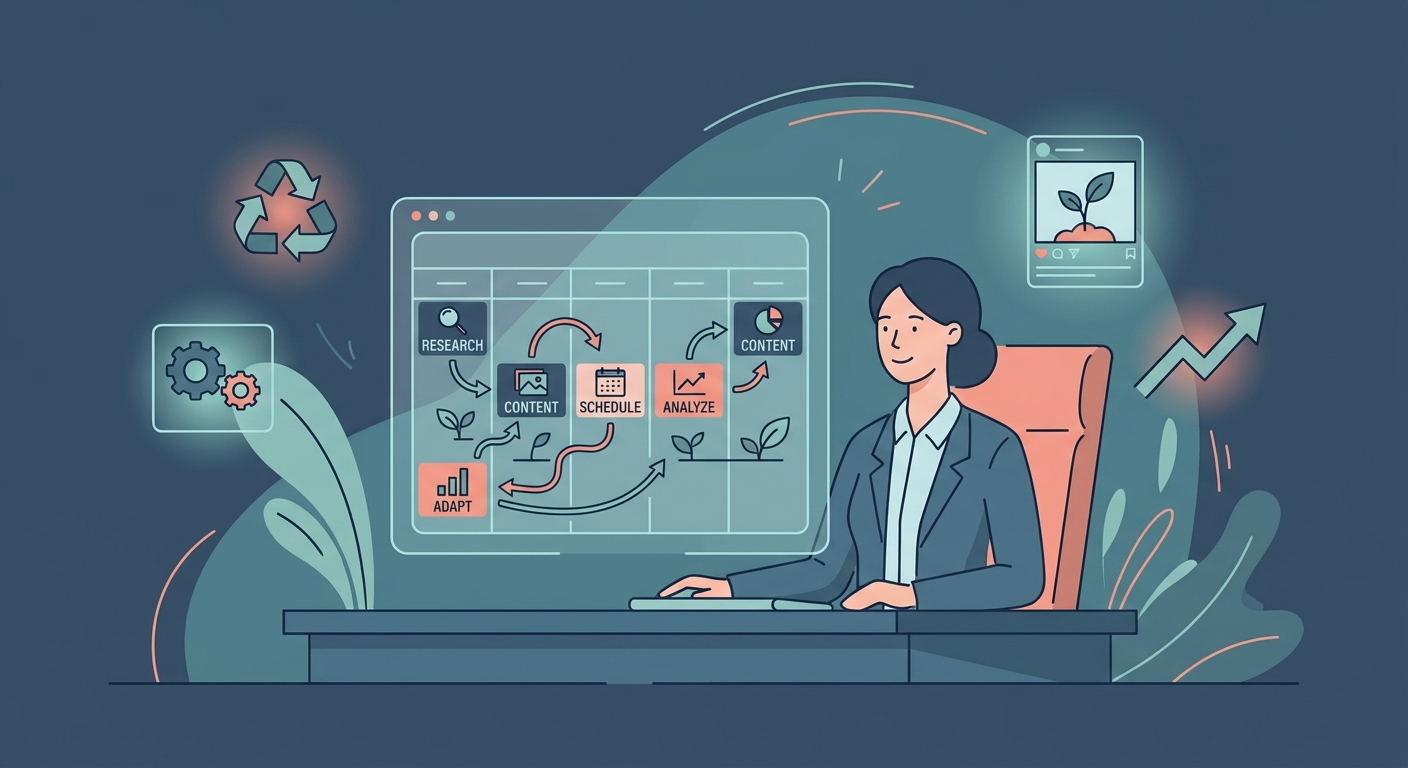
Stop the chaos. Discover how to build a high-output, AI-human hybrid social media workflow that converts and scales in 2026. Read the handbook.
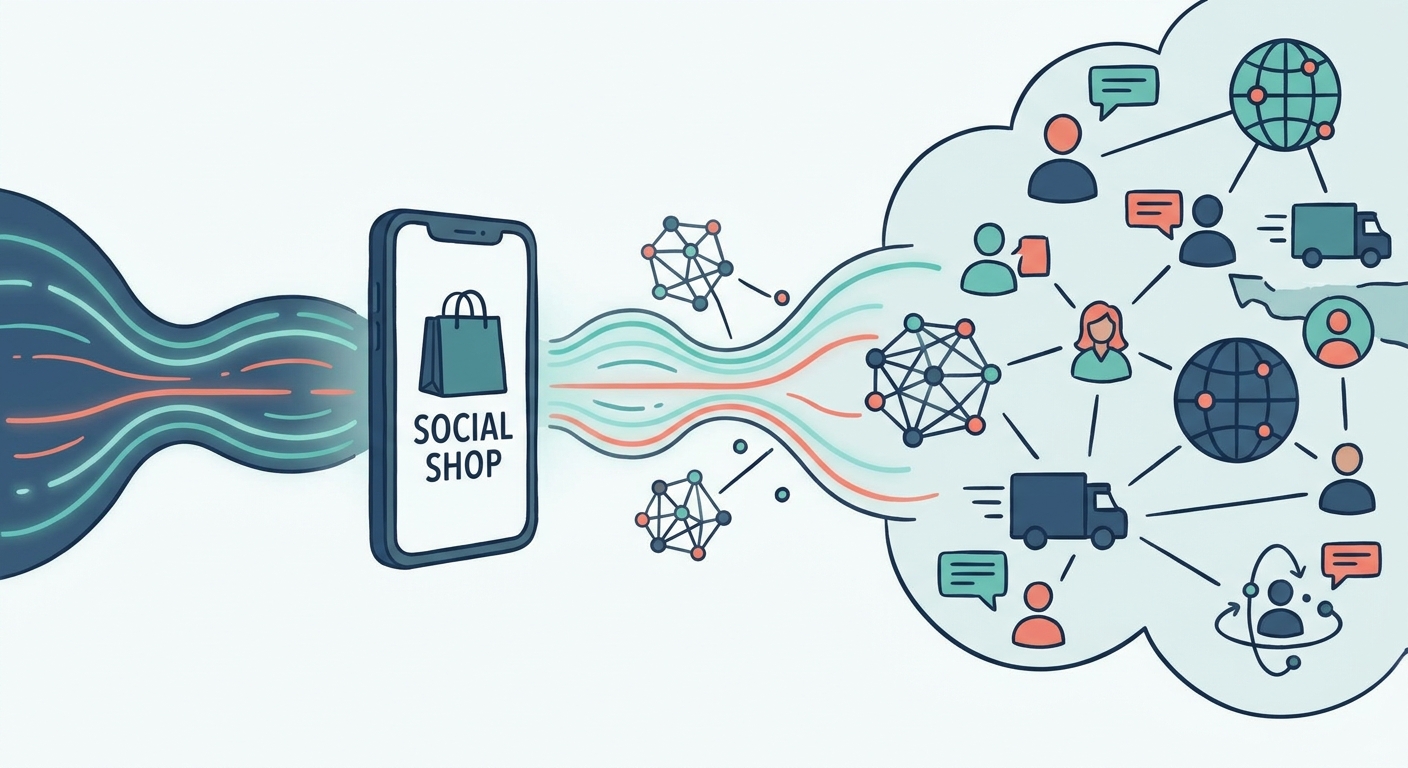
Stop manual workflows. Learn how AI integration APIs and headless architecture are transforming social commerce into an autonomous, high-conversion engine.
Social9 schedules your posts on 11 networks, and Autopilot can draft them in your brand voice for you to approve. Start on the free plan.
We use strictly necessary cookies to run this site. With your permission, we also use analytics cookies to understand how the site is used. We never use advertising cookies. See our Cookie Policy.