What is social media autopilot? How AI posting works (and where to keep a human)
Social media autopilot uses AI to plan, draft, schedule and publish posts. Learn how the loop works, platform AI rules, and where a human must stay in charge.
Autopilot & AI
Stop using 30 hashtags! Discover why precision beats volume and how to use an AI hashtag generator to master Social SEO and boost your reach in 2026. Nikita ShekhawatSocial Media Growth ExpertPublished Updated 6 min read
The era of "hashtag-stuffing" is officially dead. If you’re still dumping a block of 30 random tags at the bottom of your posts, stop. You aren’t helping your reach; you’re actively sabotaging it.
We’re living in 2026. Social platforms have pivoted hard toward Social SEO. Think of hashtags less like a "viral" hack and more like a filing system. They are minor categorization signals—nothing more, nothing less. If you’re using an AI hashtag generator to try and trick the algorithm into making you go viral, you’re using the wrong tool. Instead, use AI to provide the precise, machine-readable data the platform needs to file your content under the right "category" and serve it to the audience actually looking for your work.
If you want to stay relevant and avoid the spam filter, it’s time to trade volume for precision.
For years, we treated the 30-hashtag limit like a buffet—the more you loaded onto your plate, the better. That logic has been dismantled by modern algorithmic updates. According to official Instagram's Creator Guidelines, the platform is increasingly prioritizing content that provides genuine user value. Cluttering your caption with 30 unrelated tags? That’s not engagement; that’s gaming the system. And the algorithms have gotten very good at spotting the difference.
Industry analysis confirms The 5-Hashtag Shift, which highlights a cold, hard truth: massive blocks of hashtags trigger spam filters. When an algorithm scans your post, it looks for context. It’s trying to build a profile of your content. If you post a video about "Sustainable Coffee Roasting" but tag it with #love, #instafood, and #marketing, you’re just creating noise. You’re confusing the system.
By scaling back to five highly relevant, AI-validated tags, you provide a clear, readable signal. You stop looking like a bot and start looking like a creator who actually understands their niche. If you’re still relying on old-school "copy-paste" blocks, you’re likely suffering from suppressed reach without even realizing it.
The landscape has moved from "discovery by tag" to "discovery by intent." As detailed in this comprehensive Social SEO Guide, users have stopped clicking through hashtag feeds to find new content. They’re using the search bar. They’re typing in "best vegan recipes" or "minimalist living tips."
In this environment, your caption text, the audio you choose, and the on-screen text in your videos carry more weight than any hashtag ever could.
Think of hashtags as file folder labels. They tell the algorithm exactly which digital cabinet to shove your post into. If you use generic labels, your content gets tossed into a massive, overcrowded bin where it will never be seen again. If you use specific, niche-aligned labels, it gets filed exactly where your target audience is looking. This is where AI hashtag generators shine. They don’t guess. They analyze the current intent patterns of your industry to ensure your "labels" match what users are actually searching for right now.
To master the new algorithm, you need a framework. Stop guessing and start using the "1-2-1-1" rule. This ensures your five slots are working in harmony to signal your content’s purpose.
Forget #love or #marketing. They are dead weight. They have millions of posts, which means your content is buried in milliseconds. They provide zero value to the algorithm's categorization process.
graph TD
    A[Post Content] --> B{Categorize}
    B --> C[1 Brand Tag]
    B --> D[2 Industry Tags]
    B --> E[1 Topic Tag]
    B --> F[1 Niche/Community Tag]
    C & D & E & F --> G[Final 5-Tag Set]
Most people treat AI like a magic 8-ball. They ask for "hashtags for my business" and get back mediocre, generic results. You need to treat your AI tool like a junior social media strategist. Give it context, constraints, and a clear goal.
A perfect prompt looks like this: "Act as a social media strategist for a [Niche, e.g., boutique interior design] brand. Analyze the content of this post [Paste your caption here]. Suggest 5 targeted hashtags that balance high-volume industry reach with specific, community-driven interest. Ensure none of these tags are on the current restricted or banned list, and prioritize tags that appeal to [Target Audience, e.g., urban apartment dwellers]."
By providing the niche and the audience, you force the AI to look at the intent behind the post rather than just scanning for related words. Once you have your winning set, store them in your Our Content Calendar Template so you can track which combinations actually move the needle on engagement.
The "shadowban" is often a self-inflicted wound. It usually happens because you’re using restricted hashtags. Platforms frequently ban tags that have been hijacked by spam bots or inappropriate content. If you accidentally use one of these, the algorithm might flag your entire account as a risk and throttle your reach across the board.
AI tools are your first line of defense. They cross-reference your chosen tags against real-time databases of restricted terms. A tag that was safe last month might be restricted today. Manual research is a full-time job, but an AI generator checks these lists in seconds. It distinguishes between "popular"—which often includes spammy, low-value tags—and "high-performing," which refers to tags that are actually driving traffic within your specific industry.
Consistency is the secret sauce of growth, but consistency is impossible if your workflow is a mess. You shouldn't be spending 20 minutes manually researching tags every time you hit publish.
Build a frictionless routine:
By automating the research, you free up your mental energy to focus on the content itself—the hooks, the visuals, and the storytelling that actually keeps people on the platform. For a deeper dive into how this fits into your broader strategy, check out our Ultimate Guide to Instagram Growth. Remember: the algorithm rewards those who provide high-quality signals, not those who spam the system.
Yes, but only if they are treated as secondary SEO signals to help the algorithm categorize your content, rather than as a primary discovery mechanism.
Using more than five hashtags risks triggering spam detection, which can lead to the algorithm ignoring the excess tags or, in some cases, suppressing the post's overall reach.
AI tools analyze current usage patterns and cluster niche-specific data, identifying which tags are currently trending within your specific industry rather than just looking at overall hashtag popularity.
No. Hashtags must be content-specific to provide the algorithm with accurate signals for each individual post; using the same set across all content can signal low-effort or automated behavior.
Most modern AI hashtag generators have built-in verification filters that cross-reference tags against updated lists of banned or restricted terms to prevent accidental shadowbanning.
Social media autopilot uses AI to plan, draft, schedule and publish posts. Learn how the loop works, platform AI rules, and where a human must stay in charge.

Stop using AI as a typewriter. Learn to build agentic workflows that scale high-authority content and beat synthetic mediocrity in 2026.
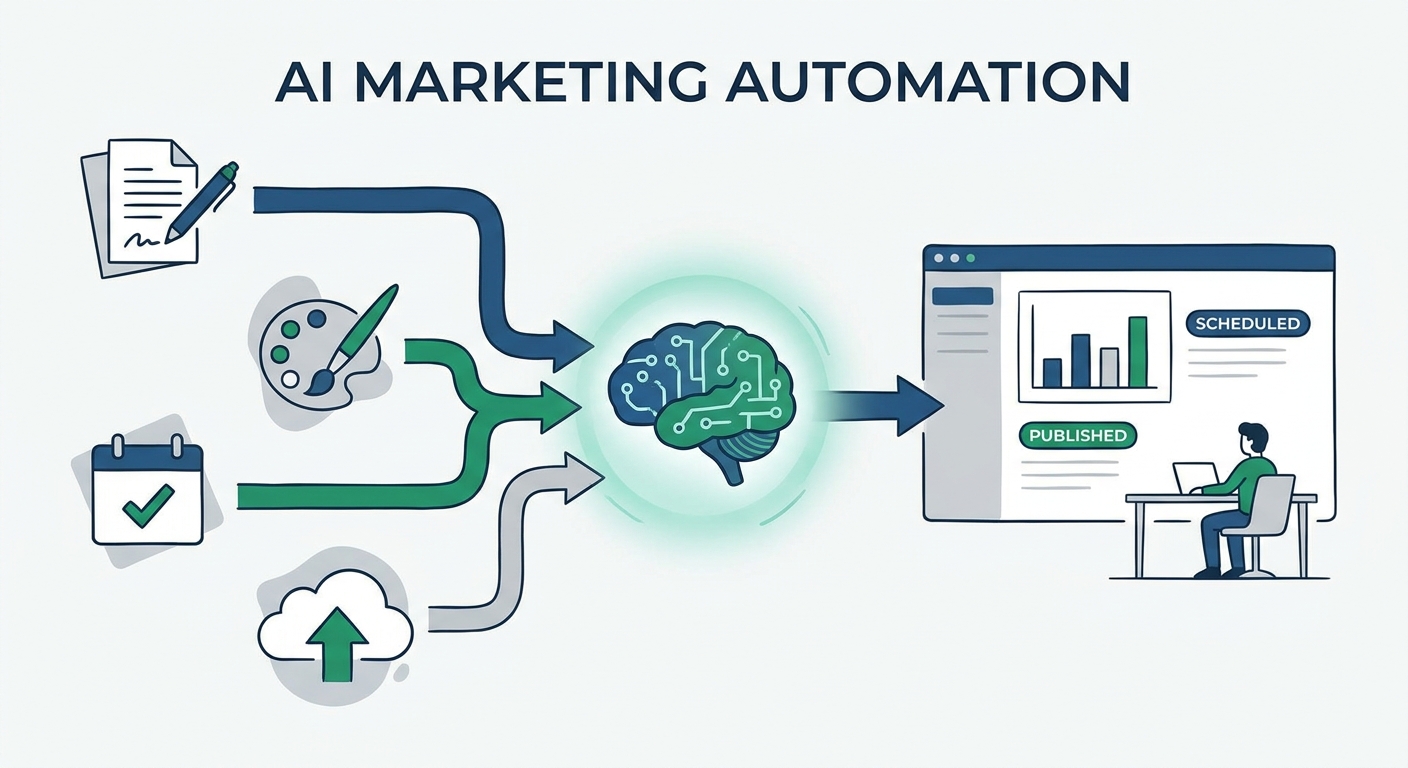
Stop manual content switching. Discover the 10 best AI social media post generators of 2026 to automate your marketing workflow and scale your content output.
Social9 schedules your posts on 11 networks, and Autopilot can draft them in your brand voice for you to approve. Start on the free plan.
We use strictly necessary cookies to run this site. With your permission, we also use analytics cookies to understand how the site is used. We never use advertising cookies. See our Cookie Policy.