Social media scheduling: the complete 2026 guide
How social media scheduling works in 2026: native schedulers vs tools, API limits, a six-step workflow, queues, time zones, approvals and a checklist.
Scheduling
Stop guessing. Learn how to use agentic AI tools to reverse-engineer viral YouTube content and build a data-backed, high-performance creator workflow for 2026. David KimAI EngineerPublished Updated 7 min read
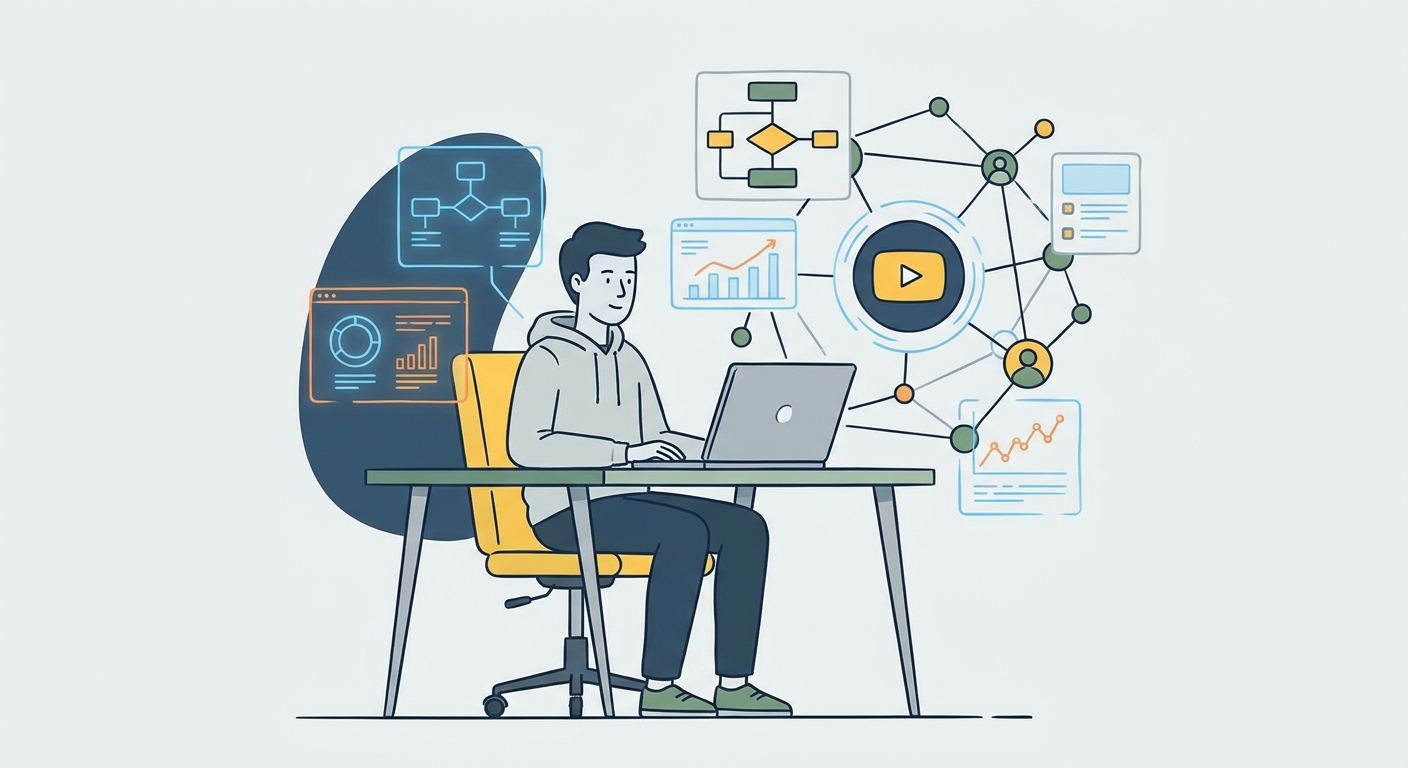
The "lone creator" grinding out videos based on gut feeling? That era is dead. If you’re still trying to manually force your way to the top in 2026, you’re playing a losing game. The new competitive edge on YouTube isn't about how fast you can cut a sequence; it’s about how well you can orchestrate an agentic workflow. We’ve moved past the days of basic, clunky text prompts. Today’s top-tier channels are using autonomous AI agents to reverse-engineer success, crunching millions of data points to predict viewer behavior before a single frame is even shot.
Mastering this isn't about letting a bot replace you. It’s about stepping into the role of a director—managing a high-performance, data-backed assembly line that consistently lands you inside that top 3.67% of videos that hoover up the vast majority of platform engagement.
For years, we were told to prioritize "consistency." The advice was simple: post three times a week, cross your fingers, and pray the comments section gives you a roadmap for the next one. That’s not a strategy; that’s a direct path to burnout.
The modern creator stack relies on Agentic AI—systems that execute complex, multi-step tasks without needing you to hold their hand every five seconds. When you look at the most successful channels, you aren't seeing luck. You're seeing the result of rigorous predictive modeling. These creators use AI to map out how a viewer’s attention will wax and wane. They place hooks and emotional pivots exactly where the data suggests a drop-off is likely to happen. It’s the difference between throwing spaghetti at the wall and conducting a symphony of engagement. Your job is to keep your "soul"—your perspective, your voice, your lived experience—while letting your digital agents handle the heavy lifting of trend analysis and structural optimization.
Most creators start by typing a few words into a search bar. Big mistake. To find the real content voids—those topics your audience is starving for but your competitors have completely missed—you need an agentic discovery loop.
By integrating tools like VidIQ or TubeBuddy (Latest 2026 Updates), you can feed your channel’s historical performance data into an AI agent tasked with "Gap Analysis." You’re not just chasing high search volume anymore. You’re looking for the sweet spot: high audience interest meeting low-quality competitor content.
graph TD
    A[Trend Data Input] --> B[AI Gap Analysis Agent]
    B --> C{Validation Check}
    C -- Failed --> A
    C -- Passed --> D[Finalized Content Brief]
    style B fill:#f9f9f9,stroke:#333
    style D fill:#e1f5fe,stroke:#0277bd
This cycle turns your "next big idea" from a wild hunch into a calculated bet. The agent filters out the noise, flags underserved niches, and refines the brief until it actually matches your specific channel authority. Only then does the cameras-on process begin.
A script shouldn't be a static block of text. It should be a living, breathing document that evolves. Start by defining your "Core Hook," then push your AI assistant to generate three distinct narrative arcs based on that single spark.
You aren't just writing words; you are building a retention engine. By incorporating insights from our complete guide to AI content strategy, you can prompt your agent to stress-test your pacing. Does the intro drag? Is the payoff buried in the weeds? AI is fantastic at flagging where the "information-to-entertainment" ratio feels off. Tighten the pacing before you ever reach for a camera. This is where "Predictive Performance Modeling" becomes your secret weapon—aligning the script’s structure with the psychological triggers that keep viewers glued to the screen until the very last second.
The "Hybrid Human-AI" model is the only way to scale without turning your channel into a soulless content farm. The trick? Knowing where to draw the line. Offload the tedious, technical, and repetitive work to AI—audio cleaning, B-roll generation, localized dubbing—but keep the storytelling, the on-camera charisma, and the creative vision strictly yours.
For global reach, creators are leaning on ElevenLabs Voice Synthesis to localize content. This isn't just about slapping subtitles on a video; it’s about keeping the emotional resonance of your delivery intact in multiple languages with perfect lip-syncing. When a viewer in Tokyo hears your voice, with your cadence and your tone, the barrier to entry vanishes. You scale your personal brand without sacrificing the parts of you that matter.
Packaging is the most underrated aspect of the YouTube growth cycle. If the packaging fails, the video doesn't exist. Before you shoot a single second of footage, use AI to run a "synthetic A/B test." Generate 50+ variations of titles and thumbnail concepts, then have an AI agent score them against high-performing benchmarks in your niche.
Don't forget the boring stuff: compliance. Use automated tools to pre-screen your content against official YouTube Creator Academy (2026 Guidelines). This catches copyright issues or guideline violations before you upload. It’s a "pre-flight check" that saves you from the gut-punch of a shadow-ban or a demonetization strike. For a deeper look at how to manage this, check out how to build an automated content calendar to keep your pipeline moving smoothly.
Stop treating a Short like a mini long-form video. They are entirely different beasts. A long-form video is a relationship; a Short is a hook-and-payoff transaction.
AI shines here when it comes to repurposing. Use an agent to scan your long-form transcript for "high-retention spikes"—the exact 30-to-60-second windows where your audience was most engaged. Have the AI automatically crop these into a vertical format, add dynamic captions, and tweak the hook for a Shorts-native audience. By automating this loop, you can extract a handful of viral-ready clips from one long-form video. You’re multiplying your reach without doubling the time you spend in the editing chair.
If you want to build an agentic workflow, organize your tools into three buckets:
The difference for a channel that adopts this is stark. A manual creator might spend 20 hours on a video that lands with a thud. An agentic creator spends 5 hours on a video that performs exponentially better because the strategy was validated by data before they ever started. This isn't a luxury anymore; it’s the baseline.
As AI-generated content becomes the standard, "AI fatigue" is coming. Audiences have a sixth sense for content that feels manufactured. Your only remaining competitive advantage is your voice. AI can give you a better script, a sharper title, and a faster workflow, but it can’t fake your lived experience or the specific way you connect with your people.
Build a feedback loop where the AI provides the data and the structure, and you provide the philosophy and the human touch. Start by mapping out your first agentic workflow, stop guessing what your audience wants, and start engineering the success you actually deserve.
Authenticity comes from your editorial lens. Use AI to draft, structure, and analyze, but never let it dictate the final creative choices. Always record your own voice, inject your personal anecdotes, and review every piece of AI-generated output to ensure it aligns with your specific brand values and tone.
At a minimum, you need a trend research tool (like VidIQ), a high-quality voice synthesis tool (like ElevenLabs), and a reliable LLM-based agent for script structuring and packaging optimization. These three pillars cover the research, production, and growth phases of the content cycle.
Not at all. The algorithm cares about viewer satisfaction—click-through rate and retention. If AI helps you make a more engaging video with a clearer hook, the algorithm will reward you. It doesn't care how you made the video; it cares how the audience responds to it.
By feeding your idea into an agentic workflow that analyzes historical performance data from your channel and broader niche trends, you can generate a "probability score." While not a guarantee, this helps you avoid low-potential ideas and focus your energy on concepts with statistically higher chances of success.
The biggest mistake is "lazy prompting"—expecting the AI to do everything from start to finish without human intervention. Another is failing to validate AI insights against your own historical channel data, which often leads to creating content that doesn't resonate with your specific core audience.
How social media scheduling works in 2026: native schedulers vs tools, API limits, a six-step workflow, queues, time zones, approvals and a checklist.

Build a 30-day social media content calendar step by step: pick content pillars, set posting frequency, batch, approve and schedule. Free template included.
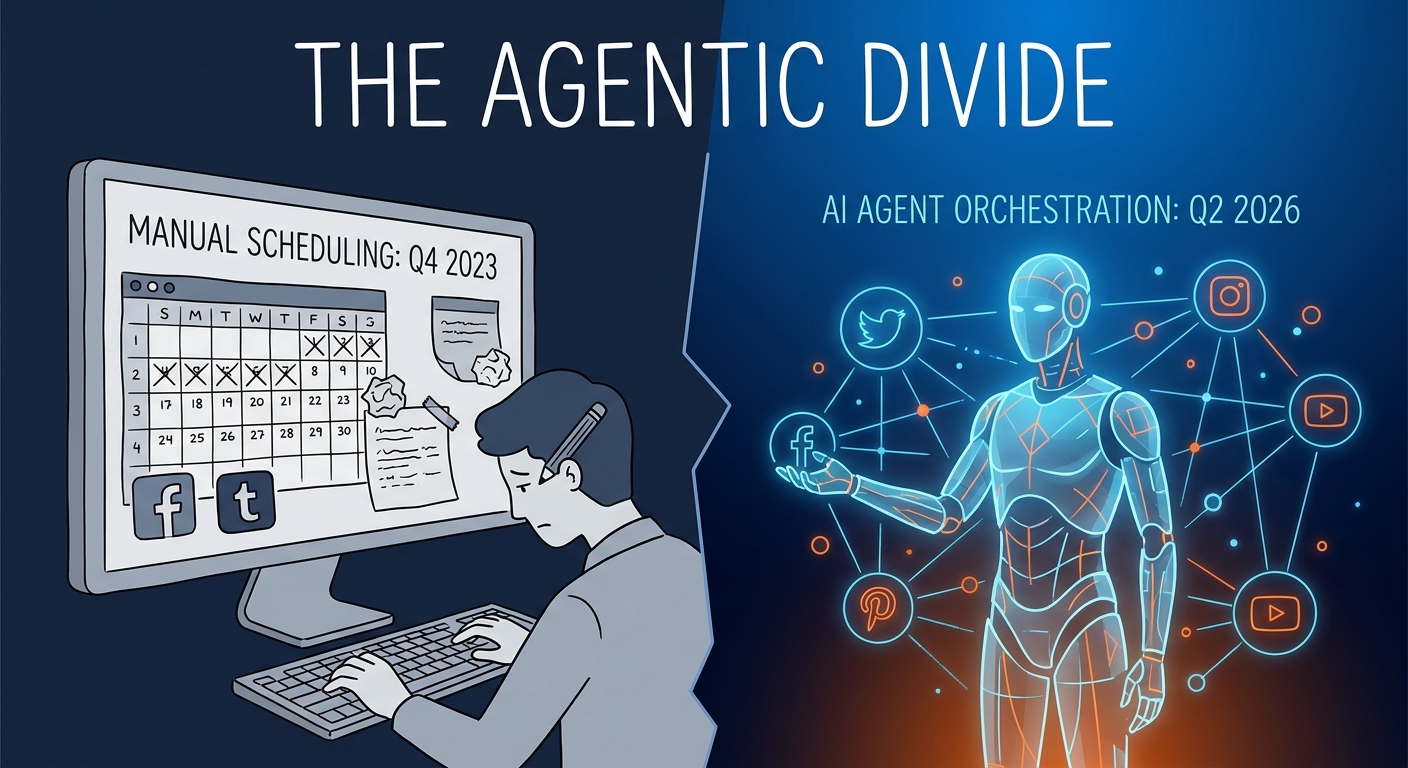
We compared 10 social media schedulers on price, pricing model, free plans, networks, AI writing and approvals. Prices checked October 2026 on vendor sites.
Social9 schedules your posts on 11 networks, and Autopilot can draft them in your brand voice for you to approve. Start on the free plan.
We use strictly necessary cookies to run this site. With your permission, we also use analytics cookies to understand how the site is used. We never use advertising cookies. See our Cookie Policy.