What is social media autopilot? How AI posting works (and where to keep a human)
Social media autopilot uses AI to plan, draft, schedule and publish posts. Learn how the loop works, platform AI rules, and where a human must stay in charge.
Autopilot & AI
The "gold rush" is officially over.
Remember 2024? The scramble. The endless copy-pasting into ChatGPT. The desperate hunt for a prompt that didn't sound like Alex ChenAI Content StrategistPublished 6 min read
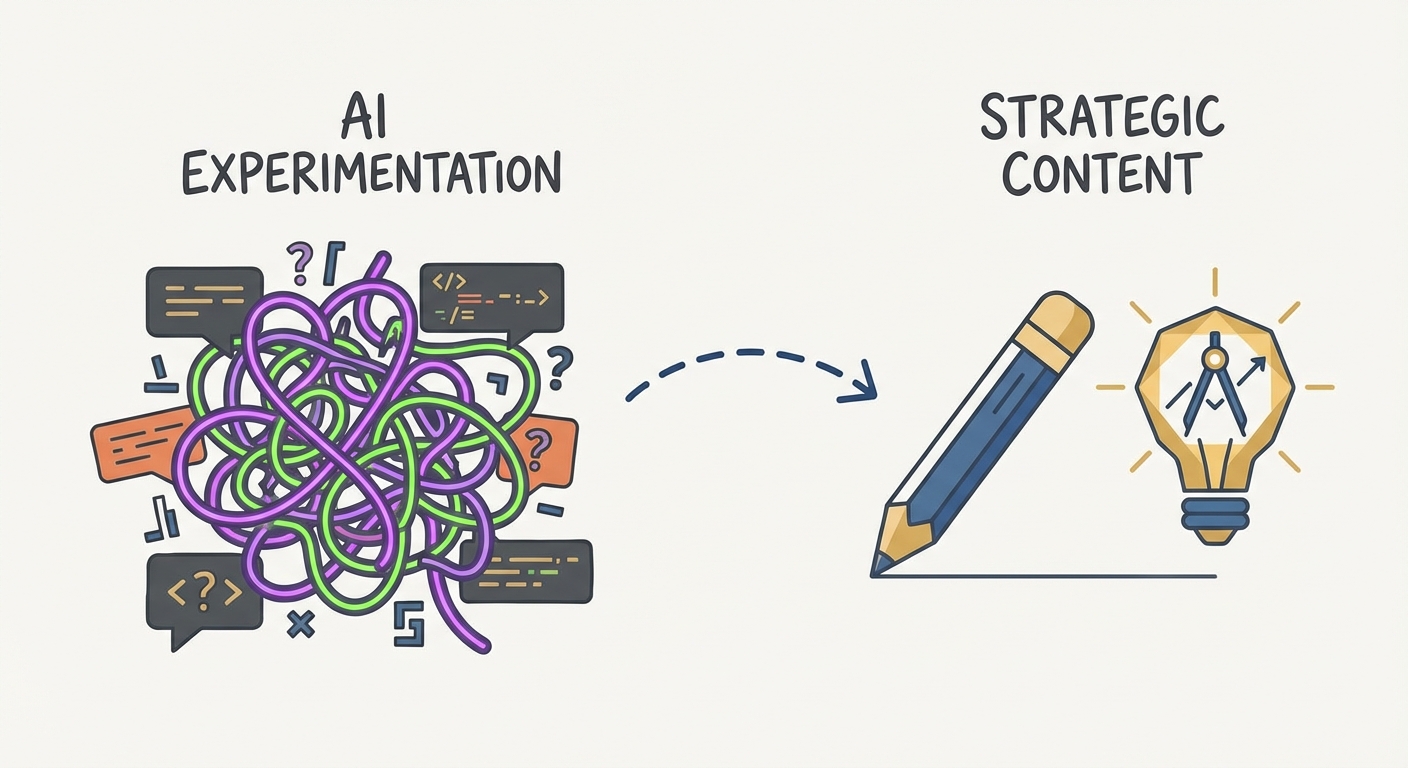
The "gold rush" is officially over.
Remember 2024? The scramble. The endless copy-pasting into ChatGPT. The desperate hunt for a prompt that didn't sound like a robot had a seizure. We spent two years throwing spaghetti at the wall to see which LLM would stick. It was messy, it was chaotic, and frankly, it was a waste of time.
That era is dead.
We’ve moved past the "novelty" phase. Using AI to write a generic listicle isn't a strategy; it’s a receipt for irrelevance. If you’re still treating AI as a glorified keyboard, you aren't just behind—you’re invisible.
2026 isn't about volume. It’s about orchestration. It’s about building systems that handle the grunt work so your team can finally focus on the one thing that actually moves the needle: the "Humanity Premium."
For a long time, we were intoxicated by the parlor trick. We treated AI like a magic trick—ask a question, get an answer, fill a calendar. It was a shallow, tactical game.
But look around. The internet is drowning in a sea of synthetic, beige, "AI-flavored" filler. Consumers have developed a sixth sense for this stuff. They can smell the soullessness from a mile away. When content feels hollow, people tune out.
In 2026, AI is no longer a "tool." It’s infrastructure. It’s electricity. You don’t "use" electricity to write; you use it to power the lights so you can get to work. The winners this year aren't the ones with the best prompts; they’re the ones with the best architectures. We are shifting from being "prompt engineers" to "system architects." We’re building workflows that don't just draft; they iterate, they verify, and they deploy.
Let’s be real: copy-pasting is a bottleneck. If your content manager is manually moving text from a browser tab to a CMS, you’re stuck in the dark ages.
Orchestration is the answer to that friction. It’s the difference between a soloist playing a piano and a conductor leading an entire symphony. As noted in the latest research on five trends in AI and Data Science for 2026, the industry has pivoted toward data-driven systems that manage complexity without needing a human to micromanage every single keystroke.
An orchestrated stack talks to your CRM, your analytics, and your brand guidelines. It creates self-correcting loops. It doesn't just create content; it measures it, learns from it, and refines the next piece automatically. It’s about flow, not just output.
If you haven't heard the term "Agentic AI," get used to it. It’s the engine of the new era.
An AI agent isn't a chatbot. A chatbot is a conversation. An agent is a worker. It’s a specialized software entity that can execute a multi-step chain of command. It researches. It fact-checks. It drafts. It applies your specific brand voice. It pushes to the CMS. It does all of this without you needing to click "enter" at every transition.
The "Agentic Loop" is how you scale without losing your soul.
graph LR
    A[Input: Brief] --> B[Research Agent]
    B --> C[Writing Agent]
    C --> D[Compliance/Brand Review Agent]
    D --> E[Distribution Agent]
    E --> F[CMS / Live]

    style A fill:#f9f9f9,stroke:#333
    style F fill:#e1f5fe,stroke:#01579b

    subgraph "Agentic Loop"
    B
    C
    D
    end
In this model, your role changes. You stop being the "doer" and start being the "governor." You aren't grinding out sentences; you are setting the guardrails. You are the curator. You’re delegating the commodity work—the tedious SEO research, the structural outlining, the formatting—so your team can spend their time on high-level strategy, contrarian insights, and the kind of creative storytelling that a machine can simulate but never, ever feel.
The more AI-generated junk there is, the more valuable your actual, lived-in experience becomes.
We’re calling this the "Anti-Generic" strategy. According to the 42 Content Marketing Trends for 2026, the brands that win this year will be the ones that use AI to clear the brush, not to plant the garden.
Use AI to scan your library. Use it to find gaps in your data. Use it to summarize the boring stuff. Then, and only then, bring in the human experts. Add the personal anecdotes. Add the opinions that might make people uncomfortable. Add the deep, lived-in context that only someone who has actually done the job can provide.
Trust is the new currency. It’s about the provenance of an idea. When your content is backed by real human expertise and verified by an AI-orchestrated system, you’re creating something that no "churn and burn" competitor can ever touch.
Here’s a hard truth: the era of standard SEO is dying. We are entering the age of AEO—Answer Engine Optimization.
Consumers aren't scrolling through ten blue links anymore. They’re asking bots. They’re asking smart assistants. They’re asking recommendation engines. If your brand isn't present in the "latent space" of these models, you effectively don’t exist.
You need to be the source the bot trusts. You need to be cited. You need to be authoritative. You need to be structured in a way that these models find easy to parse. If you’re struggling to bridge the gap between your traditional web presence and this new AI-native visibility, our content strategy services are designed to help you get there. You don't just want traffic; you want to be the "preferred source" for the machine.
"Content Manager" is becoming a legacy title. The new role is the "AI Architect."
This isn't just about knowing how to write a prompt. It’s about data literacy. It’s about workflow design. It’s about understanding how to feed your brand’s "source of truth" into your agents so they don't hallucinate or wander off-brand.
It’s technical. It’s creative. It’s both. If you don't know where to start, how to build an AI-ready content team is the most important lesson you’ll learn this year. The teams that thrive will be the ones that blend the rigor of software engineering with the soul of an editorial room.
Stop chasing the shiny objects. Start building.
Do this, and you stop chasing the hype. You start building a business that actually lasts.
Absolutely not. AI handles the heavy lifting, but the human writer is now more important than ever. Your role has leveled up to strategist and architect. Only you can provide the unique perspective and soul that gives your brand its edge.
Think of a tool as a hammer—it does one thing when you swing it. An agent is more like a contractor who knows how to use the hammer, saw, and drill to build an entire house. An agent executes a whole workflow autonomously.
Through orchestration. You don't just "use" AI; you train it on your "source of truth." By feeding your specific style guides and brand history into your agentic systems, you create a consistent, reliable voice that doesn't drift.
The "churn and burn" trap. Using AI to blast out endless, low-value content is a fast track to brand suicide. The smartest teams are using AI to do less, but much, much better work.
Social media autopilot uses AI to plan, draft, schedule and publish posts. Learn how the loop works, platform AI rules, and where a human must stay in charge.

Stop churning out generic AI fluff. Learn how to build a full-stack content workflow that scales your unique human expertise and builds reader authority.
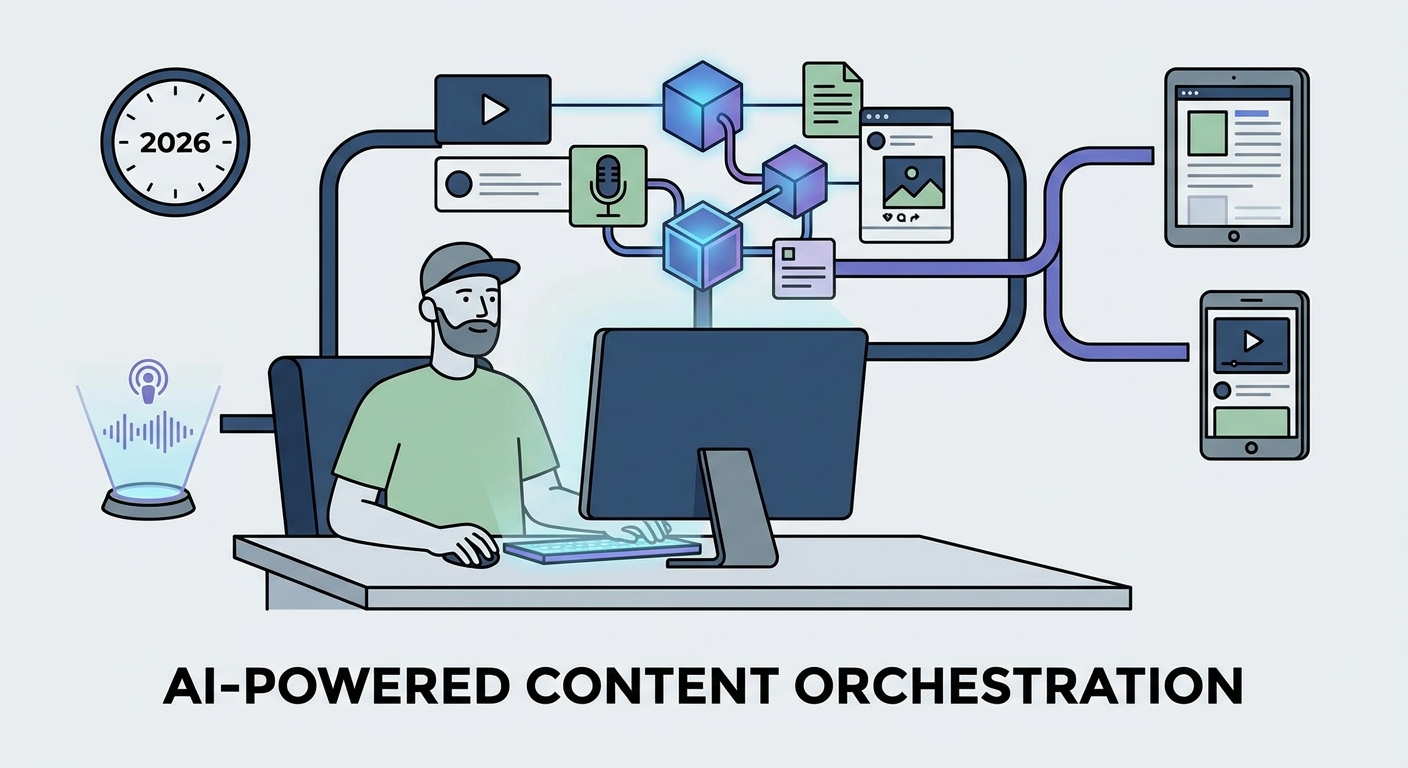
Stop manual drafting. Discover how AI-powered content creation and agentic workflows boost efficiency, scale production, and drive strategic marketing results.
Social9 schedules your posts on 11 networks, and Autopilot can draft them in your brand voice for you to approve. Start on the free plan.
We use strictly necessary cookies to run this site. With your permission, we also use analytics cookies to understand how the site is used. We never use advertising cookies. See our Cookie Policy.