What is social media autopilot? How AI posting works (and where to keep a human)
Social media autopilot uses AI to plan, draft, schedule and publish posts. Learn how the loop works, platform AI rules, and where a human must stay in charge.
Autopilot & AI
Learn how to scale your social media presence using the 70/30 automation rule to maintain your brand voice while leveraging AI for efficiency. Emily RodriguezContent Marketing SpecialistPublished 6 min read
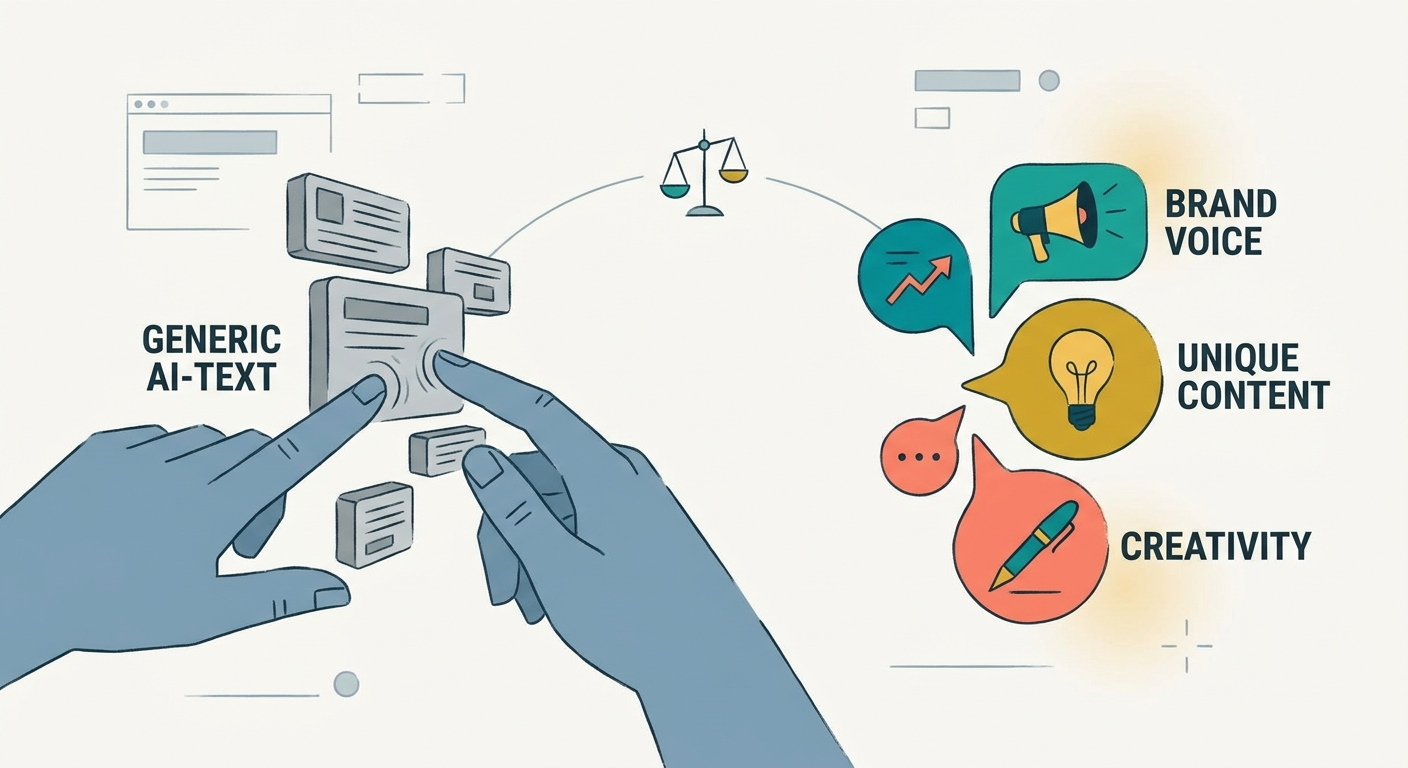
The tension between the demand for constant social visibility and the exhaustion of manual content creation is the defining struggle for every marketing team right now. In 2026, the mandate is clear: efficiency isn't a luxury; it’s the baseline for survival. But here is the trap—relying on unfiltered AI to churn out content is a fast track to becoming a digital ghost. You end up as a brand that exists everywhere but resonates nowhere.
To master social automation, you have to stop viewing it as a "set it and forget it" switch. Instead, you need to architect a system where AI handles the heavy lifting of data and logistics, while your human team provides the soul, the context, and the final, critical pulse of intent. If you want to refine your high-level approach, you can learn more about our high-level Content Strategy framework here.
We’ve moved past the era of simple auto-scheduling, where the goal was just to keep the lights on with mind-numbing, repetitive posts. Today, it’s all about "Contextual Intelligence."
This isn't just about timing your posts for 10:00 AM on a Tuesday. It’s about using AI pattern recognition to identify what to post based on real-time performance clusters. But—and this is the big but—human intuition remains the only arbiter of why that content matters to your specific audience at a specific moment.
If you are still treating automation as a glorified calendar, you’re missing the point. Hootsuite’s comprehensive Social Media Automation Guide outlines how the smartest teams are now using automation to bridge the gap between massive data sets and actual, actionable insights. By offloading the grunt work of trend identification and cross-platform formatting to AI, your team finally gets the mental bandwidth back to focus on the nuance of your brand’s perspective.
The most successful brands operating today rely on a strict 70/30 rule. 70% of the operation—the scheduling, the raw data crunching, and the initial drafting—is automated. The remaining 30%? That’s where the magic happens. It’s the creative direction, the injection of your unique brand voice, and the final, sanity-check approval. This is the only way to scale without turning your brand into a hollow, robotic echo chamber.
The pipeline looks like this:
graph LR
    A[AI Data Harvesting] --> B[Human Creative Strategy]
    B --> C[AI Drafting]
    C --> D[Human Editing/Approval]
    D --> E[Automated Publishing]

    style A fill:#f9f9f9,stroke:#333
    style B fill:#e1f5fe,stroke:#01579b
    style C fill:#f9f9f9,stroke:#333
    style D fill:#e1f5fe,stroke:#01579b
    style E fill:#fff3e0,stroke:#e65100
Phase 1 kicks off with AI harvesting data to find high-performing topic clusters based on what your audience actually cares about right now. Phase 2 is where the human comes in to set the creative direction, ensuring the "why" of the content lines up with your quarterly goals. Phase 3 lets the AI handle the heavy lifting of repurposing that core idea into platform-specific formats—short-form scripts for TikTok, punchy summaries for LinkedIn, and visual carousels for Instagram.
Finally, Phase 4 is the "Sanity Check." Never, ever automate the final button press without a human eye scanning for tone, accuracy, and cultural relevance.
Generic content is the enemy of growth. When you feed an AI tool a vague prompt like "write a post about industry trends," you will inevitably get a lukewarm, beige response that sounds like every other competitor in your space.
To protect your brand voice, treat your AI tools like a junior copywriter who needs strict, detailed guardrails.
This is the art of prompt engineering. Build a "Brand Voice Guardrail" library that acts as the constitution for your AI. This includes your specific vocabulary, your firm stance on industry topics, and examples of your best-performing, high-engagement historical content. When the AI understands the texture of your language, it stops sounding like a bot and starts sounding like a member of your team. You can see how we define and manage consistent Brand Voices for our clients here.
Efficiency is a trap if it costs you your reputation. There are specific "Danger Zones" where automation is not just ineffective; it’s a liability.
Never automate crisis management, complex community interactions, or high-stakes cultural commentary.
When a brand is under fire, the last thing your audience wants is a robotic, canned response. These moments require human empathy, nuance, and the ability to read the room in real-time. As noted in this analysis on navigating the balance of automation, the "Human-in-the-Loop" standard isn't just a preference; it’s a necessity for maintaining trust. If an interaction requires deep emotional intelligence or involves sensitive public sentiment, take the automation off the table entirely. Period.
Staying relevant in 2026 requires a hybrid approach. You need the cold, hard efficiency of AI-driven social listening to flag emerging trends, but you need a human-led creative team to interpret those trends through your brand’s unique lens.
If your AI flags a sudden spike in interest regarding an industry development, don’t let it automatically generate a post. Use that flag as a trigger for a "Pulse Meeting." Your team should assess the trend, decide if it aligns with your brand values, and then create content that actually contributes something new to the conversation. Expert perspectives on the 2026 social media landscape emphasize that the brands winning today are the ones that pivot strategies mid-campaign based on these real-time flags, rather than sticking to a rigid, pre-automated calendar that might suddenly become tone-deaf.
It’s time for a brutal assessment of your current processes. Are you "over-automating," perhaps forcing robotic DMs on your community that drive people away? Or are you "under-automating," wasting hours manually scheduling routine updates that a machine could handle in seconds?
graph TD
    subgraph Matrix
    A[Low Risk / High Repetition] -->|Automate| B(Full Automation)
    C[Low Risk / Low Repetition] -->|Template| D(Semi-Automated)
    E[High Risk / High Repetition] -->|Human-in-the-Loop| F(Systemized Manual)
    G[High Risk / Low Repetition] -->|Manual| H(Full Manual)
    end

    style B fill:#dcedc8,stroke:#33691e
    style D fill:#fff9c4,stroke:#fbc02d
    style F fill:#ffecb3,stroke:#ff8f00
    style H fill:#ffcdd2,stroke:#b71c1c
Beyond auditing your tasks, you must have an "Emergency Kill Switch." In the event of a brand crisis, you need the ability to instantly pause all automated queues with a single click. If you cannot stop your outgoing content in under sixty seconds, your system is not ready for the complexities of the modern digital landscape.
The 2026 social landscape rewards those who can master the duality of scale and soul. Automation is a tool for scale; authenticity is a tool for connection. You cannot win with one and neglect the other. By building a workflow that respects the speed of AI while fiercely guarding the human-led strategy that defines your brand, you aren't just surviving the automation wave—you are riding it. Treat your AI as your most efficient employee, but keep your brand’s heart and soul firmly in the hands of the humans who represent it.
Focus on providing the AI with a "style guide" prompt that includes examples of your past successful content, your specific brand vocabulary, and the emotional tone you want to achieve.
You should never automate crisis response, sensitive community management issues, or high-stakes cultural commentary, as these require human empathy and context that AI cannot replicate.
Use a "Core Pillar" approach where your brand values remain static, while your platform-specific "voice profile" allows for stylistic adjustments based on the audience's intent on that specific channel.
Yes; authenticity is defined by your intent and the value you provide to your audience. If automation allows you to deliver more value more consistently, it is a tool for authenticity, not a hindrance to it.
Social media autopilot uses AI to plan, draft, schedule and publish posts. Learn how the loop works, platform AI rules, and where a human must stay in charge.
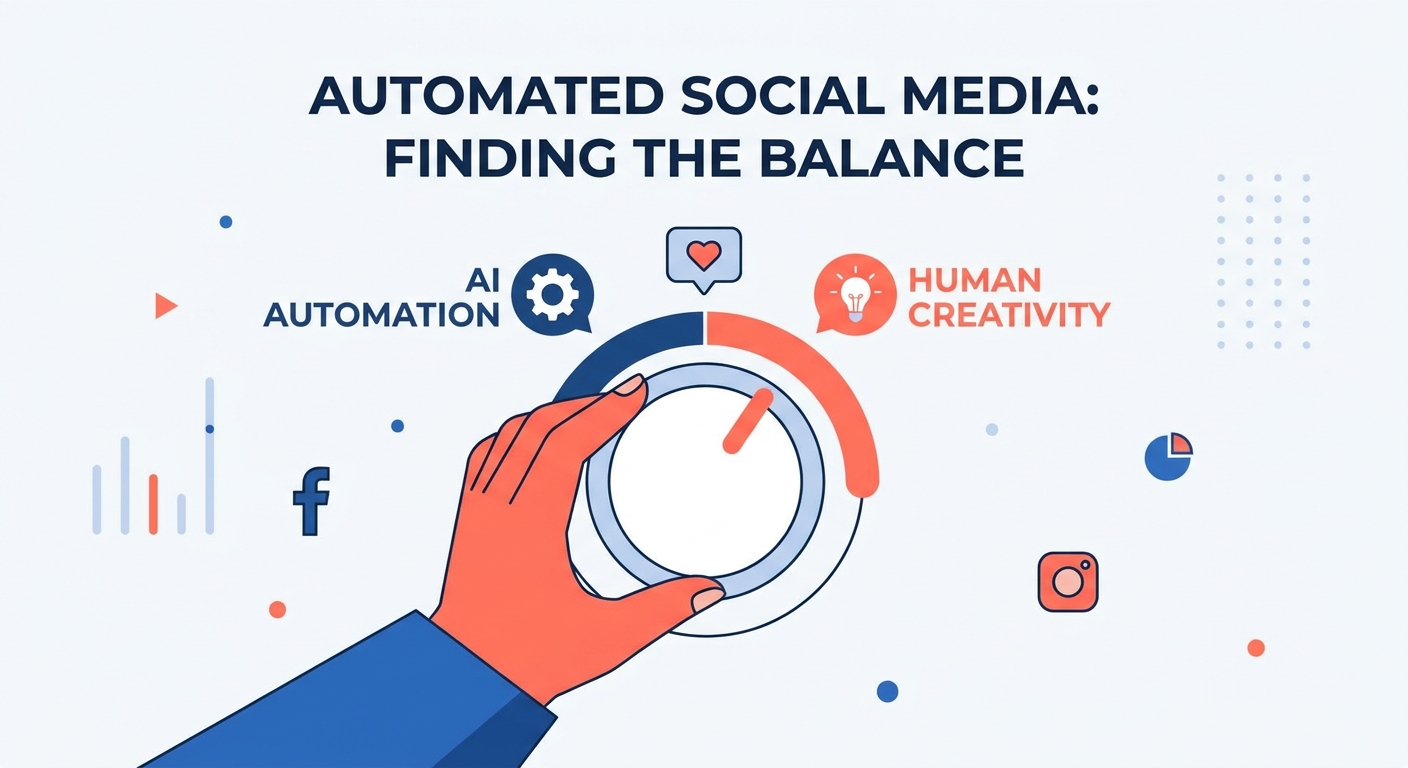
Learn how to scale social media content using AI without sacrificing your brand's unique voice. Master the 'Human-in-the-Loop' framework for authentic engagement.
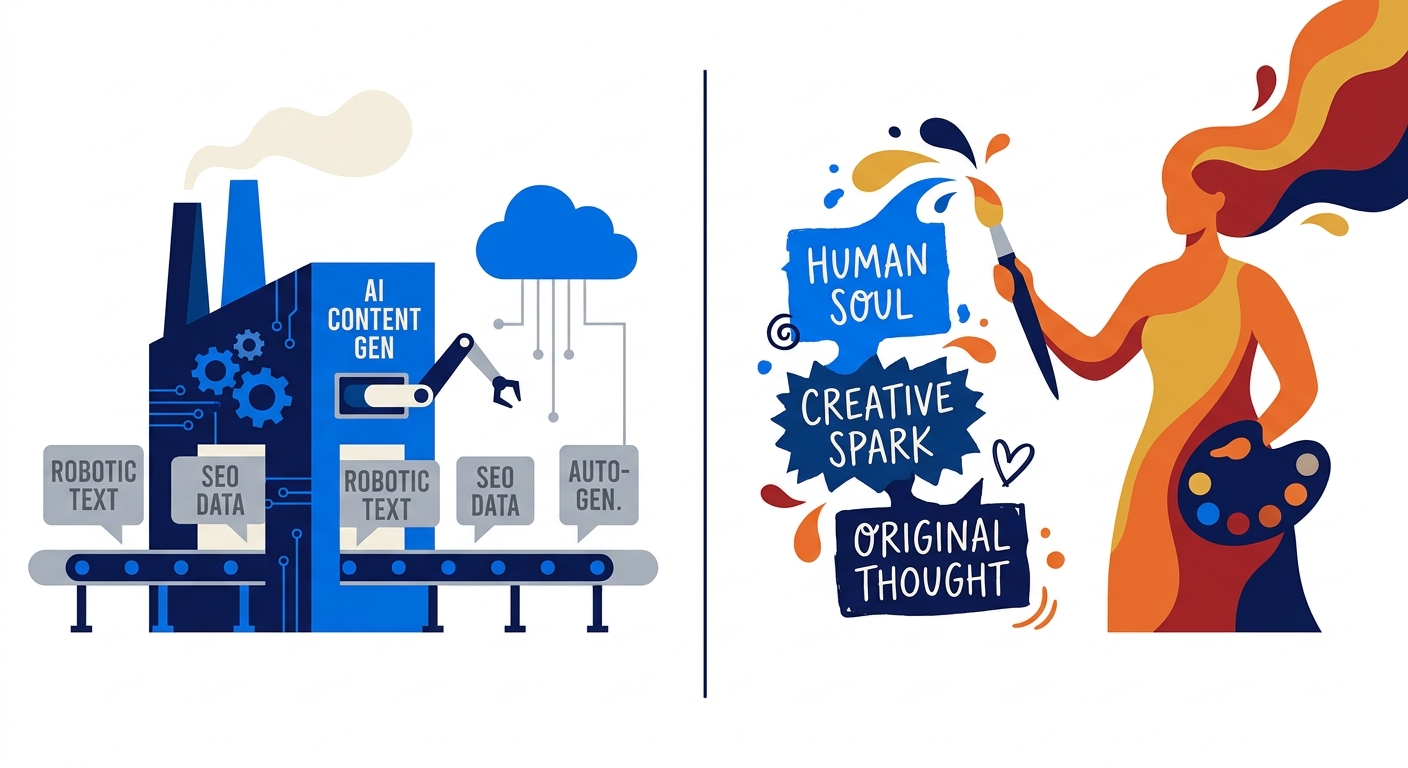
Stop posting AI-slop. Learn how to build a Zero-Touch content pipeline that automates social media strategy using your own proprietary data and insights.
Social9 schedules your posts on 11 networks, and Autopilot can draft them in your brand voice for you to approve. Start on the free plan.
We use strictly necessary cookies to run this site. With your permission, we also use analytics cookies to understand how the site is used. We never use advertising cookies. See our Cookie Policy.