What is social media autopilot? How AI posting works (and where to keep a human)
Social media autopilot uses AI to plan, draft, schedule and publish posts. Learn how the loop works, platform AI rules, and where a human must stay in charge.
Autopilot & AI
Stop drowning in AI-slop. Learn how to balance content automation with an authentic human touch to win in 2026 and build real brand authority. Jessica ThompsonBrand Strategy & Community ExpertPublished 6 min read

The "AI-only" era of content creation didn’t just fade away; it imploded. By 2026, the internet became a graveyard for brands that mistook automated volume for actual authority. We’ve hit a wall. The sheer velocity of machine-generated sludge has triggered a massive recoil from audiences, creating a new, highly lucrative "Authenticity Premium."
Here is the truth: You don’t win in 2026 by being the fastest. You win by being the most human. Success isn't a numbers game anymore. It’s about how ruthlessly you refine your output to ensure it lands with the weight of lived experience.
The pitch was seductive: infinite content, zero friction, total optimization. But reality hit hard. We ended up in a "Content Deluge." When every brand on the planet uses the same LLM-powered engines, you get a sea of indistinguishable, polished, soul-crushingly generic prose.
Audiences aren't stupid. They’ve developed a sixth sense for "AI-slop"—that specific, nauseating cadence of robotic optimism and shallow analysis that screams, "I have no original thoughts."
According to AI-Driven Marketing Trends 2026, the brands winning today are the ones who ditched mass-distribution in favor of high-fidelity, human-verified storytelling. The "AI-Only" model failed because it lacked the one thing that turns information into influence: the guts to hold a controversial opinion, share a genuine failure, or interpret a cultural moment through a specific, proprietary lens.
The greatest danger to your brand today isn't a lack of tools. It’s the comfort of the algorithmic echo chamber. When you let AI drive your ideation, it naturally gravitates toward the statistical average of what it has already scraped. This leads to brand dilution. Your voice becomes a muted reflection of industry consensus rather than a driver of it.
Think of the "Robotic Gap" as the chasm between data-backed information and human-lived experience. An AI can summarize the best practices of SEO until it's blue in the face, but it cannot explain the raw frustration of a failed campaign or the subtle shift in a community’s mood that you witnessed firsthand. To escape this trap, you must lead with "the story" before you ever touch a prompt. If your content doesn't feel like it could only have been written by someone standing in your shoes, it’s just noise.
To thrive, you need a ruthless resource allocation model. Offload the cognitive drudgery to the machine and hoard the creative "spark" for your human team.
pie title Content Production Effort (2026)
    "Automated Tasks (Drafting, SEO, Data)" : 80
    "Human-Led Strategy (Narrative, Emotion)" : 20
The 80%? That’s the mechanical heavy lifting: data aggregation, formatting, SEO-tagging, and building the structural skeleton. The 20%—the high-impact human effort—is where your brand actually gains value. This is where you define the narrative arc, inject emotional intelligence, and take those bold, opinion-led stances that turn casual readers into ride-or-die advocates. If you’re spending your human time on the 80%, you’re wasting your most expensive asset on the cheapest work.
Understanding this division of labor is the defining competence of the 2026 marketer. AI is a master of pattern recognition. It’s your ultimate junior researcher, capable of processing thousands of data points in seconds to highlight a potential angle.
But the human remains the absolute authority on nuance. We are the only ones capable of high-stakes ethical judgment and the injection of cultural context that makes a piece of content feel alive.
graph LR
    A[AI: Data & Structure] --> B(Human: Verification & Injection)
    B --> C[Refined Final Output]

    subgraph "AI-Assisted Workflow"
    A
    B
    C
    end
The "Human-in-the-Loop" workflow is non-negotiable. It’s the filter through which machine potential is converted into actual brand equity.
The risks of skipping human oversight aren’t just aesthetic—they’re existential. Between the legal liabilities of copyright infringement and the reputational damage of AI hallucinations, publishing unverified content is a gamble no serious brand can afford. As noted in AI Ethics and Content Standards, the loss of "brand soul" is the most quiet, yet devastating, consequence of automation. When a reader spots a hallucinated insight, the trust that took years to cultivate evaporates in seconds. Human verification is your primary insurance policy against obsolescence.
If your AI tool sounds exactly like your competitor’s AI tool, you’ve already lost. The "Human-First" brand voice audit is your necessary corrective. Start by creating a style guide that defines your brand’s specific "anti-patterns"—the words, phrases, and tones that you never use.
Before you write a single prompt, you need a set of governing principles. If you haven't yet mastered the art of Building a Brand Voice Guide, your AI tools will inevitably drift toward the default, generic tone of their training data. Your prompt library shouldn't just say "write a blog post about X." It should say "write an analysis of X using our specific framework, avoiding jargon, and incorporating a skeptical tone."
The era of "creepy" behavior tracking is ending. In 2026, personalization is about intent, not surveillance. Users are savvy; they’ll dump a brand in a heartbeat if they feel like they’re being watched.
The new strategy? Use AI to interpret "intent signals"—what a user is trying to achieve—rather than just tracking their click history. By focusing on intent, you deliver high-value experiences that feel helpful rather than predatory. As explored in The Human Element in Digital Strategy, the most effective personalization is invisible. It’s the feeling of being understood, not the feeling of being watched.
If you fear AI is coming for your job, you’re looking at the wrong job. The role of the "Writer" is shifting into the role of the "AI Editor." The most valuable assets in 2026 marketing teams aren't the people who churn out the most words. They’re the ones who curate, verify, and amplify the best machine-generated drafts.
This requires a new skill set: the ability to sniff out an AI hallucination, the capacity to inject a unique perspective into a bland structure, and the editorial judgment to know when to scrap an entire draft and start over. For those who want to master this transition, Our Content Services provide the framework for integrating these high-level editorial oversight practices into your existing workflow.
You’re over-automating if your engagement metrics are flat, if your content feels like a broken record, or if your insights are merely "correct" rather than "insightful." If a reader can find the exact same information on a dozen other sites, you’ve leaned too hard into the machine.
No. AI can simulate logic, but it cannot simulate "lived experience" or genuine empathy. High-converting content relies on the reader feeling a connection to the author—a sense that they are hearing from another human who has navigated the same struggles. That connection is irreproducible.
The three biggest risks are factual hallucinations, the propagation of brand-damaging biases, and the erosion of consumer trust. When readers detect "AI-slop," they don't just stop reading; they stop trusting your brand’s authority across every channel.
Consistency comes from centralized prompt libraries and human-led editorial oversight. Do not let your tools "self-direct." Every piece of content, regardless of the tool used to draft it, must pass through a strict human-led editorial gatekeeper who ensures it aligns with your established brand voice guide.
Social media autopilot uses AI to plan, draft, schedule and publish posts. Learn how the loop works, platform AI rules, and where a human must stay in charge.
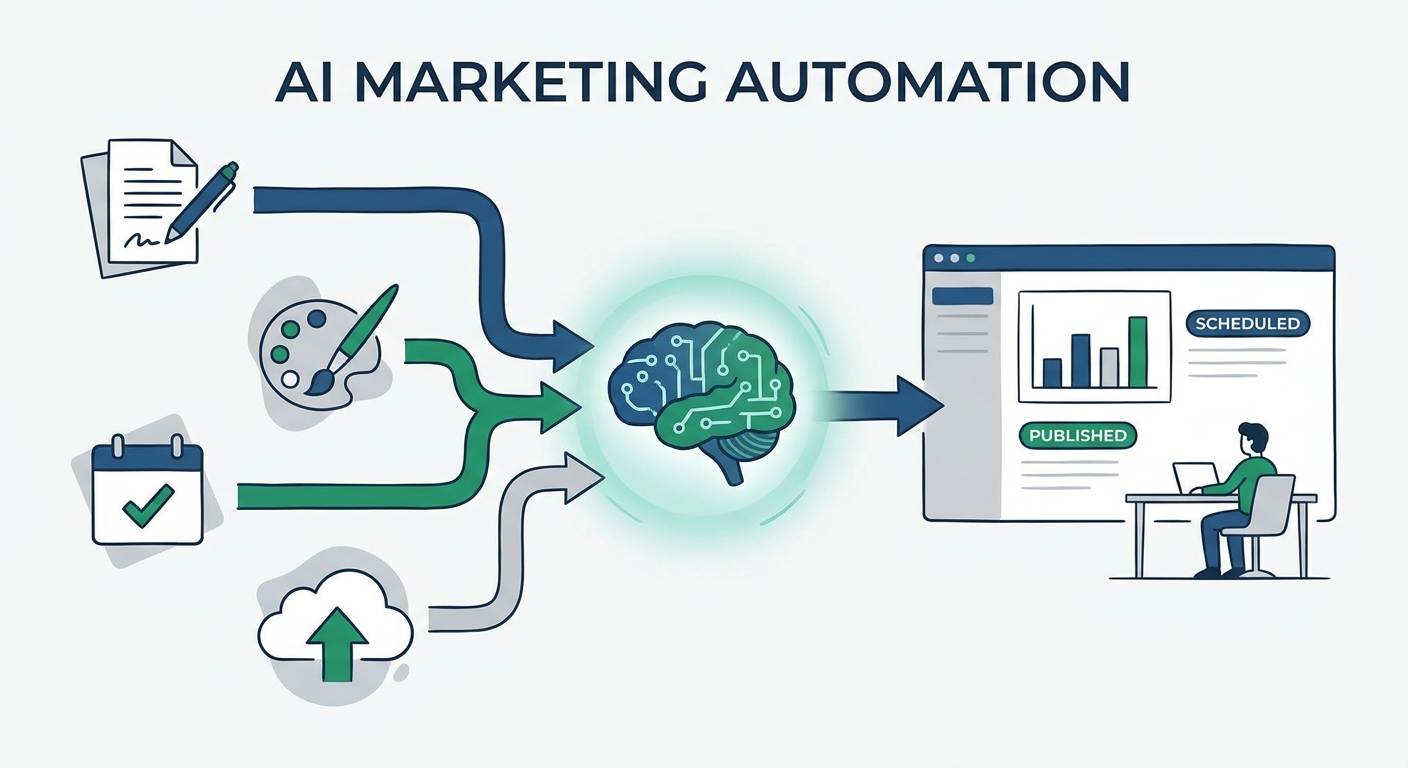
Stop manual content switching. Discover the 10 best AI social media post generators of 2026 to automate your marketing workflow and scale your content output.
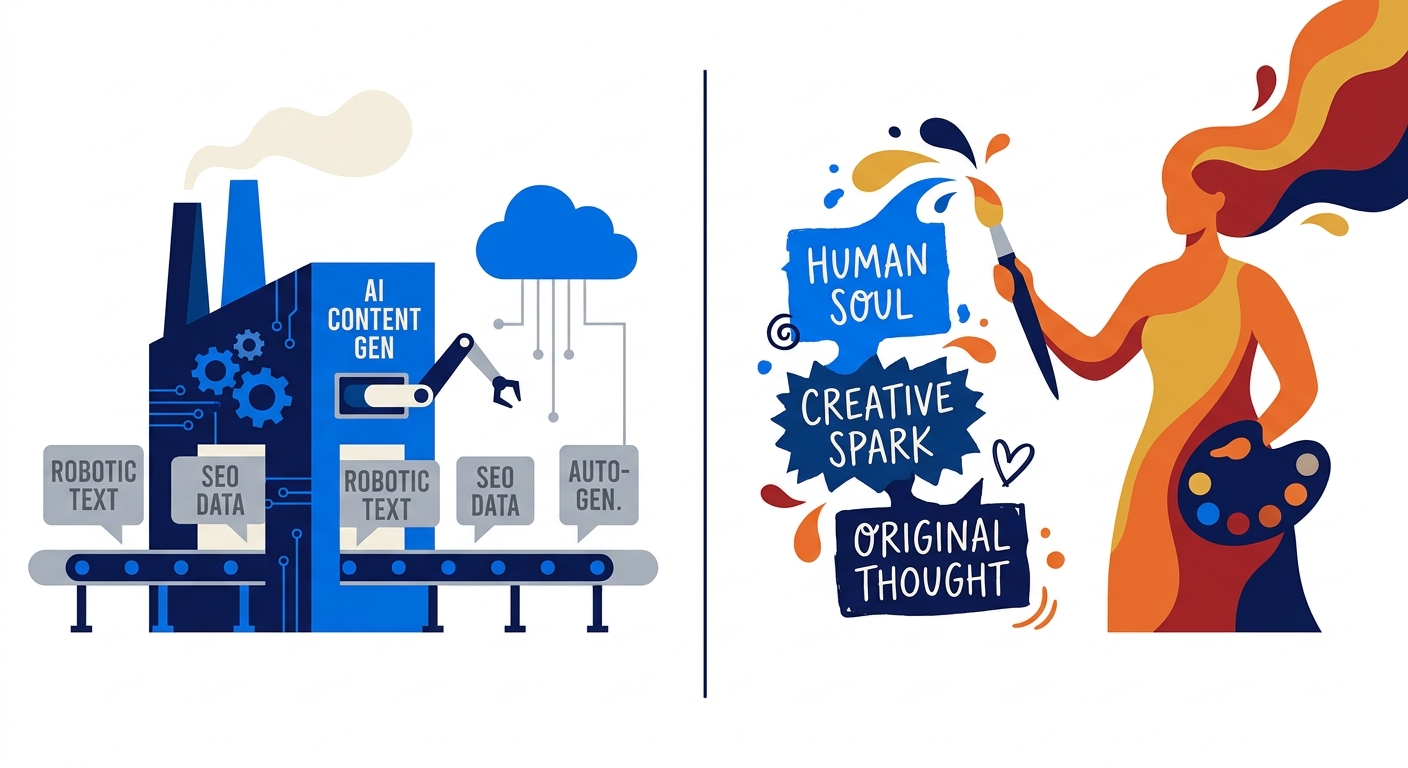
Stop posting AI-slop. Learn how to build a Zero-Touch content pipeline that automates social media strategy using your own proprietary data and insights.
Social9 schedules your posts on 11 networks, and Autopilot can draft them in your brand voice for you to approve. Start on the free plan.
We use strictly necessary cookies to run this site. With your permission, we also use analytics cookies to understand how the site is used. We never use advertising cookies. See our Cookie Policy.