What is social media autopilot? How AI posting works (and where to keep a human)
Social media autopilot uses AI to plan, draft, schedule and publish posts. Learn how the loop works, platform AI rules, and where a human must stay in charge.
Autopilot & AI
Stop manual posting. Master 'Content Atomization' to repurpose hero assets into high-performing, platform-specific content using a human-in-the-loop AI strategy. Nikita ShekhawatSocial Media Growth ExpertPublished 6 min read
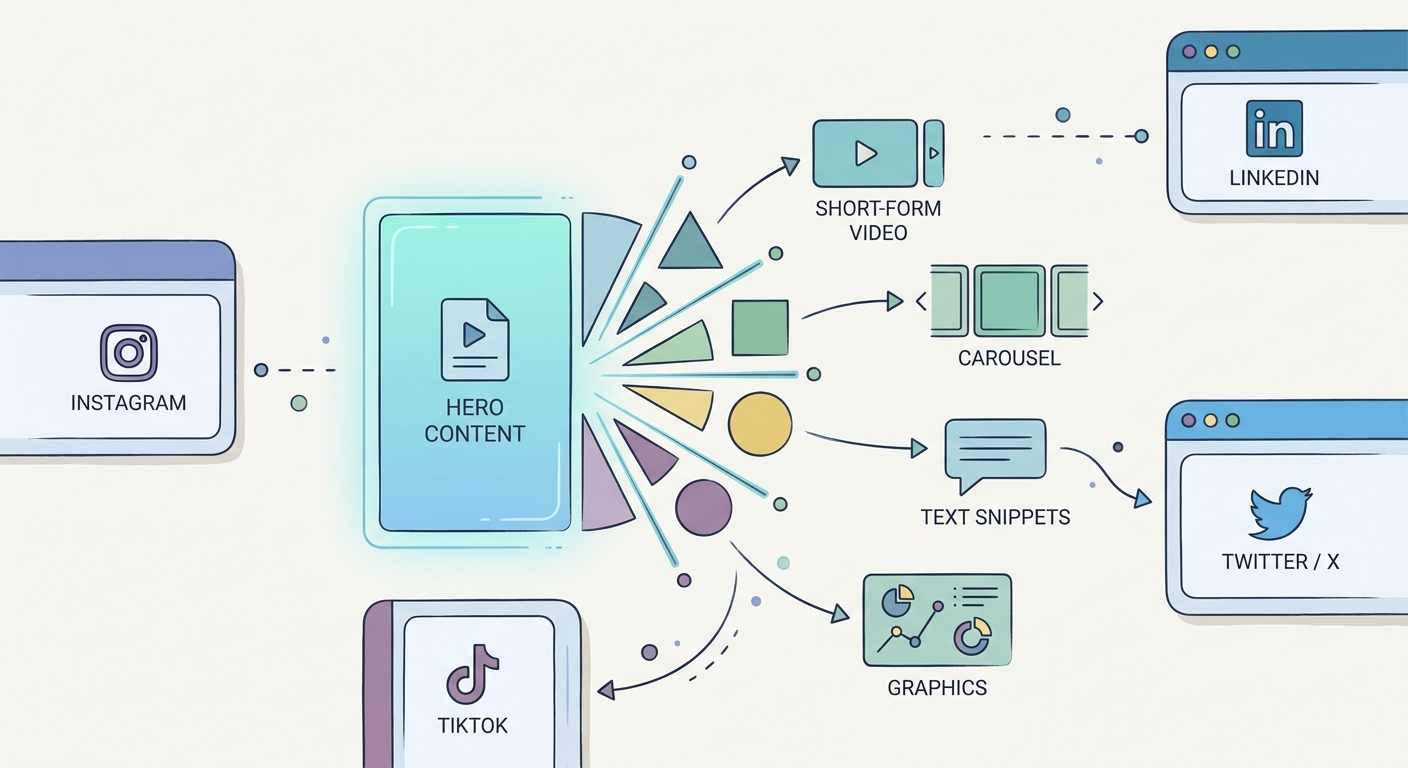
Content repurposing isn’t just a slick hack to save you a few hours on a Tuesday. In the high-speed, noisy digital landscape of 2026, it’s the only way to stay in the game without burning your candle at both ends.
The secret? Forget about blasting the same static image across five channels and calling it a day. That’s lazy. What you need is "Content Atomization." Think of it as a surgical procedure: you take one high-value "Hero" asset and break it down into native, platform-specific experiences. Move from a "Volume-first" mindset to a "Value-first" automation model. Stop shouting into the void and start building an ecosystem where your best ideas do the heavy lifting for you.
According to recent reports on Social Media Trends 2026, audiences are getting smarter. They’re tuning out the generic, mass-produced junk. If you want to win this year, nuanced, human-led automation is your biggest competitive advantage.
There’s a dangerous myth floating around that automation is here to replace the creative spark. It’s not. If you’re using AI to replace your brain, you’re doing it wrong. The best marketing teams treat AI like a force multiplier—a tireless engine that handles the grunt work of transcribing, formatting, and structural drafting. You? You provide the soul.
When you lean entirely on AI, you end up with "slop." You know the type: content that technically makes sense but lacks cultural nuance, emotional hooks, and that specific brand "zing" that turns a random scroller into a loyal follower. As noted in discussions on the Future of AI in Marketing, the real ROI of automation lives in the "Human-in-the-loop" workflow. Your job as a strategist is simple: provide the intent, the industry context, and the final polish. AI gives you the speed; you give it the empathy.
Content atomization is a philosophy. Treat your long-form content as a "Hero Asset"—a gold mine of authority—and shatter it into a dozen micro-assets that live natively on different platforms.
Write a 2,000-word deep-dive? You haven't just written a blog post. You’ve created a video script, three LinkedIn thought-leadership posts, a punchy X thread, and a series of Instagram carousels. As defined by the Content Marketing Institute, this approach ensures you aren't just recycling content. You’re re-packaging your core message to fit the behavioral expectations of the audience on each platform. Don’t just share a link. Meet your audience where they actually live.
Efficiency isn't an accident. It’s a byproduct of a rigid, repeatable system. If you aren't using a visual map for your content, you’re leaving engagement on the table. Here is the blueprint for a high-performance, human-in-the-loop workflow.
graph TD
    A[Hero Asset: Long-form Blog/Video] --> B[AI Extraction Phase: Key Insights & Quotes]
    B --> C{Platform Adaptation Layer}
    C --> D[LinkedIn Post]
    C --> E[IG Carousel]
    C --> F[X Thread]
    C --> G[TikTok Script]
    D --> H[Human Review/Approval]
    E --> H
    F --> H
    G --> H
    H --> I[Scheduled Distribution]
This workflow ensures that nothing hits the web without a human eye checking for brand alignment. By automating the extraction phase, you cut your production time by 70%. Use that extra time to actually talk to your community or plan your next big strategy.
Too many brands treat social media like a megaphone. They broadcast, they walk away, and then they wonder why their engagement metrics are flatlining. Shifting to an intentional content ecosystem means viewing your social channels as a two-way street.
When you repurpose, you aren't just filling a calendar; you’re creating multiple doors for people to enter your conversation. If you need a refresher on the basics, our guide on how to build a content strategy provides the tactical framework for ensuring your repurposing efforts actually align with your business goals. Your goal is simple: a user who finds you on TikTok should feel the same brand pulse as someone reading your dense whitepaper on LinkedIn.
Building a stack requires looking at tool maturity. If you’re just starting, grab an "All-in-one" platform that handles the end-to-end process in one interface. If you’re an advanced team, move toward API-connected workflows that "trigger" repurposing tasks based on real-time performance data.
The Recommended Stack:
The biggest fear in scaling content is the "homogenization" of voice. If your posts sound like a soulless corporate bot, you’ve lost.
The fix? Granular prompt engineering. Don't just say, "write a tweet about this." Train your AI with your past successful posts, your specific company lexicon, and your stance on industry controversies. Then, enforce a strict "Human-in-the-loop" review step. If a generated post doesn't sound like it could have been written by one of your team members, rewrite it. Automation is the baseline, never the ceiling.
Imagine you publish a 2,500-word deep-dive on "The Future of Sustainable Logistics."
By the end of the month, you’ve touched your audience four times with the same core message, but through four distinct formats that feel fresh and native to the platform. You aren't "reposting"—you're reinforcing your authority across the entire digital ecosystem. This is how you move beyond vanity likes and start driving real community feedback and qualified leads.
The key is to use a "Brand Style Guide" as a system prompt. Feed the AI your best-performing, human-written content as a reference set, and always require a human to review the final output to ensure the tone and nuance match your company's personality.
No. Social media platforms do not penalize you for "duplicate content" in the same way search engines might. In fact, they prefer content that is formatted natively for their platform. As long as you are re-packaging the insight into a new format (e.g., turning text into a carousel or script), it is seen as fresh content.
Start with high-performing long-form assets that have already proven their value, such as webinars, podcasts, or deep-dive articles. These contain the highest density of thought-leadership and are the easiest to break down into smaller, bite-sized pieces.
A good rule of thumb is the "90-day cycle." Wait at least three months before refreshing or re-sharing the same core concept. When you do, update the statistics or add a new, timely angle to ensure the content feels relevant to the current conversation.
Focus on the constraints of the platform: use carousels for Instagram to encourage "swiping," use threads for X to encourage "expansion," and use conversational, opinion-heavy hooks for LinkedIn to encourage "comments." Every platform has a native language—speak it.
Social media autopilot uses AI to plan, draft, schedule and publish posts. Learn how the loop works, platform AI rules, and where a human must stay in charge.
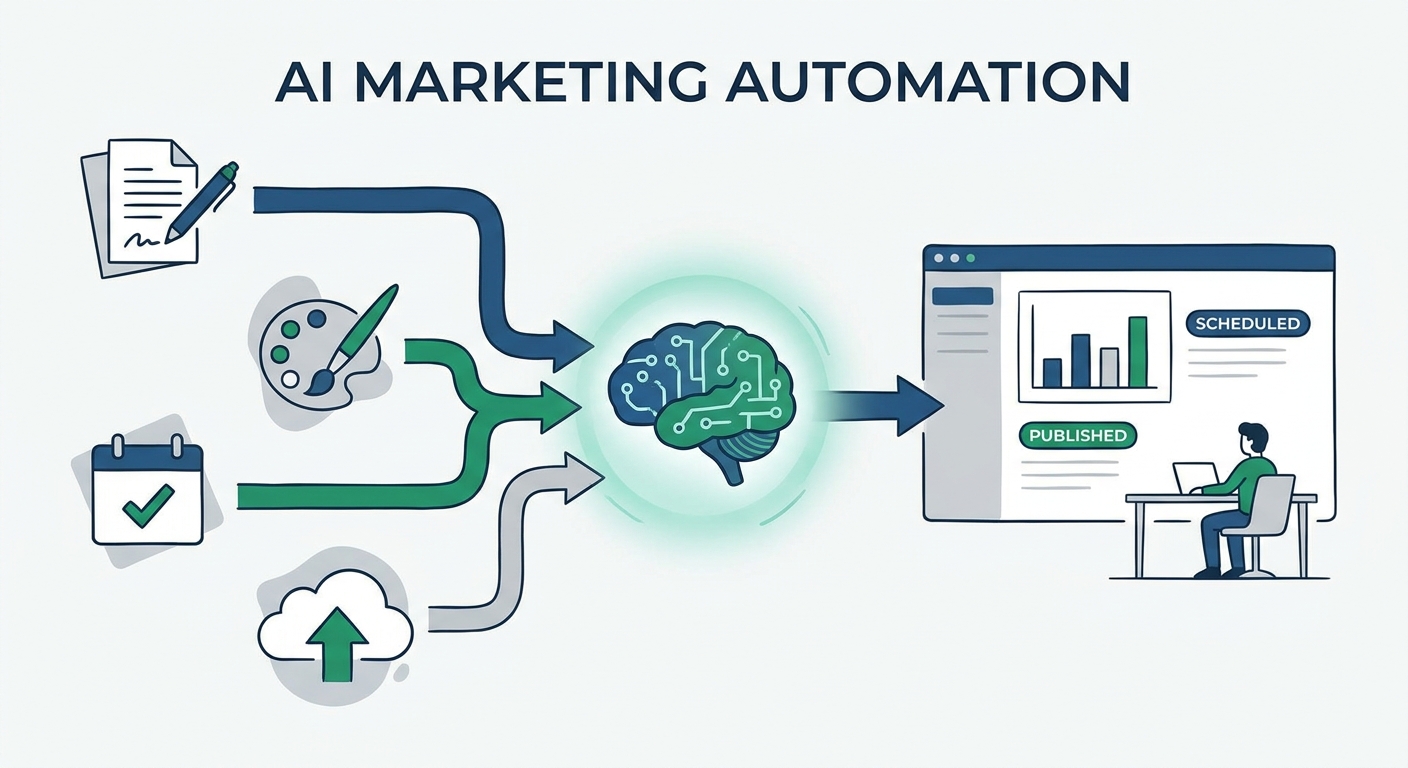
Stop manual content switching. Discover the 10 best AI social media post generators of 2026 to automate your marketing workflow and scale your content output.
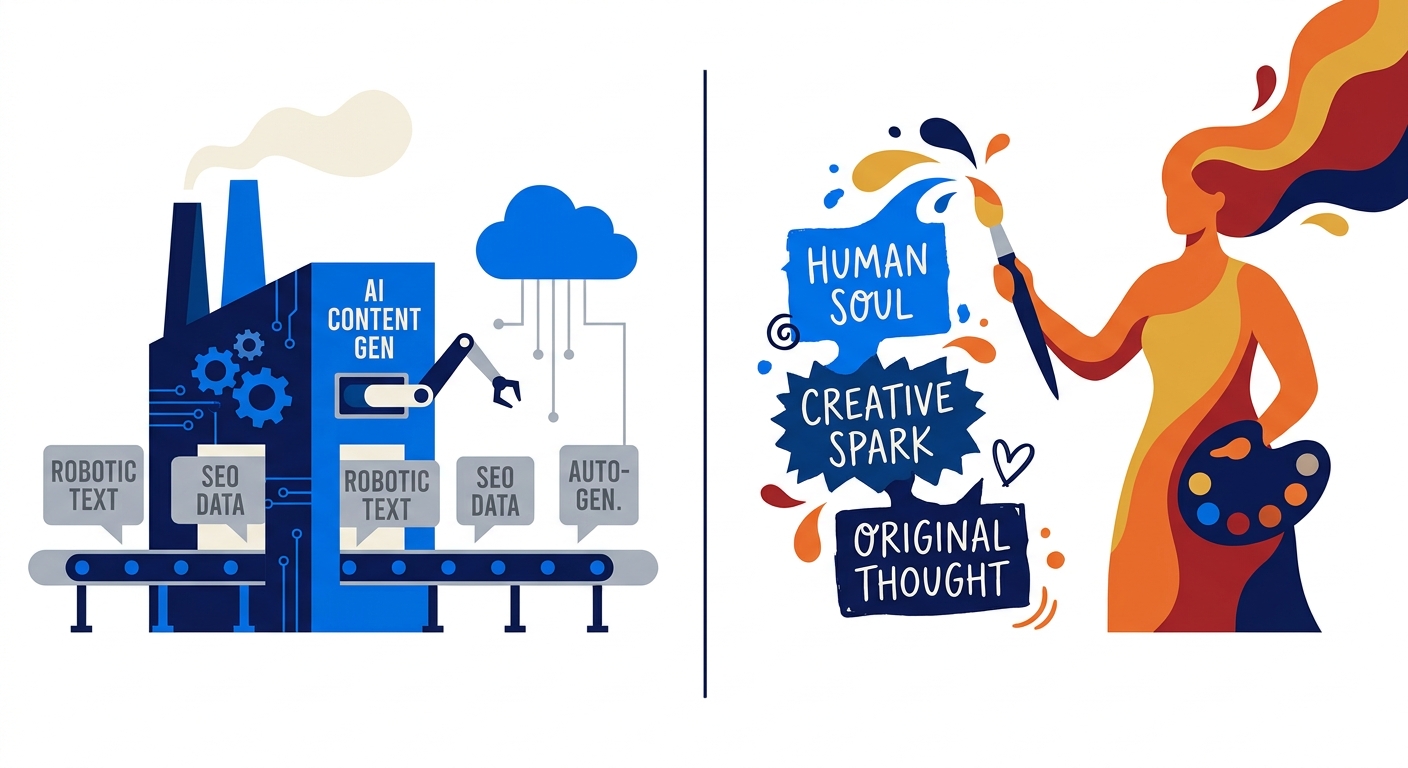
Stop posting AI-slop. Learn how to build a Zero-Touch content pipeline that automates social media strategy using your own proprietary data and insights.
Social9 schedules your posts on 11 networks, and Autopilot can draft them in your brand voice for you to approve. Start on the free plan.
We use strictly necessary cookies to run this site. With your permission, we also use analytics cookies to understand how the site is used. We never use advertising cookies. See our Cookie Policy.