Best times to post on each social network in 2026
When to post on Facebook, Instagram, LinkedIn, X, TikTok, YouTube, Pinterest and Threads in 2026, per Sprout, Buffer, Later and Hootsuite, plus a test plan.
Data & Studies
Stop tracking vanity metrics. Learn to measure intent, optimize engagement rates, and drive real revenue in the 2026 social media landscape. Michael JohnsonAnalytics & Performance SpecialistPublished 6 min read
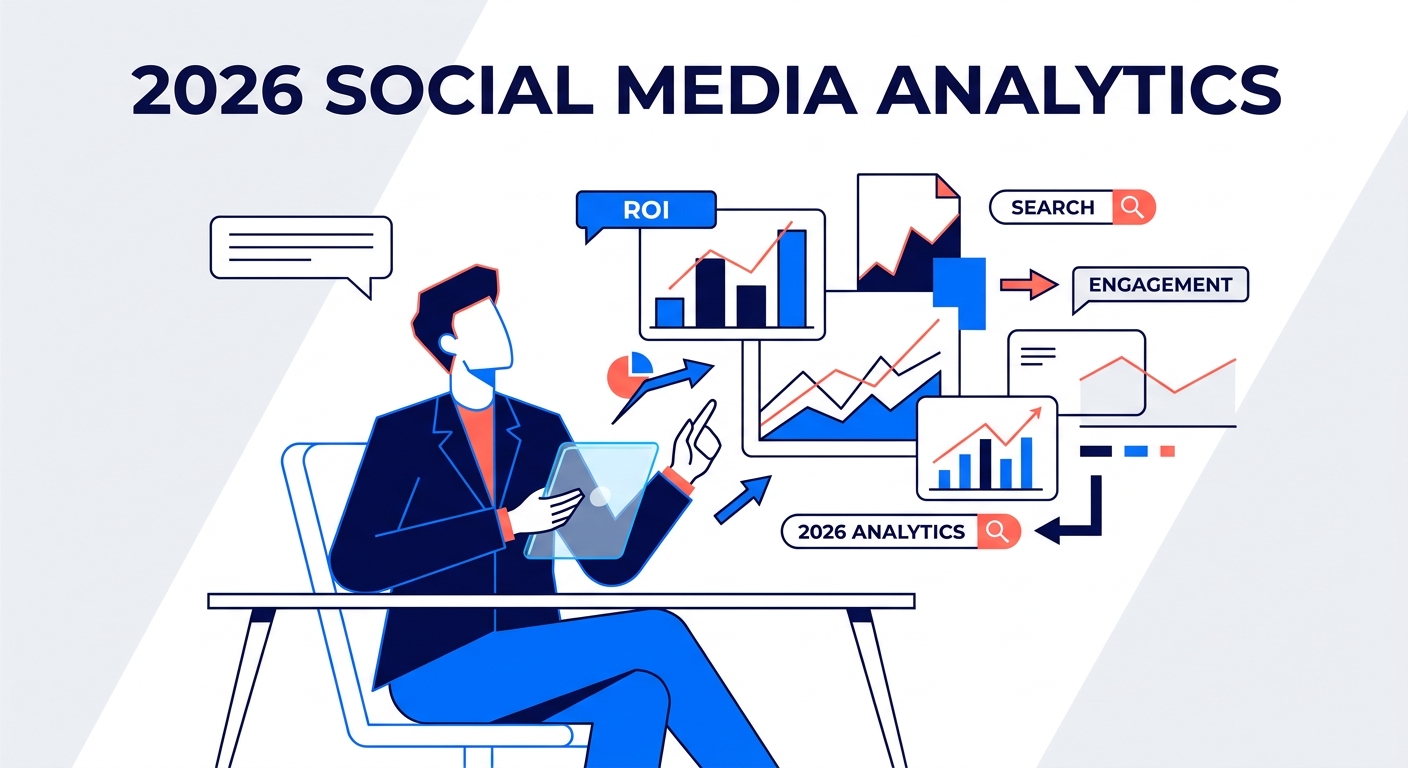
If your 2026 social media strategy still treats "Likes" as a primary success metric, you’re flying a plane with a broken altimeter. You aren't just off-course; you’re heading for a crash.
The game has changed. Social platforms aren't digital watercoolers anymore—they’ve become the primary search engines for Gen Z and Gen Alpha. With over 60% of product discovery happening directly on apps rather than Google, the era of "Broadcast Marketing" is stone-cold dead. You aren't just building a following; you’re building a storefront. ROI in 2026 isn't a vanity exercise of counting hearts. It’s a clinical, data-driven pursuit of cold, hard conversion. To survive, you have to stop measuring noise and start measuring intent.
We’ve entered the age of "Social Search Supremacy." Algorithms have ditched the chronological feed in favor of interest-based discovery. Your content is now served based on search relevance, not just how many people follow you. This shifts the weight of your strategy: your caption metadata and keyword alignment now matter way more than your brand's color palette.
Then there’s the "Authenticity Premium." After years of being bombarded by polished, AI-generated, high-production-value ads, users have developed a sixth sense for corporate fluff. They can smell a script from a mile away. Real-world testing proves that unpolished, human-centric content—the kind that feels like a genuine recommendation from a friend—consistently crushes high-budget studio assets. If your analytics show massive reach but abysmal conversion, your content is suffering from a "lack of human resonance." As noted in the latest 2026 social media trends, brands that ignore the community-first approach are watching their organic reach crater while users flock to spaces that offer actual value and two-way dialogue.
Stop obsessing over impressions. Reach is a vanity metric. It tells you how many people saw your billboard, not how many walked into the shop. In 2026, the only metrics that move the needle are "Intent-based."
graph TD
    A[Vanity Metrics: Likes, Follows, Impressions] --> B[Intent Metrics: Saves, Shares to DMs, Clicks]
    B --> C[Direct Conversion: Sales, Sign-ups, Revenue]

    style A fill:#f9f9f9,stroke:#333,stroke-width:2px
    style B fill:#e1f5fe,stroke:#0277bd,stroke-width:2px
    style C fill:#e8f5e9,stroke:#2e7d32,stroke-width:2px
Think about it: "Saves" are the new "Likes." A save means a user intends to come back to your product. "Shares to DMs" are even better—they signal that your content is being used as social currency. It’s the ultimate form of brand advocacy. And don't sleep on "Response Time." If a customer asks a question in your comments and you take six hours to reply, they’ve already bought from your competitor. In this economy, speed is the brand loyalty multiplier.
Tracking ROI in 2026 requires a bridge between your social apps and your backend sales data. If you’re relying solely on platform-native dashboards, you’re flying blind. You need a dual-layer system: use platform-native pixels (like Meta or TikTok) to feed signal data back to the algorithms, but use UTM parameters for every single link. This is how you ensure your CRM actually attributes a sale to the specific post that started it.
The user journey is messy. It spans 6.75 platforms on average before a purchase happens. If you haven't audited your funnel lately, our Social Media Audit Checklist can help you find where your traffic is leaking. Without proper attribution, you’re guessing. And guessing is a luxury no business can afford.
Optimizing for engagement (ERO) isn't about making people click; it’s about making them search. Social Search Optimization (SSO) is the technical discipline of making sure your content shows up when users type queries into TikTok or Instagram.
graph LR
    A[Keyword Research] --> B[Caption Integration]
    B --> C[Metadata Tagging]
    C --> D[Algorithmic Discovery]

    style A fill:#fff3e0,stroke:#ef6c00
    style D fill:#fff3e0,stroke:#ef6c00
Start with keyword research. What are your customers actually asking? Once you have those terms, weave them naturally into your captions and, crucially, your hidden metadata. If you struggle to keep this workflow consistent, our Content Calendar Management Guide provides the framework to institutionalize the process. If your content doesn't answer a search query or solve a specific problem, the algorithm has zero incentive to show it to new people.
Stop paying for "exposure." In 2026, the only way to justify influencer spend is "Cost per Conversion." Treat an influencer like a billboard, and you lose. Treat them like a sales channel, and you win. Give every creator a unique, trackable discount code or affiliate link to close the "attribution gap." Data shows creators are delivering 2x to 3x higher ROI than traditional display ads because they carry the weight of human trust. If an influencer can’t prove their ROI through direct sales, they shouldn't be on your payroll.
AI in 2026 isn't just for writing clever captions; it’s for reading the room. Use AI-powered listening tools to perform real-time sentiment analysis. These tools can spot a PR crisis or a shift in community mood—a surge in negative keywords or a weird tone in the comments—days before it hits the mainstream. Predictive analytics let you pivot your strategy before a trend dies or a sentiment shift becomes impossible to fix. You aren't just watching a dashboard; you’re monitoring the pulse of your community.
Benchmarks are a moving target, but they keep you sane. According to current social media benchmarks, engagement rates vary wildly by platform. LinkedIn is still king for B2B, while TikTok owns raw discovery. If your engagement is significantly lower than these averages, it’s rarely a "frequency" issue—it’s a value-proposition issue. Use these benchmarks to pressure-test your strategy, but remember that your specific niche has its own "normal."
To build an ROI framework that holds up to executive scrutiny, you must master multi-touch attribution. Your formula for "Social Commerce Conversion Value" should look like this:
(Total Revenue from Social-Attributed Sales) - (Total Ad Spend + Influencer Fees + Content Creation Costs) / (Total Investment).
Don't forget to include "Assisted Conversion" value—those sales that started with a social click but finished on a direct search. By tagging every touchpoint, you finally prove that social media is a profit center, not just a line item.
The most reliable metric is "Conversion Value." This represents the direct revenue generated through social commerce or tracked via UTM parameters from social referrals. If you can’t link a dollar sign to the interaction, it’s just noise.
You are likely optimizing for "vanity" engagement—likes and basic comments—rather than "intent-based" engagement. Focus on metrics that signal high intent, such as saves, shares to DMs, and click-throughs to product pages.
You must mandate the use of unique discount codes and affiliate tracking links for every influencer. This allows you to attribute sales directly to their specific content, moving your influencer strategy from "brand awareness" to "revenue generation."
Platforms now prioritize keywords in captions and metadata over keyword stuffing. Focus on search intent matching: write your captions to answer the specific questions your target audience is typing into the search bar.
The "Authenticity Premium" refers to the audience's preference for unpolished, human-centric content over AI-generated or highly produced ads. Analytics reflect this through higher conversion rates on "raw" content, as it builds trust faster than corporate, sterile messaging.
When to post on Facebook, Instagram, LinkedIn, X, TikTok, YouTube, Pinterest and Threads in 2026, per Sprout, Buffer, Later and Hootsuite, plus a test plan.
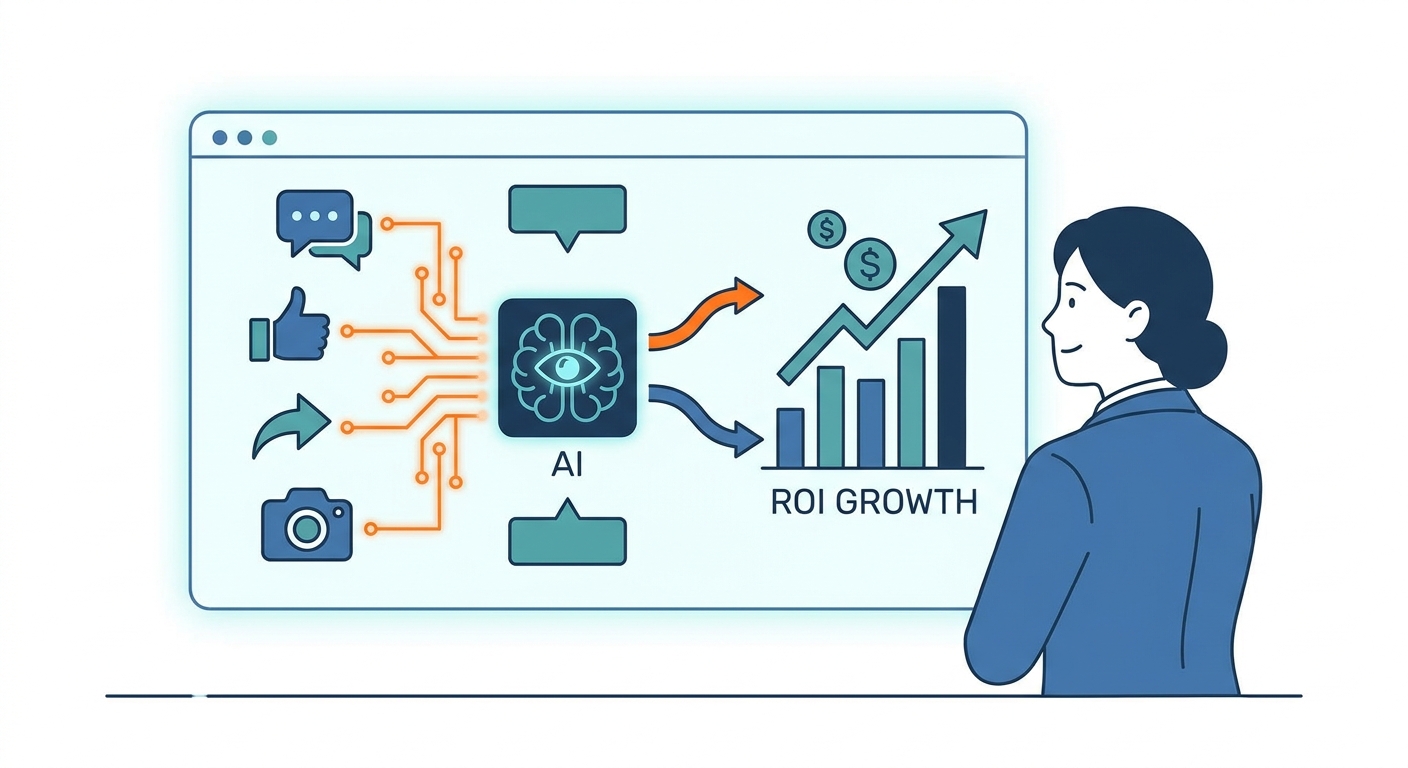
Stop tracking vanity metrics. Learn how AI-powered analytics tools shift social media ROI from descriptive reporting to predictive, real-time revenue growth.
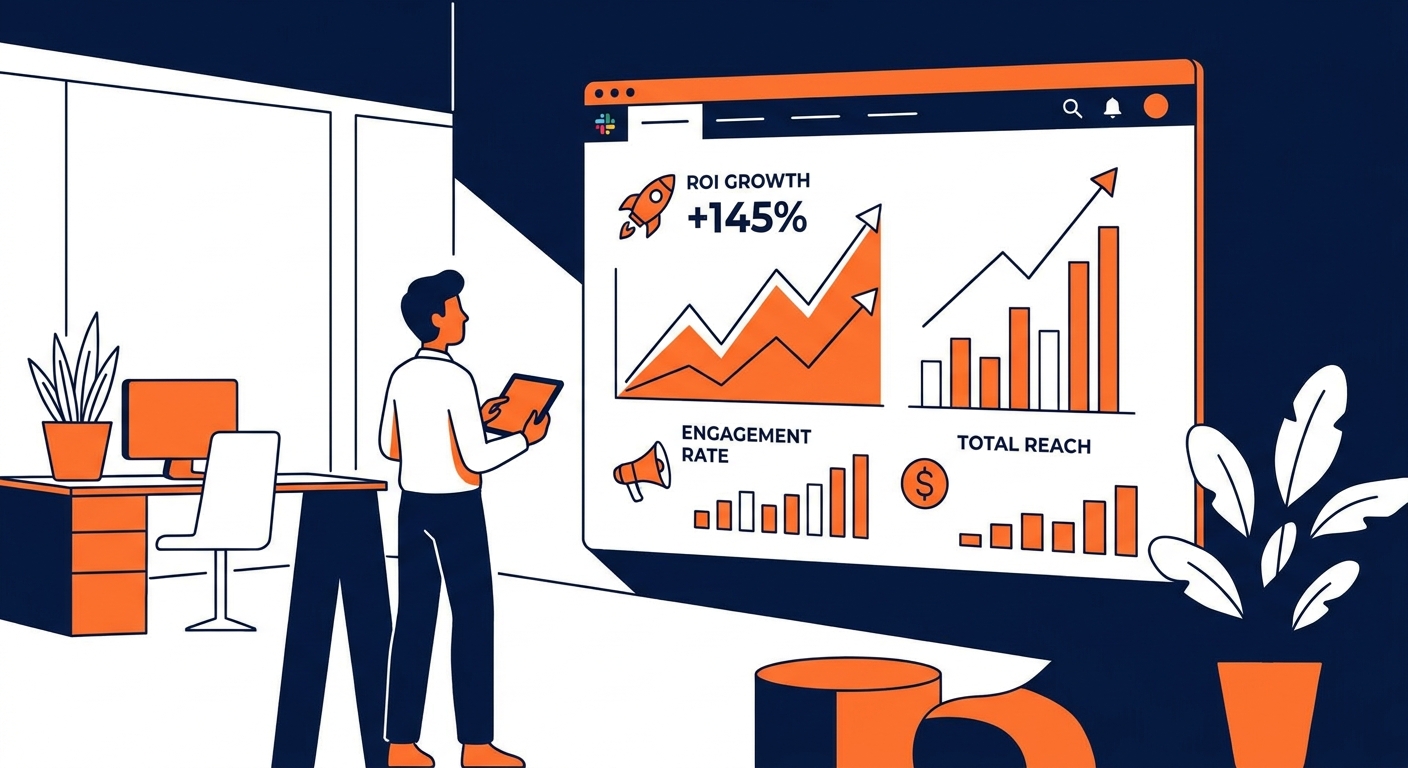
Stop tracking vanity metrics. Learn how to use social media reporting tools to prove ROI, bridge the dark funnel, and align social activity with business goals.
Social9 schedules your posts on 11 networks, and Autopilot can draft them in your brand voice for you to approve. Start on the free plan.
We use strictly necessary cookies to run this site. With your permission, we also use analytics cookies to understand how the site is used. We never use advertising cookies. See our Cookie Policy.