What is social media autopilot? How AI posting works (and where to keep a human)
Social media autopilot uses AI to plan, draft, schedule and publish posts. Learn how the loop works, platform AI rules, and where a human must stay in charge.
Autopilot & AI
Stop using AI like a typewriter. Learn how to build agentic workflows that automate research and drafting while keeping your unique creative voice. Alex ChenAI Content StrategistPublished 5 min read
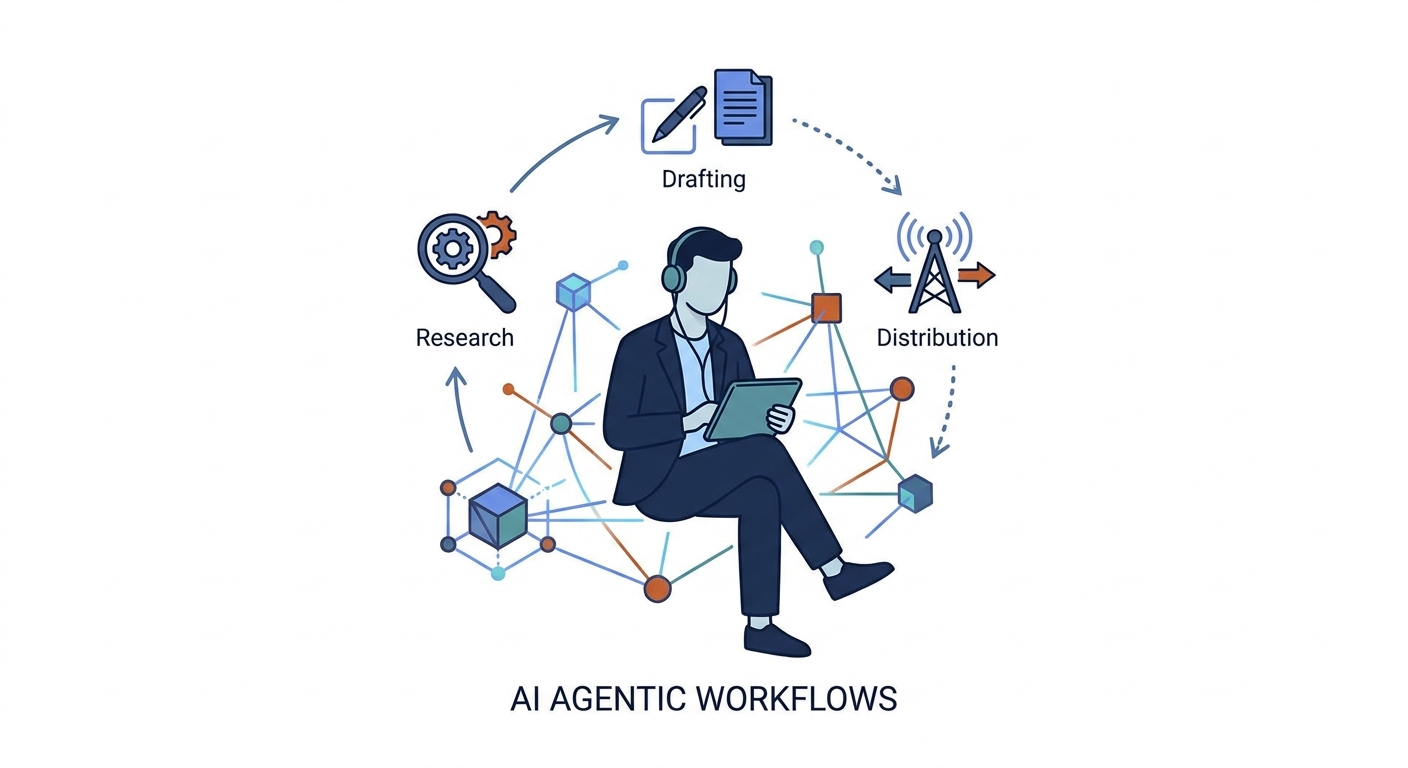
Let’s be real: the era of just typing a prompt into a chatbot and hitting "publish" is dead. It’s 2026. If you’re still treating AI like a glorified typewriter, you’re losing.
Content creation has shifted. It’s no longer about who can generate the most text the fastest. It’s about building "Agentic Workflows"—automated systems that handle the grunt work of research, drafting, and distribution so you can actually focus on the creative stuff. With 75% of marketers now integrating AI into their daily grind, the playing field has leveled out. Your competitive edge isn't the number of tools in your belt; it’s how you wire them together into a system that sounds like you.
We’ve moved past the "standalone app" phase. Remember when you had ten tabs open just to write one blog post? That’s amateur hour.
Today’s pros are building pipelines. Think of it like a relay race: an AI researcher fetches live data, a drafting agent structures the narrative, and an automated editor polishes the tone. It’s about orchestration, not just generation.
This transition is all about ROI. Creators are reporting a 60-70% reduction in production time for deep-dive assets. But here’s the catch: speed is a trap if you’re shipping garbage. The "Human-in-the-Loop" mandate isn't just a suggestion; it’s the only way to stay relevant. AI is the engine, sure. But you’re the pilot. Without your editorial judgment, your emotional stakes, and your ability to call out a hallucination, you’re just churning out digital noise.
Stop thinking about "generating content." Start thinking about "orchestrating processes." By linking specialized agents, you create a feedback loop that amplifies your natural creativity rather than drowning it out.
graph TD
    A[Research Agent] --> B[Drafting Agent]
    B --> C[SEO/Analysis Agent]
    C --> D{Human Review}
    D -- Needs Revision --> B
    D -- Approved --> E[Publishing/Distribution]
This loop acts as a quality control gate for everything you produce, whether it’s a white paper or a quick social thread. By automating the heavy lifting, you buy back hours of your day for high-level strategy—which is exactly why we emphasize this specific architecture in our Content Marketing Services.
The market has finally matured. The "best" tools today aren't the ones with the most bells and whistles; they’re the ones that actually play nice with the rest of your tech stack.
The days of robotic, "AI-sounding" copy are officially over. The top-tier tools now focus on semantic intent—they actually get what you’re trying to say. If your output feels stiff, you’re likely not feeding the model enough context. You should refer to our Brand Voice Guide to learn how to train these models to speak your language. Platforms like Jasper and Copy.ai have morphed into sophisticated engines that learn your lexicon. They don't just write; they mimic your subject matter expertise.
Visuals used to be the biggest bottleneck in the creative process. Not anymore. Canva Magic Studio has become the industry standard because it acts as the connective tissue for everything else. For high-fidelity, complex creative work, Midjourney is still king for those who care about aesthetic control. The secret? Use tools that let you push a design straight from a prompt to your scheduler without five manual steps in between.
Video production has seen the most violent shift. Descript has completely changed the game—you edit video like you edit a Word doc. It’s that simple. And for scaling? HeyGen has made it possible to turn one long-form video into a dozen social clips without spending all day in an edit suite. According to Search Engine Journal: AI & SEO, these automated clips are getting indexed as high-intent content, making them non-negotiable for search visibility.
| Metric | The Starter Pack | The Enterprise Agency Stack |
|---|---|---|
| Primary Goal | Individual efficiency | Scalable, multi-channel production |
| Core Tools | Canva, ChatGPT (Plus), Notion | Custom LLMs, HeyGen, Descript, WordPress API |
| Complexity | Low; plug-and-play | High; requires API connections |
| Cost | Low (Monthly subs) | High (Platform fees + dev time) |
Don't just collect tools like Pokémon cards. Focus on connectivity. Where are you getting stuck? If you spend three hours researching, get an agent that hooks into live web-browsing APIs. If you hate distribution, focus on tools that link your CMS directly to social media.
Think about a 1,500-word blog post. The old manual way? That’s a 6-hour slog. In an optimized stack—where an agent pulls the research, a draft is generated in a brand-trained LLM, and you perform a 20-minute surgical edit—that production cycle drops to under an hour. That’s not just speed. That’s bandwidth. That’s time you can spend on the high-intent work that actually moves the needle on revenue.
Here is the truth: "The Ethical Premium" is the new competitive advantage. As everyone else floods the internet with mid-tier AI slop, your audience is going to crave authenticity.
Be transparent. Watermark your work. When you're prompting, stop being lazy. Don't just say "write a post about X." Give the AI a personality. Give it a specific, multi-step prompt that demands personal anecdotes, counter-intuitive arguments, and unique analogies. If the AI didn't have to work for it, your reader won't either.
We are moving into the era of "Intent Mapping." Stop trying to trick the algorithm with keyword stuffing. Start using AI to figure out exactly what your user wants, and then provide the most direct, high-value answer.
The creators who win in 2026 will be the ones who treat AI like a hyper-talented, slightly erratic intern. It can do the heavy lifting at lightning speed, but it needs a seasoned manager to provide the vision. That manager is you.
AI will not replace creators, but creators who use AI will replace those who don't. The future is one of augmentation, where AI handles the heavy lifting of structure and data, while humans provide the unique perspective, emotional nuance, and E-E-A-T (Experience, Expertise, Authoritativeness, and Trustworthiness) that search engines demand.
Search engines penalize low-quality, generic filler, not AI-assisted content. To avoid penalties, ensure every piece of content undergoes rigorous human editing, fact-checking, and the infusion of unique insights that aren't found in training data. Focus on high-intent content that solves genuine user problems.
Beginners should stick to all-in-one platforms like Canva or ChatGPT Plus for their ease of use and integrated workflows. Professionals and agencies should look toward "stackable" tools that offer API access, allowing them to build custom, automated pipelines that connect their CMS, CRM, and creative design tools.
You must train the model. Use custom instructions, upload your existing style guides, and provide the AI with examples of your best-performing past content. Fine-tuning models to mirror your stylistic guidelines is the only way to ensure that your AI-generated output sounds like you, not like a generic chatbot.
Social media autopilot uses AI to plan, draft, schedule and publish posts. Learn how the loop works, platform AI rules, and where a human must stay in charge.
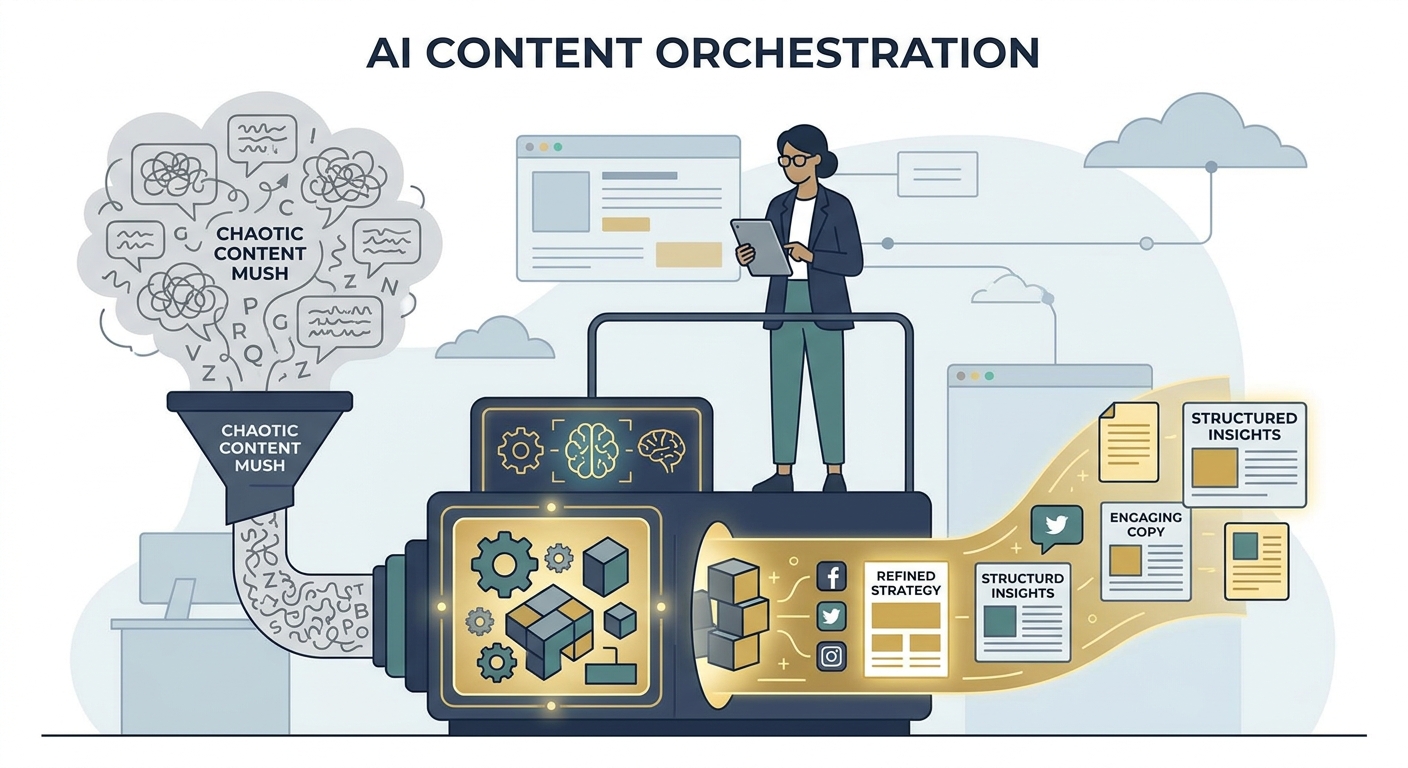
Stop 'prompting and praying.' Learn how to master agentic workflows and human-centric AI strategies to scale your content marketing efforts in 2026.
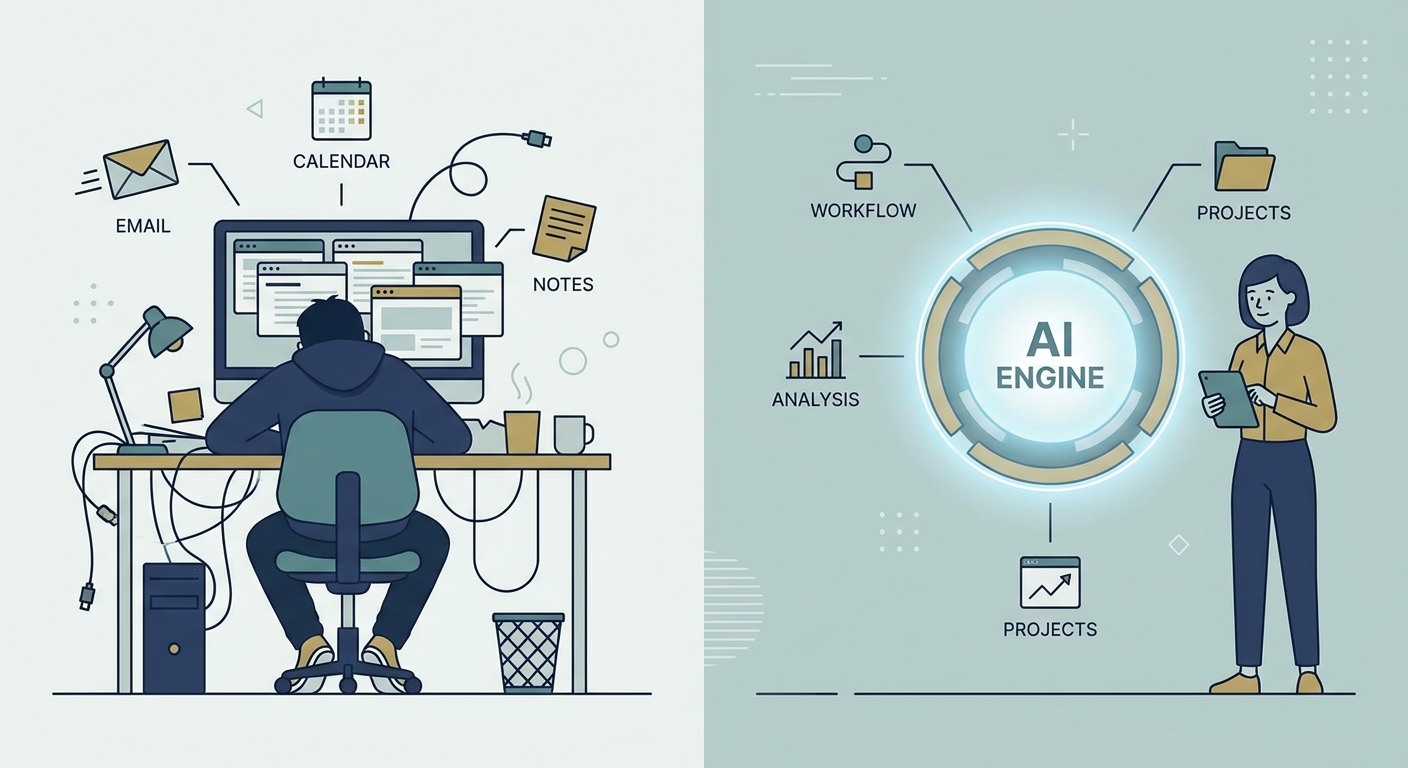
Stop tab-hopping. Learn how to choose the right AI content tools in 2026 by prioritizing agentic workflows, GEO strategies, and scalable content pipelines.
Social9 schedules your posts on 11 networks, and Autopilot can draft them in your brand voice for you to approve. Start on the free plan.
We use strictly necessary cookies to run this site. With your permission, we also use analytics cookies to understand how the site is used. We never use advertising cookies. See our Cookie Policy.