Best times to post on each social network in 2026
When to post on Facebook, Instagram, LinkedIn, X, TikTok, YouTube, Pinterest and Threads in 2026, per Sprout, Buffer, Later and Hootsuite, plus a test plan.
Data & Studies
Stop chasing vanity metrics. Learn how to track social media ROI, bridge the attribution gap, and leverage AI for predictive growth in 2026. Alex ChenAI Content StrategistPublished 5 min read

Social media analytics has finally grown up. It’s no longer just a playground for vanity metrics; it is the absolute backbone of modern business intelligence. If you’re still obsessing over like counts, you’re basically flying a jet while staring at the fuel gauge of a rusty bicycle.
In 2026, the mandate is simple: bridge the gap between your creative output and actual dollars in the bank. According to the Sprout Social Index, 65% of marketing leaders are now under the gun to prove how social media feeds business goals just to keep their budget alive. If your analytics don’t tell a story of profit, customer acquisition, or brand equity, they aren't analytics. They’re just noise.
Ever feel like your social efforts are disappearing into a black hole? You’re not alone. The culprit is the "Zero-Click" content trap. Platforms like TikTok, Instagram, and LinkedIn have stopped being simple traffic drivers. They are destination environments. They want users to stay, watch, and scroll—not click away to your landing page.
When your content goes viral but your website traffic stays flat, the traditional funnel breaks. You’re likely hitting the "attribution gap"—a failure to account for "Dark Social." This is the untraceable word-of-mouth, the private DMs, and the shares that move the needle without ever showing up in your Google Analytics.
Stop hunting for that one "last click" to justify your entire campaign. It doesn't exist. A customer might see a LinkedIn post, watch a YouTube short, and then Google your brand name days later. If your dashboard only credits the Google search, you’re blind to the social engine that actually fueled the sale. Social media is an influence multiplier, not a checkout counter. Treat it that way.
Stop looking in the rearview mirror. Retrospective reporting—telling your boss what happened last month—is easy. Predictive modeling is what separates the pros from the amateurs. You need to use AI to stitch together cross-platform data into a cohesive narrative. As noted in the Hootsuite 2026 Social Trends report, the integration of AI is the single most significant shift in how brands manage their growth cycles.
graph LR
    A[Raw Data] --> B[AI Synthesis]
    B --> C[Predictive Modeling]
    C --> D[Strategy Adjustment]
    D -.->|Feedback Loop| A
By feeding historical performance data into predictive models, you can forecast which content will resonate before you even hit record. This isn't just about efficiency; it's about killing the cost of experimentation. When you automate the synthesis of your data, you stop guessing and start engineering growth.
Survival in the current market requires a complete audit of how you define "success."
Awareness is not just reach. Reach is a cheap commodity. Instead, measure "Share of Voice." Are you the brand people talk about when they discuss your industry? Keep a close eye on sentiment analysis. If you reach a million people but 40% of them are roasting you in the comments, you have a massive reputation problem.
Engagement must be weighted. A "save" or a "share" is worth a hundred "likes." Likes are the digital equivalent of a polite nod in a hallway. Saves and shares are active endorsements. They prove your content provided real utility or identity-signaling value.
Conversion and CAC. Track your Social Commerce metrics with the same rigor you apply to paid search. Your Customer Acquisition Cost (CAC) on social should be compared against your organic reach. If your organic content is lowering your blended CAC, you have a scalable strategy.
Retention and LTV. Use social data to fuel your retention. Look at repeat interactions. Are your top social engagers also your longest-tenured customers? If the answer is yes, you’ve found the bridge between engagement and Lifetime Value (LTV).
To prove the value of your social efforts to the C-suite, use the fundamental ROI formula: (Social Return - Investment) / Investment.
The trick, of course, is defining "Social Return." If you’re running an influencer campaign, don't just look at coupon code redemptions. You must account for the lift in organic brand search and the reduction in ad spend required to retarget those audiences. For a deeper look at how to quantify the influence of creators, refer to our Beginner’s Guide to Influencer Marketing.
When you present this to leadership, ditch the spreadsheet of impressions. Show them a chart linking social sentiment and traffic spikes to direct revenue growth. When you can draw a clear line between a video series and a 15% increase in lead quality, you stop being a "cost center" and start being a revenue engine.
Manual reporting is a productivity killer. You should be analyzing strategy, not copy-pasting numbers from a dashboard into a PowerPoint deck. Build an automated workflow that normalizes data across different platforms—TikTok’s video-first metrics and LinkedIn’s professional-first engagement—into one source of truth.
graph TD
    A[API Integration] --> B[Data Cleaning]
    C[Automated Reporting Template] --> D[Executive Review]
    D -->|Insights| E{Approval/Action}
    E -->|Refine| A
Establish two rhythms: the "Weekly High-Level Check-in" for immediate course correction, and the "Monthly Deep Dive" for strategic planning. If you’re struggling to identify exactly what to measure during these audits, use our Comprehensive Social Media Audit Checklist to ensure nothing falls through the cracks.
As discussed in the Coherent Market Insights report, the social media landscape is becoming increasingly volatile. "Chaos Culture" is the new standard. It refers to your brand’s ability to jump into fast-moving, unpredictable trends without losing your core identity.
Measurement in a chaotic environment is hard—but necessary. You must balance the agility required to participate in these trends with the discipline of measurement. Don't be rigid; be prepared. Learn How to Build a Content Calendar that leaves room for spontaneous, data-informed pivots while maintaining a baseline of strategic, high-value content.
The most dangerous thing you can do is compare this month’s performance only to last month’s. Sure, you might be growing, but are you growing as fast as the market?
Internal silos create a false sense of security. You need industry benchmarks to validate your performance. If your engagement rate is up 5% but the industry average for your vertical is up 20%, you are actually losing ground. When the data shows you’re falling behind, use it as a pivot point. Re-examine your creative, adjust your posting cadence, and lean into the formats that are currently over-indexing in your sector. Data is not just a report card; it is a compass.
Focus on conversion rates, customer acquisition cost (CAC), and sentiment analysis rather than vanity metrics like follower counts or likes.
Focus on tying your social metrics directly to revenue, cost savings from organic reach, and the impact social sentiment has on brand equity and customer lifetime value.
Conduct a deep-dive audit monthly to adjust your long-term strategy, while maintaining a high-level automated dashboard for weekly performance monitoring.
Utilize UTM parameters, track referral traffic directly in your CRM, and use post-purchase surveys to ask customers how they discovered your brand to capture untraceable social influence.
When to post on Facebook, Instagram, LinkedIn, X, TikTok, YouTube, Pinterest and Threads in 2026, per Sprout, Buffer, Later and Hootsuite, plus a test plan.
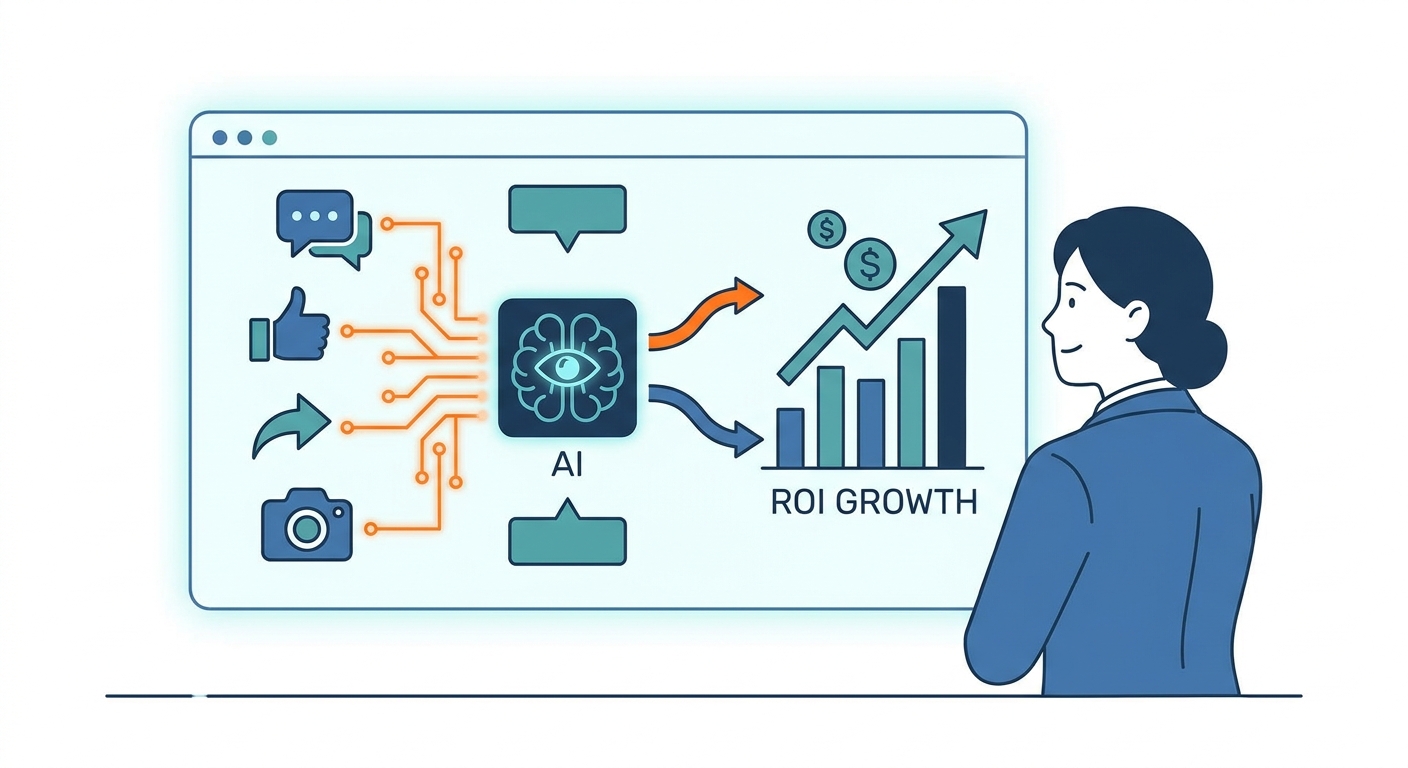
Stop tracking vanity metrics. Learn how AI-powered analytics tools shift social media ROI from descriptive reporting to predictive, real-time revenue growth.
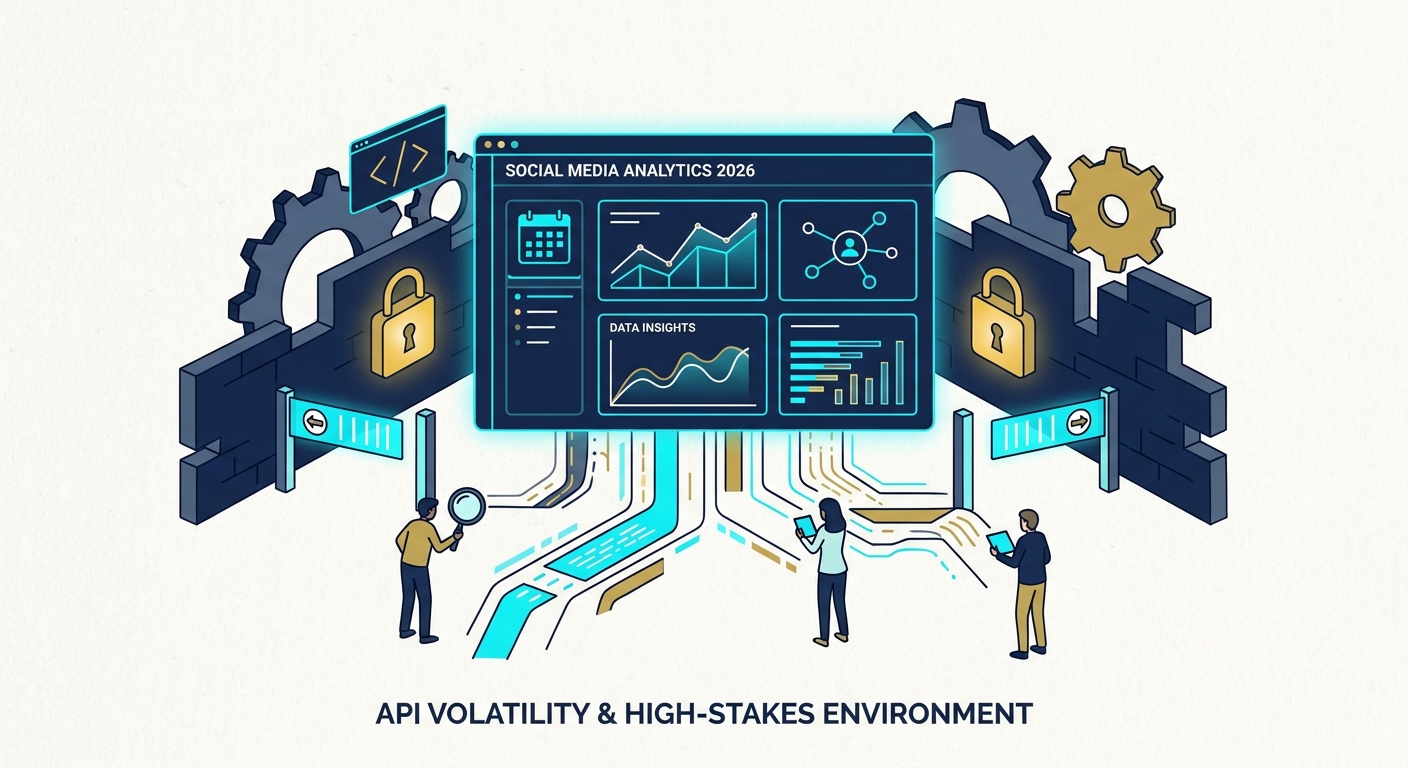
Stop using outdated social media tools. Learn why a modular, AI-native 2026 toolkit is essential for conversion-focused content management and API-verified analytics.
Social9 schedules your posts on 11 networks, and Autopilot can draft them in your brand voice for you to approve. Start on the free plan.
We use strictly necessary cookies to run this site. With your permission, we also use analytics cookies to understand how the site is used. We never use advertising cookies. See our Cookie Policy.