What is social media autopilot? How AI posting works (and where to keep a human)
Social media autopilot uses AI to plan, draft, schedule and publish posts. Learn how the loop works, platform AI rules, and where a human must stay in charge.
Autopilot & AI
Stop using bland AI copy. Learn the Performance-First prompt framework to generate high-converting social media ads that drive real engagement and ROI. Nikita ShekhawatSocial Media Growth ExpertPublished Updated 6 min read
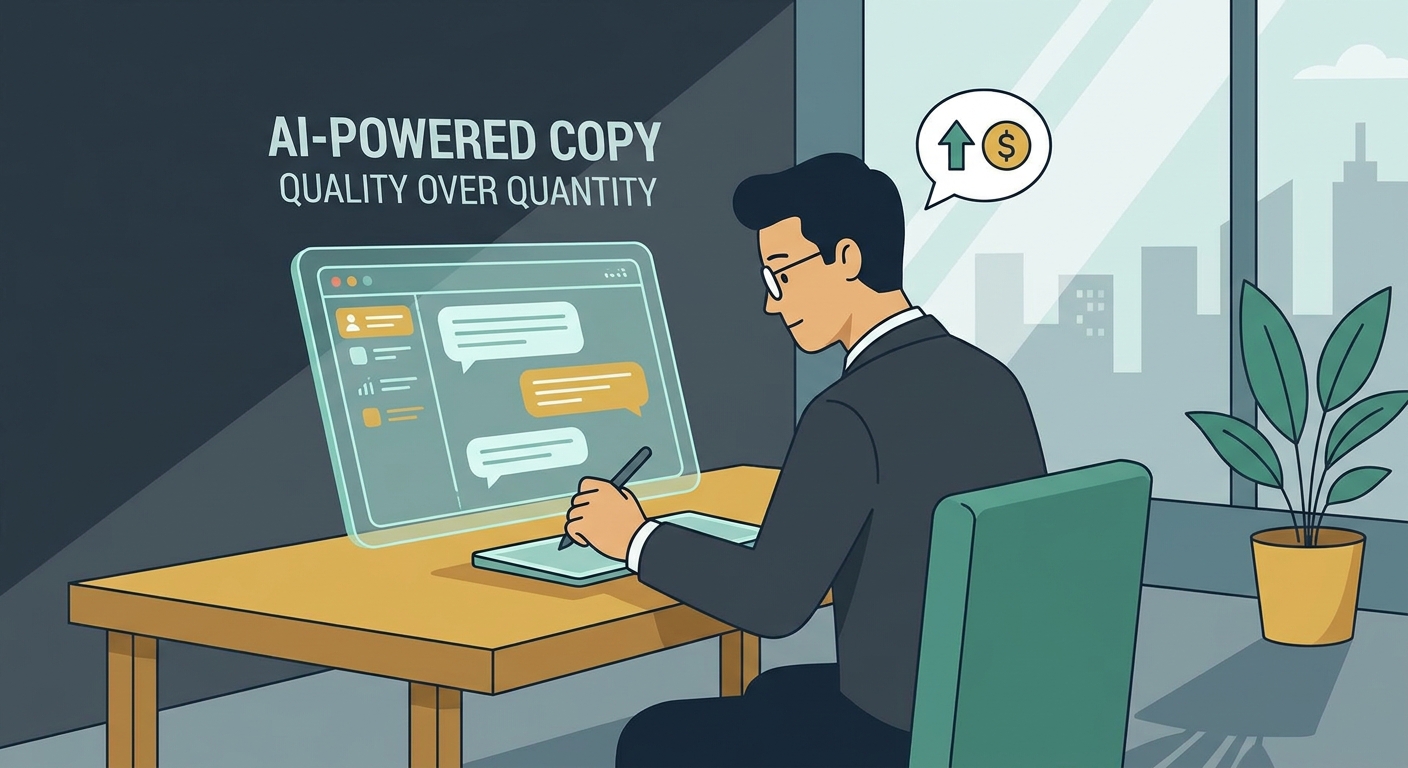
You’re stuck in the "average" trap. We’ve all been there: you drop a few product notes into a chatbot, hit enter, and wait for the magic. Instead, you get a bland, robotic paragraph that sounds like it was written by a committee of middle managers in 2022.
If your conversion rates are tanking, don’t blame the tech. AI isn’t incapable of writing—it’s just being treated like a summer intern who hasn’t been briefed. In 2026, the era of "AI volume" is officially dead. Real audiences have developed a sixth sense for synthetic, hollow marketing copy. They scroll past it with surgical precision. To win today, you have to pivot from volume to validation. Your copy needs to be rooted in our comprehensive content marketing strategy guide so your ads act as a cohesive part of your funnel, not just noisy, isolated interruptions.
The death of bulk-generated content is old news. According to the State of AI in Marketing Report 2026, brands that prioritize high-intent, human-vetted creative are seeing a 40% higher engagement rate than those relying on the "set it and forget it" automated sludge. It is time to stop asking for "an ad" and start prompting for performance.
The failure of most ad copy doesn't lie in the AI's intelligence; it lies in the prompt’s architecture. A "Performance-First" framework treats the AI like a strategic partner, not a magic vending machine. You aren't just requesting text—you’re building a logic engine.
The architecture consists of four non-negotiable pillars: [Role] + [Context/Persona] + [Objective/Constraint] + [Output Format].
graph TD
    A[Brand Data Input] --> B{Performance-First Prompt Logic}
    subgraph Prompt Engine
    B --> C[Role Assignment]
    B --> D[Persona/Context Definition]
    B --> E[Objective & Constraints]
    end
    C & D & E --> F[AI Generation Engine]
    F --> G[Ad Copy Variations]
    G --> H[Validation: A/B Test]
    H -->|Iterate| A
When you define the Role (e.g., "You are a direct-response copywriter specializing in high-ticket SaaS"), you prime the model for a specific tone. Adding Context—your audience’s specific pain points or your brand's unique value proposition—prevents the AI from hallucinating generic benefits. Constraints are where you kill the fluff. Tell the AI to "avoid hyperbole," "write at a 4th-grade level," or "limit the hook to 10 words." Finally, specifying the Output Format ensures you get clean, copy-paste-ready variations rather than a wall of commentary.
The biggest mistake marketers make is assuming the AI knows who they are. If you don't provide a "Style Reference Document," the AI defaults to "corporate bland." You need to build a digital DNA profile for your brand. Before you write a single ad, feed the AI your best-performing organic posts, your mission statement, and a list of words you absolutely despise.
By learning how to define your brand voice, you create a benchmark the AI can actually hit. When you prompt the model, include a "Style Guardrails" section: "Use a conversational, slightly irreverent tone. Avoid passive voice. Use short, punchy sentences. Never use words like 'unleash,' 'game-changer,' or 'delve.'" When the AI has a clear boundary for what not to do, its creative output suddenly stops sounding like a robot trying to win a corporate award.
Generic ads list features. High-converting ads trigger biological impulses. To move beyond surface-level copy, your prompts must explicitly instruct the AI to weave in proven psychological frameworks. According to The Psychology of Persuasion, principles like scarcity, social proof, and authority are the bedrock of human compliance.
Don’t just ask for an ad. Ask the AI to write an ad that "uses Cialdini’s principle of social proof by highlighting how 5,000+ industry leaders have switched to our platform." Or, "Apply the principle of scarcity by emphasizing that this offer expires in 48 hours, creating a sense of urgency without sounding desperate." When you force the AI to anchor its creativity in human psychology, you stop writing for algorithms and start writing for the person holding the phone.
Stop reinventing the wheel. Use these modular templates to build your ad sets. The beauty of these templates is their flexibility—you can swap out the bracketed variables for any product or service.
Template 1: The "Problem-Agitation-Solution" (PAS) Framework
"Act as a world-class copywriter. Write 3 variations of a Facebook ad using the PAS framework. Product: [Product Name]. Target Audience: [Audience]. Problem: [Pain Point]. Tone: Empathetic but authoritative. Constraint: Keep the hook under 12 words. Do not use buzzwords."
Template 2: The "Social Proof" Hook Generator
"Act as a growth marketer. Generate 5 ad hooks for [Product]. Context: We have [Number] users and a [Rating] on Trustpilot. Goal: Build immediate trust with a cold audience. Format: Bullet points. Focus on the transformation, not the features."
Template 3: The "Platform-Native" Adaptation
"Rewrite this ad copy for TikTok. Constraints: Use a 'TikTok-first' style. Start with a visual hook that stops the scroll. Use conversational language, emojis, and a clear call to action. Keep it under 15 seconds of reading time."
Generating 20 versions of an ad is a waste of your ad budget. Instead, use the AI to generate 3 distinct strategic angles. Before you even touch the prompt, head over to the Facebook Ad Library to see what your competitors are doing. If you see them leaning heavily into "fear-based" messaging, your angle could be "aspirational/positive."
By testing three distinct hypotheses—for instance: one focused on cost-savings, one on time-efficiency, and one on social status—you gain actual data. If the AI generates 10 variations of the same "cost-savings" message, you aren't testing; you’re just guessing with more words. Use the AI to build the structure of the test, and let the platform’s algorithm find the winner.
The "Uncanny Valley" of marketing is real. It’s that feeling a reader gets when the copy is technically perfect but emotionally hollow. AI lacks lived experience. It doesn't know the frustration of a Monday morning or the relief of finding a solution to a long-standing bottleneck.
Your job as the "Human-in-the-Loop" is to be the editor-in-chief. Check for emotional resonance: Does this make me feel something? Check for factual accuracy: Did the AI hallucinate a feature we don't have? And finally, check for brand safety: Does this sound like us, or does it sound like a robot trying to sell insurance? The AI is the engine, but you are the pilot. Never hit "publish" without reading the copy out loud. If you stumble over a sentence, your reader will too.
The market is flooded, but your stack should be surgical. For long-form, brand-heavy LinkedIn content, tools that support custom knowledge bases—where you can upload your brand guidelines—are non-negotiable. For snappy, visual-first TikTok and Instagram hooks, you want models that excel at brevity and current meme culture.
Integrate these tools directly into your workflow. If you are using project management software, look for integrations that allow you to pull your "Style Reference Document" into your prompt interface automatically. The goal is to reduce the friction between the brand strategy and the ad creative.
It is likely due to a lack of specific context. AI defaults to "average" when it isn't fed unique brand DNA, competitive research, or specific psychological triggers. Your human-written copy likely contains nuances and empathy that the AI hasn't been explicitly instructed to replicate.
Focus on 3-4 distinct "strategic angles" rather than 20 minor variations of the same message. Testing different psychological hooks (e.g., scarcity vs. social proof) provides better data than testing minute changes in word choice.
Create a "Style Reference Document" containing your brand voice guidelines, preferred vocabulary, and "banned" words. Instruct the AI to cross-reference this document in every prompt you send.
The "lazy prompt." Asking for "an ad for X" gives the AI zero direction. You must provide a role, context, specific constraints, and a clear output format to get high-converting results.
No. TikTok, LinkedIn, and Instagram require different "native" formats. A LinkedIn audience expects professional insights, while a TikTok audience expects a fast-paced, scroll-stopping hook. Always adapt your prompts for the specific platform’s user intent.
Social media autopilot uses AI to plan, draft, schedule and publish posts. Learn how the loop works, platform AI rules, and where a human must stay in charge.

Discover how AI-driven hyper-personalization transforms ad copy generation for content creators, driving higher engagement and ROI.
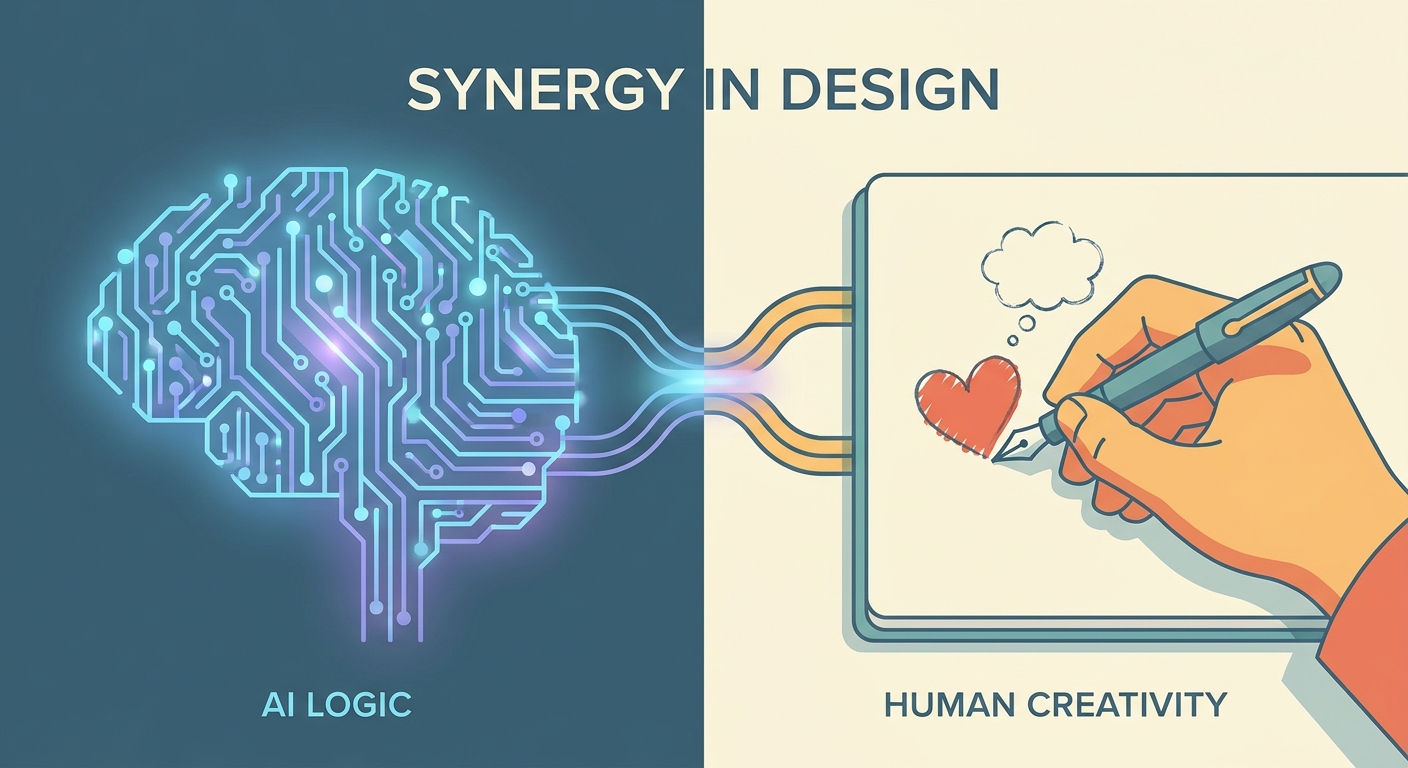
Stop choosing between speed and soul. Learn the AI-augmented, human-led workflow to boost social media engagement without losing your brand's authentic voice.
Social9 schedules your posts on 11 networks, and Autopilot can draft them in your brand voice for you to approve. Start on the free plan.
We use strictly necessary cookies to run this site. With your permission, we also use analytics cookies to understand how the site is used. We never use advertising cookies. See our Cookie Policy.