How agencies manage 20+ client calendars without burning out
A playbook for agencies running 20+ client calendars: workspace setup, a capacity formula, a monthly cadence, approval SLAs, safe access and burnout rules.
Playbooks
Stop the noise. Learn how to use human-centric brand storytelling frameworks to build authentic social media loyalty and cut through the Inattention Economy. Jessica ThompsonBrand Strategy & Community ExpertPublished 5 min read
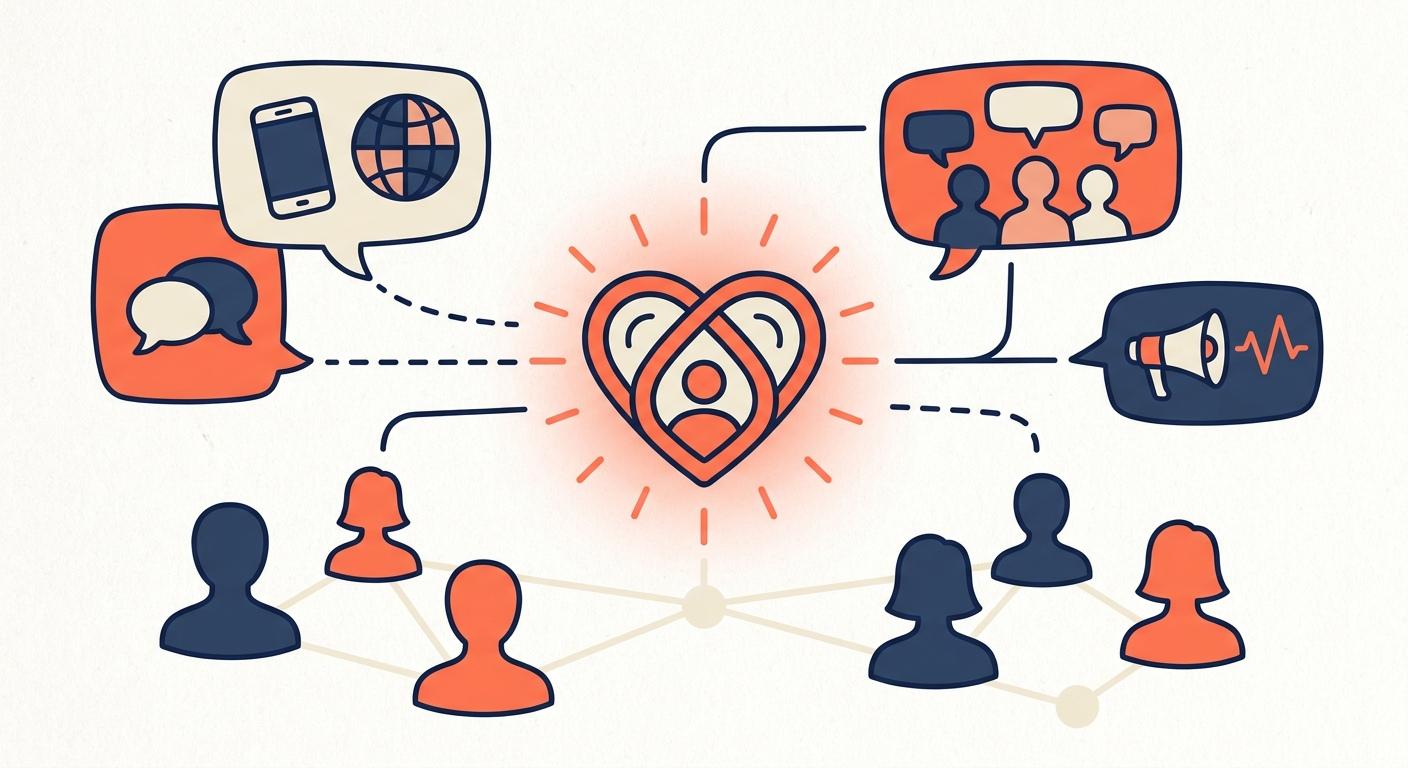
Let’s be honest: your social media strategy is probably exhausting. If you’re still treating your feed like a digital billboard for discount codes and dry product specs, you aren’t just losing engagement—you’re fading into the background noise.
In 2026, nobody cares about your latest product feature unless you can prove it matters to them. Real loyalty isn’t built on viral vanity metrics or the fleeting dopamine hit of a "high-reach" post. It’s built on "Social Substance," a concept highlighted in the Ogilvy Social Trends 2026 report. The future of connection isn't better algorithms; it’s a return to the messy, human, and authentic experiences that no machine can fake.
We’re living through what I call the "Inattention Economy." Between the wave of AI-generated fluff and the endless, mindless scroll of performative content, your audience has developed a sixth sense for anything that feels manufactured.
If your brand relies on mass-reach tactics, you’re likely seeing your engagement rates crater. Why? Because you’re chasing the crowd instead of the community. When you chase virality, you attract transients—people who might like a post for a second but have zero emotional stake in your brand’s future.
Stop the hustle of daily, low-effort posting. Pivot to substance. Your audience doesn’t want perfection; they want a pulse. The brands that win in 2026 treat social media like an entertainment channel. They provide value through narrative arcs that make people want to stick around, not just buy.
Generative AI has left us in a strange paradox: we have more tools to create content than ever, yet we’ve never had more trouble actually saying something meaningful.
The danger is simple: don’t let the algorithm write your soul. If you’re letting AI handle your scripts, captions, and scheduling without a human hand on the wheel, you’re stripping your brand of the identity that turns followers into advocates.
Use AI for the heavy lifting—the data crunching, the trend spotting, and the calendar logistics. But keep the narrative arc strictly human. If a post doesn’t move you, it won’t move your audience. Think of AI as your research assistant and yourself as the creative director. Authenticity requires a pulse. A language model can simulate structure, but it can’t simulate experience.
Great stories aren’t accidental. They’re built on purpose. If you want to move from noise to signal, stop guessing and start using a structure. Here are the big three:
The biggest sin in marketing is making the brand the hero. That’s not your job. Your customer is the hero. Your brand is the guide, the mentor, or the tool-provider. When you position the customer as the protagonist, you validate their journey. That’s how you build deep-seated, long-term loyalty.
People want to know what you stand for, not just what you sell. By weaving your mission into your content, you stop building a "customer base" and start building a tribe. This is about alignment. If they share your worldview, they’ll stay for the long haul.
In an AI-saturated world, perfection is suspicious. Radical honesty—showing the messy, human process behind the scenes—builds more trust in five minutes than a polished ad does in a year. Share the failed prototypes. Talk about the botched launches. Vulnerability is your greatest competitive advantage.
graph TD
    subgraph Customer_Centric_Hero
    A[Customer is Hero] --> B[Brand acts as Guide/Mentor]
    B --> C[Brand provides tools/wisdom]
    C --> D[Customer achieves transformation]
    end

    subgraph Behind_the_Scenes
    E[Brand is Protagonist] --> F[Radical Honesty/Process]
    F --> G[Vulnerability/Mistakes]
    G --> H[Human Connection established]
    end

    Customer_Centric_Hero ---|Best for| I(Service, Tech, B2B)
    Behind_the_Scenes ---|Best for| J(Lifestyle, CPG, Creator Brands)
Most strategies fail because they’re disjointed. Each post acts like an island, drifting away from the last one. To build real habituation, you need to think like a TV producer.
Your feed should feel like a series. Each post needs to hook the audience and leave them wanting the next "episode." When you map out content in multi-week arcs, you create anticipation. You aren't just pushing a product; you’re telling a story that unfolds. If you’re stuck on how to stitch these narratives together, our Content Strategy Services can help you align those episodic goals with your bottom line.
gantt
    title 4-Week Social Story Arc Planner
    dateFormat  YYYY-MM-DD
    section Week 1
    Hook & Introduction :active, w1, 2026-01-01, 7d
    section Week 2
    The Conflict / Challenge :w2, after w1, 7d
    section Week 3
    The Pivot / Discovery :w3, after w2, 7d
    section Week 4
    Resolution & Call to Action :w4, after w3, 7d
If you’re still obsessing over "Likes" and "Views," you’re playing the wrong game. Real ROI is found in community sentiment and repeat engagement.
According to the latest Hootsuite Social Trends Report, the winners are the brands prioritizing "social value"—the tangible ways they contribute to their followers' lives. Look at your "Return on Relationship." Are people commenting with actual thoughts, or just emojis? Are they sharing your work? As The Power of Brand Storytelling by DMI points out, high-quality narrative marketing drives higher Customer Lifetime Value (CLV) because it creates a psychological barrier that your competitors just can't cross.
The hardest part of storytelling is keeping a unified voice when you're juggling LinkedIn, Instagram, and TikTok. Your brand needs to sound like a human, not a committee.
If your brand sounds like a stiff consultant on LinkedIn and a chaotic teenager on TikTok, you have a problem. You’re confusing your audience. Consistency is everything. If you haven't nailed your brand personality yet, check out our guide on How to Define Your Brand Voice. It’s the key to making sure that no matter the platform, you sound like you.
Treat AI output as a rough draft. Always inject personal anecdotes, specific industry observations, or internal team jokes that a model wouldn't know. The "human-in-the-loop" approach is non-negotiable for preserving brand identity.
Absolutely. In B2B, the "hero" of the story is the stakeholder trying to solve a problem—your product is the tool they use to win. Humanizing the B2B experience by focusing on the professional's journey is the most effective way to cut through the corporate noise.
Direct response ads provide a short-term spike in sales, but storytelling builds the brand equity that makes those ads cheaper and more effective over time. Measure your success through long-term CLV, organic brand mentions, and the growth of your community sentiment.
The biggest mistake is "performative authenticity"—trying to be "real" because it's a trend, rather than actually being transparent. If your "authenticity" feels like a marketing tactic, your audience will smell it immediately. True authenticity comes from admitting faults and showing the actual, unvarnished work behind the scenes.
A playbook for agencies running 20+ client calendars: workspace setup, a capacity formula, a monthly cadence, approval SLAs, safe access and burnout rules.
Stop translating and start localizing. Learn how to adapt your social media strategy for global markets without losing your brand voice or meaning.
Stop sounding like AI. Learn how to define your brand voice, build a personality matrix, and use the 'Spectrum Model' to stand out on social media in 2026.
Social9 schedules your posts on 11 networks, and Autopilot can draft them in your brand voice for you to approve. Start on the free plan.
We use strictly necessary cookies to run this site. With your permission, we also use analytics cookies to understand how the site is used. We never use advertising cookies. See our Cookie Policy.