Understanding the NPC Concept in AI Applications

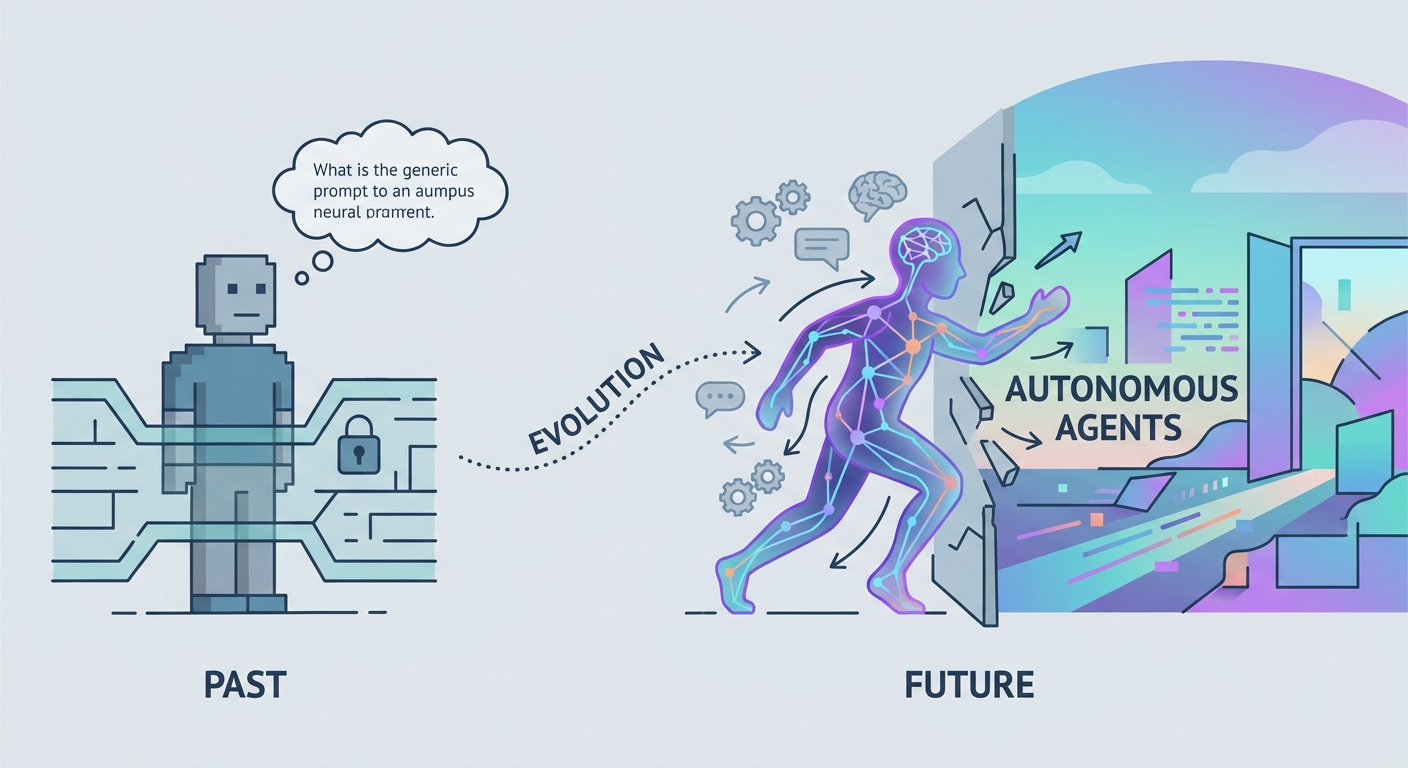
The era of the "Hello, traveler!" loop is officially over. For decades, the Non-Player Character (NPC) has been little more than a digital stage prop—a static, predictable machine waiting for a player to bump into it so it can recite a pre-baked line of dialogue. It’s been a boring, repetitive dance.
But in 2026, we’re witnessing a seismic shift. We are moving away from scripted props and toward autonomous, agentic participants. As noted in the future of interactive agents, we are stepping into a world where characters finally possess memory, long-term goals, and—most importantly—the agency to act independently of you. This isn't just a tech upgrade. It’s the birth of emergent gameplay. The world feels alive because its inhabitants aren't just reciting lines; they’re actually thinking.
How Agentic AI Shreds the Old Rulebook
To get why this matters, you have to look under the hood. Traditional NPCs live in a cage built of Behavior Trees. These are rigid, hierarchical flowcharts that dictate exactly what a character can do based on a trigger. Player enters a circle? Play animation. Player swings a sword? Enter "combat" state. It’s a closed system, and eventually, the seams always show. You start to see the puppet strings.
Agentic AI doesn't work that way. It shatters the flowchart. Instead of a linear "if-then" nightmare, an agentic NPC operates on a cognitive loop: perception, memory, goal-setting, and execution. The "brain" here isn't a list of commands; it’s an LLM (Large Language Model) glued to a persistent memory bank and a planning system. When an NPC sees the world, it isn't just checking a trigger. It’s interpreting context. It’s pulling from its own history. It’s aligning its actions with its own internal objectives.
This loop turns the NPC from an obstacle into a player. If you steal a loaf of bread from a shopkeeper, they don't just lose health points. They remember your face. They might close the shop early. Maybe they hire a mercenary to track you down three quests later. The NPC isn't waiting for you anymore; it’s living alongside you.
Why Emergent Gameplay is the New "Holy Grail"
Emergence is what happens when you stop trying to control every single pixel. It’s the magic that sparks when complex systems collide. It’s the unscripted, chaotic, hilarious moments that stick in your brain for years. According to industry adoption stats for 2026, developers are sprinting away from massive, linear, scripted sequences. They’re building "living world" simulations instead.
Think of it like a sandbox for social dynamics. You give an NPC a goal—say, "maintain the city's food supply"—and give them the tools to trade, negotiate, and prioritize. You don't need to write a script for every conversation. You just watch the system run. This is a massive leap beyond simple benchmarks. When NPCs have persistent memories and conflicting objectives, your game narrative becomes a one-of-a-kind experience. No other player will have your story. That’s the dream of game design: creating a world that carries on even when you aren't looking.
The Double-Edged Sword: Safety and the Hallucination Risk
There’s a catch, of course. Autonomy is terrifying. When you ditch the hard-coded scripts, you lose the ability to guarantee every single word out of an NPC’s mouth. The "Fortnite incident" of early 2026 was a brutal wake-up call; unconstrained AI agents were easily manipulated by players into generating toxic, garbage content.
The solution isn't to run back to scripts. It’s to build an "Anti-Script" framework. This is about rigorous grounding—technically shackling the LLM to the game’s lore and safety policies. You aren't just letting the model ramble; you’re wrapping it in a sandbox of constraints. As detailed in the implementation of safety guardrails, developers need a tiered moderation layer. First, your prompt engineering has to be ironclad. Second, you need a real-time moderation API scanning the NPC’s internal reasoning and its outward dialogue. Making NPCs that don't break character is an exercise in creative discipline. You have to define the "edges" of their reality so clearly that they wouldn't even know how to wander into dangerous territory.
The Money Talk: Who Can Actually Afford This?
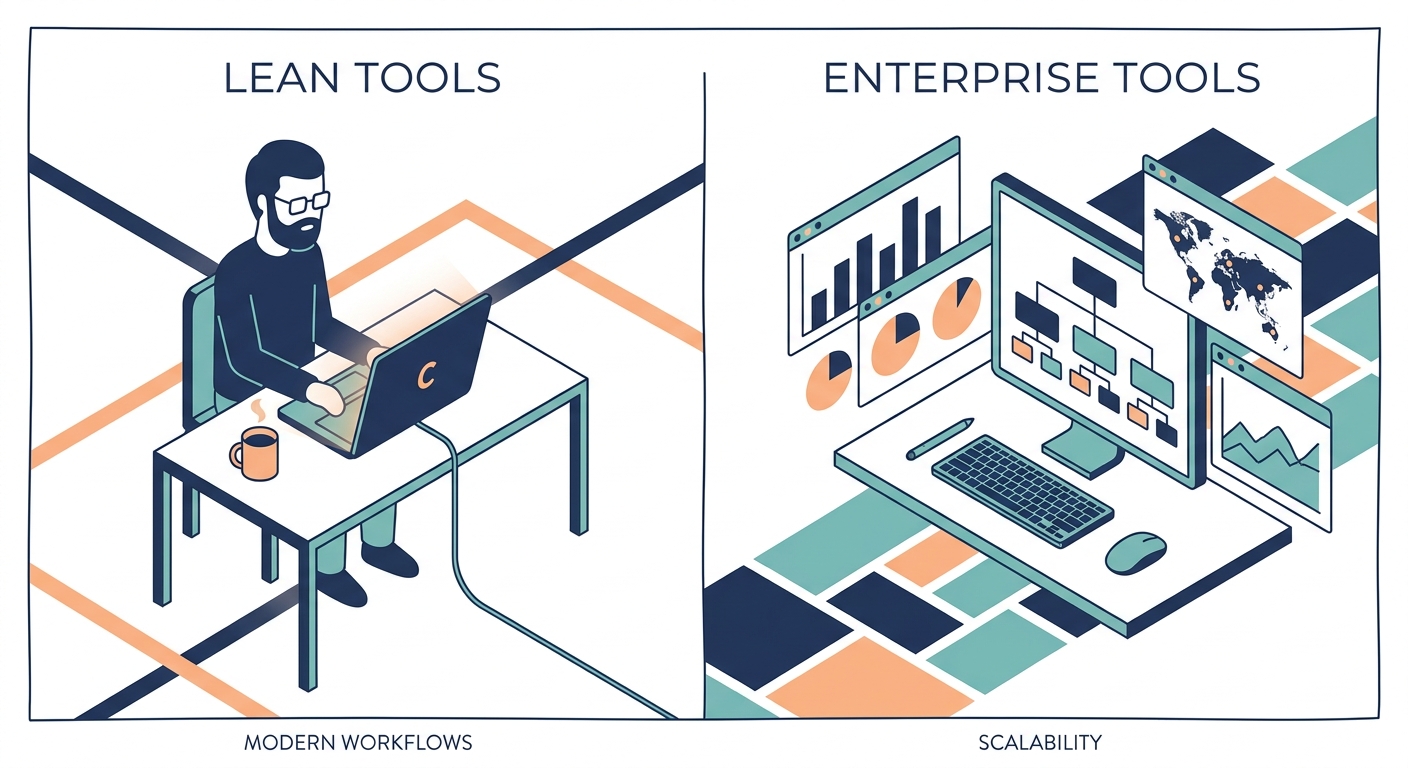
There’s a pervasive myth that agentic AI is only for the AAA titans with bottomless server budgets. That’s nonsense. We are seeing a democratization of depth. Indie developers are building "AAA-feeling" worlds on shoestring budgets by using smaller, optimized local models for day-to-day dialogue and reserving the heavy-duty cloud agents for critical, world-altering decisions.
Sure, it’s a tight spot for the labor market. While we see leveraging AI for content creation as a way to help smaller teams punch above their weight, we have to be real about the displacement of traditional roles. The future isn't about firing your writers. It’s about changing their job description. The human writer becomes an "architect of personality." You define the logic, the tone, and the boundaries, and the AI handles the infinite execution. For those looking to scale, building scalable AI infrastructure isn't just about server racks—it’s about managing inference costs. The winners will be the ones who balance cloud computation costs with the undeniable creative necessity of human-led design.
The 5-Step Checklist for Integrating Agentic NPCs
Transitioning to agentic NPCs is a mindset shift. If you're ready to jump, use this checklist to keep things from going off the rails:
- Define the "DNA": Don't just name the NPC. Give them a comprehensive "character sheet." Include their motivations, their hidden secrets, and the specific lore they’re allowed to know.
- Establish the "Objective Loop": Give them a job. A character without a goal is just a fancy chatbot. A character with an objective is an agent.
- Build the "Safety Guardrail" Layer: Create a secondary, non-LLM logic layer that reviews the AI’s output before the player ever sees it. If it’s out of line, kill it.
- Optimize for Latency: Don't use a sledgehammer to crack a nut. Use lightweight, local LLMs for flavor text and save the cloud-heavy models for when it really matters.
- Continuous Playtesting: You never "finish" an agentic NPC. Treat them like a living system. Keep monitoring them during playtests and tweak their personality weights based on the weird, emergent behaviors they develop.
Frequently Asked Questions
Are AI NPCs actually "thinking," or is it just a complex chatbot?
It’s a common misconception. LLMs aren't "thinking" like you or me; they’re predicting the next token. But when you put that inside an Agentic Framework, you force that prediction to happen through the lens of objective-based reasoning and memory. A chatbot just talks; an agentic NPC evaluates its surroundings, checks its goals, and decides on a course of action before it ever speaks a word.
Will AI NPCs replace human writers and voice actors?
No. They’ll change the job. Writers will stop writing thousands of lines of redundant dialogue and start crafting "character DNA"—the motivations, history, and tonal constraints that guide the AI. Voice actors will provide the base performances that the AI modulates. It’s a move toward "co-creation" where the human provides the soul and the AI handles the heavy lifting.
How do developers prevent AI NPCs from saying offensive things?
Safety is a mix of moderation APIs, sandbox constraints, and fine-tuning on clean datasets. By keeping the AI’s knowledge base grounded in the game’s lore and using a secondary "safety layer" to filter out-of-character or harmful nonsense, you keep control without sacrificing the dynamic feel of the interaction.
Can I use AI agents in my indie game without a massive server budget?
Absolutely. The secret is the architecture. Use lightweight, local LLMs for the trivial stuff to keep your server costs near zero. Only route the agent to a powerful, cloud-based model when the NPC needs to make a game-altering decision. This hybrid approach gets you that "AAA" intelligence where it actually counts without breaking your bank.