How agencies manage 20+ client calendars without burning out
A playbook for agencies running 20+ client calendars: workspace setup, a capacity formula, a monthly cadence, approval SLAs, safe access and burnout rules.
Playbooks
Stop chasing viral trends. Learn how to build a social media content strategy that prioritizes community, human authenticity, and measurable business revenue. Jessica ThompsonBrand Strategy & Community ExpertPublished 6 min read
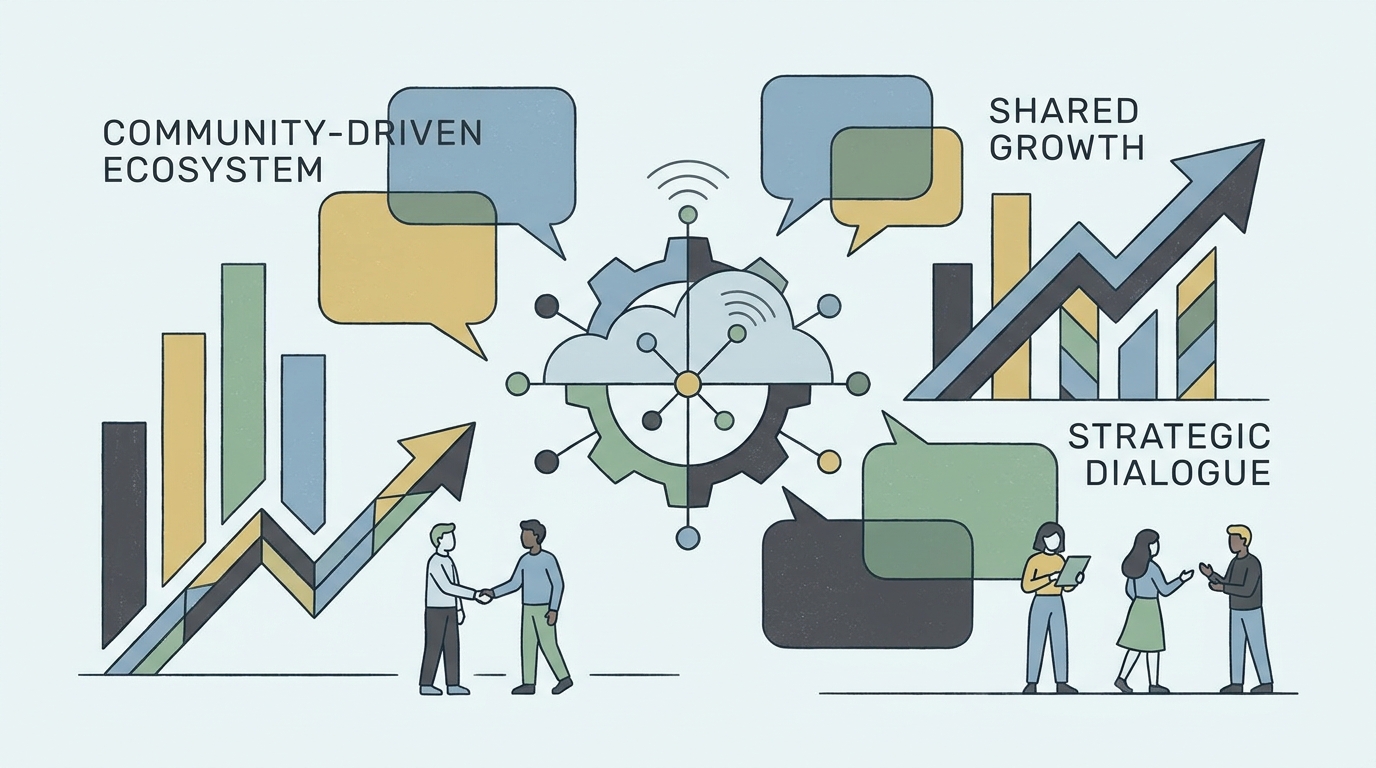
Real growth in 2026 isn't about chasing viral audio or praying to the algorithm gods. It’s about the quiet, unglamorous work of building a community that actually trusts you. If your current strategy feels like a frantic, daily scramble to keep up with every new format, stop. You aren’t building a business; you’re just building a chore list.
To drive revenue, you need to stop being a megaphone shouting into the void. You need to become a hub—a place where people actually want to hang out. The "Human Premium" is your greatest asset right now. In a digital world drowning in AI-generated fluff, the brands that win are the ones that use tech to handle the busywork so they can show up with a real, unfiltered perspective.
The old guard treated social media like a digital billboard. You posted, you prayed for reach, and you hoped for a click. That’s dead. According to Sprout Social’s 2026 Social Media Trends, consumers are actively tuning out "broadcast-style" corporate noise. They don't want a lecture; they want a conversation.
A modern strategy treats social media as a living, breathing ecosystem. It’s not about how many eyeballs saw your post; it’s about how many people stopped to engage with you. If your content doesn't answer the question, "Does this make our community feel seen or understood?" then you’re still stuck in the megaphone era.
Vanity metrics are the silent killers of marketing budgets. If you’re reporting "likes" and "follower growth" to your boss, you’re reporting on popularity, not performance. Real growth is measured by the stuff that keeps the lights on: lead volume, sentiment shifts, and actual conversion rates.
You need to build a bridge that connects a comment on a post to a sale in your CRM. If you’re struggling to make that connection, our How to Measure Social Media ROI Guide breaks down the tracking mechanisms you need to stop guessing and start proving value. When you stop chasing the algorithm and start chasing qualified leads, you’ll find that a smaller, hyper-engaged audience almost always outperforms a massive, indifferent one.
The temptation to let AI run your entire calendar is huge, but it’s a trap. If your brand sounds like every other bot on the internet, you’ve already lost. We recommend an "AI-as-Co-Pilot" workflow. Use AI to crunch data, suggest skeletons, and schedule the posts. But for the love of everything, let a human handle the creative polish. Raw, unpolished video—the kind where you can hear a bit of background noise or feel the presenter’s genuine passion—is currently crushing sterile, high-production ads. Why? Because it feels real.
graph LR
    A[AI Ideation] --> B[Human Creative Polish]
    B --> C[AI-Assisted Scheduling]
    C --> D[Human Community Engagement]
    D --> A
By keeping a human in the loop for community engagement, you ensure that every response feels like a conversation, not a canned template. AI gives you the time back; human empathy gives you the trust.
Most brands fail because they try to be everything to everyone. Instead, focus on the "Three Pillar" approach: Educational (Value), Relatable (Human/BTS), and Promotional (Conversion).
Avoid "Trend Fatigue." Hootsuite’s latest research on platform usage shows that users are getting fed up with recycled, low-effort content. When you stop chasing trends and start creating evergreen, original perspectives, you build authority that lasts longer than a 24-hour reel.
Building a strategy that works requires discipline. Here is how to move from chaos to clarity:
Step 1: The Audience Deep Dive. Stop focusing on generic personas like "Marketing Manager, 30-45." Start focusing on "Community Interests." What do they actually argue about in their spare time? What keeps them up at night?
Step 2: Platform Selection. You cannot be everywhere at once without sacrificing quality. Pick one primary channel where your audience lives and go all-in. Being a master of one platform is infinitely better than being a mediocre presence on five.
Step 3: The Content Mix Strategy. Apply the 70/20/10 rule. 70% of your content should be pure value, 20% should be community building and behind-the-scenes, and 10% should be direct sales. This keeps your audience from feeling like they’re being constantly pitched to.
Step 4: The Engagement Engine. Stop viewing the comment section as an afterthought. Treat it as your primary landing page. If someone comments, they are inviting you into a conversation. Respond with substance. For a more structured approach, AMA’s 8 Steps to a Winning Strategy provides a solid foundation for those looking to formalize their planning.
The endgame is turning followers into advocates. This happens through "Dark Social"—those private DMs, group chats, and community threads where real, unfiltered brand recommendations happen. You can’t track these as easily as a click-through rate, but they are where the highest trust is forged. If you need help scaling this level of intimacy without losing your brand voice, our Social Media Management Services are designed to facilitate this exact kind of community-led growth.
The barrier between "socializing" and "shopping" is dissolving. The future belongs to the "In-App Ecosystem," where the user discovers a product, researches it in the comments, engages with educational content, and buys it without ever leaving the platform.
graph TD
    A[Discovery: Short-form video] --> B[Research: Comments/Community]
    B --> C[Consideration: Educational content]
    C --> D[Purchase: In-app checkout]
By reducing friction in the buyer journey, you make it easier for a casual browser to become a customer. Every click you save is a potential sale captured.
If you find yourself posting just to "keep the feed alive," you are algorithm-chasing. Stop. Take a breath. Perform a quarterly audit:
Focus on AI as a productivity tool for data synthesis and scheduling, but prioritize human-led storytelling for content creation to ensure your brand maintains a unique voice that cuts through AI-generated noise.
Social media is the channel; social marketing is the strategic application of that channel to drive business objectives like lead generation, customer retention, and brand advocacy.
Shift your focus toward engagement depth (e.g., meaningful comments, private messages), conversion rates from social traffic, and the growth of your brand community sentiment.
Frequency is secondary to consistency and resonance; prioritize a cadence that allows you to maintain high-quality, high-engagement content without burning out your creative team.
A playbook for agencies running 20+ client calendars: workspace setup, a capacity formula, a monthly cadence, approval SLAs, safe access and burnout rules.
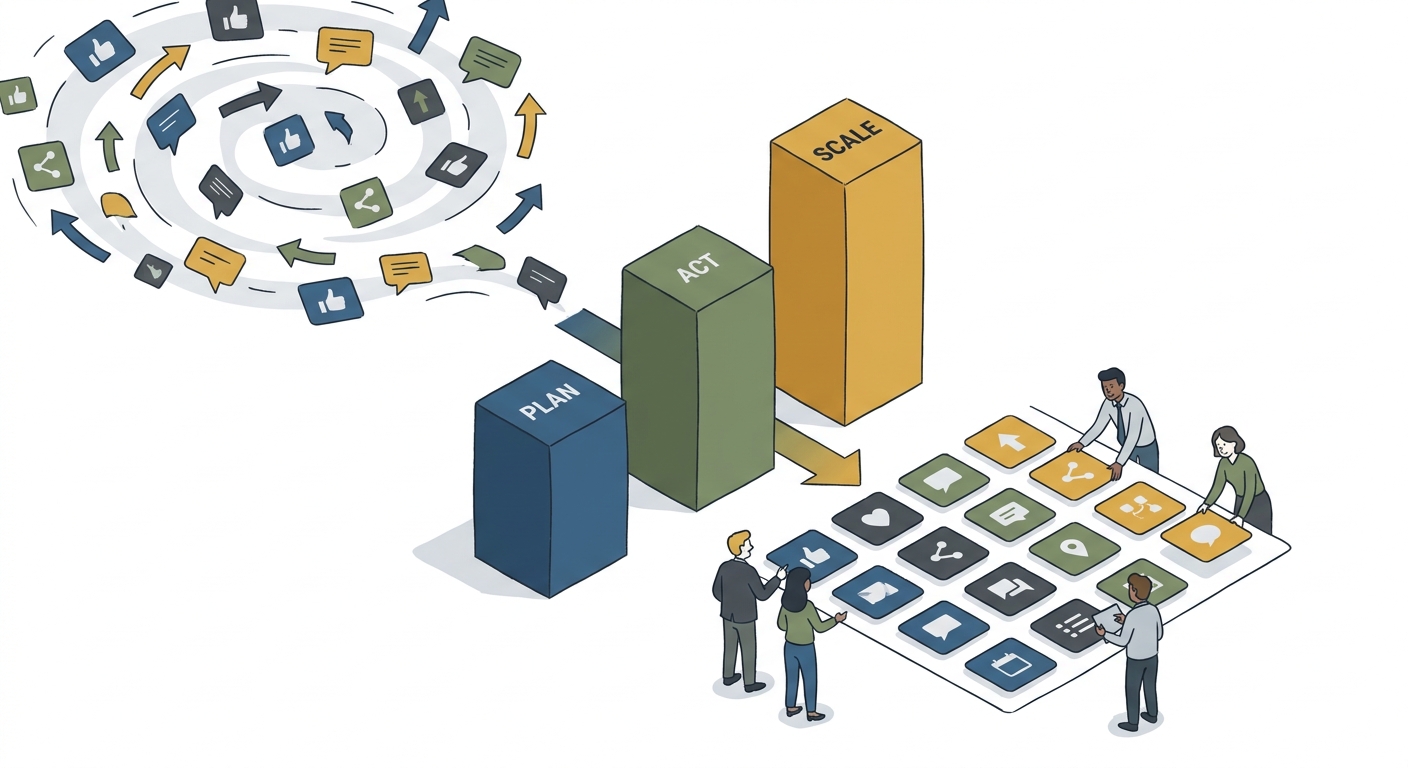
Stop the content chaos. Learn how to build a scalable social media content pillar framework to define your brand authority and streamline your team's workflow.

Stop the scroll with expert social media copywriting tips. Learn how to write magnetic hooks and use proven formulas to drive engagement in 2026.
Social9 schedules your posts on 11 networks, and Autopilot can draft them in your brand voice for you to approve. Start on the free plan.
We use strictly necessary cookies to run this site. With your permission, we also use analytics cookies to understand how the site is used. We never use advertising cookies. See our Cookie Policy.