Smart AI Solutions for Creative Problem Solving

The "chat-and-wait" era of AI is dead. If you’re still treating your chatbot like a digital intern you have to hand-hold through every single task, you’re already behind.
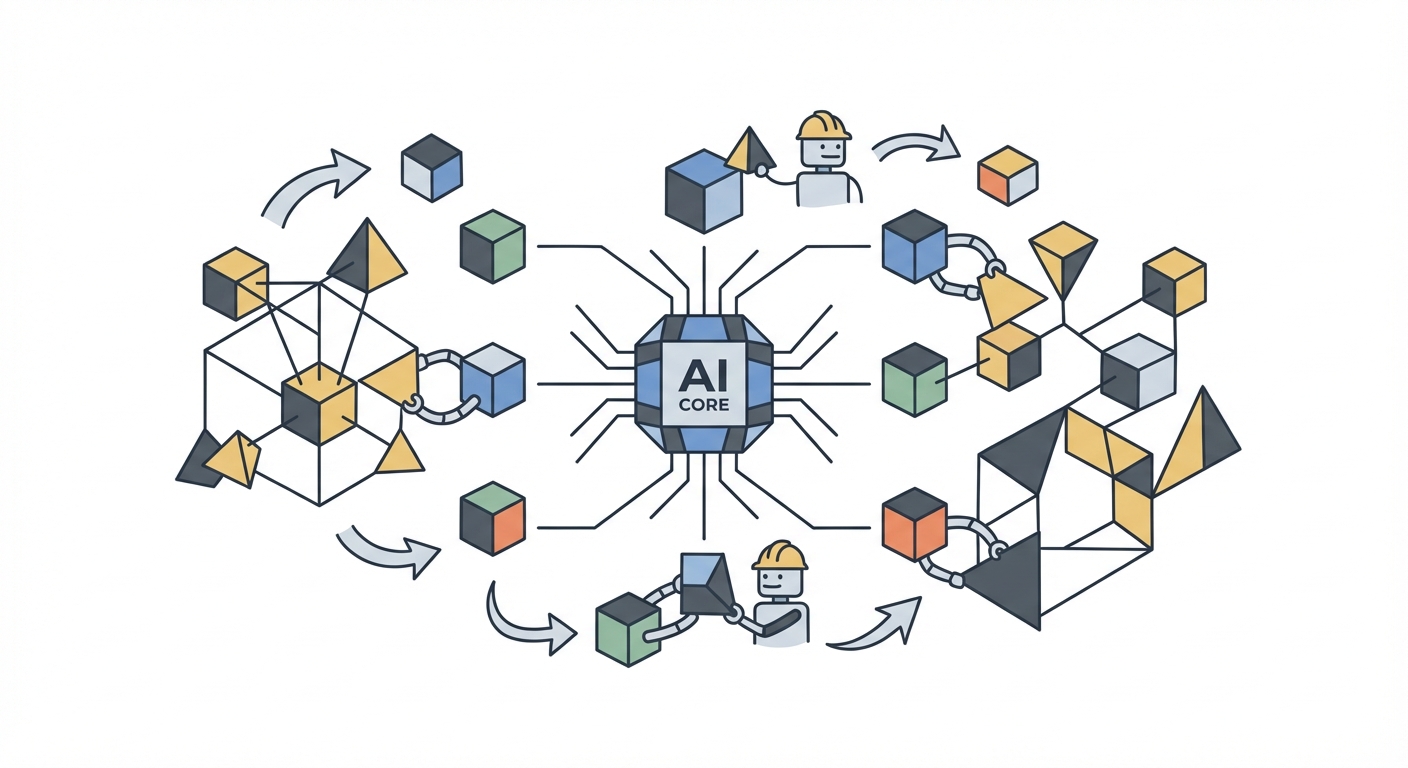
It’s 2026. Creative problem solving has evolved. We aren’t just tossing prompts into a void anymore; we’re building agentic systems. These are autonomous architectures that don't just "generate"—they reason, they plan, and they execute complex, multi-step workflows without needing you to click "go" every five seconds. As the State of AI 2026 Report makes clear, the competitive edge no longer belongs to the people who use AI tools. It belongs to the people who weave these agents into the very fabric of their business to make innovation happen at scale.
The Shift to Agentic AI: From "Neat" to "Necessary"
For years, "AI for creativity" was a shiny toy. You used it to write a quick email, summarize a boring meeting, or generate a placeholder image. It was a time-saver. A minor efficiency play.
That was then. Today, the goal isn't just saving time—it’s creating real, measurable value.
Think about it: when you treat AI as a passive tool, you’re basically hiring a calculator to do the work of a strategist. It’s a waste of potential. Agentic AI systems are different. They act like actual partners. They don’t just sit there waiting for a prompt; they look at the end goal, figure out what data they need, map out the steps to get there, and—this is the kicker—they pivot when they hit a wall.
In our recent success stories, we’ve watched clients slash their time-to-market by nearly 40%. They didn't do this by "automating" their designers away. They did it by deploying agents that handle the soul-crushing grunt work—versioning assets, digging through market trends, and iterating on layouts—so the humans could focus on the big ideas. This is the new ROI: turning your creative output from a bottleneck into a high-velocity engine.
How Agentic AI Workflows Differ From Legacy AI
The secret sauce is the loop.
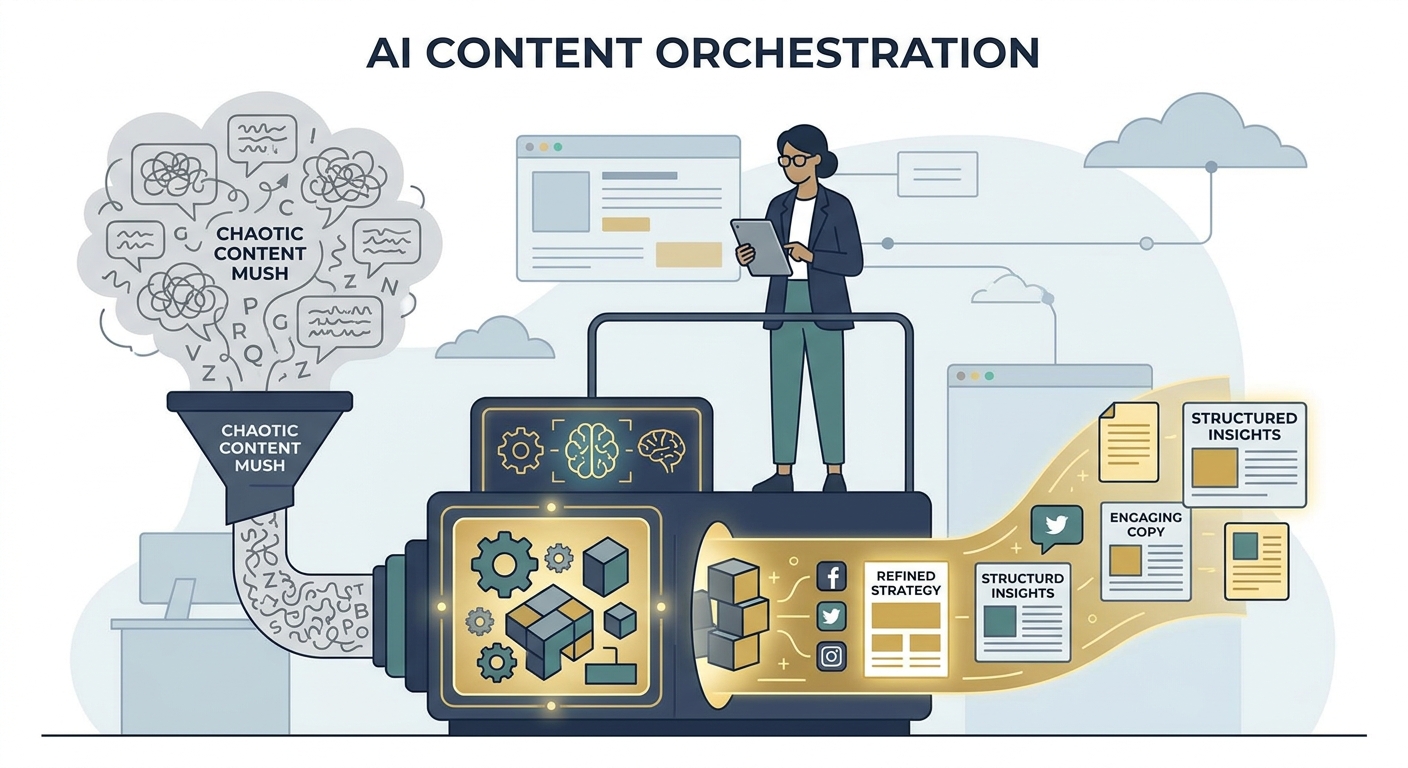
Legacy AI is a linear transaction. You talk, it answers, you move on. It’s a one-and-done deal. An agentic workflow? That’s a recursive, self-correcting cycle. It treats a creative challenge like a professional project, not a search engine query.
By building in that self-correction phase, the system catches its own errors in logic or brand alignment before the work ever hits a human stakeholder. It kills the "hallucination trap" that makes static AI so dangerous, grounding every output in the specific, messy, beautiful requirements of your brand.
High-Impact Use Cases for 2026
How do you actually use this? It’s changing the creative lifecycle in three massive ways:
1. Hyper-Personalization at Scale Every customer wants to feel like the only customer. Doing this manually for thousands of people? That’s a nightmare. Now, agents ingest behavioral data and automatically churn out bespoke creative assets—adjusting copy, imagery, and layout on the fly—all while staying strictly within your brand’s voice.
2. Predictive Product Innovation Creative problem solving shouldn't just be reactive. It should be prophetic. By using multimodal analysis—scanning social sentiment, patent filings, and competitor shifts—agentic systems can spot market gaps before they become obvious. As discussed in recent real-world creative AI applications, the ability to synthesize disparate data points lets your team prototype based on data-backed intuition instead of just guessing.
3. Workforce Augmentation Offload the drudgery. Let the agents handle the high-volume, low-complexity stuff—reformatting assets for different social platforms or cleaning up technical design files. When your team stops pushing pixels, they regain the bandwidth to focus on high-level strategy and emotional resonance. The machine handles the heavy lifting; the human provides the soul.
Building a Resilient AI-Enabled Creative Workflow
Moving to an agentic model isn't just about buying a subscription to a new model. It’s a structural overhaul. It’s a culture shift. If you’re ready to modernize, check out our tailored AI strategy services to bridge the gap between "cool concept" and "deployed reality."
Step 1: Define the Objective Before you flip the switch, define the "Why." Are you cutting production costs? Are you trying to skyrocket the volume of your creative variations? If you don't have a clear objective, you’re just giving an agent a blank check to wander around your data.
Step 2: Selecting the Architecture Don't use a hammer to drive a screw. Use high-reasoning LLMs for creative writing. Use multimodal models with high fidelity for visual assets. Keep your architecture modular so you can swap out tools the second something better hits the market.
Step 3: Governance and Guardrails You need a "kill switch." You need rigid guardrails. Define your brand parameters—tone, prohibited imagery, legal disclaimers—and hard-code these into the system’s reasoning layer. Don't leave it to chance.
Why Most AI Implementations Fail
We’ve seen it all. The graveyard of failed AI projects is full of companies that made three fatal mistakes.
First, Data Quality Silos. AI is only as smart as the information it can reach. If your brand guidelines, customer data, and historical assets are locked in disconnected databases, your AI is flying blind.
Second, Ignoring the Creative Intuition Factor. The biggest myth is that AI replaces human talent. It doesn't. AI provides precision; humans provide the "why." A system that creates a perfect ad without understanding the emotional undercurrent of the campaign is just a pretty picture that won't convert.
Third, Over-Automation. The dream of a button you can press to "do everything automatically" is a siren song. It’s a trap. Without a human-in-the-loop, even the most impressive agents will eventually drift. They’ll start hallucinating or straying from your brand identity. You need a captain at the helm.
Maintaining Compliance in an Autonomous World
As your workflows get more autonomous, your risk profile changes. You can’t wing it. Adopting a structure like the NIST AI Risk Management Framework is no longer optional—it’s your roadmap for handling bias, security, and IP.
Remember: Governance isn't just about saying "no." It’s about enabling. When your team knows the boundaries—where the agent can run wild and where it must stop—they’re more likely to experiment without fear. Bake compliance into the workflow. Don't treat it like a chore you do at the end.
The Future of Creative Problem Solving
The future belongs to the "Centaur"—the hybrid of human strategy and agentic execution. In the next few years, AI literacy will be just as critical for a CEO as financial literacy. You don't need to be able to code the models yourself, but you absolutely need to know how to manage the agents that drive them.
The transition from "playing with chatbots" to "enterprise-grade deployment" is the final hurdle. The companies that stop treating this like a science project and start building resilient, agentic ecosystems today? Those are the ones that will own the creative landscape of tomorrow.
Frequently Asked Questions
What is the fundamental difference between simple AI automation and Agentic AI?
Simple AI automation is a "do what I say" model; you provide a prompt, and the AI provides a response. Agentic AI is a "do what I mean" system. It features a Reasoning-Planning-Action loop, where the AI can break down a high-level goal into sub-tasks, utilize external tools to gather data, verify its own work, and self-correct if the output doesn't meet the target criteria.
How can businesses ensure creative AI solutions remain ethical and compliant?
The most effective way to ensure ethics and compliance is the implementation of "Human-in-the-loop" checkpoints. By forcing the agent to pause for human validation at critical decision nodes and adhering to established risk management frameworks like the NIST guidelines, businesses can maintain control over the creative output while benefiting from AI-driven speed.
Does using AI for creative tasks reduce the "human touch"?
Quite the opposite. When AI handles the high-volume, low-complexity heavy lifting, it frees up human creatives to focus on high-level strategy, emotional resonance, and "creative intuition." AI provides the precision and the scale, while the human provides the soul and the strategic direction, resulting in a more potent, human-led creative process.
What is the biggest barrier to implementing AI solutions in 2026?
The primary barrier is organizational culture and the state of internal data. Moving to agentic workflows requires clean, accessible data and a shift in mindset from "AI as a tool" to "AI as a partner." Many companies fail because they try to force AI into legacy workflows that are too rigid to support autonomous, multi-step problem solving.