Is the Indie Sleaze Trend Making a Comeback?

TL;DR
- Indie Sleaze is returning as a reaction against hyper-curated, minimalist trends.
- The 2026 revival prioritizes circular fashion and authentic vintage over fast-fashion.
- The aesthetic focuses on 'curated chaos' rather than artificial, high-gloss perfection.
- Readers are encouraged to treat their wardrobes as archives through sustainable sourcing.
The short answer is yes. But don’t expect a carbon copy of those hazy, flash-bulb-drenched nights from 2009. Indie Sleaze isn’t just drifting back into style as a visual mood board; it’s being resurrected as a visceral, middle-finger salute to the sterile, hyper-curated "Clean Girl" minimalism that’s choked our feeds for the last three years.
Honestly? We’re exhausted. We’re tired of the beige-toned, algorithmically perfected existence. We’re reaching for the grit, the mess, and the unpolished, jagged edges of the early 2010s. But here’s the kicker: the 2026 version of this trend isn’t fueled by the soul-crushing machinery of fast fashion. It’s built on something slower, more deliberate, and infinitely more circular.
The Cultural Pendulum Swings Back to Chaos
For years, the internet has demanded a level of visual perfection that is—let’s be real—totally unsustainable. We slogged through the "that girl" era, drowning in capsule wardrobes and beige linen. But culture is a pendulum. When you feed people a steady diet of high-gloss, filtered perfection, the human instinct is to crave the opposite.
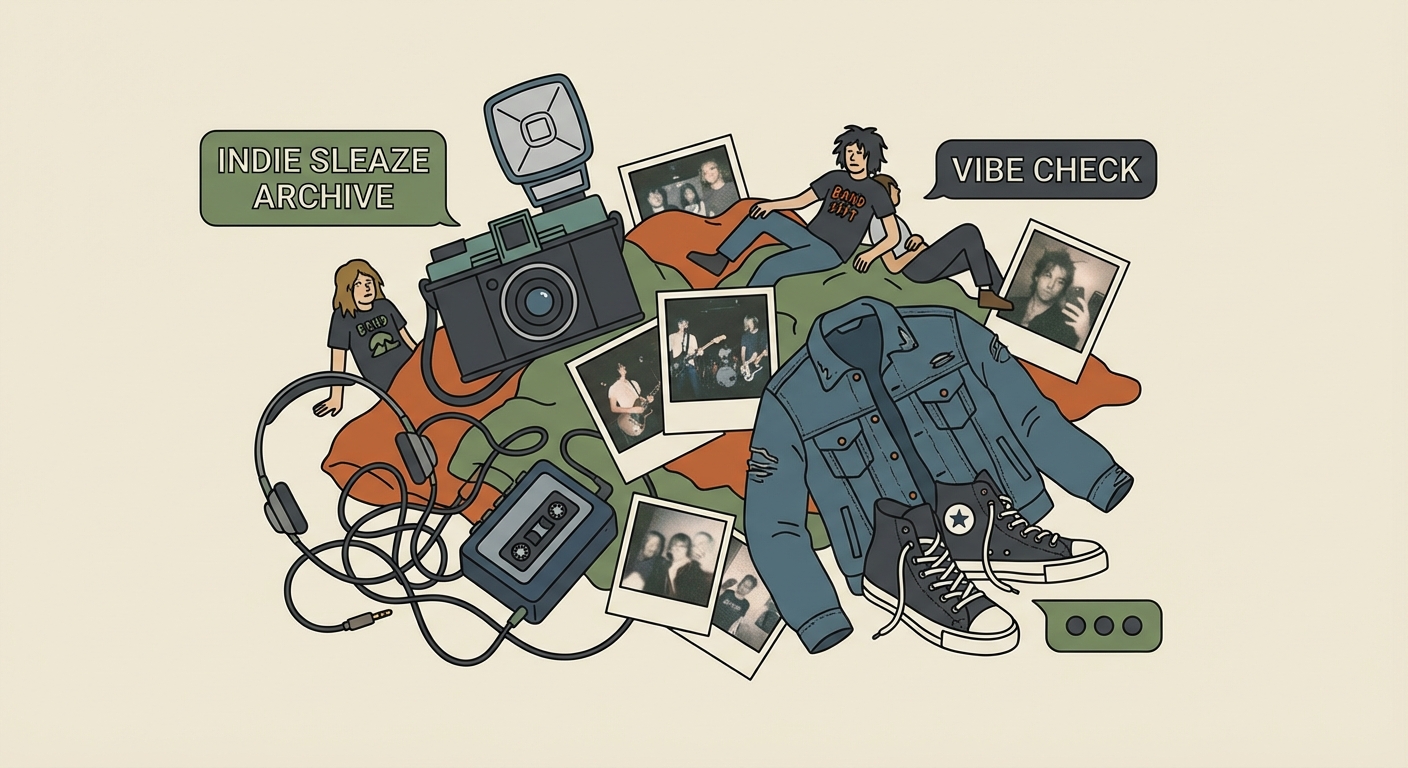
Indie Sleaze gives us permission to be messy. It is the absolute antithesis of "quiet luxury." It celebrates the band tee you’ve slept in for three days, the ripped tights that have seen better nights, and the smeared eyeliner that looks better the morning after. This isn't just about fashion. It’s a psychological reclamation of our right to be human in a digital age that demands we look like a stock photo. We’re trading the "curated life" for "curated chaos," finding beauty in the friction of living rather than the polish of appearing.
The Anatomy of 2026: From Fast Fashion to Found Treasures
Back in 2010, the Indie Sleaze look—American Apparel hoodies, metallic leggings, disheveled blazers—was the poster child for the fast-fashion boom. Everything was bought new, worn for a single party, and tossed aside. That’s where the 2026 revival parts ways with its ancestor.
Today, the aesthetic is anchored in the circular economy. You aren’t running to the mall to buy a mass-produced "distressed" tee; you’re scouring Gem Search to find a faded, authentic 2008 tour shirt that actually survived the era. The silhouette remains the same—think skinny scarves, layered leather, and beat-up ankle boots—but the sourcing has shifted. We’re looking for the "re-loved" over the "newly made." If you’re curious about how to navigate this shift without falling back into the trap of overconsumption, our guide to sustainable fashion offers a framework for building a wardrobe that values longevity over trends.
The Sourcing Loop: How to Build Your Aesthetic Sustainably
The danger with any trend that relies on a specific "look" is the temptation to buy cheap, plastic knock-offs. To avoid that, you have to treat your wardrobe like an archive. The process of sourcing the Indie Sleaze look in 2026 is a deliberate loop of discovery and curation.
This cycle ensures that every piece you bring into your life has a history. By using platforms that aggregate vintage listings, you bypass the fast-fashion giants entirely. When you find a piece—whether it’s a blazer from a local thrift shop or a luxury vintage find sourced via The RealReal—you aren't just buying clothes. You’re participating in a system that keeps textiles out of landfills. The "sleaze" isn't in the quality of the fabric; it’s in the soul of the piece.
The Twee Connection and the Whimsy of Grit
As Indie Sleaze settles into the cultural consciousness, it’s started to bleed into its "little sister" aesthetic: Twee. While Indie Sleaze is the garage band playing until 3:00 AM, Twee is the whimsical, nostalgic side of the same coin. They share a DNA of retro-obsession—think Peter Pan collars, patterned tights, and a general disdain for the "adult" world of corporate minimalism.
This isn't a contradiction; it’s a spectrum of nostalgia. If you want to see where these shapes originated, looking back at Vogue Runway archives from that era reveals a fascinating tension between the grungy, party-heavy aesthetic of the mid-2000s and the softer, more romantic elements that define the Twee revival. The two are merging, creating a look that is simultaneously edgy and incredibly soft. It’s a complex, layered approach to dressing that allows for more personal expression than the rigid, stifling rules of a capsule wardrobe.
Authenticity vs. The TikTok Sanitization
There is a massive danger in any trend that gains traction on short-form video apps: the sanitization of the original spirit. Watch out for the "Indie Sleaze" tutorials that suggest buying a pre-ripped sweater from a big-box retailer. That misses the point entirely. The essence of the movement was never about the clothes. It was about the DIY, unpolished spirit of the scene.
If your look is entirely bought from a fast-fashion site, it’s not Indie Sleaze—it’s just a costume. The "sleaze" requires effort, but not the kind that involves a credit card. It requires the effort of digging through bins, learning how to mend a hem, and wearing your clothes until they have character. When you move away from hyper-curated trends, you find that your personal style becomes more resilient. You stop chasing the "next big thing" and start building a collection that actually reflects who you are, rather than who an algorithm wants you to be.
Frequently Asked Questions
Is Indie Sleaze just another word for Y2K fashion?
Not quite. Y2K fashion is rooted in the high-glitz, pop-star aesthetic of the late 90s and early 2000s—think velour tracksuits, butterfly clips, and bright, plastic textures. Indie Sleaze, by contrast, is the gritty, garage-rock reaction to that era. It’s defined by the "indie band" look: dark colors, vintage band tees, messy hair, and an overall vibe that suggests you just walked out of a basement show.
How can I achieve the Indie Sleaze look sustainably?
Focus on the "hunt." Use vintage aggregators to search specifically for the pieces you need, such as oversized blazers or distressed denim. Prioritize natural fibers like cotton and leather that age well. Most importantly, resist the urge to buy "dupes." If you can't find the perfect vintage piece today, wait. The thrill of the find is a core component of the aesthetic’s authenticity.
Why is the Indie Sleaze trend coming back now?
The revival is a direct reaction to the "Clean Girl" and "Minimalist" trends that have dominated social media. After years of being told to keep our homes, our wardrobes, and our photos perfectly beige and organized, people are craving the freedom to be messy, loud, and unpolished. It’s a return to the messy reality of human expression.
Is the "sleaze" part of the trend necessary?
Absolutely. Without the "sleaze"—the grit, the DIY effort, and the lived-in quality—the trend becomes a hollow costume. The movement was born from party culture and artistic rebellion. If you strip away the messiness and the intentional lack of polish, you lose the cultural context that made the original era so distinct. It’s the difference between wearing a vintage leather jacket that has its own history and buying a factory-distressed one that looks identical to everyone else’s.