How agencies manage 20+ client calendars without burning out
A playbook for agencies running 20+ client calendars: workspace setup, a capacity formula, a monthly cadence, approval SLAs, safe access and burnout rules.
Playbooks
Stop wasting budget on content that doesn't convert. We compare the real costs of in-house teams, agencies, and AI to help you build a profitable 2026 strategy. Michael JohnsonAnalytics & Performance SpecialistPublished 6 min read
The true cost of social media in 2026 isn't hidden in an invoice or a monthly SaaS subscription. It’s buried in the widening gap between how much content you churn out and how much revenue that content actually generates.
We’ve arrived at a strange moment in history. Creating content is essentially free. Making it work? That’s never been more expensive.
We’re living through the "Content Paradox." Marketing teams are hammering out more assets than ever, yet customer acquisition costs (CAC) are climbing, and engagement is flatlining. The debate between building an in-house team, hiring an agency, or betting the house on AI isn't just about budget anymore. It’s about survival. In a digital world drowning in generic, AI-generated noise, algorithms and human intuition are getting better at identifying—and ignoring—the fluff.
The "AI-as-a-toy" era is dead. Back in 2024, using a chatbot to write a caption felt like a clever hack. Today, if you aren't using industrial-grade LLMs to process data, you’re playing a game you’ve already lost. But here’s the trap: assuming "cheaper" equals "better."
When businesses rely solely on AI to fill their content calendars, they usually end up in a slow-motion car crash of brand erosion. The route that looks best on a spreadsheet—the AI-only path—is often the most expensive when you account for the silence from your audience, the wasted conversions, and the sheer amount of time spent trying to fix robotic, soulless copy.
If your content doesn’t have a distinct point of view, it’s invisible. Period.
To figure out where your money belongs, look at the trade-off between human oversight and raw output volume.
quadrantChart
    title Human Oversight vs. Output Volume
    x-axis Low Volume --> High Volume
    y-axis Low Oversight --> High Oversight
    quadrant-1 High Impact/Strategy
    quadrant-2 Scalable AI Automation
    quadrant-3 Lean/Experimental
    quadrant-4 Resource Intensive
    "In-House": [0.7, 0.85]
    "Agency": [0.6, 0.9]
    "AI-First": [0.9, 0.2]
    "Freelance": [0.4, 0.5]
Putting a team under your own roof gives you the best brand alignment, sure. But it comes with a massive, invisible tax. You aren't just paying salaries. You’re paying for recruitment, health benefits, specialized software, and the "management tax"—the countless hours leadership spends training, course-correcting, and putting out fires. In-house teams are your best bet for high-stakes, long-term brand building, but they are notoriously hard to scale without blowing up your fixed costs.
Agencies have grown up. The best ones now function as Managed Marketing Services, acting as a buffer against performance risk. You aren't just paying for a post; you’re paying for accountability. You’re paying for a partner who owns the strategy, monitors the analytics, and knows when to pivot. According to industry benchmarks on social media costs, agencies that provide high-end strategic oversight often yield a lower "Total Cost of Acquisition" than in-house teams. Why? Because they eliminate the churn and training headaches of building a department from scratch.
The "AI-first" label is often just a mask for "we don't have a strategy." You can buy a dozen LLMs and image generators for the price of one freelancer, but the hidden cost is the "human-in-the-loop" requirement. To meet the EEAT (Experience, Expertise, Authoritativeness, and Trustworthiness) standards that search-integrated platforms now demand, you need humans to prompt, edit, and refine everything. If you aren't paying for that human time, you aren't producing content. You’re producing digital clutter.
Efficiency isn't about doing more. It’s about doing what works. Audit your current setup based on where you are in your growth cycle.
graph TD
    A[Start: Define Goal & Budget] --> B{Budget Level}
    B -- Low/Testing --> C[Lean AI + Freelance]
    B -- Mid-Market/Scaling --> D[Hybrid Agency]
    B -- Enterprise/High-Stakes --> E[In-House Core + Specialized Agency]

    C --> F[Focus: Rapid Iteration]
    D --> G[Focus: Strategic Growth]
    E --> H[Focus: Brand Authority & Conversion]

    F --> I[Review Every 3 Months]
    G --> I
    H --> I
    I --> J{Performance Target Met?}
    J -- No --> A
    J -- Yes --> K[Scale Operations]
If you’re a startup, mix AI for volume with a sharp freelance editor for tone. If you’re mid-market, a hybrid agency strategy is usually the sweet spot—it keeps your core strategy tight while scaling your output. For enterprises, the winning model is an in-house core team that guards the "soul" of the brand, supported by specialized agencies that handle the heavy technical lifting of performance marketing.
Brand dilution is the silent killer of social media ROI. When you feed your guidelines into a generic model, you get a homogenized, middle-of-the-road output that sounds like every other company on the internet.
The fix? Don't ban AI. Master it.
Treat your brand voice as a proprietary asset. Use rigorous prompt engineering and custom fine-tuning. If you want a deeper look at the mechanics, this guide on balancing automation with authenticity breaks down how to keep the human element in the driver's seat. When in doubt, lean on our proprietary strategy framework to ensure your content is built on intent, not just keyword density.
Here is the biggest shift of 2026: the death of the "deliverable-based" contract. If your social media manager or agency is still reporting to you based on "number of posts per month," you are actively losing money.
The conversation needs to shift to conversion. Does this piece of content move a prospect through the funnel? Does it generate qualified leads? The "premium" you pay for a high-performing agency is an investment in revenue attribution. You are paying them to identify what doesn't work and stop doing it—a level of discernment that a generic AI or an unmanaged junior team simply cannot provide.
We are now in the age of search-integrated social platforms. Your content is being indexed by AI agents, not just humans. If your content is "AI-citation ready"—meaning it is structured with clear, verifiable expertise—it wins. If it’s just generic filler, it gets flagged.
A "Human-in-the-Loop" workflow is no longer a luxury; it’s an EEAT compliance necessity. Before anything goes live, a human needs to verify it provides value that an LLM couldn't have synthesized from a generic crawl of the internet.
It’s cheaper to produce, but more expensive to make effective. Once you factor in the time required for high-level editing, fact-checking, and brand-voice calibration—the "human-in-the-loop" cost—you realize that cheap content is often a sunk cost that fails to convert.
You should graduate the moment your growth is bottlenecked by strategy rather than production. If you have the volume but lack the conversion data, or if you find yourself spending more time managing freelancers than executing on your business goals, it is time for a professional partner.
You must move beyond basic prompting. Use custom fine-tuning, load your proprietary brand guidelines into your LLM’s knowledge base, and enforce a mandatory, human-led QA stage for every single piece of content before it touches your audience.
Beyond salaries, you are paying for the "opportunity cost" of management time, consistent software subscriptions, the high price of recruiting, and the inevitable productivity dip that occurs whenever a team member leaves and needs to be replaced.
Stop tracking vanity metrics like reach and impressions. Focus on "conversion-focused" metrics: lead attribution, direct pipeline contribution, and the cost of customer acquisition (CAC) specifically tied to social channels. If you can't trace a dollar to a post, it’s not content—it’s just noise.
A playbook for agencies running 20+ client calendars: workspace setup, a capacity formula, a monthly cadence, approval SLAs, safe access and burnout rules.
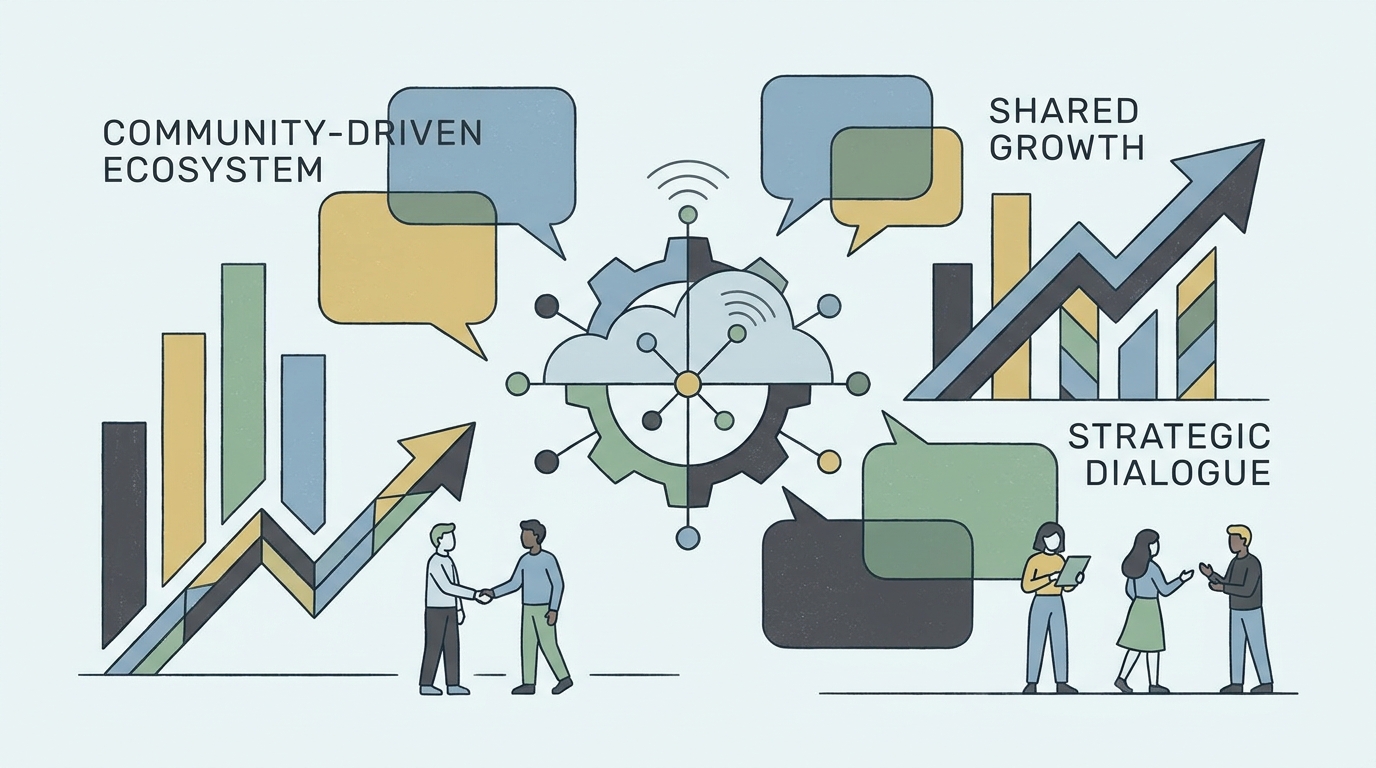
Stop chasing viral trends. Learn how to build a social media content strategy that prioritizes community, human authenticity, and measurable business revenue.
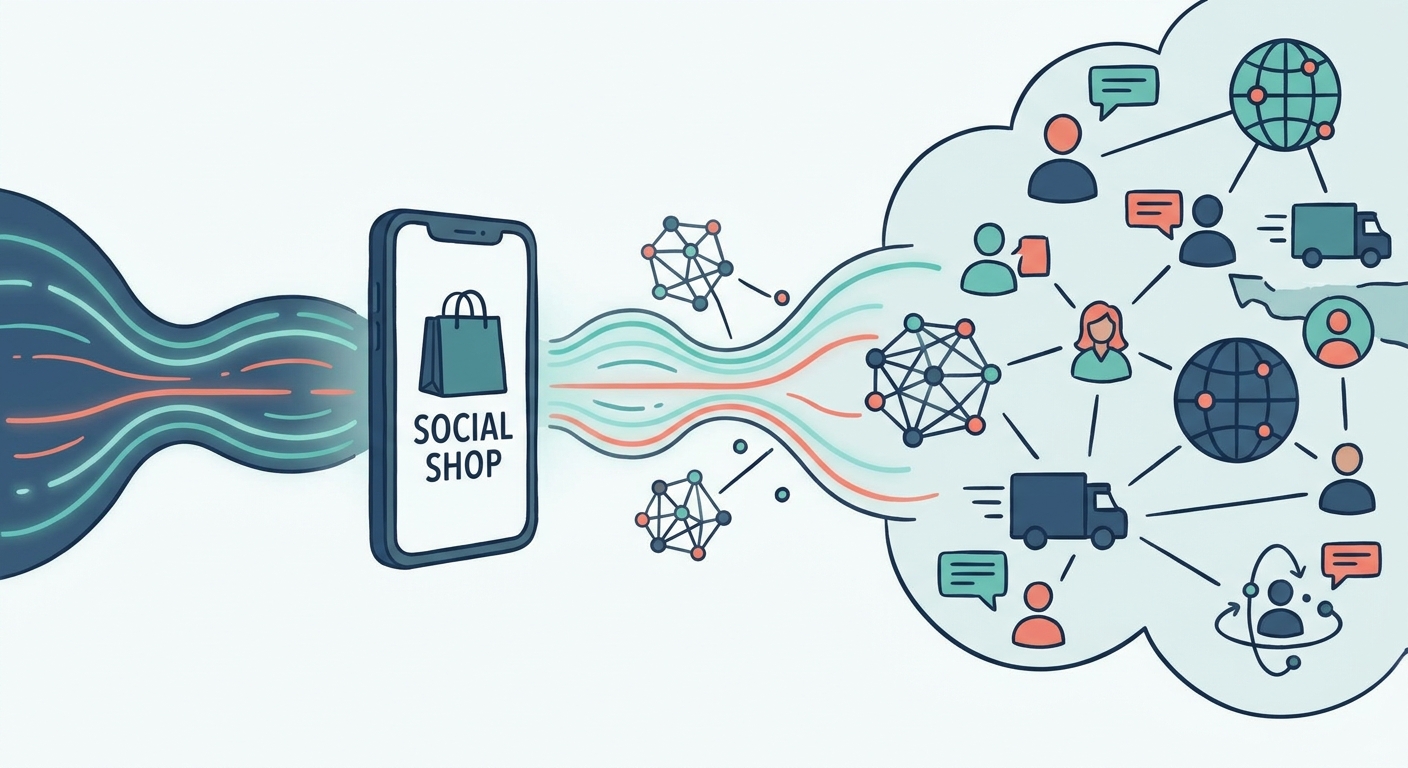
Stop manual workflows. Learn how AI integration APIs and headless architecture are transforming social commerce into an autonomous, high-conversion engine.
Social9 schedules your posts on 11 networks, and Autopilot can draft them in your brand voice for you to approve. Start on the free plan.
We use strictly necessary cookies to run this site. With your permission, we also use analytics cookies to understand how the site is used. We never use advertising cookies. See our Cookie Policy.