How agencies manage 20+ client calendars without burning out
A playbook for agencies running 20+ client calendars: workspace setup, a capacity formula, a monthly cadence, approval SLAs, safe access and burnout rules.
Playbooks
Stop using high-gloss production. Learn why raw, front-facing comedy is winning in 2026 and how to optimize your lighting, framing, and audio for viral reach. Emily RodriguezContent Marketing SpecialistPublished Updated 6 min read
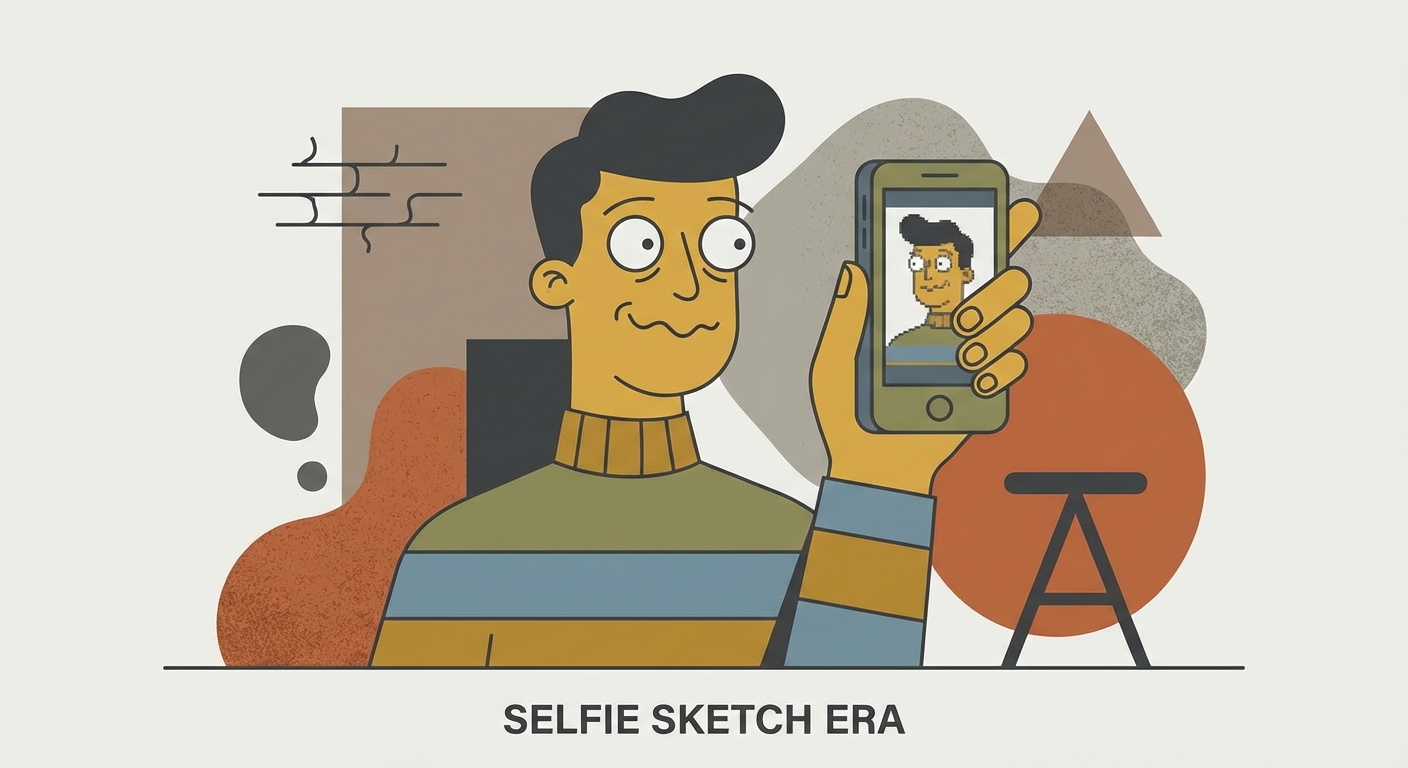
The front-facing camera isn't for vanity anymore. It’s the most dangerous, effective stage a comedian has ever had.
In 2026, the era of the high-gloss, cinematic sketch is dying. Audiences are flat-out exhausted by the uncanny, sterile perfection of AI-generated junk. They’re pivoting back to the messy, raw, and undeniably human connection of the "selfie sketch." When you stare directly into that tiny lens, you aren't just making a video. You’re signing a parasocial contract. You’re inviting the viewer into your room, breaking the fourth wall without a crew, and proving that a sharp brain beats a million-dollar lighting rig every single time.
The psychology of the "POV" gaze is your secret weapon. When you film with the front-facing lens, you’re mimicking a video call—the most intimate, high-stakes communication we have. A third-person cinematic sketch feels like a commercial. A selfie sketch feels like a secret you’re whispering to a friend.
This immediate trust is the bedrock of comedy. If the viewer feels like they’re "in" on the joke with you, the punchline hits like a freight train. This isn't just about being relatable; it's about being there. Mastering this lets you align your content strategy with the nuances of viral engagement, keeping your voice consistent while the trends do their usual dance. The "lo-fi" look isn't a sign of being broke anymore; it’s a badge of authenticity. It tells the algorithm—and the audience—that what they’re seeing is real, unscripted, and human.
You don't need a cinema camera to be funny. But you do need to stop looking like you’re filming from inside a damp cave. The gap between a viral hit and a forgotten post usually boils down to three things: lighting, framing, and audio.
Stop letting a ring light blast you directly in the face. It flattens everything and makes you look like a floating, ghostly head. Go find some natural light. Sit at a 45-degree angle to a window. This creates depth, shadows, and that "catchlight" in your eyes that makes you look alive. If you have to use artificial light, diffuse it. Bounce it off a wall. Learn these Mobile Lighting Hacks to see how simple positioning changes the entire mood of a scene.
Keep the lens at eye level. If it’s too high, you look subservient. Too low, and you look like you’re trying to intimidate the viewer. Eye-level framing creates equality. It says, "We are peers." That’s essential for comedic timing.
Bad video is forgivable. Bad audio is a death sentence. A viewer will scroll past a 4K video with muffled, echoey audio in less than a second. A $20 lavalier mic plugged into your phone will outperform a $1,000 cinema camera every single time. Audio is the emotional conduit of your punchline. If they can’t hear the inflection in your voice, the joke is dead on arrival.
graph TD
    A([Start: Clear Background]) --> B{Natural Light?}
    B -- Yes --> C[Position at 45 degrees]
    B -- No --> D[Ring light at eye level - diffused]
    C --> E[Check: Audio Gain - Target -6dB]
    D --> E
    E --> F([Action: 'Record' button])
The 0.5-second hook is everything. In our current attention economy, you have zero time to "warm up." If your first sentence isn't a jarring observation, a weird question, or a high-energy visual, the user is already gone.
Scripting for the selfie format isn't writing a screenplay. It’s writing a riff. Keep your pacing tight. If a sentence doesn't serve the joke, kill it. Use the "Punchline Zoom"—a quick, manual digital zoom right as you deliver the climax—to emphasize your reaction. It’s a rhythmic cue that tells the viewer exactly when to laugh, replacing the need for a fake laugh track.
The fear that AI will replace the human comedian is misplaced. AI is a shovel, not a gardener. Use it to handle the drudgery. Understanding the Rise of AI in Video Creation is smart, but your workflow should focus on efficiency, not generation.
Use AI-powered noise reduction to clean up your audio. Use auto-captioning tools to make sure your timing is visually represented. When you look for Essential Content Creation Tools for 2026, look for things that help you edit faster, not things that write your jokes. If a machine writes your punchline, it will lack the specific, lived-in weirdness that makes a joke truly funny. Keep the soul of the work human; let the AI do the heavy lifting of the technical polish.
Most viral sketches now follow the "Setup-Punchline-Loop" structure. The "Setup" is the relatable observation—something minorly annoying or universally bizarre. The "Punchline" is the escalation, where you take that observation to its logical, hyperbolic extreme. The "Loop" is the final turn, where the end of the video seamlessly transitions back to the beginning, often via a repeating catchphrase or a visual bridge.
This works because it respects the viewer's time. It gives them a complete narrative arc in under 30 seconds. When you deconstruct top-performing sketches, you’ll notice that the intensity of the facial expressions is usually inversely proportional to the number of cuts. If you’re doing a heavy bit of physical comedy, let the camera stay still. If you’re doing a rapid-fire monologue, use jump cuts to keep the energy frantic and engaging.
There is a real danger in over-editing selfie videos. Once you add too many sound effects, transitions, and heavy color grades, you lose the "lo-fi" charm that makes this work. When a video looks too much like a TV commercial, the wall goes back up. The audience stops seeing a person and starts seeing a corporate brand.
Maintain the lo-fi aesthetic as a strategic choice. You want the viewer to believe you just had a funny thought and decided to record it. If you spend four hours color-correcting a 15-second clip, you’re defeating the purpose of the format. Mastering Smartphone Filmmaking Best Practices should be about making the image clear, not artificial. Keep it simple. Keep it real. Keep it funny.
For the modern comedian, keep your gear list lean and repeatable.
| Gear | Role | 2026 Standard |
|---|---|---|
| Microphone | Audio Clarity | Lavalier (Wired or Wireless) |
| Lighting | Catchlights/Depth | Window (Natural) or Softened Ring |
| Stabilization | Framing | Minimalist Tripod or "Stack of Books" |
| Editing | Pacing | Native Platform Tools + AI Noise Removal |
Not as much as you think. While modern sensors are excellent, the "amateur vs. pro" gap is now defined by your mastery of lighting and stability. If your lighting is soft and your framing is intentional, the difference between a flagship phone and a two-year-old model is negligible to the average viewer.
Focus on background curation. A messy room can look "authentic," but a room with bad, cluttered lighting looks "cheap." Ensure your background is intentional—either a clean, neutral wall or a space that adds context to your joke. Couple this with crisp audio, and your content will immediately feel professional regardless of the camera used.
Use AI for brainstorming, structural ideation, and overcoming writer's block. However, the delivery, the timing, and the specific nuance of the joke must remain 100% human. AI lacks the lived experience required to make a punchline land with genuine, resonant humor.
Focus on rhythmic pacing and jump cuts. Remove every breath that isn't necessary. Use native platform features for captions and textures, as these are often favored by the algorithm. Your goal is to keep the viewer’s eye moving and their attention locked until the final frame.
A playbook for agencies running 20+ client calendars: workspace setup, a capacity formula, a monthly cadence, approval SLAs, safe access and burnout rules.

Learn how to balance educational and entertaining content for your brand. Use AI tools to optimize engagement across social media platforms.
Discover how AI-powered tools can help content creators identify and engage with niche subcultures, or "social tribes." Learn practical strategies and ethical considerations.
Social9 schedules your posts on 11 networks, and Autopilot can draft them in your brand voice for you to approve. Start on the free plan.
We use strictly necessary cookies to run this site. With your permission, we also use analytics cookies to understand how the site is used. We never use advertising cookies. See our Cookie Policy.