What to Consider When Choosing Outfits for Content Creation Activities

TL;DR
- Align your wardrobe choices with your specific brand persona and identity.
- Use color psychology to create a consistent, recognizable visual brand.
- Avoid tight, intricate patterns to prevent the camera-distorting Moire Effect.
- Leverage AI virtual try-on tools to preview outfits before filming.
- Prioritize natural, weighted fabrics that render clearly on high-resolution sensors.
Your wardrobe isn’t just "clothes." It’s your visual SEO. Before you’ve uttered a single syllable, your viewers have already pegged you. Are you the expert? The approachable friend? The chaotic genius? Your shirt, your colors, and your accessories are the silent ambassadors of your brand.
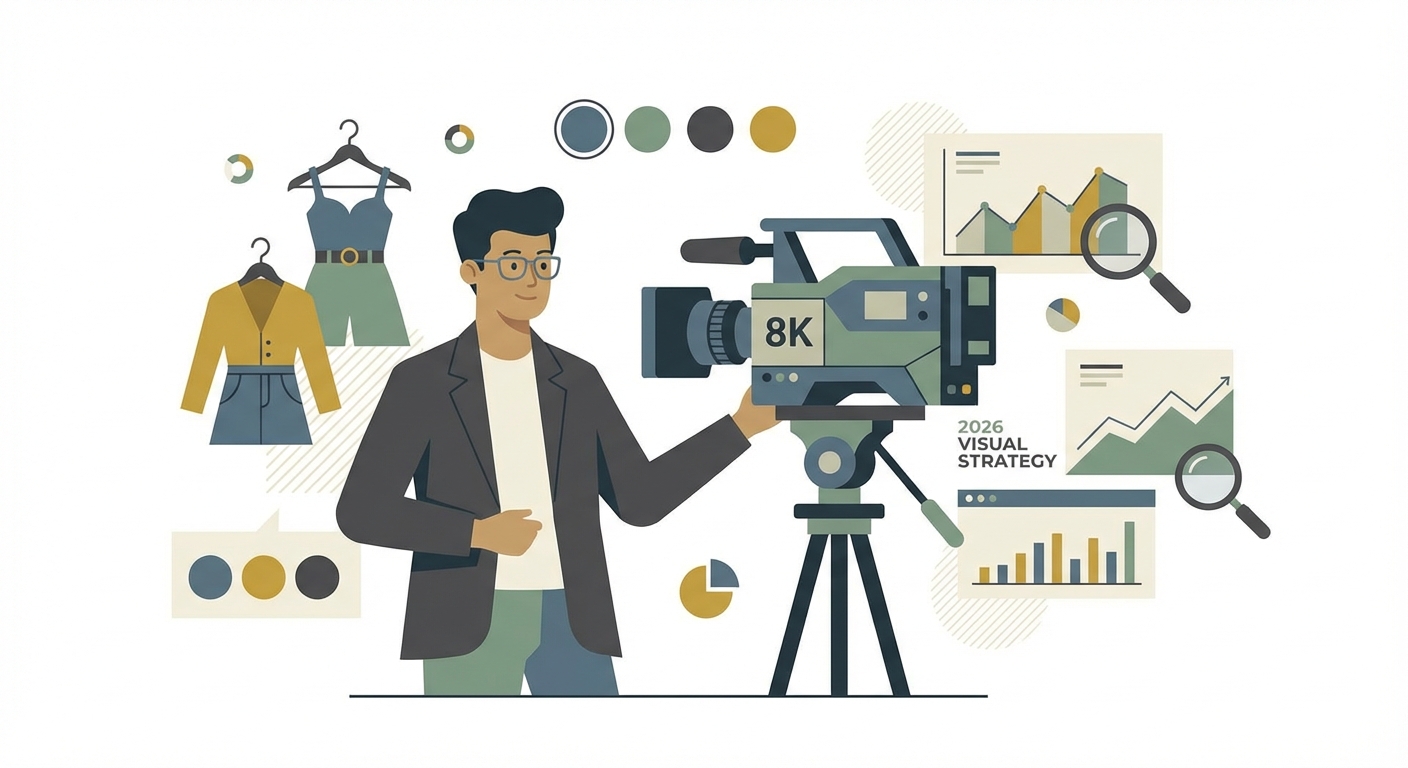
In 2026, we’re shooting on sensors that capture more detail than the human eye ever asked for. When you’re filming in 4K or 8K, every stray thread and digital artifact is magnified. Choosing an outfit isn't just about fashion anymore; it’s about technical performance. Whether you're cutting a high-production YouTube documentary or a scrappy TikTok update, your look needs to survive the sensor while keeping your audience locked in.
Does Your Outfit Actually Fit Your Brand?
Before you grab that trendy jacket, hit the brakes. Ask yourself: Does this serve the brand I'm building?
Your wardrobe is a shorthand for your identity. If your core brand persona is built on clinical precision and high-end consulting, showing up in a neon-printed graphic tee creates "cognitive dissonance." Your audience gets confused. They don't know who you are or why they should trust you. Conversely, if you’re a lifestyle vlogger, a stiff, formal suit makes you look like a stranger in your own living room.
Think of color as a psychological lever. Deep blues scream stability and trust. Vibrant oranges and yellows? That’s pure, high-octane creativity. Don’t overcomplicate it. Pick two or three signature tones and stick to them. This creates a "Visual SEO" effect. Over time, when a viewer scrolls past your content, the color profile alone triggers an immediate, subconscious connection to your brand.
The Technical Rules (What 8K Cameras Actually See)
Modern sensors are brutal. They see things you don’t. This is why fabric and texture are everything. Natural, weighted fabrics—think heavy cotton, linen, or high-grade wool—render beautifully. They have depth. They don't fight the camera.
Avoid these like the plague:
- Tight houndstooth.
- Fine pinstripes.
- Intricate, dizzying geometric prints.
These patterns trigger the Moire Effect. It’s that weird, shimmering, vibrating distortion that makes your shirt look like it’s glitching. It’s a one-way ticket to a "cheap" looking video. If you love a pattern, make sure it’s oversized and low-contrast. If you’re nervous, stick to solids. Let the lighting hit your face, not your shirt.
Streamlining with AI
Look, the 2026 creator is an AI-augmented creator. You don't need to haul a rack of clothes to the studio anymore. You can preview how an outfit interacts with your background before you even touch a camera.
Virtual try-on tech has leveled up. It can simulate how fabric drapes and how colors react to your specific room lighting. This is the future of fashion’s digital identity. Use it to avoid the "clashing" issue—where your clothes bleed into your set or vanish against a green screen. Test your outfit in a digital space. Save your sanity on set.
The Outfit-to-Background Workflow
Stop guessing. Start planning. If you want a high-value shoot, you need a system. Map your visual strategy to cut down on the "what do I wear?" panic on production day.
Building Your "Capsule Content Wardrobe"
Sustainability isn’t just about the planet; it’s about your brain. If your closet is a graveyard of "fast fashion," you’re suffering from decision fatigue. Cut it out. Build a "capsule content wardrobe."
We’re talking 5 to 10 high-impact, versatile pieces. Look at 2026 spring fashion trends for a pulse check, but filter them through your lens. A killer matte-finish blazer, a crisp neutral shirt, and trousers that don’t bunch when you sit? That’s worth more than twenty trendy, flimsy tops.
This is modular. You can wear the blazer for a deep-dive YouTube essay, then drop the blazer and roll up the sleeves for a punchy, relaxed Reel. Same you. Different platform intent.
The "Creator’s Go-Bag"
Even the best-laid plans fall apart under hot lights. Your "Creator’s Go-Bag" is your insurance policy.
- Lint roller: Essential. Sensors love dust.
- Matte-finish powder: Shine is the enemy. A quick touch-up prevents the "greasy forehead" look.
- Safety pins/clips: The secret to a "tailored" look. If a shirt is bunching in the back, pin it taut. It’s the difference between looking like you’re wearing your dad’s clothes and looking like a pro.
If your gear or your setup feels like a barrier to looking polished, don't be afraid to look into professional video production services. Sometimes, you need an extra set of hands to get the lighting and grooming just right. Grooming is the final polish. If your hair is a mess, a $5,000 suit won't save you.
Why Comfort is the Ultimate Confidence Hack
Let’s talk about the "fidget-factor."
If your collar is choking you, or you’re tugging at your hem every thirty seconds, your audience will know. They’ll see the shifting eyes. They’ll see the nervous energy. They’ll stop listening to your words and start wondering why you’re so uncomfortable.
Comfort is your biggest confidence hack. When you’re comfortable, you stop thinking about your clothes and start focusing on your message. If you’re filming a 30-minute podcast, wear something that lets you breathe. If you feel like yourself, you’ll sound like yourself. And in this game, sounding like yourself is the only way to build a loyal audience.
Frequently Asked Questions
Why do my clothes look "shimmering" or distorted on camera?
This is usually caused by the Moire Effect, which happens when fine patterns or high-contrast textures interact with the pixels on your camera sensor. To fix this, avoid tight stripes, small checks, or herringbone patterns. Stick to solid colors or larger, softer textures.
How do I choose colors that don't clash with my green screen or background?
Avoid wearing the same color as your background, especially if using a green screen, as this will result in "transparency" or "ghosting" effects. Use a color wheel to pick complementary colors—if your background is a warm earth tone, choose a cool-toned outfit to make yourself pop.
Do I really need to dress professionally for casual, "authentic" content?
"Professional" doesn't mean a suit and tie; it means intentional. Authentic content still requires a polished presentation. You can be casual while still ensuring your clothes are clean, wrinkle-free, and aligned with your brand’s color palette.
How can I use AI tools to test my outfits before I start filming?
Use AI-based virtual try-on apps or generative design tools to upload a photo of your outfit against a photo of your studio set. This allows you to check for color clashing and visual distractions before you commit to the look on recording day.
What are the most important items to keep in a creator's emergency kit?
Always carry a lint roller, a small pack of safety pins or clips for fit adjustments, a translucent matte-finish powder to reduce shine, and a travel-sized steamer to remove wrinkles. These small details ensure you look high-definition ready at all times.