The Rise of Artificial Intelligence in the NFT Industry

The narrative that NFTs are just speculative digital beanie babies? It’s dead. Buried. If you’re still waiting for the "JPEG bubble" to burst, you’ve missed the point entirely. We’re deep into 2026 now, and the landscape has shifted beneath our feet. We aren’t looking at stagnant, inert files anymore. We’re witnessing the rise of living, breathing, autonomous digital infrastructure.
With the global NFT market projected to scale significantly, AI has become the engine room of this evolution. It’s moving the sector away from the hype-cycle madness and toward a future defined by cold, hard utility and sophisticated digital ownership.
The End of the "Trait Factory" Workflow
Remember the 2021 era? The endless, soul-crushing grind of layering thousands of images in Photoshop, praying the metadata didn't break? That’s over.
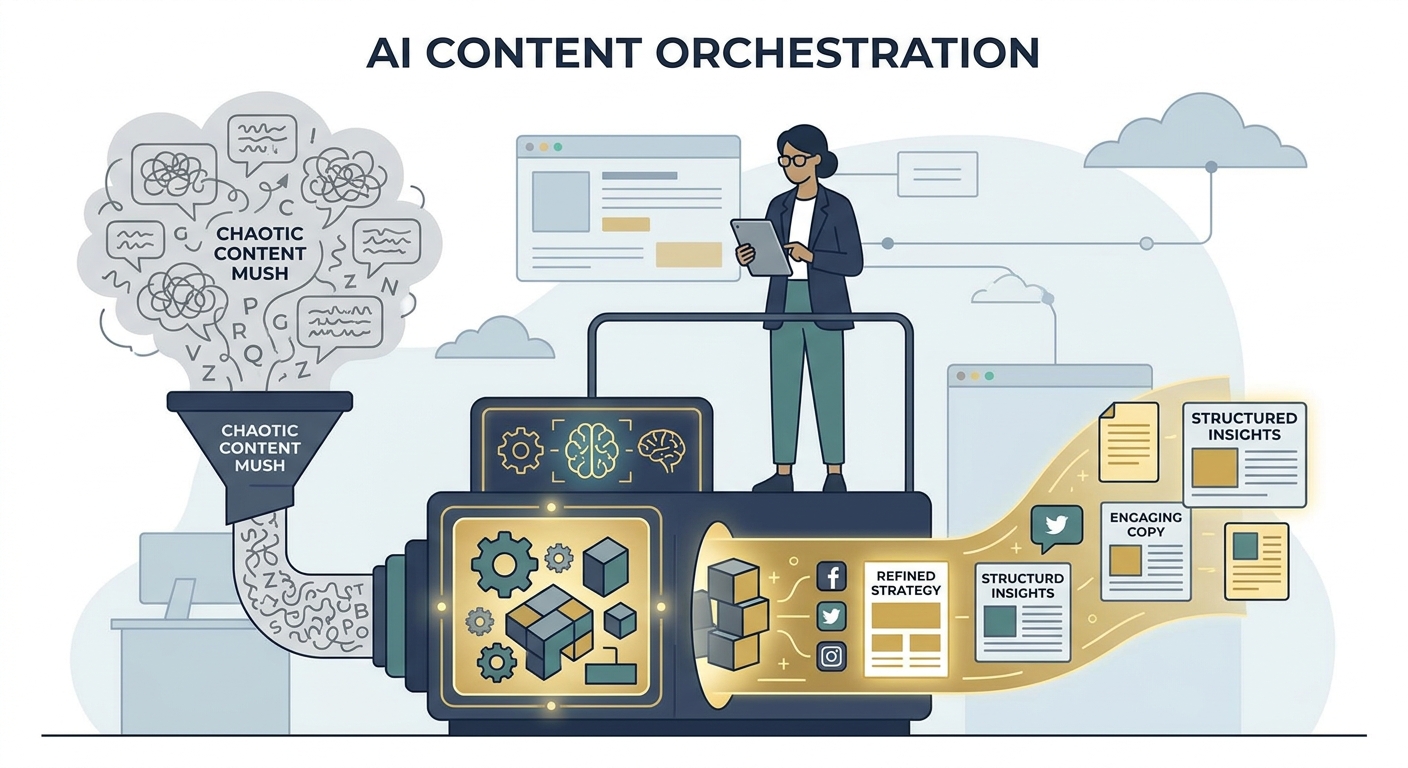
Today’s creators aren't just artists; they’re architects. They’re building generative systems. The industry has pivoted from "prompting" to a "Human-in-the-Loop" workflow. It’s a subtle but massive distinction. The artist sets the stylistic boundaries—the "vibe," if you will—and the AI handles the heavy lifting: the trait generation, the tedious metadata optimization, and the distribution logic.
It’s about scale without the sacrifice of quality. You can keep a massive collection coherent, complex, and distinct, all while avoiding that generic, "synthetic" look that plagues lazy, uncurated projects. By offloading the grunt work to machine learning, artists finally have the bandwidth to do what they’re actually good at: high-level curation. The final "yes" or "no" that defines a project’s brand identity is still, and always will be, a human decision.
When you keep the human in the loop, you keep the soul. That’s the secret sauce.
Dynamic NFTs: Assets That Actually Do Something
The most radical change? We’ve stopped treating NFTs like static JPEGs. We’re moving toward real-time data integration. If you’re still getting your bearings, brush up on how to create an NFT to understand the foundational smart contract structures before you try to wrap your head around dynamic assets.
Dynamic NFTs (dNFTs) are living organisms. They change. They react. They evolve. AI models act as the "oracles" here—the brains behind the operation.
Imagine an avatar that changes its clothing based on the actual weather in your city. Or a gaming weapon that gains stats based on how well you played your last match. In DeFi, this is a game-changer. An NFT representing collateral can now have its metadata updated by an AI model that tracks real-time market volatility. It’s not just a visual gimmick; it’s a functional bridge connecting the blockchain to the physical world. It’s utility, plain and simple.
The Rise of the Agentic Marketplace
Welcome to the era of the "agentic" marketplace. By 2026, the trading floor has been taken over by autonomous AI agents. These aren't human day-traders staring at charts until their eyes bleed. These are algorithms acting as the primary liquidity providers and arbitrageurs.
They move with millisecond precision. They scan the entire blockchain for undervalued assets, executing trades based on sentiment analysis and historical price action that a human brain couldn't possibly process in time.
According to recent AI and blockchain predictions for 2026, the market is becoming terrifyingly efficient. The "floor price" of a collection isn't just hype anymore; it’s a reflection of market health and data-verified utility. The emotional volatility of the "diamond hands" crowd? It’s being smoothed out by the cold, calculated logic of the agentic market.
The Trust Crisis: Can We Keep it Real?
Here’s the paradox: the better AI gets at creating, the harder it is to prove something is "hand-made." We’re facing a flood of synthetic media. So, how do we value the human touch?
The answer is provenance. We’re seeing a boom in cryptographic watermarking and forensic tools designed to sniff out "lazy" synthetic dumps. This is critical for Web3 security best practices. If you want to survive, you need to prove your work isn't just AI-generated spam.
The ethics of training data remain a flashpoint, too. The best projects? They’re going open-source and provenance-verified. They’re telling you exactly how they trained their models, proving they didn't steal their inspiration and that the artists involved were actually compensated. That’s the new gold standard.
How to Build Without Getting Burnt
So, you’re a creator. You want to use AI to scale. How do you do it without losing your integrity?
Don't scrape the open web. That’s a legal nightmare waiting to happen. Instead, build your own proprietary datasets. Train your models on your own journals, your own sketches, your own past work. When you control the training data, you own the output. You’re not just a user of a tool; you’re the master of a bespoke pipeline.
Before you drop your next collection, look at the broader impact of AI on market trends. If your project doesn't offer utility or verified authenticity, you’re going to get left behind. Proactive IP protection is the hallmark of a pro. Don't skip it.
The Future: It’s All About Utility
The trajectory is clear. We’re moving toward a "Utility-First" economy. Within five years, the term "AI art" will sound as archaic as "digital photography." AI will just be the standard-issue tool for every digital creator.
We’re heading toward self-evolving virtual worlds—metaverses that aren't just static backdrops, but living ecosystems where AI agents and human-owned NFTs interact in real-time. The winners? The ones who stop fighting the AI and start using it as a partner in discovery. It’s about solving problems of scale and complexity that were impossible just a few years ago.
The "JPEG" era is over. The era of the "Utility Asset" has begun.
Frequently Asked Questions
How does Artificial Intelligence actually change how NFTs are created?
AI shifts the workflow from manual, labor-intensive trait creation to a professional "human-in-the-loop" process. Creators use AI to automate the generation of thousands of variations while maintaining a cohesive style, allowing them to focus on the curation and strategic metadata distribution that adds real value to a collection.
Are AI-generated NFTs considered "real" art?
The value of an NFT is increasingly defined by the human curator’s intent. In the current market, AI-assisted art is treated as a collaborative medium. The "realness" is found in the artist's vision, the unique constraints they place on the AI, and the narrative they build around the collection.
What are the copyright risks of using AI in NFT collections?
The primary risks involve the use of public, unvetted training data. To mitigate these, creators should train models on proprietary datasets they own or have licensed. Using "clean" data ensures that the resulting assets are legally defensible and free from the intellectual property entanglements that often plague public AI models.
Will AI replace human NFT artists?
AI is a force-multiplier, not a replacement. While it handles the repetitive scaling and technical execution, it lacks the subjective, lived experience that defines iconic art. The future belongs to the "hybrid creator"—the artist who uses AI to handle the heavy lifting while retaining the final creative authority.