Best times to post on each social network in 2026
When to post on Facebook, Instagram, LinkedIn, X, TikTok, YouTube, Pinterest and Threads in 2026, per Sprout, Buffer, Later and Hootsuite, plus a test plan.
Data & Studies
Stop chasing vanity metrics. Learn how to calculate social media ROI, build a full-funnel attribution framework, and speak the language of your CFO. Michael JohnsonAnalytics & Performance SpecialistPublished 6 min read
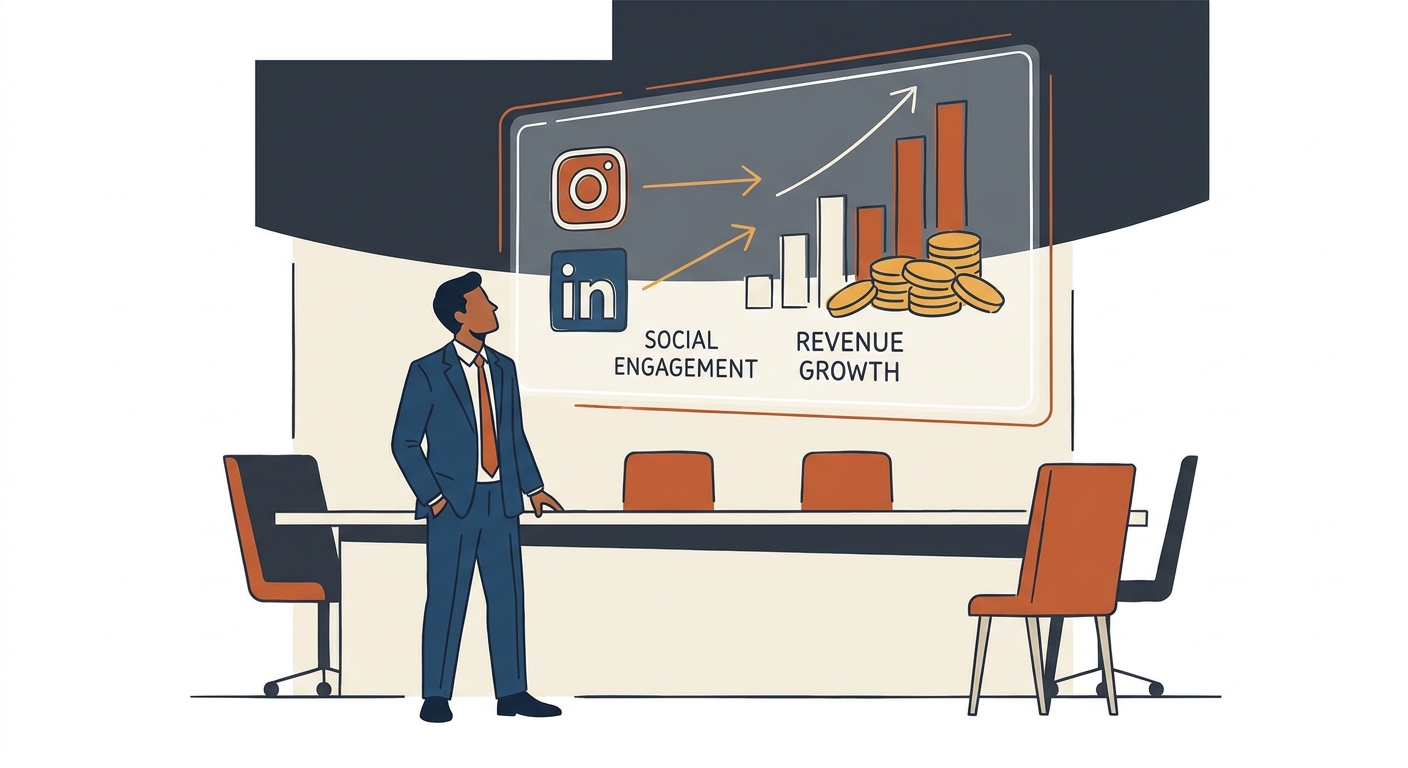
Social media ROI stopped being a "nice-to-have" brand awareness metric years ago. Today, it’s the primary language of the boardroom. If you can’t draw a straight, defensible line between your Instagram Reels or LinkedIn posts and actual business outcomes—like lead quality, retention, or cold, hard revenue—you aren’t running a marketing strategy. You’re running an expensive hobby.
In 2026, the gap between teams treating social as a megaphone and those treating it as a sales engine has become a full-blown chasm. If you want to keep your budget, you have to stop chasing vanity metrics and start building a full-funnel attribution framework that actually speaks the CFO’s language.
The "Impact-First" shift has rewritten the scorecard. While the dinosaurs of marketing still lose sleep over follower counts, high-performing teams are obsessed with the "quality of conversation" and how it greases the wheels of the sales pipeline. We’re in an era where 65% of leadership now demands a documented connection between social touchpoints and business objectives, according to the Sprout Social Index 2026.
When you’re setting expectations, kill the word "virality." It’s a pipe dream. Start promising efficiency instead. The industry-standard baseline for a healthy social program is a 3:1 return on investment. If you’re running high-performing paid campaigns, that benchmark should hit 5:1. These are the numbers that keep you in the room. Anything less? You’re underperforming. Anything more? You’ve effectively cracked the code.
The math is simple. The data collection? That’s where the headache starts. The core formula is: (Revenue - Investment) / Investment x 100. The trap most marketers fall into is lying to themselves about the "Investment" side of the equation.
To get an honest picture, your investment must include:
graph TD
    A[Total Returns: Sales/Leads] --> D(Net Profit)
    B[Total Costs: Ad Spend] --> C(Total Investment)
    E[Total Costs: Tools] --> C
    F[Total Costs: Man-hours] --> C
    C --> D
    D --> G{ROI Percentage}
    C --> G
If you leave out the man-hours, your ROI will look artificially inflated. Your credibility with the finance department will vaporize the second they ask for an operating expense breakdown. Don't set yourself up for that embarrassment.
Vanity metrics are the junk food of marketing. They give you a quick spike of dopamine—a thousand likes on a post—but they have zero nutritional value for the business. Likes don't pay the payroll.
If you want to move the needle, you have to stop obsessing over:
Instead, start tracking:
If you’re struggling to bridge the gap between these metrics and executive-level results, our team offers expert execution to achieve these benchmarks, ensuring your strategy is built on data, not guesses.
The customer journey is a mess, not a straight line. A lead might find you through a TikTok trend, read a blog post, and finally convert after seeing a LinkedIn case study. If you look at social channels in silos, you’ll never see the truth.
Use UTM parameters for every single link you share. Without them, you’re flying blind. Beyond that, use cross-channel tracking pixels to see how those social touchpoints contribute to the broader conversion path. For a deeper dive into how to structure these paths, review GA4 attribution models for conversion paths.
graph LR
    A[Awareness: TikTok] --> B[Consideration: IG/Blog]
    B --> C[Decision: LinkedIn/Website]
    C --> D[Conversion: CRM/Sales]

    style A fill:#f9f,stroke:#333
    style B fill:#bbf,stroke:#333
    style C fill:#bfb,stroke:#333
    style D fill:#fbb,stroke:#333
The "Visualization Gap" is where most marketing careers go to die. Your CFO couldn't care less about your Instagram engagement rate. They care about how much revenue that engagement generated compared to the campaign's cost.
When you’re in front of leadership, kill the jargon. Build an "Executive Dashboard" that focuses on three things:
If you need a blueprint for building these high-impact reports, learn how to build a data-driven dashboard that turns raw numbers into a story of growth.
When budget season rolls around, don’t walk into the room with a deck full of pretty posts. Walk in with a business case.
The "CFO Script" Template:
"Our social program delivered $X in attributed revenue this quarter at a CPA of $Y, which is 15% below our blended acquisition cost. By shifting our focus from volume to high-intent conversion, we’ve effectively lowered our reliance on expensive paid search and increased our customer retention by Z%."
Your tools define your data quality. Native platform insights (like Meta Ads Manager) are fine for tactical platform tweaks, but they are useless for cross-channel attribution. You need an aggregation layer—a tool that pulls data from social, your website, and your CRM into one single source of truth.
The "Holy Grail" is CRM integration. When your social tool talks to your Salesforce or HubSpot instance, you stop guessing who your leads are. You start seeing exactly which LinkedIn post turned a cold prospect into a closed-won deal.
Likes are an engagement metric, not a revenue metric. They show interest, but they don't show intent. ROI is about financial gain. Likes are just a leading indicator of visibility—they only count as ROI when they actually turn into a lead or a sale.
A "good" ROI is a 3:1 return for organic/blended work. If you’re running high-performing paid social, you should be aiming for a 5:1 return. Anything above that puts you at the top of the pack.
You have to use multi-touch attribution. B2B sales can take months. You need to track "assisted conversions" to see how social touchpoints nudge prospects along the research phase, even if the final click happens on a demo request page months later.
Focus on CPA (Cost Per Acquisition), Lead Quality (conversion rate of social leads vs. other channels), and CLV (Customer Lifetime Value). These metrics translate directly to the company's financial health—the only thing that matters when the budget is under the microscope.
When to post on Facebook, Instagram, LinkedIn, X, TikTok, YouTube, Pinterest and Threads in 2026, per Sprout, Buffer, Later and Hootsuite, plus a test plan.
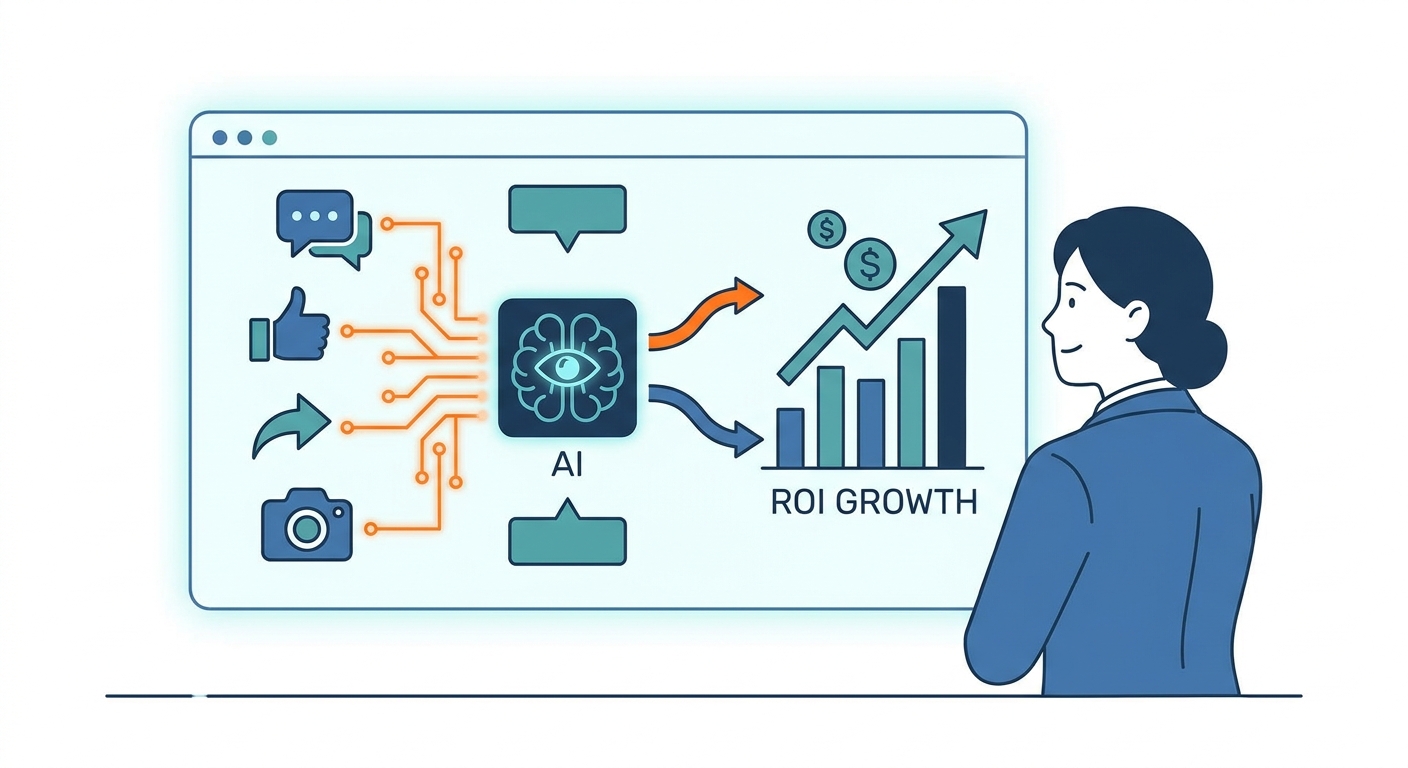
Stop tracking vanity metrics. Learn how AI-powered analytics tools shift social media ROI from descriptive reporting to predictive, real-time revenue growth.
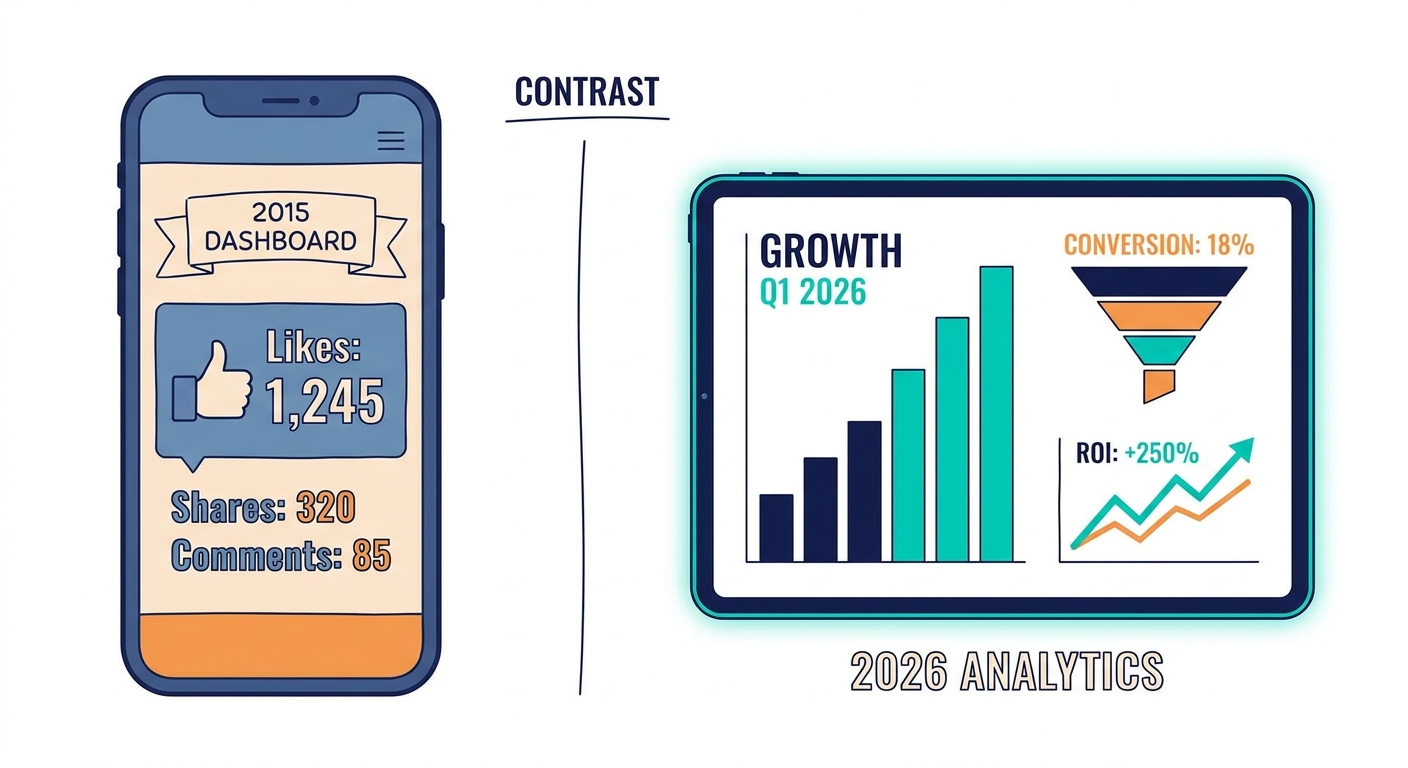
Stop tracking vanity metrics. Learn when to upgrade from free native analytics to paid tools to drive actual revenue and ROI for your business in 2026.
Social9 schedules your posts on 11 networks, and Autopilot can draft them in your brand voice for you to approve. Start on the free plan.
We use strictly necessary cookies to run this site. With your permission, we also use analytics cookies to understand how the site is used. We never use advertising cookies. See our Cookie Policy.