Social media scheduling: the complete 2026 guide
How social media scheduling works in 2026: native schedulers vs tools, API limits, a six-step workflow, queues, time zones, approvals and a checklist.
Scheduling
Stop relying on outdated 'best time to post' lists. Learn how to analyze your own audience data to find the optimal social media content schedule for 2026. Michael JohnsonAnalytics & Performance SpecialistPublished 5 min read
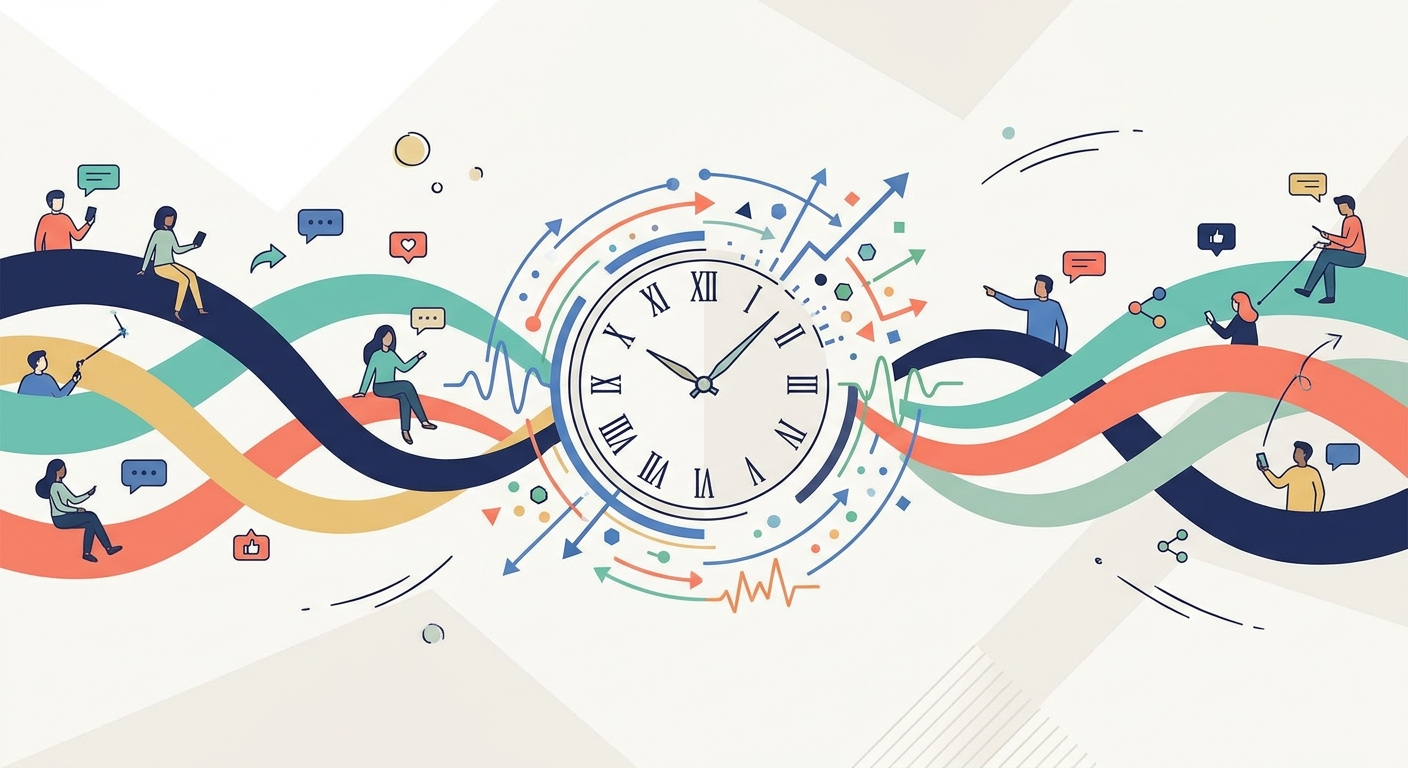
There is no "golden hour" for social media. If you’re still clinging to those generic, industry-wide charts to decide when to hit "publish," you’re actively sabotaging your own reach.
Let’s be real: the algorithm doesn’t care about a blog post from 2023 that told you to post on LinkedIn at 9:00 AM on a Tuesday. That’s ancient history. Today’s platforms aren't just chronological feeds; they are sophisticated intent-engines. They care about watch time, session depth, and whether a user actually gives a damn about what you’ve posted. To win in 2026, you have to stop chasing what "everyone else" is doing and start stalking the specific habits of your own followers.
The internet is a graveyard of "best time to post" infographics. They’re colorful, they’re convenient, and—let’s be honest—they’re mostly useless. These lists aggregate data from millions of accounts, effectively turning your unique audience into a beige, statistical average.
If your audience is a bunch of night-shift nurses, and you’re posting during the "ideal" 9-to-5 window because some infographic told you to, your content is stone-cold dead by the time they actually open their phones. When you chase a universal best time, you’re optimizing for a ghost audience. You’re shouting into the void because you’re too afraid to look at your own data.
Short answer: No. Long answer: Still no, but platform-specific usage does create patterns. Professional platforms like LinkedIn often see spikes during the grind of the workday, while entertainment-heavy apps like TikTok see massive surges once the workday clock hits zero and the dopamine-chasing begins.
graph TD
    subgraph Peak_Engagement_Hours
    A[LinkedIn: B2B/Professional] -->|10 AM - 2 PM| B(High Engagement)
    C[TikTok: Leisure/Entertainment] -->|7 PM - 11 PM| D(High Engagement)
    end
    style A fill:#f9f9f9,stroke:#333
    style C fill:#f9f9f9,stroke:#333
Trying to force a one-size-fits-all schedule across every platform is a recipe for stagnation. You have to understand the difference between a user looking for a career boost on LinkedIn and a user looking for a laugh on TikTok. Their mindsets are miles apart.
Stop guessing. Start looking at your metadata. Every platform gives you the keys to the kingdom if you actually bother to look at their native tools. For Facebook and Instagram, you should review your engagement metrics via Meta Business Suite to see exactly when your followers are lurking. If you’re playing the professional game, access LinkedIn analytics documentation to see when your specific niche is actually paying attention.
Here is the secret: Export your last 90 days of post data into a spreadsheet. Don't let the software do the thinking for you. Look for three things: the time, the day, and the engagement rate. If you notice a consistent 15% bump in comments on posts published at 8:00 PM on Thursdays, that’s your golden hour. Ignore the noise. Trust your numbers.
Optimization isn't a "set it and forget it" task. It’s a process. Before you blow up your calendar, run a formal audit. Use a Social Media Audit Checklist to see where you've been, then run this 30-day experiment.
graph TD
    A[1. Audit Current Data] --> B[2. Identify 3 Test Windows]
    B --> C[3. Execute 30-Day Test]
    C --> D[4. Analyze Engagement Lift]
    D --> E[5. Refine Schedule]
    style A fill:#e1f5fe,stroke:#01579b
    style E fill:#c8e6c9,stroke:#2e7d32
Keep your content quality rock-solid during this test. If you test a new time slot with a lazy, low-effort post, you’re going to get skewed data. A/B test your timing by keeping the content theme identical across different slots for one month. By the end of the 30 days, the data will speak for itself.
Finding the "right" time is nice, but it’s secondary to showing up. The algorithm rewards consistency. It wants to know that you are a reliable source of content. If you post sporadically at "perfect" times, you’re less valuable to the platform than a creator who posts reliably at "good" times. When planning your distribution and building a content calendar, prioritize a rhythm you can actually maintain. A predictable cadence builds anticipation. It tells the platform, "Hey, I’m here, and I’m not going anywhere."
I worked with a B2B SaaS company that was obsessed with the standard "9:00 AM Monday" advice. Their LinkedIn engagement? Pathetic. They were talking to software developers who didn't even look at LinkedIn until after their daily stand-ups or during their evening wind-down.
We moved their posting schedule to 7:00 PM on Tuesdays and Thursdays. Within a month, they saw a 20% lift in engagement. By ditching the "best practices" and leaning into the actual behavior of their audience, they turned a dead channel into a lead-generation machine.
Managing a global audience used to be a headache. You’d be doing math at 3:00 AM to figure out if your audience in London was awake. In 2026, the platforms have largely automated this. Most scheduling tools now calculate the "local time" of your followers, so you can set a post to land right when they’re grabbing their coffee. For a deeper look at these shifting metrics, check out the 2026 State of Social Media Engagement. Stop stressing about EST or GMT. Worry about the user's local context.
If your audience is most active at 2:00 AM, you should be sleeping. Do not be the person hitting "publish" in the middle of the night. The whole point of scheduling tools is to decouple your creation process from your sleep cycle. Use automation to keep your cadence steady so you can focus on the actual storytelling, not the logistics of the clock.
No. Each platform has different user behaviors; for example, TikTok users are most active in the evenings, while LinkedIn users are most active during work hours.
Absolutely not. Quality, relevance, and value always drive engagement more than timing. Timing is the "cherry on top" of a great post, not the foundation.
Once every quarter is sufficient. Your audience's habits change as their lifestyle or your content strategy evolves, but checking more frequently usually leads to "optimization paralysis."
Yes, if your audience is global. Use native analytics tools that show when your specific followers are online, rather than relying on global "best time" averages that don't account for your specific demographic distribution.
Treat them as separate silos. Use a tool to schedule LinkedIn posts during professional hours and TikTok posts during leisure hours. Trying to synchronize them across both will inevitably result in suboptimal performance on at least one, if not both, platforms.
How social media scheduling works in 2026: native schedulers vs tools, API limits, a six-step workflow, queues, time zones, approvals and a checklist.
Build a 30-day social media content calendar step by step: pick content pillars, set posting frequency, batch, approve and schedule. Free template included.
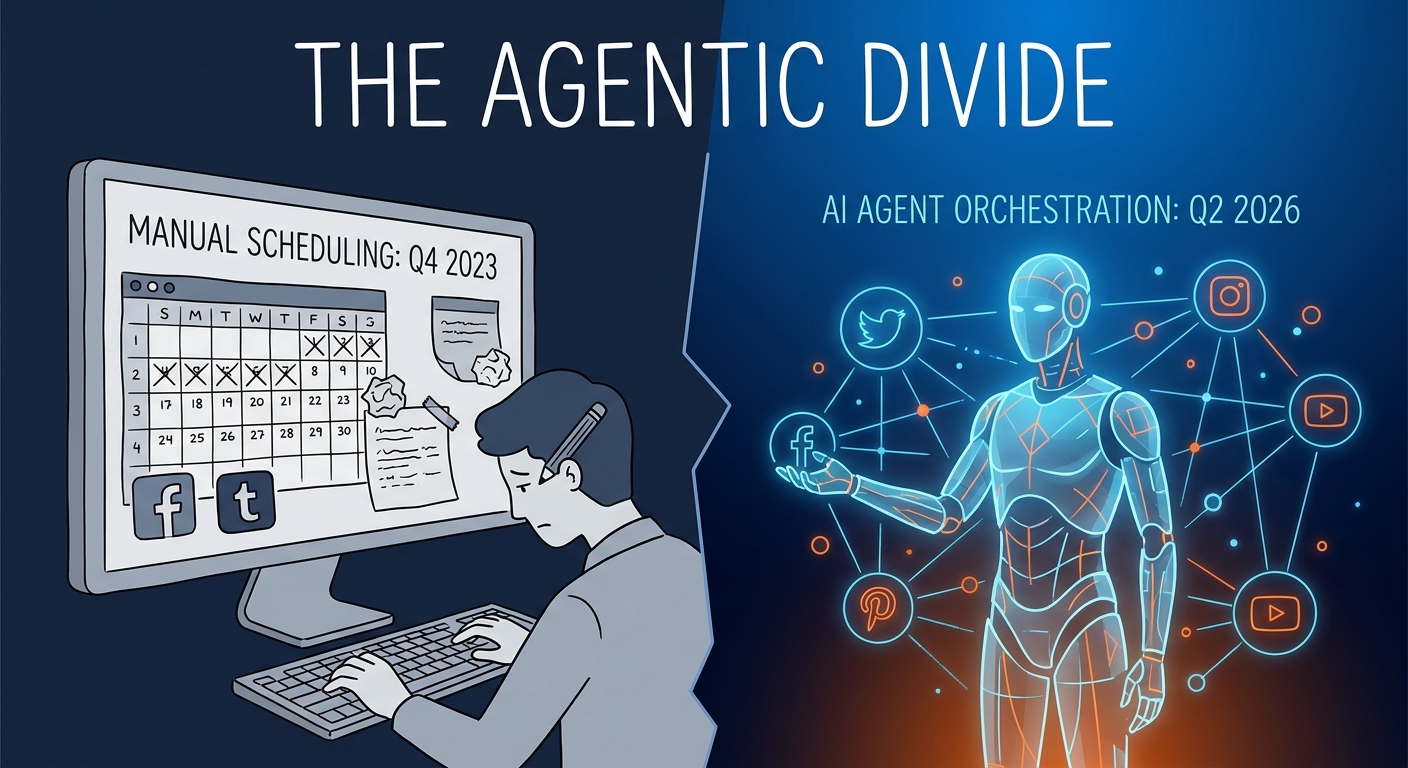
We compared 10 social media schedulers on price, pricing model, free plans, networks, AI writing and approvals. Prices checked October 2026 on vendor sites.
Social9 schedules your posts on 11 networks, and Autopilot can draft them in your brand voice for you to approve. Start on the free plan.
We use strictly necessary cookies to run this site. With your permission, we also use analytics cookies to understand how the site is used. We never use advertising cookies. See our Cookie Policy.