Social media image and video sizes for every network (2026)
Official image and video specs for Facebook, Instagram, Threads, LinkedIn, X, TikTok, YouTube, Pinterest, Google Business Profile, Bluesky and Mastodon.
Networks
Stop chasing viral vanity. Learn the 2026 strategy for TikTok, Instagram Reels, and YouTube Shorts that builds community and drives real revenue. Alex ChenAI Content StrategistPublished 4 min read
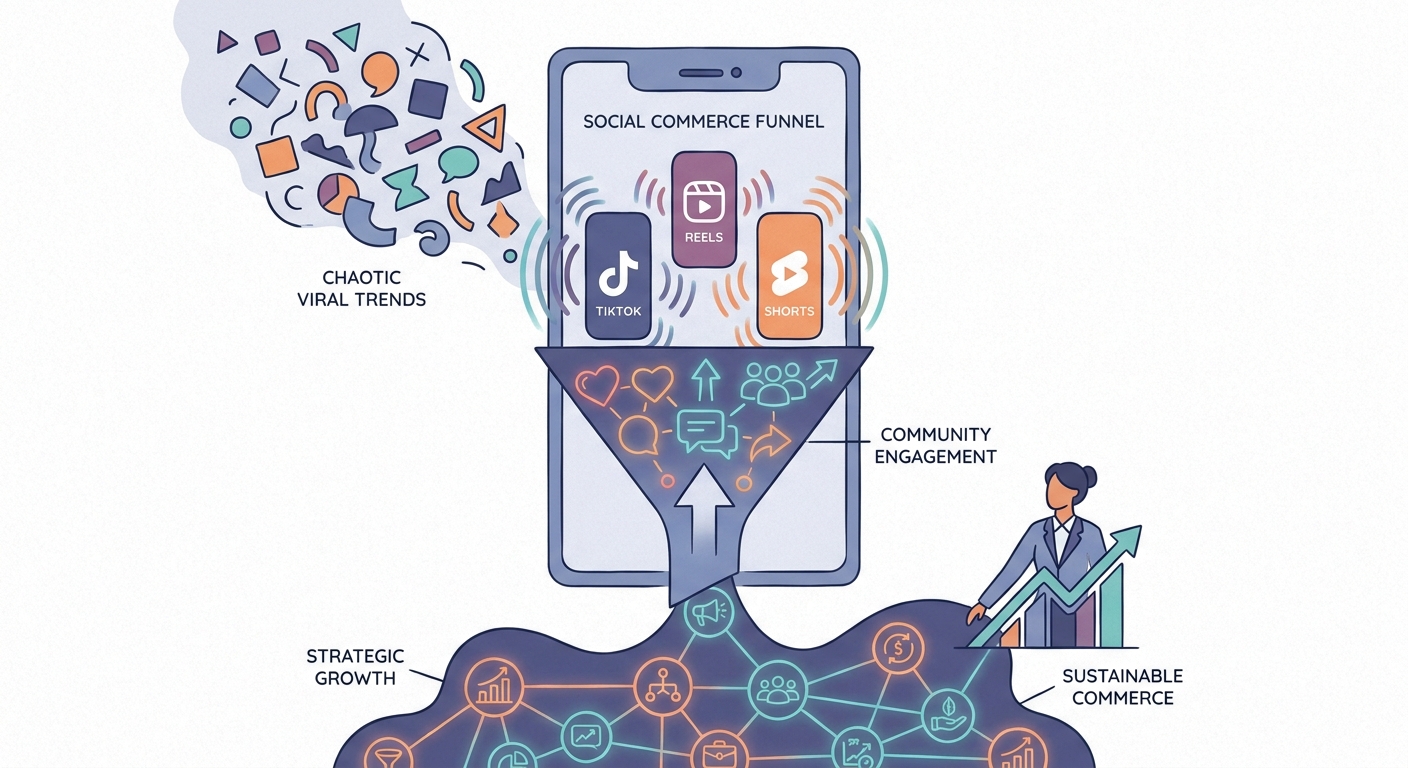
Forget what you thought you knew about "going viral." By 2026, the game has fundamentally changed. The era of chasing fleeting trends just to rack up empty impressions? It’s dead. If you’re still "spray and praying" with your content, you’re burning cash and time for nothing.
Today, the only currency that actually buys growth is community-led commerce. The winners aren’t the ones with the most followers; they’re the ones who use vertical video as a high-precision filter to qualify, educate, and convert people who actually care about their brand. As detailed in the 2026 Social Media Trends Report, the most successful creators have pivoted. They’ve traded the "viral vanity" approach for a surgical, funnel-oriented strategy. They treat every 60-second clip not as a destination, but as a bridge to a deeper, more profitable relationship.
We’ve stopped treating TikTok, Reels, and YouTube Shorts like interchangeable clones. That was a rookie mistake. In 2026, we view these apps for what they are: distinct stages of a customer’s journey. YouTube Shorts, specifically, has become the undisputed king of discovery-to-depth. It’s the top-of-funnel entry point that feeds directly into a creator’s long-form library.
graph TD
    A[Short-Form Video] -->|Discovery| B(Engagement/Interest)
    B -->|Value Bridge| C[Long-Form Video]
    C -->|Conversion/Community| D{Brand Authority}

    style A fill:#f9f9f9,stroke:#333,stroke-width:2px
    style C fill:#e1f5fe,stroke:#0277bd,stroke-width:2px
    style D fill:#fff9c4,stroke:#fbc02d,stroke-width:2px
This funnel works because it respects the user’s psychology. When someone is mindlessly scrolling, they’re looking for a quick hit. If your clip provides a genuine "aha" moment, the transition to a 10-minute deep dive on YouTube feels natural—logical, even. It isn't forced. This is the cornerstone of building a brand audience in a market that’s screaming for attention: give them the snackable insight, then serve them the full meal.
Choosing a platform in 2026 isn't about being everywhere. It’s about being where your business goals live. If you’re trying to build a lifestyle brand where aesthetic consistency is your moat, Instagram Reels remains the gold standard. If you’re playing the game of social commerce and impulse buys, TikTok is the engine. But if you’re hunting for high-intent, search-driven authority, YouTube is the only home that matters.
Don't spread yourself thin. Align your primary output with your core revenue driver. If you can't articulate why you're on a specific platform, get off it.
Remember when everyone was obsessed with keeping videos under 15 seconds to juice the replay count? That’s ancient history. Algorithms today are far smarter than that. They don't reward "short"; they reward "sticky."
They prioritize completion rate and dwell time above everything else. A 50-second video that keeps a viewer engaged for 45 seconds is objectively more valuable to the platform than a 10-second clip that gets skipped after three. Stop trying to trick the system with brevity. Start trying to hold their attention with substance.
graph LR
    Goal{Business Goal} -->|Discovery/Growth| TikTok[TikTok: Interest-Graph]
    Goal -->|Authority/Search| YT[YouTube: Search-Intent]
    Goal -->|Brand Awareness| Reels[Reels: Social-Graph]

    TikTok -->|Strategy| T_Strat[Trend-led, High Energy]
    YT -->|Strategy| Y_Strat[Educational, Evergreen]
    Reels -->|Strategy| R_Strat[Relatable, Aesthetic]

    style Goal fill:#e0e0e0,stroke:#333
    style TikTok fill:#ffcccc,stroke:#b71c1c
    style YT fill:#ffcccc,stroke:#b71c1c
    style Reels fill:#ffcccc,stroke:#b71c1c
Every platform speaks a different dialect. TikTok’s engine is purely interest-based; it feeds content based on what users do, not who they follow. YouTube is increasingly a search engine—it rewards content that solves specific problems. Reels? It’s still tethered to your social graph, prioritizing content that resonates with your existing community’s vibe.
If the content is the body, the hook is the heartbeat. In 2026, a hook isn't just a catchy phrase. It’s a visual and auditory disruption. You need to create a "curiosity gap"—a cognitive itch that can only be scratched by watching the next 30 seconds.
Kill the "Hey guys, welcome back" intro. Bury it. Start in the middle of the chaos. If you’re selling a product, show the result first—the glowing skin, the fixed engine, the finished meal—then backtrack to the process. Front-load the value immediately. If you don't stop the scroll in the first three seconds, the algorithm has already moved on without you.
Monetization has shifted. It’s no longer about chasing pennies from ad-revenue sharing. That’s a hobby, not a business. The real money is in integrated social commerce.
In 2026, your short-form video is a storefront. It’s a showcase. If you aren't using your content to move people toward a proprietary offer, a community, or a direct sale, you’re just a content creator—not a business owner.
Think of your video as a salesperson who never sleeps. It qualifies the lead, builds the trust, and presents the solution. If the viewer wants more, they click the link. They join the list. They buy the product.
Stop thinking about views as a measure of success. Start thinking about them as a measure of reach. How many of those views turned into a conversation? How many turned into a customer? That’s the only metric that keeps the lights on.
We are currently flooded with AI-generated, soulless content. It’s everywhere. It’s boring. It’s predictable. And that is exactly your competitive advantage.
People are starving for genuine human connection. They want to see the messiness, the personality, and the unique perspective that an algorithm can’t replicate. Don't be afraid to break the "rules" of content creation. Use your own voice. Tell stories that actually happened to you. Be opinionated.
The content that wins in 2026 will be the content that feels like it was made by a person, for a person. Don't try to be a media company; be a brand that people actually want to talk to. Keep your edits tight, your value high, and your motives transparent.
The platforms will keep changing. The algorithms will keep updating. But the desire for authentic human insight? That’s never going away. Master that, and you’ll be relevant long after the current trends have turned to dust.
Official image and video specs for Facebook, Instagram, Threads, LinkedIn, X, TikTok, YouTube, Pinterest, Google Business Profile, Bluesky and Mastodon.
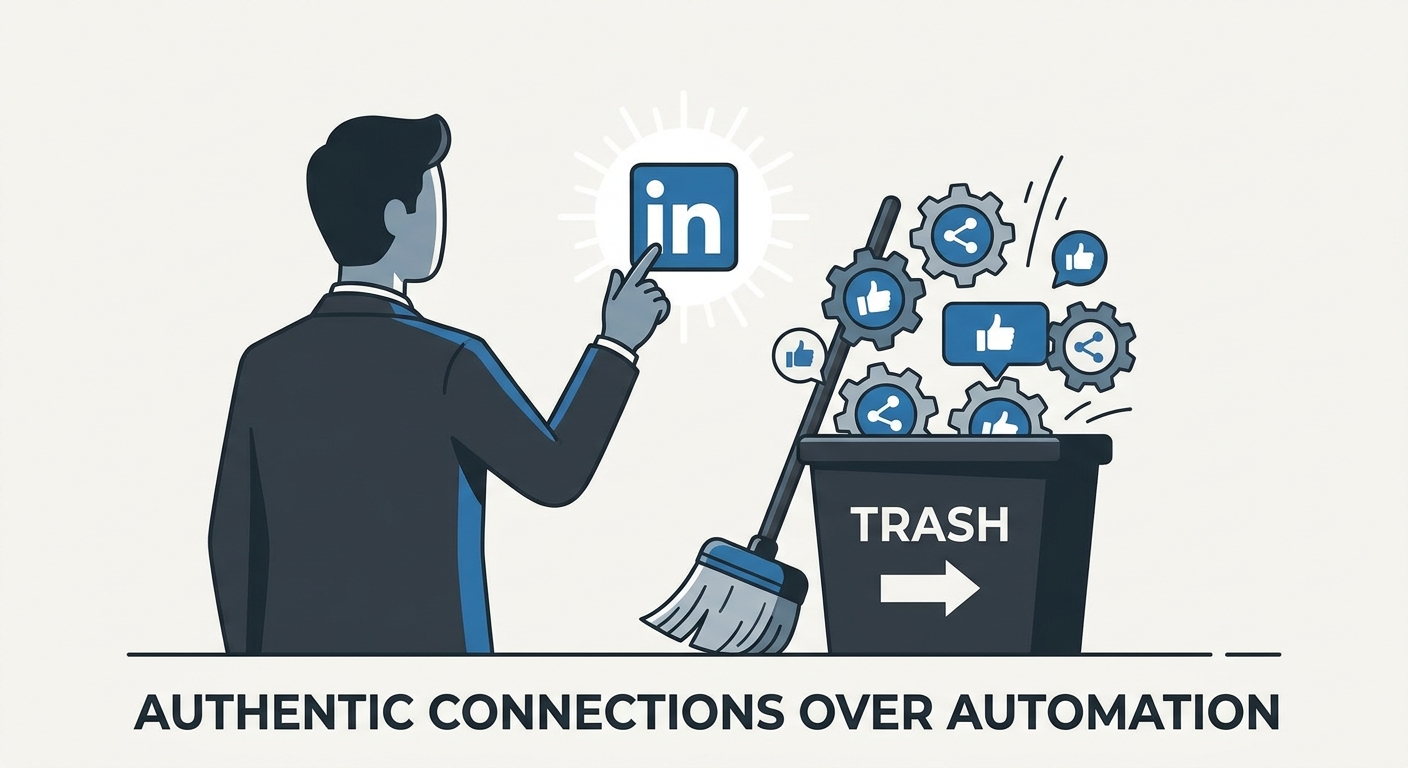
Stop spamming and start connecting. Learn how to use LinkedIn automation tools to amplify your personal brand without losing your authentic voice in 2026.
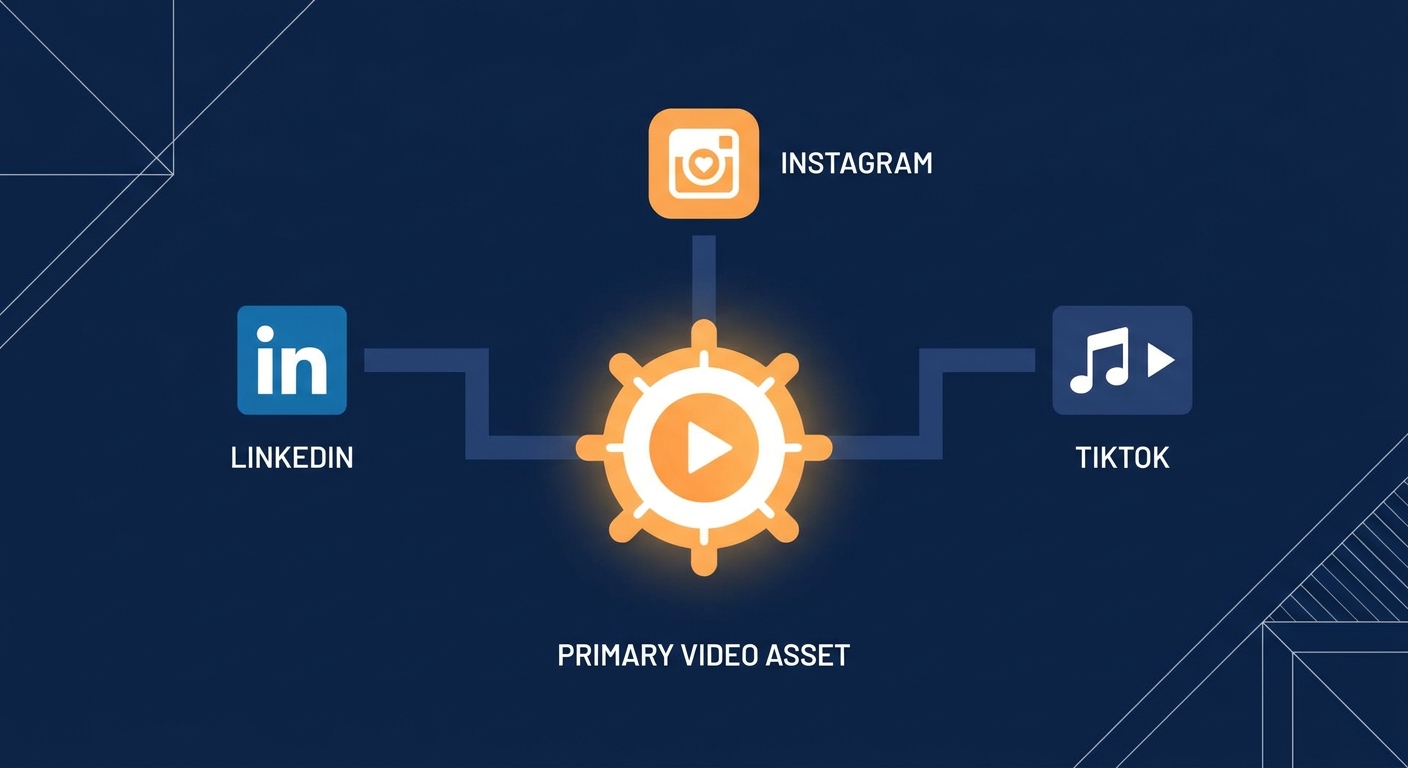
Stop blasting identical content across social media. Learn the Core-to-Satellite model to adapt your content for maximum engagement on LinkedIn, Reels, and TikTok.
Social9 schedules your posts on 11 networks, and Autopilot can draft them in your brand voice for you to approve. Start on the free plan.
We use strictly necessary cookies to run this site. With your permission, we also use analytics cookies to understand how the site is used. We never use advertising cookies. See our Cookie Policy.