Best times to post on each social network in 2026
When to post on Facebook, Instagram, LinkedIn, X, TikTok, YouTube, Pinterest and Threads in 2026, per Sprout, Buffer, Later and Hootsuite, plus a test plan.
Data & Studies
Stop tracking vanity metrics. Learn how to measure the true ROI of AI in your social media strategy and drive revenue in 2026 with our efficiency framework. Michael JohnsonAnalytics & Performance SpecialistPublished 6 min read
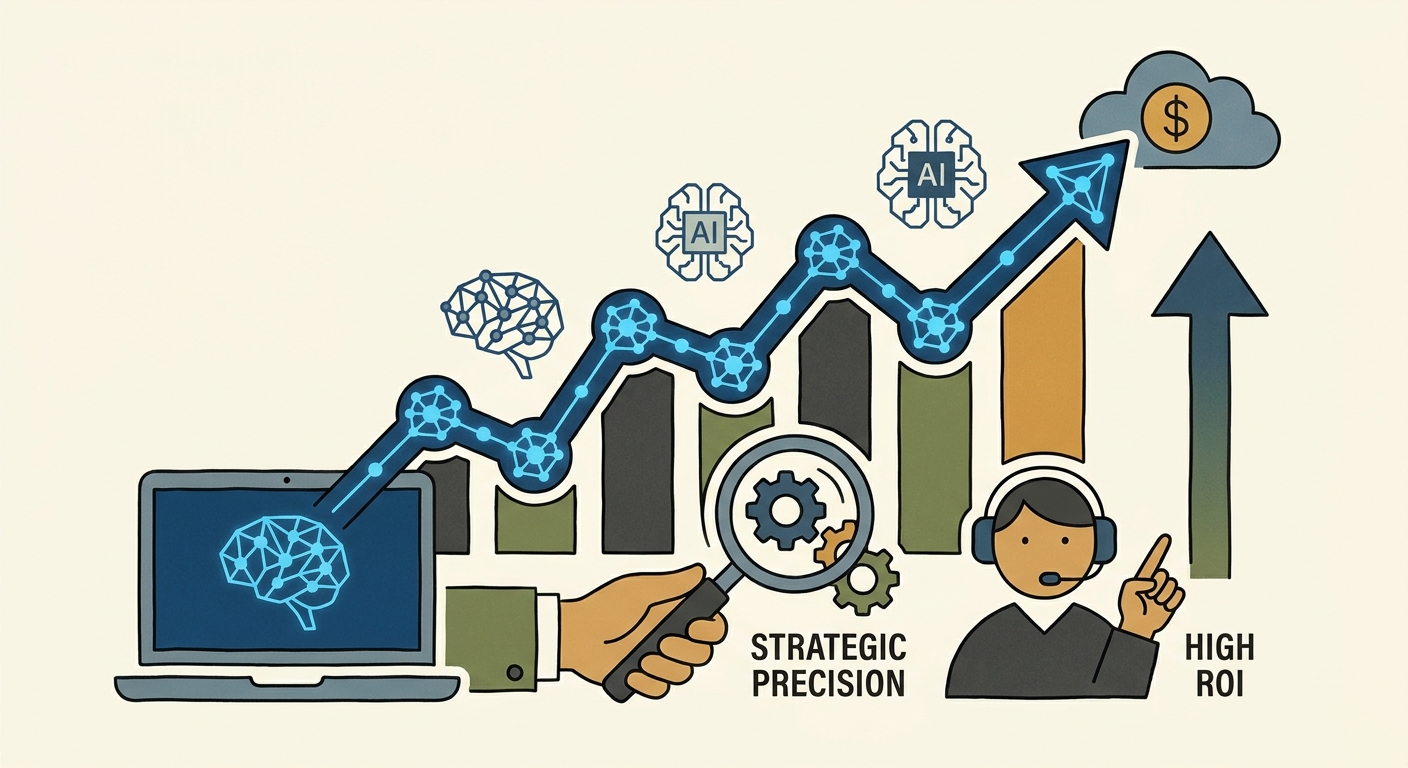
By 2026, the question isn’t whether you should use AI in your social media strategy. It’s whether your current setup is actually capable of capturing the value it creates. We are long past the "let’s churn out lazy captions" phase. Today, AI is the central operating system for high-performing brands. It’s handling everything from real-time sentiment analysis to predictive community moderation. Businesses that have fully integrated AI into their content lifecycle are hitting a 3.8x ROI benchmark. That’s the gap between the market leaders and the folks still treating social media like a high-stakes, manual guessing game.
The shift in 2026 is architectural. Forget about AI as a "bolt-on" utility; that’s ancient history. Now, it’s the infrastructure. Look at the most effective social teams, and you’ll notice a total departure from the "post and pray" model. Instead, they’re running systems where AI agents ingest raw data from social listening tools, identify shifting consumer sentiment, and trigger automated content that actually hits when the buyer is ready.
This isn’t just about being efficient. It’s about being smart. By automating the grunt work, you free up your best creative minds to focus on what actually matters: high-level strategy and brand positioning. The data is loud and clear: companies that treat AI as their primary operating system are consistently dusting their manual-only competitors. They’re generating higher returns on both time and capital. Period.
If your success metrics are still just "Likes," "Followers," or "Shares," you’re looking at vanity metrics. They mean almost nothing in today’s landscape. In an era of zero-click search and conversational AI, those numbers are effectively obsolete. According to Sprout Social ROI insights, the industry is finally moving toward a more sophisticated model: revenue attribution.
The modern strategy demands that we measure social media’s role in the multi-touch customer journey. We aren't hunting for a direct line from one tweet to a sale; we’re tracking how social interactions nudge a user from awareness to conversion inside the CRM. If your dashboard doesn't connect a social touchpoint to a specific lead or revenue event, you aren't measuring ROI. You’re measuring noise.
To justify your AI tech stack, you have to move past vague talk about "productivity." You need to run the Input vs. Output math. Audit the manual labor hours you used to pour into content ideation, drafting, and community management. Now, compare that to the subscription cost of your AI tools.
The real multiplier, though? It’s "Personalization at Scale." When you use AI to generate hundreds of micro-variants of a single campaign, tailored specifically for high-intent audience segments, you aren't just saving time. You’re boosting conversion rates. You can find a deeper dive into these methodologies in our complete guide to AI content creation.
graph LR
    A[Input: Raw Data] --> B[AI Processing: Sentiment/Predictive]
    B --> C[Output: Hyper-Personalized Content]
    C --> D[Metric: Revenue Attribution]
    D -.->|Feedback Loop| A
The "Cost of Inaction" is the most ignored variable in any budget meeting. It’s the hidden tax you pay for sticking to manual workflows while your competition iterates at the speed of algorithms.
Think about Risk Mitigation ROI. AI-driven social listening can spot a PR nightmare in its infancy, letting your team jump in before a negative trend goes nuclear. A manual team might catch it days later—by then, your brand equity is already toast. When you compare the cost of a potential disaster against the monthly fee for an AI monitoring suite, the ROI of the software becomes a no-brainer.
| Metric | Manual-Only Workflow | AI-Augmented Workflow |
|---|---|---|
| Speed-to-Market | 7–14 Days | 2–4 Hours |
| Sentiment Analysis | Reactive (Manual Spot-Checks) | Proactive (Real-time Alerts) |
| Brand Consistency | Fragmented (Human Error) | Uniform (AI-Guided Guardrails) |
| Campaign Scalability | Low (Limited by Headcount) | High (Limited by Budget) |
Social platforms are basically conversational search engines now. Users are interacting with brand chatbots or AI-assisted search features to solve problems. Because of this, we have to stop obsessing over "click-throughs" and start measuring "Conversational AI interactions" as legitimate conversions.
To make this real, you must plug your AI-driven social data directly into your CRM. By tagging interactions that start on social and tracking them through the funnel, you finally see the true lifetime value of a social-originated lead. For those looking to bridge the gap between social data and revenue, our social media management services focus specifically on building these attribution pipelines.
The proof isn't just anecdotal anymore. We’re seeing companies move from manual reporting to AI-driven predictive modeling, and they’re hitting double-digit growth in conversion efficiency. When reviewing Hashmeta AI case studies, the pattern is consistent: those who use AI to inform their strategy—not just spit out text—see a massive drop in customer acquisition costs. They aren't just posting more; they’re posting smarter, using predictive models that tell them exactly what their audience needs to see, right when they need to see it.
Before you sign off on your next quarter’s strategy, run through this checklist. If you can’t answer "yes" to these, you’re behind:
AI hits a ceiling when it comes to empathy and brand soul. AI can process data, scale content, and move with insane speed, but the final multiplier is always the human strategist who understands the why behind the numbers.
graph TD
    subgraph AI[AI Capabilities]
        A1[Data Processing]
        A2[Scale]
        A3[Speed]
    end
    subgraph Human[Human Capabilities]
        H1[Empathy]
        H2[Strategy]
        H3[Brand Voice]
    end
    AI & Human --> R[Result: Optimized ROI]
Social ROI measures the performance of your channel (leads, sales, awareness), while AI ROI is the efficiency gain and performance lift you achieve by applying AI to those social operations. You calculate AI ROI by subtracting the cost of your AI stack from the total value gained through time savings and increased conversion rates.
No. Platforms do not penalize content simply because it is AI-assisted. They penalize content that is low-quality, repetitive, or irrelevant. If your AI-augmented strategy results in high-engagement, value-driven posts, your search visibility will naturally increase.
The biggest mistake is measuring "output volume" (how many posts were created) instead of "outcome influence" (how many conversions were attributed to those posts). Creating 100 AI-generated posts is meaningless if they don't move the needle on your revenue targets.
Risk mitigation is a form of "avoided cost." By using AI to identify a PR crisis early, you avoid the potential loss of customer lifetime value, the cost of crisis management consultants, and the long-term damage to your brand’s reputation. When calculating ROI, add the "avoided losses" to your total gains.
When to post on Facebook, Instagram, LinkedIn, X, TikTok, YouTube, Pinterest and Threads in 2026, per Sprout, Buffer, Later and Hootsuite, plus a test plan.
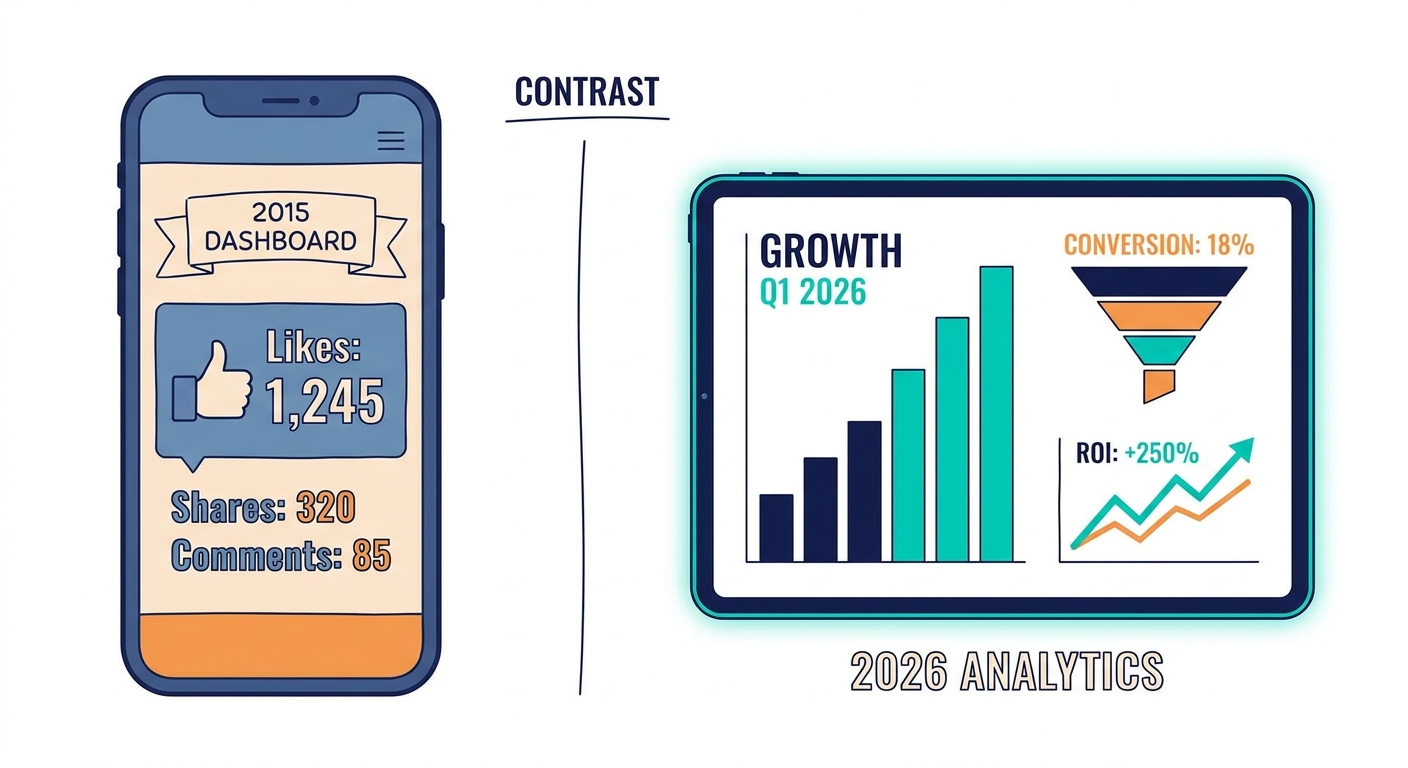
Stop tracking vanity metrics. Learn when to upgrade from free native analytics to paid tools to drive actual revenue and ROI for your business in 2026.
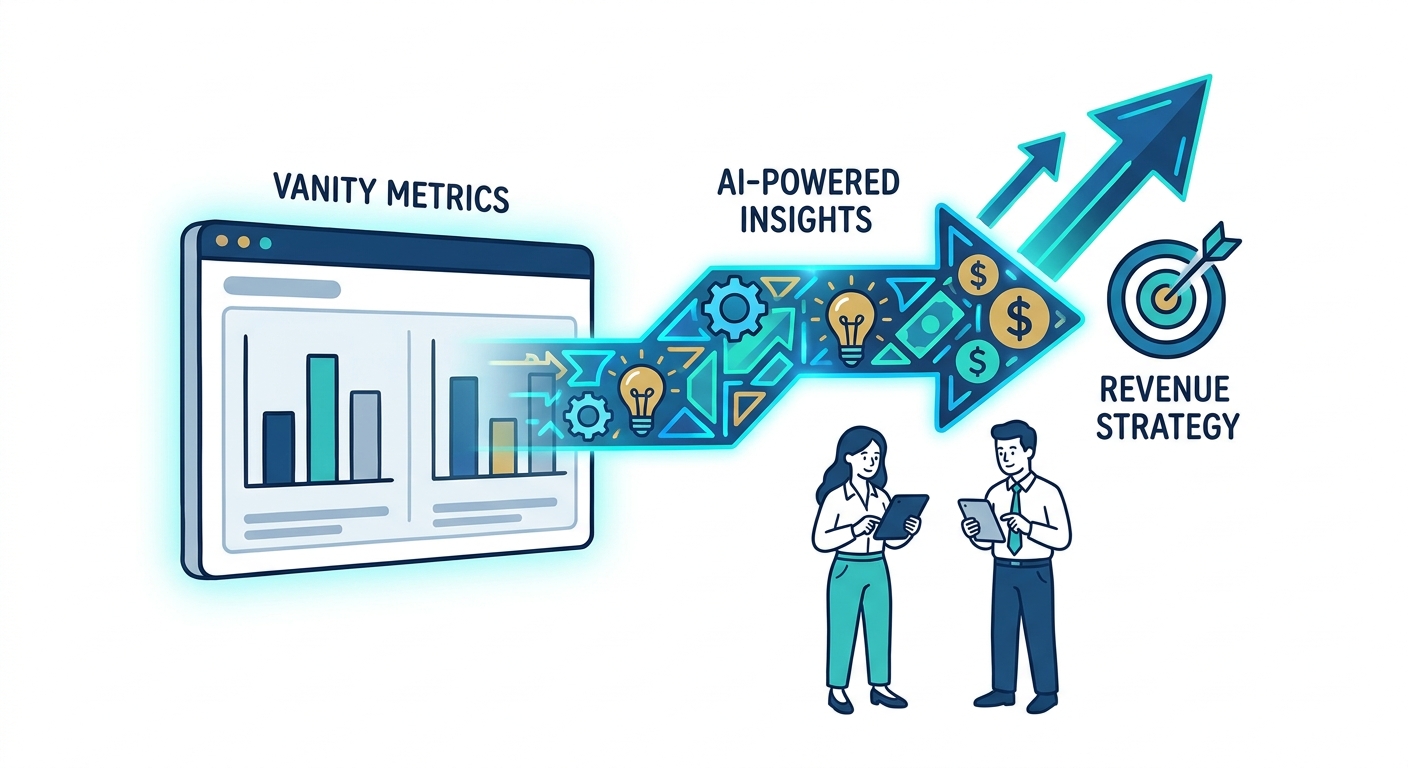
Stop flying blind with vanity metrics. Discover the 10 best social media analytics tools for 2026 that use agentic AI to drive actual revenue and growth.
Social9 schedules your posts on 11 networks, and Autopilot can draft them in your brand voice for you to approve. Start on the free plan.
We use strictly necessary cookies to run this site. With your permission, we also use analytics cookies to understand how the site is used. We never use advertising cookies. See our Cookie Policy.