What is social media autopilot? How AI posting works (and where to keep a human)
Social media autopilot uses AI to plan, draft, schedule and publish posts. Learn how the loop works, platform AI rules, and where a human must stay in charge.
Autopilot & AI
Stop manually grinding on social media. Discover why AI is the new operating system for brands in 2026 and how to build a winning human-AI hybrid strategy. Michael JohnsonAnalytics & Performance SpecialistPublished 5 min read

The days of social media as a manual, pixel-pushing grind? They’re over. Done. History. By 2026, AI has stopped being a "productivity hack" and evolved into the actual operating system for your brand. If you’re still manually scheduling posts, grinding out captions, or chasing trends with your eyes glued to a feed, you aren't just being inefficient. You’re becoming invisible.
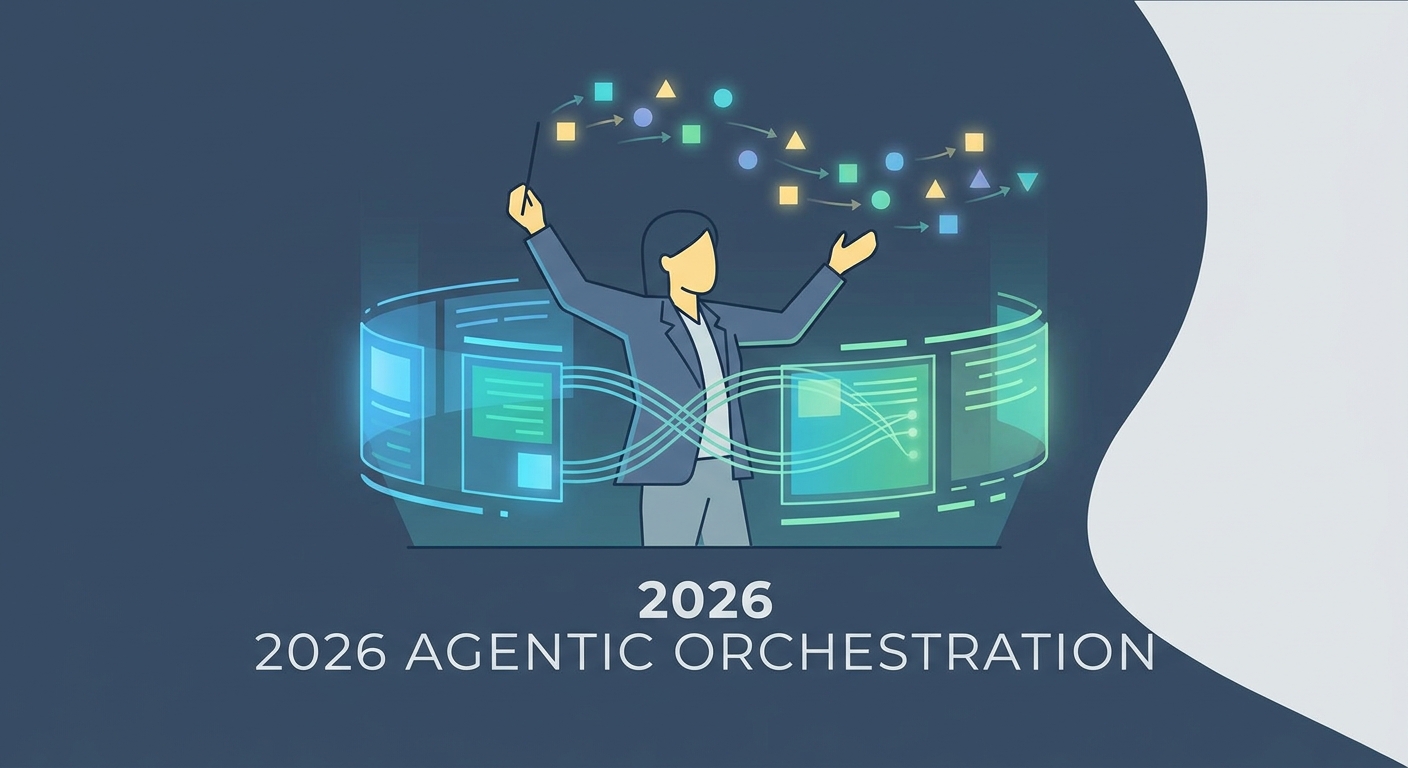
The data doesn't lie. According to the 2026 State of Marketing Report, 97% of high-performing teams have woven AI into their core infrastructure. It’s the new baseline. If you aren't using it, you’re playing a game of catch-up while the rest of the world is sprinting. The strategist of 2026 isn't a "doer" anymore. They’re an orchestrator—a conductor balancing the raw, blistering speed of machine-generated output with the messy, irreplaceable weight of human intent.
The ground shifted. We’re living in the age of Generative Engine Optimization (GEO). Users aren't just scrolling feeds like they used to; they’re querying AI-driven discovery layers on TikTok, LinkedIn, and Instagram. These models act as the gatekeepers—or the facilitators—of your brand’s visibility.
If your content doesn't speak the language of these AI models, you’re opting out of the discovery cycle entirely. You have to pivot from reactive posting—where you see a trend and scramble to film a video—to predictive intelligence. By leveraging 7 AI Marketing Trends Reshaping 2026, brands are now spotting sub-cultures and sentiment shifts weeks before they hit the mainstream. You aren't just chasing the trend; you’re feeding the engine the exact data it needs to prioritize your brand in the next wave of user searches.
The biggest mistake modern marketers make? The "Uncanny Valley" effect. It’s that cold, synthetic, hollow feeling you get when a brand tries to automate its soul.
We aren't trying to let the robots run the asylum. We’re building an AI-Human Hybrid framework.
graph TD
    subgraph "AI-Human Hybrid Responsibilities"
    A[Task] --> B{Role Allocation}

    B -->|AI| C[Content Creation: Drafting & Formatting]
    B -->|AI| D[Community Management: Initial Filtering]
    B -->|AI| E[Analytics: Data Processing & Reporting]

    B -->|Human| F[Strategy: Direction & Vision]
    B -->|Human| G[Voice Validation & Ethics]
    B -->|Human| H[Community Management: Complex Interactions]

    C -.->|Supervised by| F
    D -.->|Validated by| G
    E -.->|Interpreted by| F
    end
The split is simple: Machines win at patterns, processing, and volume. Humans win at empathy, moral compasses, and taking creative risks. Use AI to filter out the spam and sort the sentiment, but for the love of all that is holy, don't let it handle a PR crisis or a complex customer complaint. The moment you pull the human out of the conversation, you kill the trust that keeps your customers around.
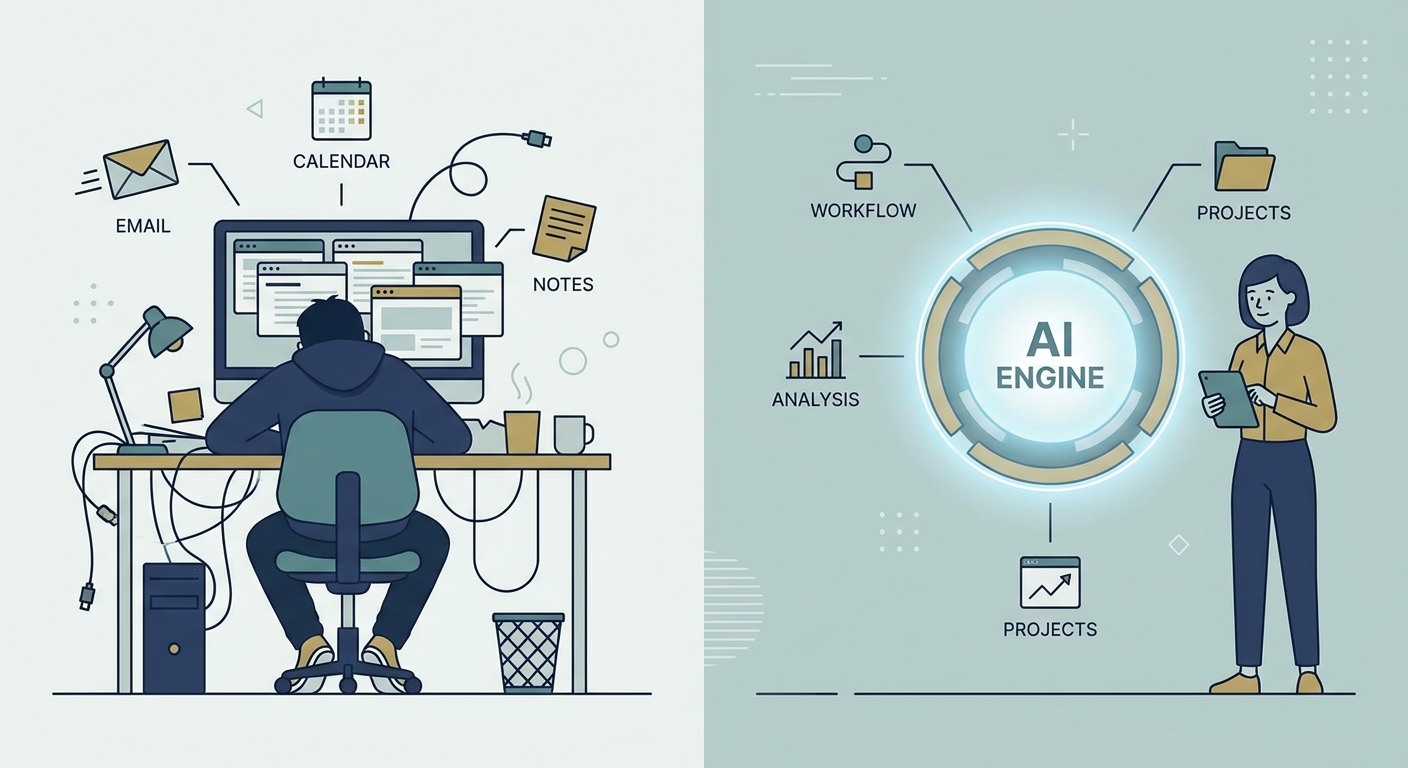
Forget managing a dozen disconnected tabs. That’s amateur hour. Your 2026 stack is an integrated ecosystem. You need a centralized brain—a hub that pulls in real-time social listening, runs it through an LLM trained on your specific brand voice, and pushes human-vetted content across every channel at once.
If you’re struggling to connect your data to your output, our AI-Powered Content Strategy Guide breaks down exactly how to wire these systems so your internal loops actually feed your outward-facing content. You need to be able to take one big strategic asset and transmute it into sixty platform-native formats in minutes. Anything less is just busywork.
Mass-market messaging is a relic. In 2026, AI is the only way to do hyper-personalization that actually clicks with niche sub-cultures. Why create one generic ad for everyone? Your AI stack should be using predictive modeling to churn out unique variations of your creative—tweaking the tone, the visuals, and the CTA—for hundreds of different segments.
This is the core of Social Media Trends for 2026. It’s about being "community-first." When you know what a niche values before they even engage, you stop shouting into the void and start providing the exact solution a user was looking for at the exact moment they needed it.
Before you hit the gas, you have to clear the friction. Most teams are drowning in "data debt"—too much noise, not enough signal. Map your content velocity. Are you spending 80% of your time on creation and only 20% on strategy? If so, your ratio is backwards for 2026.
Use our Social Media Audit Toolkit to find the "low-hanging fruit." What can you offload today? Sentiment tagging? Competitive benchmarking? Routine A/B testing? Once those are running on autopilot, your team finally has the breathing room to focus on the high-level brand narrative that no machine can dream up.
Automation without guardrails is a liability. As AI gets smarter, the risks—hallucinations, bias, copyright headaches—grow right alongside it. Every organization needs a formal AI Usage & Disclosure Policy. This isn't just "legal stuff." It’s your integrity.
Your audience has a sixth sense for synthetic content. If it feels robotic, they’ll tune out. Treat your LLM like an intern who needs a lot of training. Fine-tune your models with your best work, scrub the "AI-isms" that make generic posts sound so bland, and keep a human in the loop for every single post. Transparency is your greatest asset. When in doubt? Label it.
Transitioning to an AI-first strategy isn't about replacing your social media manager. It’s about liberating them. You’re taking the mechanical, soul-crushing labor off their plate so they can actually think. You’re moving from "doing" to "directing." The brands that win in 2026 are the ones that use AI to amplify their human creativity, not mask their lack of it. Start small. Audit your stack. Prioritize the human-AI partnership. The future belongs to the orchestrators.
No. AI replaces the tasks of a social media manager, not the role itself. The position is evolving into that of an "orchestrator"—someone who manages AI workflows, verifies output for brand safety, and focuses on high-level strategic storytelling that machines cannot synthesize.
Consistency requires fine-tuning. You must move beyond generic prompts and use custom-trained models fed with your specific brand style guides, historical top-performing posts, and editorial tone-of-voice documents. Rigorous human-in-the-loop validation is the final gatekeeper for every asset.
Focus on two primary metrics: efficiency gains and attribution modeling. Track the drastic reduction in time-to-publish (time-saved metrics) and correlate the use of AI-driven, predictive content with measurable spikes in engagement and conversion compared to legacy manual processes.
The primary risks are the "authenticity deficit"—where audiences disconnect from brands that feel robotic—alongside hallucination risks and potential copyright entanglements. These are mitigated through strict disclosure policies and keeping humans in the loop for all strategic and sensitive communications.
GEO is the process of optimizing content to be understood and surfaced by AI-driven search engines and platform recommendation algorithms. As users increasingly rely on AI summaries for discovery rather than traditional feeds, GEO ensures your brand is the "answer" provided by the AI, rather than just another link in a long list.
Social media autopilot uses AI to plan, draft, schedule and publish posts. Learn how the loop works, platform AI rules, and where a human must stay in charge.
Stop tab-hopping. Learn how to choose the right AI content tools in 2026 by prioritizing agentic workflows, GEO strategies, and scalable content pipelines.
Stop using AI as a typewriter. Learn to build agentic workflows that scale high-authority content and beat synthetic mediocrity in 2026.
Social9 schedules your posts on 11 networks, and Autopilot can draft them in your brand voice for you to approve. Start on the free plan.
We use strictly necessary cookies to run this site. With your permission, we also use analytics cookies to understand how the site is used. We never use advertising cookies. See our Cookie Policy.