What is social media autopilot? How AI posting works (and where to keep a human)
Social media autopilot uses AI to plan, draft, schedule and publish posts. Learn how the loop works, platform AI rules, and where a human must stay in charge.
Autopilot & AI
Stop using AI for fluff. Learn the 2026 'Human Sandwich' workflow and predictive AI strategies to engineer viral content and avoid 'AI slop' fatigue. Alex ChenAI Content StrategistPublished Updated 7 min read

Here is the hard truth about viral content in 2026: The secret isn't asking Artificial Intelligence to write your script.
It’s asking AI to judge your idea before you ever hit record.
We have officially moved past the "magic button" era. The hangover has set in. If you are still prompting ChatGPT to "write a viral LinkedIn post about B2B sales," you are already losing. The audience can smell the silicon from a mile away. They know the cadence. They hate the fluff.
The true power of AI in modern content strategy isn't generation. It’s prediction.
The top-tier agencies aren't using AI to replace the artist. They are using it to kill the blank page and engineer "predictive creativity." They validate hooks, analyze pacing, and stress-test concepts before a single dollar of production budget leaves the bank account.
Let’s talk about the elephant in the room: Slop Fatigue.
By late 2025, the internet was drowning. We saw endless streams of Midjourney images with plastic skin, blogs starting with "In the ever-evolving landscape," and videos featuring uncanny, unblinking avatars.
The backlash was swift. It was brutal. Audiences didn't just scroll past; they blocked. They muted. They revolted.
To go viral now, you have to respect your viewer’s intelligence. They want connection, not perfection. This shift gave rise to the only workflow that consistently works for high-level brand strategy: The Human Sandwich.
In this model, AI is never the bread. It is the filling.
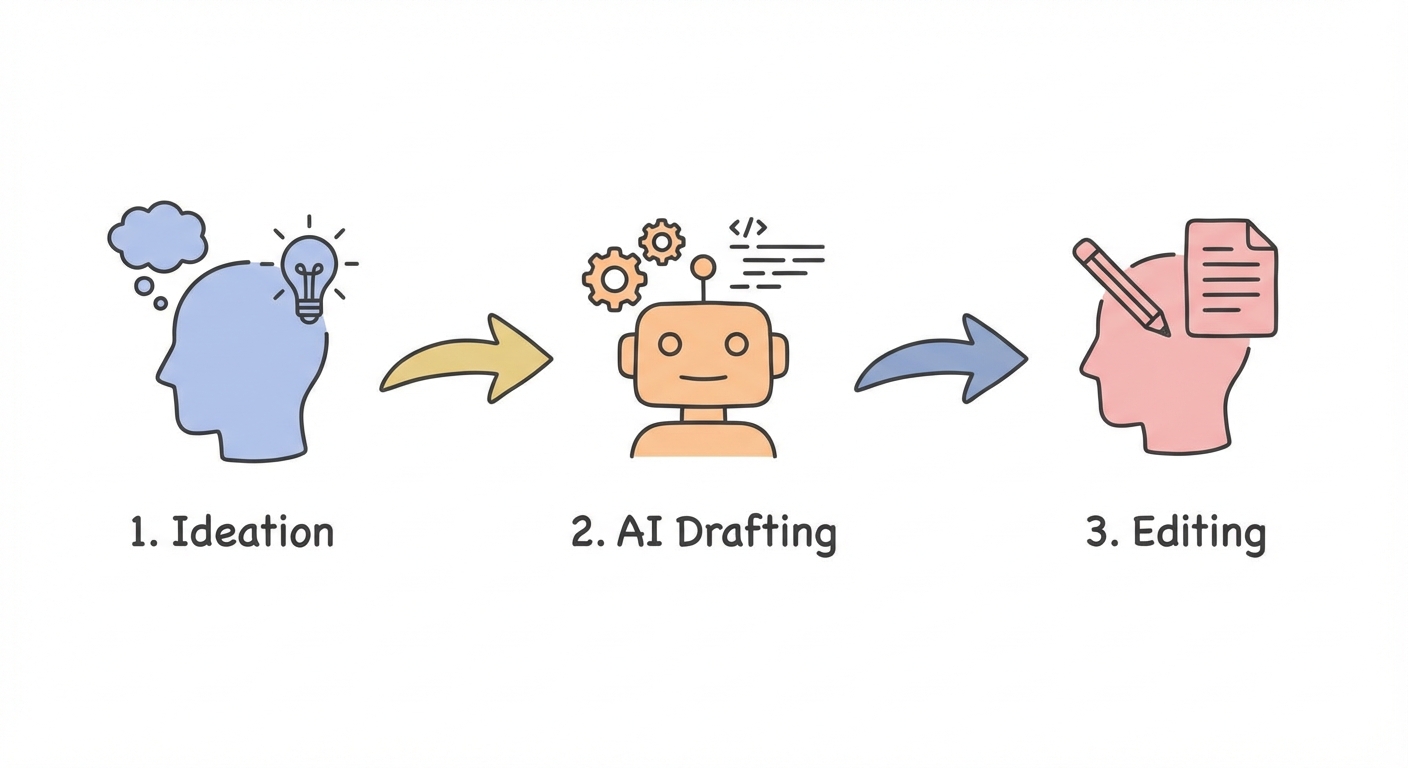
Does this sound like a lot of moving parts? It can be. If you need help building the foundation, check our Content Strategy Guide. It’s designed to integrate these systems without the headache.
The biggest mistake marketers make? Betting the farm on a hunch.
They script a video. They hire a videographer. They edit for days. They post it. Result: 200 views.
Smart strategists use AI to fail cheaply. They employ a "Testing Matrix."
Here is the workflow. Before you commit to a high-production video, use an LLM to generate 20 text-based variations of your core hook. Post these as low-stakes tweets (X), LinkedIn text posts, or Instagram Stories.
You aren't looking for virality yet. You are looking for a pulse. Resonance.
If 19 of those hooks get zero engagement, but one specific angle gets three comments and a share—that is your winner. You take that winning text hook and turn it into your high-production video. You are no longer guessing. You are executing on data.
According to reports from Spinta Digital, over 500 million pieces of content are created daily. Using AI-driven personalization in this testing phase can lower production costs by up to 40%. Why? Because you stop filming ideas that were never going to work in the first place.
We are shifting from Generative AI (making stuff) to Analytical AI (judging stuff).
The algorithms governing TikTok, Reels, and YouTube Shorts prioritize retention above all else. To keep retention, you need a "Pattern Interrupt"—a visual or auditory break that resets the viewer's attention span.
Tools like Sora and Runway Gen-3 allow creators to engineer "visual paradoxes." These are scenes impossible to film in real life but stop the scroll instantly.
Imagine a video starting with a luxury car melting into liquid chrome. Or a coffee cup that bursts into a bouquet of flowers when touched. These aren't the story. They are the split-second hook that buys you the time to tell the story.
Before a script goes into production, advanced agencies run it through custom GPTs trained on thousands of viral transcripts. These tools analyze the script against a database of hits to predict a "Virality Score."
They look for the subtle things humans miss:
For deeper insight into specific structures, look at Miraflow's analysis of AI shorts formats. Their breakdown of the "3 Tips in 30 Seconds" framework remains a staple for educational content that actually converts.
The quality of your AI-generated content depends entirely on the quality of your input. A vague blueprint equals a vague building. If you ask for "a funny video script," you will get dad jokes.
You need to prompt for psychology.
Here is a specific, copy-paste prompt you can use right now. It forces the AI to stop acting like a writer and start acting like a behavioral scientist:
"Act as a viral marketing psychologist. Analyze the topic '[INSERT YOUR TOPIC]' and generate 5 video hooks. Do not use generic marketing speak. Instead, use the 'Negativity Bias' (what they are losing) and 'FOMO' (what they are missing) triggers. Format this for a 15-second TikTok where the first 3 seconds are the most critical."
This works because it bypasses the generic "marketing fluff" filter most models have. If you need high-end execution on these scripts, our Viral Video Production services specialize in turning these psychological hooks into visual reality.
2025 and 2026 gave us a masterclass in the difference between using AI with soul and using it to cut corners.
Coca-Cola faced significant backlash for its AI-generated Christmas commercial. The ad featured the classic trucks and Santa, but it felt... wrong. The movement was too smooth. The lighting was too perfect. The emotion was nonexistent.
Critics tore it apart.
The lesson? Nostalgia requires a human touch. You cannot automate warmth. As noted in a breakdown of the Coca-Cola "Masterpiece" vs. Backlash, audiences feel betrayed when a brand trades emotional heritage for cheap generation.
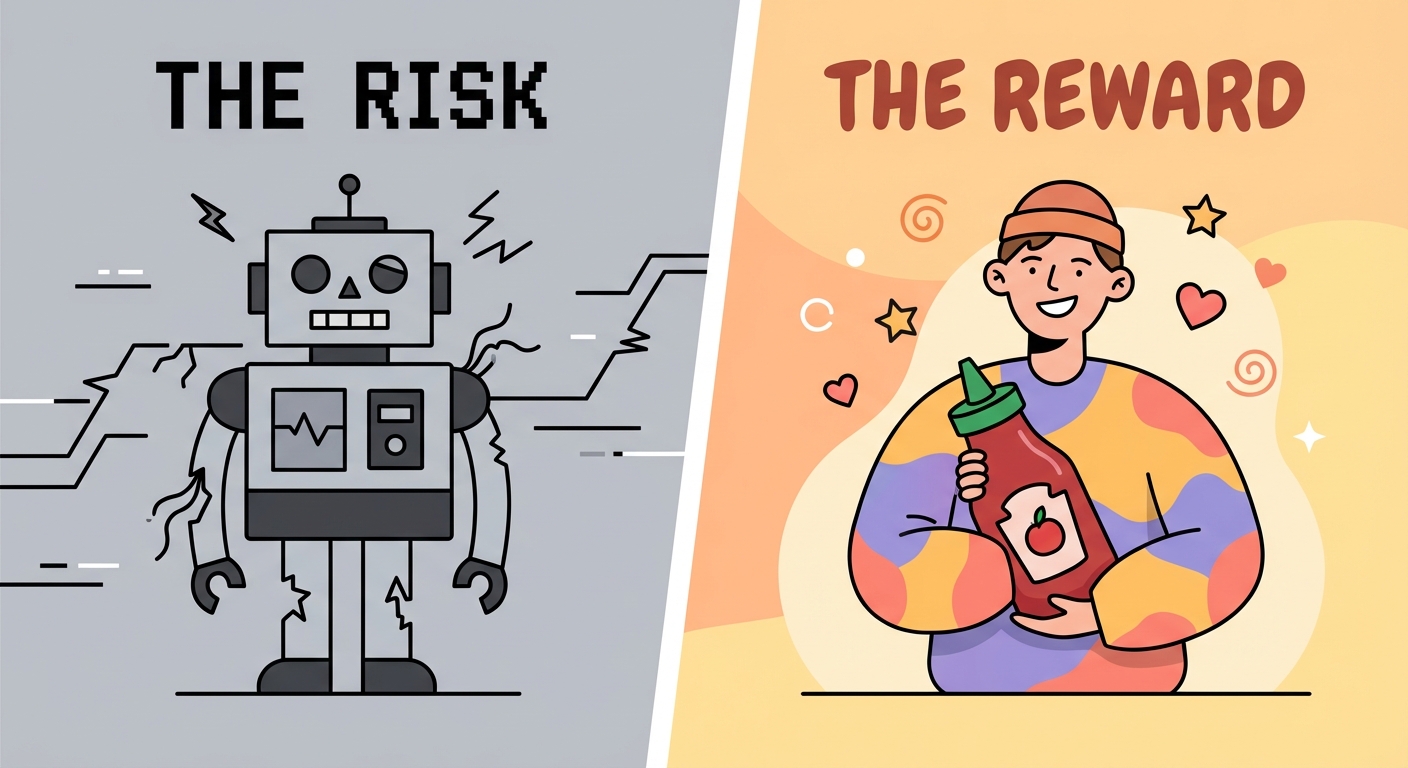
Contrast this with Heinz. They launched a campaign where they asked an image generator to simply "draw ketchup."
The AI consistently generated images that looked exactly like Heinz bottles.
They didn't use AI to replace their creative team. They used AI to prove their brand dominance. It was clever, it was meta, and it was human-led. As seen in the Heinz A.I. Ketchup Campaign, the key takeaway is simple: Innovation permits AI.
When you are doing something new and cool, the audience accepts the tech. When you are trying to fake an old feeling, they reject it.
A common fear among CMOs: "If I use AI, will Google tank my rankings?"
The reality is nuanced. Google’s stance has evolved. They are looking for "Helpful Content." According to Google's Guide to AI Content, it does not matter how the content is produced, but if it provides value to the user.
However, there is a catch: EEAT (Experience, Expertise, Authoritativeness, and Trustworthiness).
Raw AI content fails the "Experience" check every time. An AI cannot have "experience." It cannot taste the food, drive the car, or interview the CEO. If you publish unedited AI content, you will likely be penalized—not because it is AI, but because it lacks unique value.
This is why the "Human Sandwich" is not just a creative preference; it is an SEO survival strategy.
For brands worried about compliance, our AI Content Services ensure that every piece of content meets strict EEAT standards before publication.
AI is a power drill.
It is faster than a hand screwdriver. It can help you build a house in record time. But if you give a power drill to someone who doesn't know how to build a house, they will just poke holes in the wall.
You are the architect.
The secrets to virality in 2026 aren't hidden inside a specific software update or a magical prompt. They are found in the strategy of when to use the tool and when to put it down. Don't let the technology overwhelm your strategy. Start with the "Testing Matrix" today, or contact us to build your predictive content engine.
Q1: Will using AI for content hurt my SEO rankings in 2026? Answer: Not necessarily. Google rewards "Helpful Content" regardless of production method. However, unedited "raw" AI content often lacks the "Experience" factor of EEAT, which can hurt rankings. The "Human Sandwich" method mitigates this risk by injecting human expertise into the final output.
Q2: What is the best AI tool for viral video hooks? Answer: While tools change rapidly, the best strategy is using AI that analyzes trends (like OpusClip or custom GPTs) rather than just generative text tools. You want tools that can "score" a script against historical viral data before you film.
Q3: How do I avoid the "AI Slop" look that users hate? Answer: Focus on the "Human Sandwich" approach. Ensure the core idea comes from human insight, use AI for scaling/drafting, and strictly use humans for the final edit and voice. Avoid using AI for emotional nostalgia, as seen in the Coca-Cola case study.
Q4: Can AI really predict if a video will go viral? Answer: Predictive analytics have improved significantly. By analyzing historical data of similar accounts, AI can assign a probability score to a script based on its pacing, keywords, and structure, allowing you to optimize before production.
Social media autopilot uses AI to plan, draft, schedule and publish posts. Learn how the loop works, platform AI rules, and where a human must stay in charge.

Stop churning out generic AI fluff. Learn how to build a full-stack content workflow that scales your unique human expertise and builds reader authority.
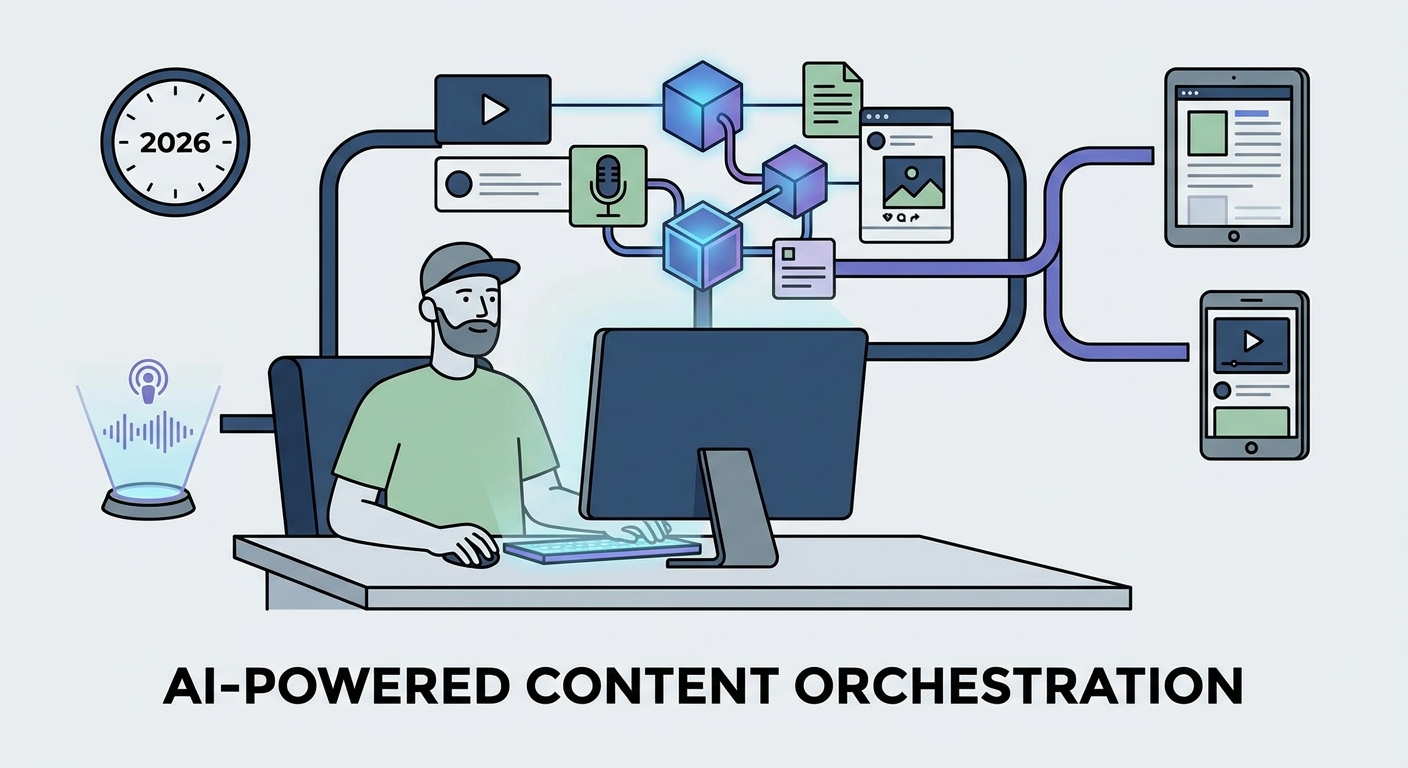
Stop manual drafting. Discover how AI-powered content creation and agentic workflows boost efficiency, scale production, and drive strategic marketing results.
Social9 schedules your posts on 11 networks, and Autopilot can draft them in your brand voice for you to approve. Start on the free plan.
We use strictly necessary cookies to run this site. With your permission, we also use analytics cookies to understand how the site is used. We never use advertising cookies. See our Cookie Policy.