What is social media autopilot? How AI posting works (and where to keep a human)
Social media autopilot uses AI to plan, draft, schedule and publish posts. Learn how the loop works, platform AI rules, and where a human must stay in charge.
Autopilot & AI
Stop generating generic fluff. Learn to build agentic AI content pipelines that satisfy human readers and modern answer engines in 2026. Alex ChenAI Content StrategistPublished 6 min read
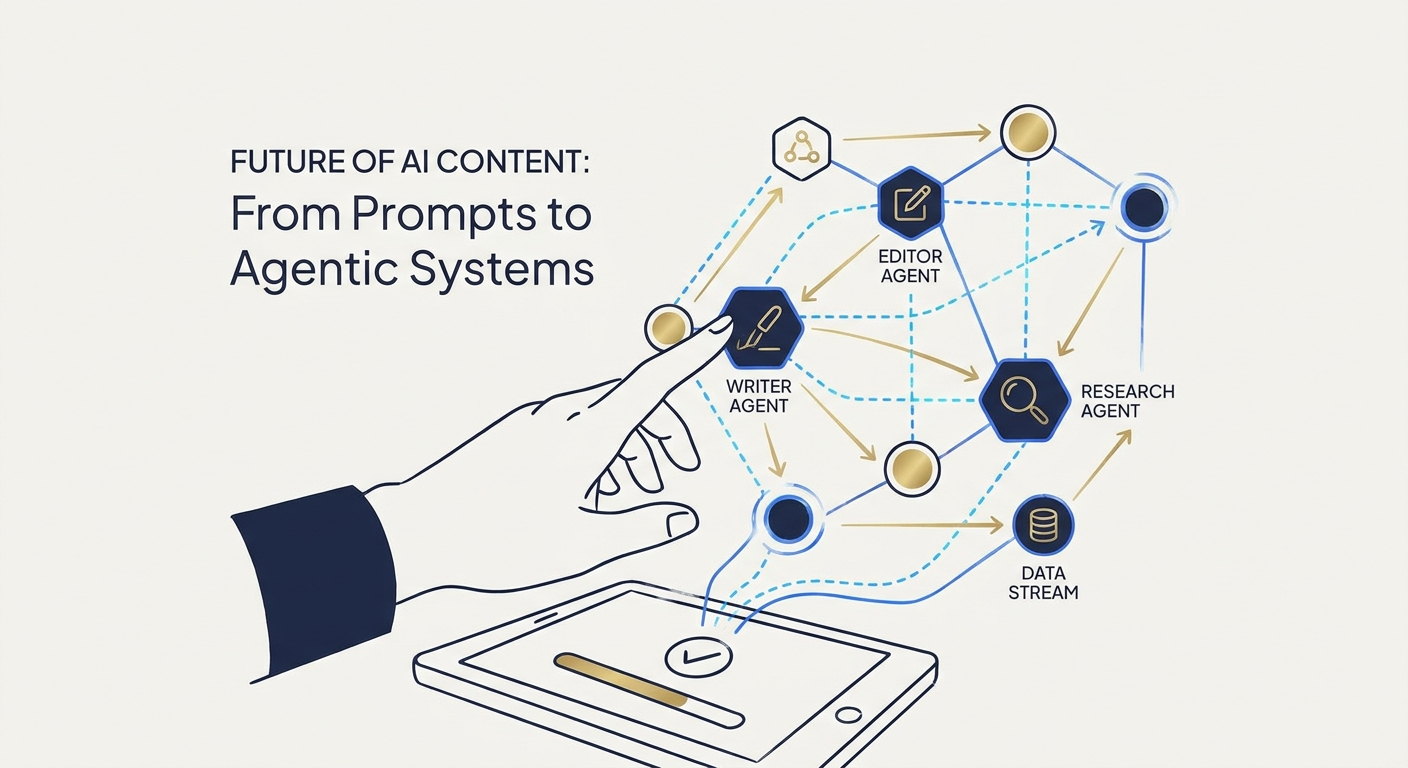
The era of "prompting" a chatbot to spit out a generic blog post is over. If you’re still treating AI like a magic trick—type a prompt, get a result, hit publish—you’re already losing.
In 2026, content creation isn’t about generating text. It’s about orchestrating sophisticated, agentic systems that sit right at the sweet spot where human intuition meets machine-grade scale. We’ve moved past the "ooh-ah" novelty of LLMs into a $9.2B market where the only competitive advantage left is the architectural integrity of your content pipeline. As noted in The State of Generative AI in Marketing, the winners this year aren't the ones with the most tools. They’re the ones treating AI like a hyper-efficient junior partner—one that needs constant oversight, deep brand-specific fine-tuning, and a relentless commitment to human-centric value.
We’ve entered the age of the "Human-in-the-Loop" premium. The internet is drowning in synthetic noise. Your audience has developed a sixth sense for it; they can smell the soulless, automated fluff from a mile away.
So, how do you cut through? Stop thinking of AI as a replacement for your writers. Start viewing it as a high-speed research and assembly engine. By 2026, "content creation" has officially morphed into "content engineering." The goal is no longer to flood the zone with keywords. The goal is to produce high-authority, verifiable assets that satisfy both human curiosity and the rigid technical demands of modern search.
The "Blue Link" era—where success meant a steady stream of traffic from a search engine results page (SERP)—is dead. We are currently living in the age of Answer Engine Optimization (AEO).
When users query Perplexity, Gemini, or ChatGPT Search, they aren't looking for a list of URLs to click through. They want a definitive, synthesized answer now. As explained in this deep dive on What is Answer Engine Optimization (AEO)?, the strategy has shifted. You have to structure your content for machine consumption. If your site doesn't provide direct, citation-rich answers that AI scrapers can easily feast on, you are effectively invisible to the modern researcher.
The biggest mistake teams make? Using standalone tools in isolation. Stop jumping between a dozen browser tabs. The most efficient teams are building unified, multimodal loops. Your workflow should look like a factory floor, not a cluttered desktop.
graph TD
    A[Research Data] --> B[AI Synthesis & Drafting]
    B --> C{Human Review & Editing}
    C -->|Approved| D[Multimodal Distribution]
    C -->|Needs Revision| B
    D --> E[Text Blog]
    D --> F[Audio Podcast]
    D --> G[Short-form Video]
This cycle starts with structured data—your proprietary research, customer interviews, or industry reports. That data gets fed into a reasoning model like Claude or GPT. But here is the catch: the human editor is the final gatekeeper. They ensure the output matches your brand voice and factual accuracy. Only then does it get repurposed into audio via ElevenLabs or visuals via tools like Sora and Veo.
The tool landscape has finally matured. We’re seeing a flight to quality, where professional teams prioritize RAG (Retrieval-Augmented Generation) capabilities to keep hallucinations in check.
If you want to win, adopt a "Summary-First" approach. AI scrapers are built to extract the "what," "why," and "how" from your content in milliseconds. If you bury the answer at the bottom of a 2,000-word essay, you’ve already lost the citation.
Use structured data (Schema markup) to tell the machine exactly what your content is about. Furthermore, cite your sources. AI search engines thrive on authority. By linking to reputable, high-domain-authority data points, you’re signaling to the algorithm that your content is a trusted, verified source of truth.
The "Trust Gap" is the biggest threat to marketing today. Generic AI content is easily identified and ignored by readers who crave genuine perspective.
To bridge this gap, you must fine-tune your models on your proprietary brand voice data. Stop using the "default" voice of the LLM. It’s boring. Feed the model your best-performing historical content, your specific brand guidelines, and your company’s unique "opinionated" stances. If your team needs help auditing their voice or implementing these fine-tuning protocols, our Content Strategy Services offer a roadmap for maintaining that human edge at scale.
In the "Wild West" days of 2024, brands played fast and loose with copyright and licensing. In 2026, that’s a massive liability.
Before you plug in any new tool, check the legal fine print. As outlined in AI Content Ethics and Commercial Rights, the legal framework is tightening. Always prioritize enterprise-grade tools that offer indemnity clauses and ironclad data privacy protections. If a tool doesn't explicitly state that you own the commercial rights to the output, don't use it for your primary marketing assets. It’s not worth the risk.
Your scaling strategy depends on your resources. If you’re an agency, your goal is "bulk production with human-in-the-loop checkpoints." Automate the mundane—transcription, metadata tagging, basic formatting—to free up your creative directors for high-level strategy.
If you’re a solo creator, the strategy is different. Use AI to amplify your personal brand. Let the machine handle the heavy lifting of research and distribution so you can dedicate your energy to the one thing AI cannot replicate: your lived experience and unique point of view.
Tools provide the scale, but you provide the strategy. The future of content creation isn't about replacing the human; it’s about empowering the human to do more, faster, and with greater impact. As the landscape continues to shift, your ability to integrate these systems while maintaining a rigid standard of authenticity will define your success.
If you are ready to transition from manual production to an automated, high-authority content system, Contact Our Strategy Team to discuss how we can help you build your 2026 pipeline.
SEO has shifted toward Answer Engine Optimization (AEO). Rankings are no longer just about keyword density; they are about providing concise, authoritative, and citation-rich answers that AI models can verify and present directly to the user.
Avoid using generic prompts. Fine-tune your AI models on your own historical brand content, use specific style guides, and always ensure a human-in-the-loop verification process to inject personal anecdotes and unique perspectives that AI cannot synthesize on its own.
Not all AI tools are created equal. Only utilize enterprise-grade platforms that provide clear commercial licensing and indemnity clauses. Always review the terms of service regarding copyright ownership, as laws are evolving rapidly.
Start with a pilot program focusing on one bottleneck—such as research or audio repurposing. Once you have a proven, repeatable workflow, slowly expand to other areas of the pipeline, ensuring that every automation is backed by a human review process for quality control.
Social media autopilot uses AI to plan, draft, schedule and publish posts. Learn how the loop works, platform AI rules, and where a human must stay in charge.
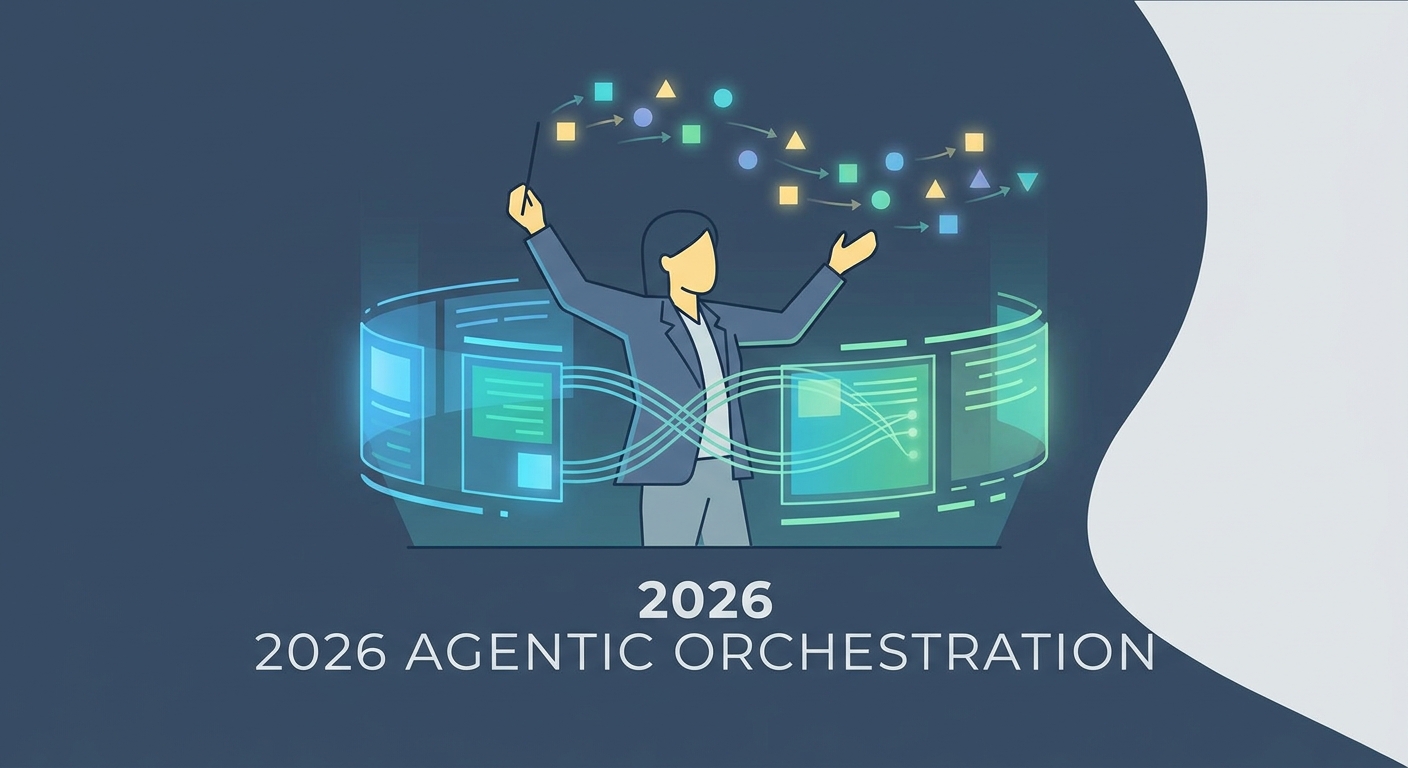
Stop using AI as a typewriter. Learn to build agentic workflows that scale high-authority content and beat synthetic mediocrity in 2026.

Stop manual drafting. Discover 5 free AI social media post generators to automate your content workflow, save time, and scale your brand presence in 2026.
Social9 schedules your posts on 11 networks, and Autopilot can draft them in your brand voice for you to approve. Start on the free plan.
We use strictly necessary cookies to run this site. With your permission, we also use analytics cookies to understand how the site is used. We never use advertising cookies. See our Cookie Policy.