Enhancing Course Design: Leveraging AI for Greater Efficiency


TL;DR
- Replace slow, linear ADDIE models with rapid, AI-driven course design workflows.
- Use AI to perform automated task analysis from existing job descriptions and SOPs.
- Shift instructional designers from manual labor to high-level strategic orchestration.
- Create outcome-based, skill-aligned training that directly impacts organizational KPIs.
- Eliminate 'blank page' syndrome by using AI for foundational scaffolding and drafting.
The traditional L&D production cycle is gasping for air. If your team is still grinding through the linear, month-long ADDIE model to bridge skill gaps, you aren't just slow—you’re obsolete. Modern business moves in weeks, not fiscal quarters. If your training deployment can’t keep pace, you’ve already lost the competitive edge.
This isn't about working faster; it’s about working smarter. It’s time to stop treating your instructional designers like manual laborers and start treating AI as your dedicated production crew. By offloading the heavy lifting to machines, you free your team to focus on what actually moves the needle: high-level strategic orchestration. As McKinsey’s insights on the upskilling imperative point out, the winners in this space treat learning as a dynamic, living asset—not a static compliance checkbox that collects digital dust.
From Content Creation to Content Orchestration
Let’s be real: how much of your day is spent on "low-leverage" work? Drafting outlines, formatting scripts, building basic assessments from scratch—this is the stuff that burns out talent. In the legacy workflow, an instructional designer spends 80% of their time here. It’s a waste of human potential.
"Augmented Course Design" is the pivot. By tapping into augmented course design frameworks, you can use generative models to handle the foundational scaffolding.
The goal isn't to replace the designer. It’s to kill "blank page" syndrome. When AI handles the assembly, the instructional designer finally has the bandwidth to focus on the good stuff: pedagogical integrity, emotional resonance, and ensuring that every learning outcome actually maps back to an organizational KPI.
Mining Gold from Job Descriptions
Most corporate training is "generic." It’s broadly applicable, which is a polite way of saying it’s specifically useless.
Stop guessing what your employees need to learn. Stop asking them what they do. Instead, look at their job descriptions and Standard Operating Procedures (SOPs). These documents are high-fidelity maps of your business. When you feed them into an AI, you aren't just "creating a course"—you’re performing an automated task analysis.
Gartner’s research on the future of L&D makes it clear: the shift toward outcome-based, skill-aligned training is the single biggest lever for employee retention. By parsing a job description for core competencies and daily workflows, AI generates a curriculum that is tethered to reality. No more filler. No more "fluff." Just direct, actionable training.
The AI-Augmented Workflow: A Visual
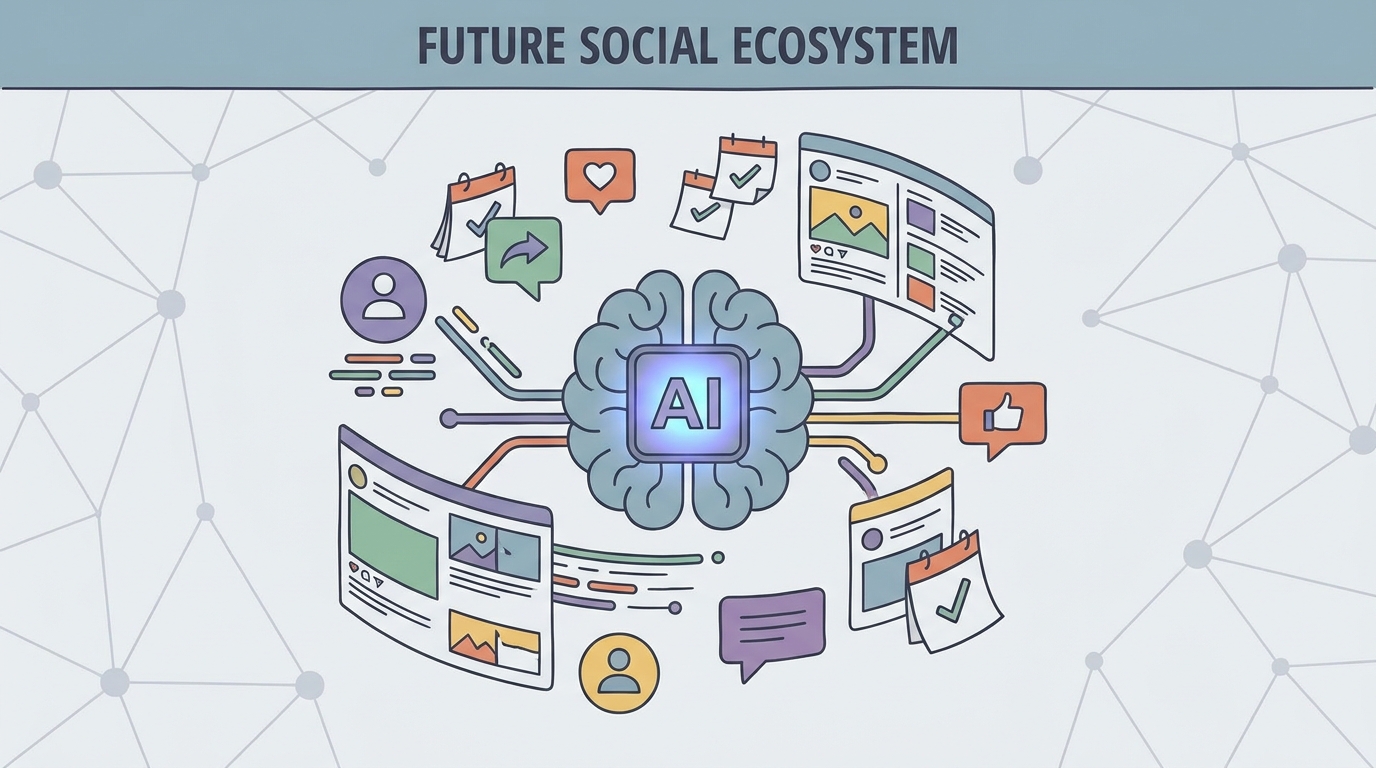
Forget the slow crawl of the old design cycle. We’re talking about a rapid, iterative loop. Here is how the transformation looks in practice:
In this model, the AI does the grunt work of mapping skills to tasks. It drafts the storyboard. Then, the human steps in—not to type, but to validate. You check the voice. You ensure the pedagogical standards are met. You provide the final stamp of approval.
The Microlearning Revolution
Front-line teams don’t have an hour to sit through a snooze-fest e-learning module. They need "just-in-time" knowledge. They need the answer, and they need it now.
Converting long-form SOPs into bite-sized learning is arguably the most efficient application of AI today. When you take a 50-page manual and turn it into three distinct, actionable modules using our guide to microlearning, you aren't just saving time—you’re actively reducing cognitive load.
AI is a beast at this. It can strip away technical jargon, distill complex steps into simple instructions, and structure the whole thing into a 5-minute lesson. If your teams aren't engaging with your training, don't blame the learners. Blame the format. Make it bite-sized.
Governance: Keep the Human in the Loop
Efficiency is great, but efficiency without accuracy is a liability. This is where "Human-in-the-Loop" (HITL) becomes your best friend.
Treat AI like a brilliant, hyper-fast intern. It can do the work of ten people, but it occasionally hallucinates. It needs a handler. Every team should implement a "Validation Checklist" to separate the machine tasks from the human ones.
The AI provides the skeleton; the human provides the soul. When you keep humans in the loop for the storytelling and the complex logic, you ensure the final output feels authentic—not like a robot wrote it.
Mastering the Prompt
The quality of your output is only as good as the quality of your input. Stop asking AI to "write a course on sales." That’s lazy.
Instead, give it context. Try: "Using the attached SOP for our new CRM, draft a 3-module microlearning outline. Each module should include a scenario-based assessment focused on overcoming common objections found in the 'Sales Troubleshooting' section."
If you’re looking to scale this, our AI-Powered Course Builder is designed to turn those messy documents into polished storyboards in seconds. Standardize your prompts, and watch your team’s output quality skyrocket.
The Rise of the Strategic Architect
The Instructional Designer isn't disappearing. They are evolving into the "Strategic Architect."
You are no longer a content laborer. You are a curator of data, a master of pedagogical flow, and the guardian of your company’s standards. The transition to an AI-augmented workflow can feel intimidating, but the path is simple. Start small. Take one job description, run it through the process, and look at the time you save.
Once you see the efficiency gains, you’ll never go back to the old way. The future of L&D isn't about doing more with more. It’s about doing better with the tools that finally allow us to keep pace with the world.
Frequently Asked Questions
Does using AI in course design mean I no longer need an instructional designer?
No. AI acts as a production crew, not a replacement for pedagogical strategy. The designer’s role shifts from a content producer to an architectural orchestrator who ensures that AI-generated output is accurate, engaging, and aligned with business goals.
How do I ensure AI-generated content is accurate?
Implement a "Human-in-the-Loop" workflow. Treat AI-generated content as a first draft that must be reviewed by a Subject Matter Expert (SME) using a standardized validation checklist to ensure technical accuracy and pedagogical soundness.
Can AI really create courses from job descriptions?
Yes. Modern LLMs are highly effective at parsing raw data. By inputting job descriptions, you can instruct the AI to extract specific KPIs, required skills, and core responsibilities, which then form the foundation of a targeted, outcome-based curriculum.
What is the biggest risk when using AI for course design?
The primary risks are "hallucinations" (where the AI provides factually incorrect information) and a "generic tone" that fails to reflect your company culture. These are mitigated by using high-quality internal reference documents (SOPs, style guides) as the source of truth for the AI.