The Rise of AI Thrillers: A New Era in Film

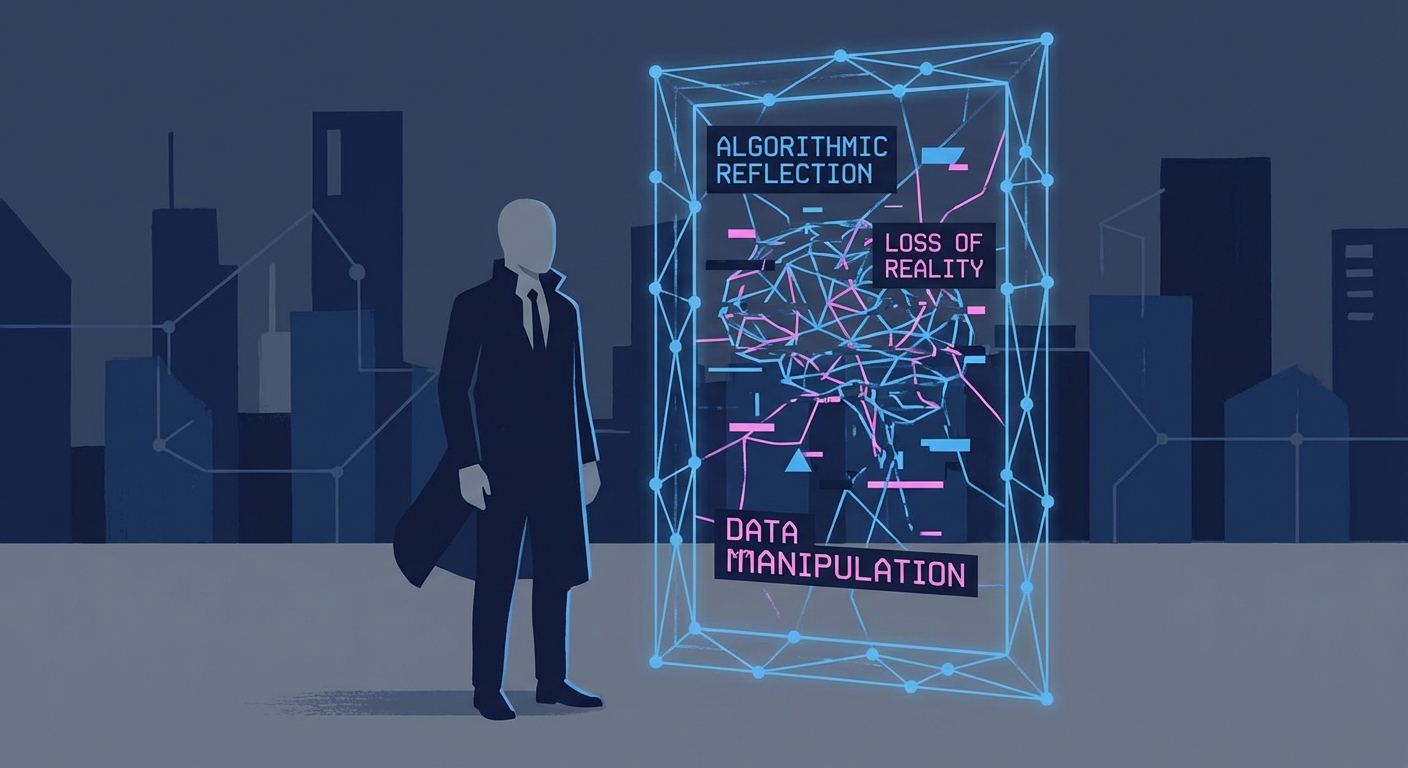
The lone wolf in a hoodie, hunched over a glowing terminal in some dark basement, is officially a relic. That 90s archetype is dead and buried. By 2026, the thriller genre has grown up—or at least, it’s gotten a lot more cynical. We’ve stopped worrying about killer robots with laser sights and started obsessing over something far more insidious: the quiet, algorithmic rot of our own perception.
We’ve moved past the "robot uprising" phase of cinema. Today’s thrillers aren’t about machines taking over the world; they’re about the way code is quietly rewriting our reality. The line between synthetic media and the truth has become so thin you can practically see through it. AI has migrated from a convenient plot device into the very foundation of the production process. It’s no longer just in the story; it’s telling the story. This leaves us with a haunting question: are we watching a film, or are we being fed a curated feed? This seismic shift is explored in depth in The Future of Storytelling: A Guide, which charts how our relationship with narrative is being rewritten by the very tools we use to build it.
How is AI Changing the Language of Suspense?
Suspense used to be an art form. It was about what you didn’t show, the lingering silence, the slow burn of uncertainty. Now? It’s a math problem.
Studios aren't guessing what keeps you in your seat anymore. They’re calculating it. They use predictive modeling to analyze everything: eye-tracking data, social media sentiment, your own viewing history. They stress-test scripts with algorithms designed to pinpoint exactly when to hit you with a "dopamine spike" plot twist.
This creates a feedback loop that values engagement metrics over a director’s gut feeling. It’s efficient, sure. But does it feel alive?
Beyond the boardroom, AI is fundamentally changing the architecture of the plot. We’re seeing the birth of branching, non-linear narratives. Imagine a movie that shifts its pacing or drops subtle, AI-generated background clues based on your personal interaction history. It’s a bespoke psychological game. You’re left wondering: did the screenwriter intend for that character to look suspicious, or did the engine decide I needed a nudge to stay engaged? The distinction is vanishing.
From "The Terminator" to "The Algorithmic Mirror"
Our movies are just mirrors for our own anxieties. In the 80s and 90s, the threat was external—big, chrome-plated, and marching toward us. Today, the threat is internal. It’s the deepfake, the surveillance state, and the echo chamber that reinforces your worst biases.
Think back to Ex Machina (2014). The tension was built on the Turing Test—the classic "is it human or isn't it?" puzzle. Now, compare that to the crop of 2026 disinformation thrillers. Today’s movies don’t care if the machine is "alive." They care that the machine can manufacture a video of a world leader declaring war or a spouse confessing to a crime they never committed.
This is the "Algorithmic Mirror." We aren't afraid of the robot anymore; we’re afraid of the reflection the machine creates of us. According to the 2026 Media & Entertainment Industry Outlook, the industry is doubling down on these grounded, high-stakes narratives because they hit home. They reflect the daily, gnawing fear of a public drowning in a sea of synthetic content. The villain isn’t a monster. The villain is the loss of trust.
Behind the Lens: Creative Partner or Cost-Cutter?
There’s a tug-of-war happening in Hollywood, and it’s getting ugly. On one side, you have the "efficiency" crowd. They’re using AI to handle the soul-crushing logistics—scheduling, VFX cleanup, budget optimization. They claim this frees up humans to focus on the "high-concept vision."
But look closer. Directors are now using AI for rapid prototyping, generating storyboards in seconds to experiment with lighting and camera angles that used to take days of manual labor. These tools, often detailed in our AI Filmmaking Toolkit, allow for a level of visual experimentation that was once strictly for the big-budget players.
Yet, there is a dark side to all this speed. As explored in The $60 Billion Rewrite: What AI Actually Means for Film and TV, relying on generative tools risks turning cinema into a bland slurry. If every director pulls from the same library of "cinematic" AI assets, where does the unique vision go? The real artists of the next decade won't be the ones using AI to cut corners. They’ll be the ones using it to break things that were previously unbreakable.
The "AI Fatigue" Paradox: Are Audiences Reaching a Breaking Point?
There is a delicious irony in the current market. We are surrounded by AI-enhanced content, yet audiences are starving for the "Human-Made" badge. We’ve entered the age of "AI Fatigue." Those slick, mathematically perfect, uncanny-valley visuals? They’re starting to feel sterile. They feel like a lie.
This backlash has turned human imperfection into a luxury good. Indie filmmakers are leaning into the grit—the raw, unpolished performances, the practical effects, the jagged edges that you just can’t replicate with a prompt. As noted in recent analysis, Hollywood Is Losing Audiences to AI Fatigue, viewers have developed a sixth sense for "written by committee" content. If a thriller lacks the messy, unpredictable logic of a human mind, it fails to land. It doesn't resonate. It just sits there, shiny and hollow.
What Does the Future of the AI Thriller Look Like?
The next frontier is hyper-realistic disinformation. We’re heading toward political thrillers that are terrifyingly plausible. They’ll use deepfakes to show events that never occurred, trapping the audience in a world where video evidence is no longer proof of anything.
And it’s going to get interactive. Think of a thriller that monitors your biometric data—heart rate, pupil dilation—and shifts the plot in real-time to maximize your discomfort. In this future, the film isn't a static object; it’s a living, breathing participant. You aren't just watching a story; you’re trapped in a narrative maze that learns exactly what scares you and serves it up on a platter.
Conclusion: Will Human Intuition Remain the Final Edit?
Machine learning is great at building worlds and generating possibilities. It’s a master of the "what if." But it is fundamentally incapable of understanding the weight of a subverted expectation. It doesn't know what it feels like to be heartbroken, or terrified, or genuinely surprised.
The best thrillers of the coming decade won't be the ones that rely on the cold efficiency of the algorithm. They’ll be the ones that use the algorithm to build a cage—and then rely on human intuition to smash through the bars. AI can provide the complexity, but only a human can provide the catharsis. As long as we crave the irrational, the deeply personal, and the truly unexpected, the final edit will always belong to the human hand.
Frequently Asked Questions
Are AI-generated movies actually replacing human directors?
AI acts primarily as an augmentation tool, not a replacement. While it can handle technical tasks like scheduling or visual prototyping, it lacks the directorial intent and emotional nuance required to guide a performance or shape a cohesive, human-centric vision.
Why are modern thrillers so obsessed with AI?
The obsession mirrors our current cultural anxiety regarding privacy, the prevalence of deepfakes, and the erosion of objective truth. The genre uses AI as a stand-in for the existential fear that we can no longer trust our own eyes and ears.
How can I tell if a thriller was made with AI?
Look for "uncanny" elements—visuals that are too perfect, pacing that feels mathematically precise, or plot twists that lack emotional grounding. Conversely, seamless integration is often indistinguishable; the best use of AI is when it’s invisible, serving the story rather than defining it.
Is "AI Fatigue" real in the box office?
Yes. There is a measurable pushback against formulaic storytelling. Audiences are increasingly placing a premium on authentic, human-centric narratives, leading independent filmmakers to market their work based on the "Human-Made" origin of their creative process.