What is social media autopilot? How AI posting works (and where to keep a human)
Social media autopilot uses AI to plan, draft, schedule and publish posts. Learn how the loop works, platform AI rules, and where a human must stay in charge.
Autopilot & AI
The era of "set it and forget it" content is dead. If you’re still relying on bulk-generated, unedited AI drivel to fill your social calendar, stop. You aren’t Alex ChenAI Content StrategistPublished 6 min read

The era of "set it and forget it" content is dead. If you’re still relying on bulk-generated, unedited AI drivel to fill your social calendar, stop. You aren’t just failing to gain traction; you’re actively digging your brand’s grave.
By 2026, the major social platforms have collectively slammed the brakes on the "growth at all costs" mentality. They are tired of the noise. They’ve moved toward rigid, compliance-heavy frameworks designed to suffocate the tidal wave of synthetic, low-value content. For your brand, this is a wake-up call. The algorithm isn't just looking for engagement anymore—it’s looking for a heartbeat. If your content smells like a machine, the platform will bury it in the digital shadows.
The internet is currently drowning in what industry insiders call "AI-slop." You know the type: repetitive, hollow, and painfully generic content churned out by LLMs with zero human oversight. It’s a content tsunami that has diluted the value of every social feed on the planet.
Meta, TikTok, and X have had enough. They’ve realized that if they don’t prioritize "human-verifiable expertise," they lose their users.
Think about it: Why would a platform promote a post that feels like a sterile, machine-generated product catalog? They wouldn’t. The algorithms have evolved. They’ve stopped obsessing over simple clicks and shares—metrics that are easily faked by bot farms—and started tracking "authenticity signals." They’re hunting for metadata, interaction patterns, and content variance. They want to see the messiness of a real person. If your feed is too perfect, too polished, and too predictable, the platform will treat it as noise. And noise gets muted.
"Move fast and break things" is out. "Disclose everything or pay the price" is in. The platforms have codified their requirements, and they aren't messing around with warnings anymore.
Stop thinking about AI compliance as an "IT problem." It’s a legal one. The global regulatory environment has matured, and the platforms are done taking the heat for your content. They’re dumping that liability onto you.
The EU AI Act set the global standard: transparency is mandatory. If you’re using an algorithm to create, the user needs to know.
In the U.S., the FTC AI Advertising Guidance makes the stakes crystal clear. If you use AI to create marketing materials or fake endorsements, you are responsible for the output. If that output is deceptive, the FTC isn’t going to chase the platform—they’re coming for the brand. You’re risking more than just a dip in engagement; you’re risking heavy fines and a permanent stain on your brand’s reputation.
The difference comes down to the "Content Validation Loop." Generative AI is a fantastic assistant. It is a terrible author. The algorithm knows the difference between a human-led narrative that uses AI for a quick polish and a "slop" machine that spits out unedited, repetitive garbage.
graph TD
    A[Content Idea/Input] --> B{AI Usage Type}
    B -- Brainstorming/Grammar/Editing --> C[Assistive AI]
    B -- Generating Image/Video/Text Asset --> D[Generative AI]

    C --> E[Human Review & Refinement]
    D --> F[Mandatory Disclosure Tagging]
    F --> E

    E --> G{Content Value Check}
    G -- High Value/Original/Human-Led --> H[Publish Content]
    G -- Low Value/Repetitive/AI-Slop --> I[Algorithm Demotion]

    style C fill:#e1f5fe,stroke:#01579b
    style D fill:#fff3e0,stroke:#e65100
    style I fill:#ffebee,stroke:#b71c1c
    style H fill:#e8f5e9,stroke:#1b5e20
If you skip the "Human Review & Refinement" phase, you are effectively training the platform to ignore you. High-value content requires a soul. It needs a unique perspective, a risky take, or a personal anecdote that an LLM can’t pull from its training data.
Authenticity is the new premium. While your competitors are busy trying to automate every single pixel, the smart brands are leaning into the "imperfect."
They’re posting raw, behind-the-scenes footage. They’re using natural pacing in video edits. They’re telling stories that only a human could tell. If you’re feeling lost, our Social Media Strategy Guide breaks down how to integrate these tools without losing your brand’s unique voice.
Also, take a look at our curated list of AI Tools for Marketing. The goal is to use AI for the boring, heavy lifting—cleaning up audio, organizing data, formatting—while keeping the actual creative direction firmly in human hands.
We are staring down the barrel of 2027, and the social web is splitting in two. On one side, you’ll have "synthetic creative spaces"—simulated environments where AI influencers chat with other AI bots. It’ll be a high-speed, empty echo chamber.
On the other side? "Human-centric social feeds." In these spaces, verified human expertise will command a massive premium. Advertising there will be expensive, but it will work. Consumers are already developing "AI-fatigue." They’re craving the friction, the messiness, and the genuine connection that only a human can offer. The brands that win in 2027 won’t be the ones that replaced their team with software; they’ll be the ones that used software to make their team better.
Don't wait for a penalty notification to start acting. Run this 5-step audit today:
No. You only need to disclose content that is "generative"—meaning the final asset (image, video, or long-form copy) was created by AI. Using AI as an assistive tool, such as for brainstorming, grammar checking, or data organization, does not require a disclosure label because the final creative output is still fundamentally human-led.
Not inherently. Reach is penalized when content is identified as "low-value" or "AI-slop"—meaning it is repetitive, unoriginal, or lacks human insight. If your AI-generated content is high-quality, relevant to your audience, and properly disclosed, it will not be demoted. The penalty is for the lack of value, not the use of technology.
The consequences range from platform-level penalties, such as shadow-banning or loss of monetization status, to serious legal actions. Under FTC guidelines, failing to disclose AI-generated influencers or misleading AI-created advertising can result in significant fines and enforcement actions for deceptive marketing practices.
Focus on the "human-in-the-loop" narrative. Use AI to handle the heavy lifting of research and formatting, but ensure that the final script, the visual direction, and the emotional hook are crafted by your team. Adding "imperfect" elements—such as real-world context, personal anecdotes, or behind-the-scenes footage—will keep your content grounded and clearly differentiated from automated noise.
Social media autopilot uses AI to plan, draft, schedule and publish posts. Learn how the loop works, platform AI rules, and where a human must stay in charge.

Stop churning out generic AI fluff. Learn how to build a full-stack content workflow that scales your unique human expertise and builds reader authority.
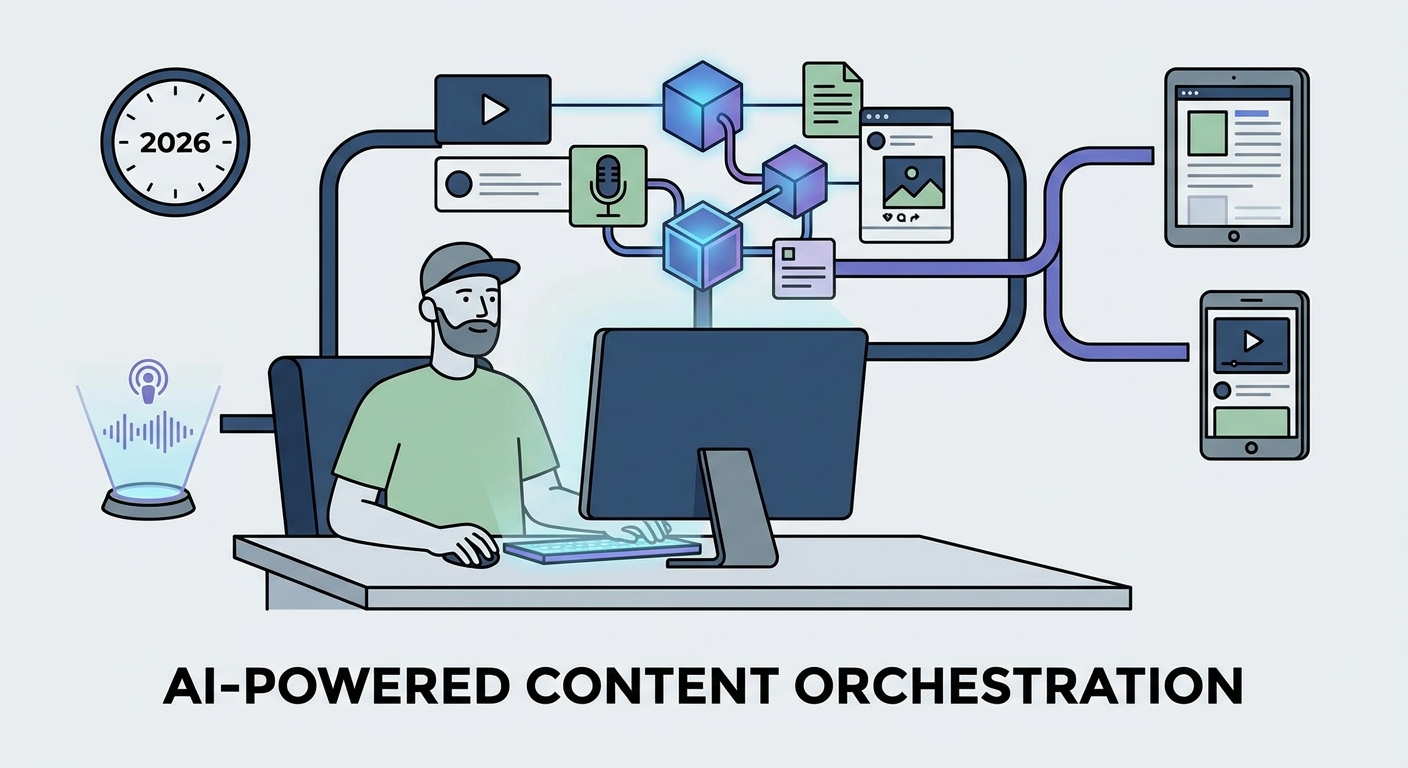
Stop manual drafting. Discover how AI-powered content creation and agentic workflows boost efficiency, scale production, and drive strategic marketing results.
Social9 schedules your posts on 11 networks, and Autopilot can draft them in your brand voice for you to approve. Start on the free plan.
We use strictly necessary cookies to run this site. With your permission, we also use analytics cookies to understand how the site is used. We never use advertising cookies. See our Cookie Policy.