How AI is Revolutionizing the Creation of NFTs

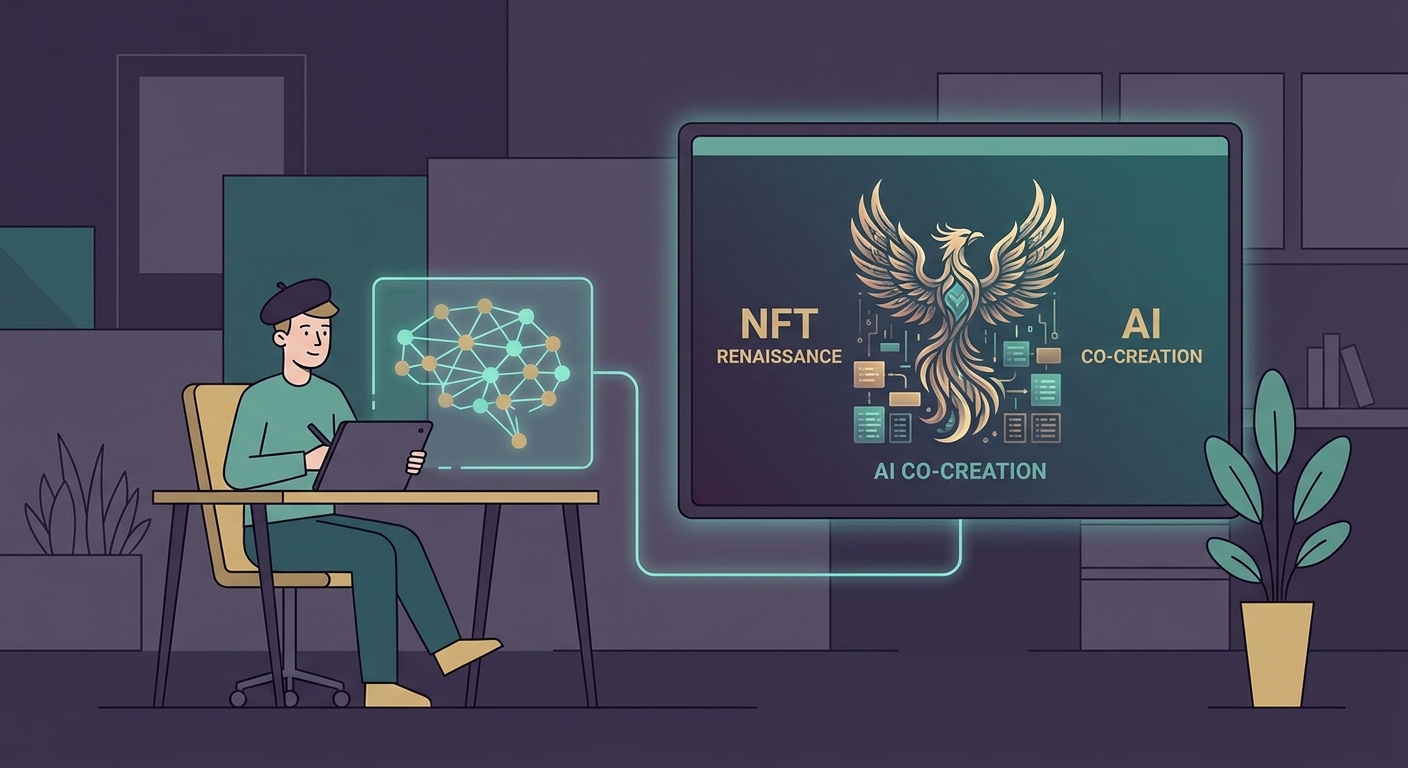
The NFT scene in 2026 isn’t the chaotic, PFP-obsessed wildfire of five years ago. Remember those days? Millions of identical, low-effort monkeys, pixelated punks, and copy-paste collections flooding every marketplace. It was a fever dream.
We’ve moved past the "get rich quick" phase. Today, we’re in the middle of a Digital Renaissance. AI isn't killing off artists; it’s finally giving them a superpower. It’s the ultimate force multiplier, turning technical hurdles into creative playgrounds. The artist is no longer just a laborer; they’re the architect, the director, and the curator of digital value. You aren't replacing the human touch—you're amplifying it.
The Workflow Revolution: From Manual Grind to Hybrid Artistry
Let’s be honest: the old way of making a collection was a soul-crushing slog. Artists spent months chained to a tablet, hand-drawing layers, obsessing over rarity traits, and manually piecing together metadata files. It was tedious, slow, and frankly, a bit boring.
Today? That timeline has collapsed. What used to take months now takes days. The most successful creators aren't just "drawing" anymore; they’re building systems. They use generative AI to handle the heavy lifting, allowing them to iterate through fifty concepts before lunch.
This hybrid workflow is the new industry standard. You let the machine handle the geometry and the base assets, and you provide the "soul"—the finishing touches that make a piece feel like art rather than an output.
The "Human-in-the-Loop" Premium: Why Authenticity Wins
Here’s the catch: because AI can spit out infinite images with a single prompt, the market is flooded with... well, average stuff. Raw AI output is basically a commodity now. If you just type a prompt, hit generate, and mint, you’re going to get ignored.
The market doesn't care about "prompt engineers" anymore. It cares about taste. As discussed in The Rise of Digital Art by Cosimo, the real value—the "premium"—is hidden in the provenance and the human finish.
Collectors have gotten smarter. They can spot a generic, soulless AI output from a mile away. The winning strategy? Use AI for the ideation phase, but then bring it into your own workspace. Apply manual compositing, tweak the color grading, and layer in your specific aesthetic. Your role as the creator is to be the final filter. By injecting your own constraints into the AI’s output, you transform a robotic result into a piece of art that actually commands a price. It’s about intentionality.
Essential Tools for the 2026 Creator
The barrier to entry? History. You don’t need a CS degree to build complex, high-fidelity 3D assets anymore. Browser-based tools have democratized the entire process.
Take Adobe Project Neo, for example. It’s fundamentally changed how we approach 3D. You can manipulate forms with a vector-like intuition, exporting assets directly into high-fidelity NFT formats. It’s fast, fluid, and actually fun.
Once you’ve mastered the tools and built a cohesive series, there’s one more hurdle: how you present it. If your gallery looks like a disorganized file dump, nobody is going to take you seriously. Using a dedicated Portfolio Builder is non-negotiable. You need to curate your work, tell a narrative, and show the "human touch" behind your collection. In 2026, the gallery is the art.
From Static Images to Dynamic Utility
The most exciting shift? We’re moving away from static JPEGs. Modern collections are "alive."
AI is now being used to script the logic of the smart contract itself. We’re talking about NFTs that evolve, change their appearance, or update their utility based on real-world data or community interactions. According to recent OpenSea Blog trends, the market is gravitating toward assets that provide ongoing value.
Imagine an NFT that changes its rarity traits based on your performance in an AI-powered game, or a digital collectible that grows more complex as you interact with it. By integrating AI at the contract level, you aren't just selling an image anymore. You’re selling a piece of software that grows alongside its owner. That’s where the real longevity lies.
Pricing Your Art in an AI-Driven Economy
It’s time to kill the "floor price" mentality. That was a relic of the early days. When you use AI to assist your workflow, your value proposition shifts from "labor time" to "curatorial expertise."
Nobody cares how many hours you spent pixels-pushing. They care about your creative vision and the scarcity of your taste. When you’re ready to launch, be transparent about your process. Using a structured Pricing Your Art Guide can help you justify your pricing. When collectors see that a human hand guided the AI to create something truly unique, they’re far more likely to respect the price point you’ve set. Transparency breeds trust.
The Future of Ownership and Digital Identity
Looking toward 2027, the line between creator, AI, and collector is only going to get blurrier. We’re heading toward a future where our digital identities—our avatars, our virtual homes, our assets—are shaped by the AI models we personally "train" through our daily interactions.
Your NFTs are becoming extensions of your digital fingerprint. By getting involved now, you aren't just minting assets; you’re defining how your future digital self will be perceived. The creators who master the balance of human intent and machine efficiency today? They’re the ones who will define digital culture tomorrow.
Frequently Asked Questions
Are AI-generated NFTs still considered "original art"?
Originality in 2026 is defined by creative direction, not just the physical act of drawing. If you provide the initial concept, curate the AI’s output, and apply human editorial oversight and manual refinement, you are the author of the work. The AI is merely the brush.
How do I protect my AI-generated NFTs from being copied?
While you cannot prevent a screenshot, you can establish provenance through blockchain timestamping and metadata transparency. By recording your creative process and linking your identity to the smart contract, you establish a chain of ownership that copycats cannot replicate.
What is the difference between static and dynamic AI NFTs?
Static NFTs are fixed assets that do not change after they are minted. Dynamic AI NFTs contain code that allows their metadata and visual properties to evolve over time, reacting to external data, user behavior, or smart contract events.
Do I need coding skills to launch an AI-generated NFT collection in 2026?
No. The rise of no-code minting platforms and drag-and-drop smart contract builders means that your creative vision is the only currency that matters. Technical barriers that once required a team of developers can now be navigated by a single creator using modern web-based infrastructure.