
Let’s be real. The manual grind of gaming content creation—spending six hours scrubbing through a three-hour VOD just to find thirty seconds of "clip-worthy" magic—is dead. It’s a relic. A relic that belongs in the bargain bin of history.
By 2026, the game has changed. It’s no longer about who can grind the longest; it’s about who has the smartest workflow. AI in gaming isn’t about letting a bot "make" your channel. If you do that, you’re just another faceless, soulless feed-clogger. No, this is about reclaiming your time so you can focus on the one thing the machines can’t touch: your personality. Using "Human-in-the-Loop" workflows, elite creators are now pumping out high-velocity content without losing the soul, the jokes, or the timing that made their community stick around in the first place.
The New Reality of Gaming Content
We’re way past the "experimental" phase. Back in 2024, everyone was terrified of "AI slop"—that repetitive, uncanny, low-effort trash that platforms rightfully buried. Today? The smartest creators use AI as a force multiplier. It’s for pacing, it’s for localization, and it’s for cinematic storytelling that actually looks good.
The "Human-in-the-Loop" standard is the dividing line between a channel that explodes and one that gets throttled into oblivion. Viewers are smart. They have a sixth sense for soulless automation. They know when a clip was edited by someone who actually plays the game and understands the meta, and they know when it was churned out by a generic script. Your goal for 2026 is crystal clear: let the machine handle the pixel-pushing, the cropping, and the noise reduction. You? You keep your hand on the wheel of the narrative.
The 3 Pillars of AI Gaming Content
If you try to automate everything, you’ll lose your identity—and your audience. If you automate nothing, you’ll get left in the dust by someone faster than you. You need a balance. Break your production into three distinct pillars:
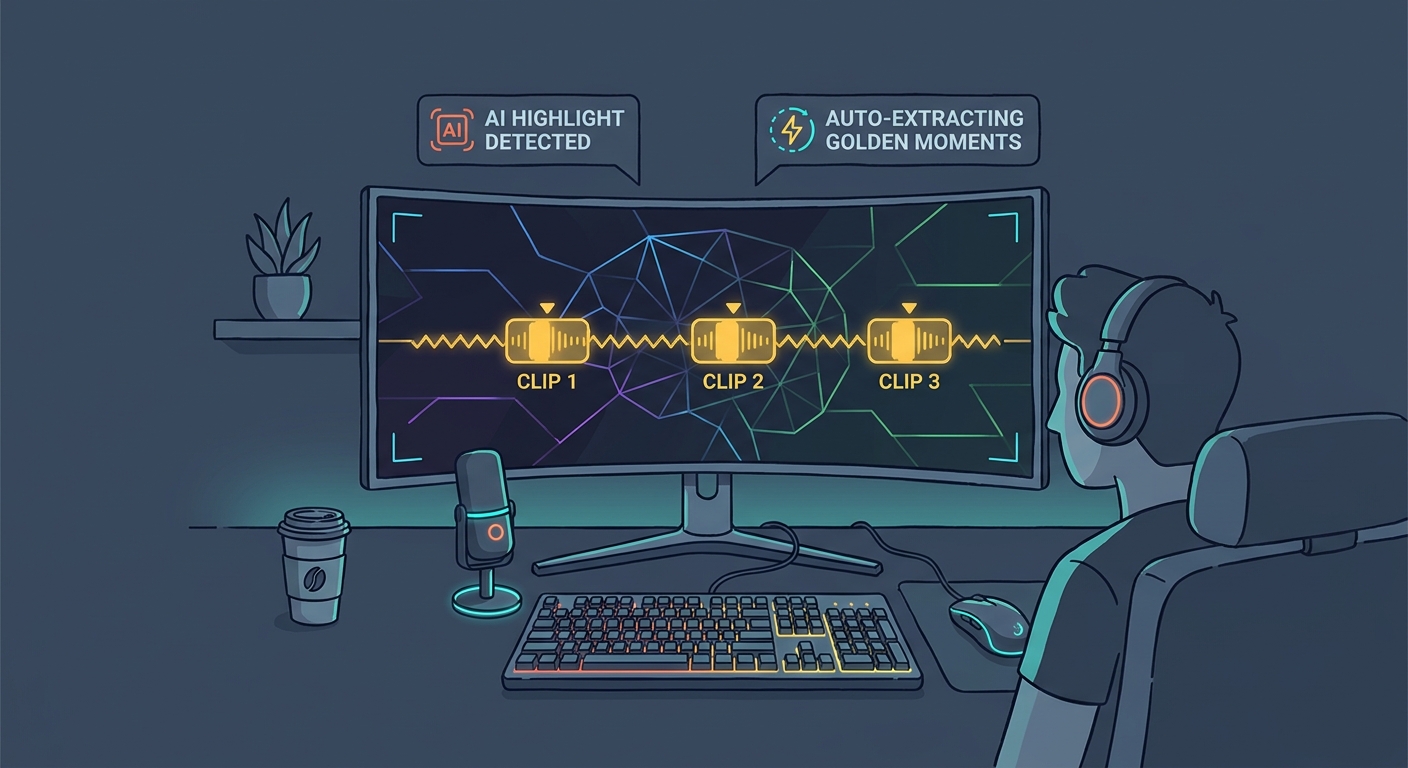
- Clipping: This is your intake department. Modern automated extraction engines identify high-motion gameplay, clutch moments, and peaks in your mic audio to pull the "best of" your stream before you’ve even finished your post-stream snack.
- Editing: Once you have the raw footage, AI-assisted tools strip out the "dead air," scrub the background noise from your mic, and slap on those dynamic captions that keep retention high in the doom-scrolling world of shorts.
- Cinematics: This is where the production value goes through the roof. You can use generative models to build custom B-roll, textures, or even high-fidelity trailer assets that would’ve cost you five figures and a team of designers just two years ago.
Which Tools Should You Use?
The market is flooded with junk. Seriously, it’s a minefield. You need tools that can handle high-bitrate, high-motion gaming footage without turning it into a blurry mess. When you’re building your stack, look for tools that prioritize frame-rate stability and intelligent motion tracking.
For your highlights, you need engines that actually understand the difference between a boring walk-up and a high-intensity firefight. According to Zapier's Best AI Video Generators 2026, the best tools are those that allow for granular control. Don’t settle for the "one-click" solutions that force a generic, cookie-cutter aesthetic on your brand.
When you need to level up with custom assets—like a high-end intro sequence or a specific texture for a thumbnail—RunwayML has become the industry standard for creators who want to look like a studio rather than a guy in his bedroom.
And don't sleep on global expansion. AI-powered dubbing and localized captioning have turned mid-sized channels into international powerhouses overnight. If your content is only in English, you are literally leaving 70% of the world's gaming audience on the table. Why would you do that?
How Do You Build a Viral Gaming Short in Under 30 Minutes?
Efficiency isn’t about being lazy. It’s about production velocity. If you can move from "stream ended" to "viral short" in under 30 minutes, you can own the feed.
- The Ingestion: Feed your long-form VODs into your clipping engine. Check out our Best Practices for Content Repurposing to make sure you’re tagging your highlights so the AI actually knows why a moment was good.
- The Human Touch: This is non-negotiable. Spend ten minutes reviewing what the AI picked. Did it grab the clutch win, or did it grab that weird moment where you accidentally walked into a wall? The AI doesn't know your brand of humor—you do. Pick the moments that showcase your personality.
- The Polish: Apply your brand’s visual flair with automated captioning. As noted in AI Video Trends 2026, creators who adopt these workflows are seeing a 70% reduction in production time. That’s more time to iterate on your hook and pacing based on actual data, not vibes.
Is Your AI Content Safe from Demonetization?
The "AI ban" fear is real, but it’s mostly directed at "slop"—content that’s 100% generated by machines without a shred of human commentary. Platforms like YouTube and Twitch are businesses; they reward engagement, and engagement comes from human connection.
To stay safe, use enterprise-grade tools like Adobe Firefly for your assets. These are trained on commercially safe libraries, so you won't wake up to a copyright strike because your AI-generated thumbnail accidentally mimicked a protected asset.
Most importantly: keep the "Human-in-the-Loop." If you’re using AI to clip and caption, you’re golden. If you’re using AI to generate a fake persona that reads a script you didn't write? You’re walking on thin ice. Use AI to handle the grunt work, but keep your voice, your reactions, and your editorial calls at the center. For more on navigating these platform changes, check out Our Guide to Streamer Growth.
What Does the Future Hold?
We’re inching toward real-time AI interaction. Imagine a live stream where the AI doesn't just edit your clips after the fact—it dynamically changes your overlays, lighting, or even the in-game UI based on your chat’s sentiment or the intensity of the moment.
Customization is the next frontier. Soon, we’ll see dynamic AI generation that tailors the video experience to the individual viewer—changing the language, the pacing, or the highlighted moments based on what they prefer. It’s the shift from "one video for everyone" to "the perfect video for every viewer."
The creators who embrace these tools now? They’re the ones who will be setting the standard for the next decade. Don't get left behind.
Frequently Asked Questions
Will using AI video generation get my gaming channel demonetized?
Platforms reward original commentary and human-led editing. AI tools used for efficiency—like clipping or captioning—are perfectly safe. The risk lies in "AI slop": content generated entirely by machines without human personality or editorial oversight. If your voice and perspective remain the core of the video, you are in the clear.
Which AI tools are best for handling the high-motion footage found in fast-paced games?
For fast-paced titles like FPS or racing games, you need tools that prioritize frame-rate stability and motion tracking, such as OpusClip and Descript. These platforms are specifically engineered to maintain visual clarity during high-intensity moments, preventing the motion blur or artifacting that plagues lower-quality generators.
Can I use AI to generate original game assets for my content?
Absolutely. Tools like Luma or Firefly allow you to generate high-fidelity thumbnails, custom overlays, and cinematic B-roll. This gives your channel the aesthetic of a professional studio, allowing you to stand out in a saturated market without needing a dedicated team of motion designers.
How do I make my AI-generated gaming content feel authentic?
Authenticity is about the "Human-in-the-Loop" philosophy. Use AI to handle the "grunt work"—the clipping, the noise reduction, and the captioning—but retain full control over the pacing, the comedic timing, and the final selection of clips. If the edit feels like a human made it, it is authentic.
How can I reach international audiences with my gaming content?
AI-powered dubbing and localized captioning tools, such as Papercup, have made global reach accessible to mid-sized creators. By translating your voiceover and text into multiple languages, you can expand your reach to international markets without the need for a massive production team or expensive localization services.