What is social media autopilot? How AI posting works (and where to keep a human)
Social media autopilot uses AI to plan, draft, schedule and publish posts. Learn how the loop works, platform AI rules, and where a human must stay in charge.
Autopilot & AI
Discover how to move beyond basic prompts with agentic AI. Explore 21 inspiring examples of AI-powered content creation, performance marketing, and automation. Nikita ShekhawatSocial Media Growth ExpertPublished Updated 6 min read
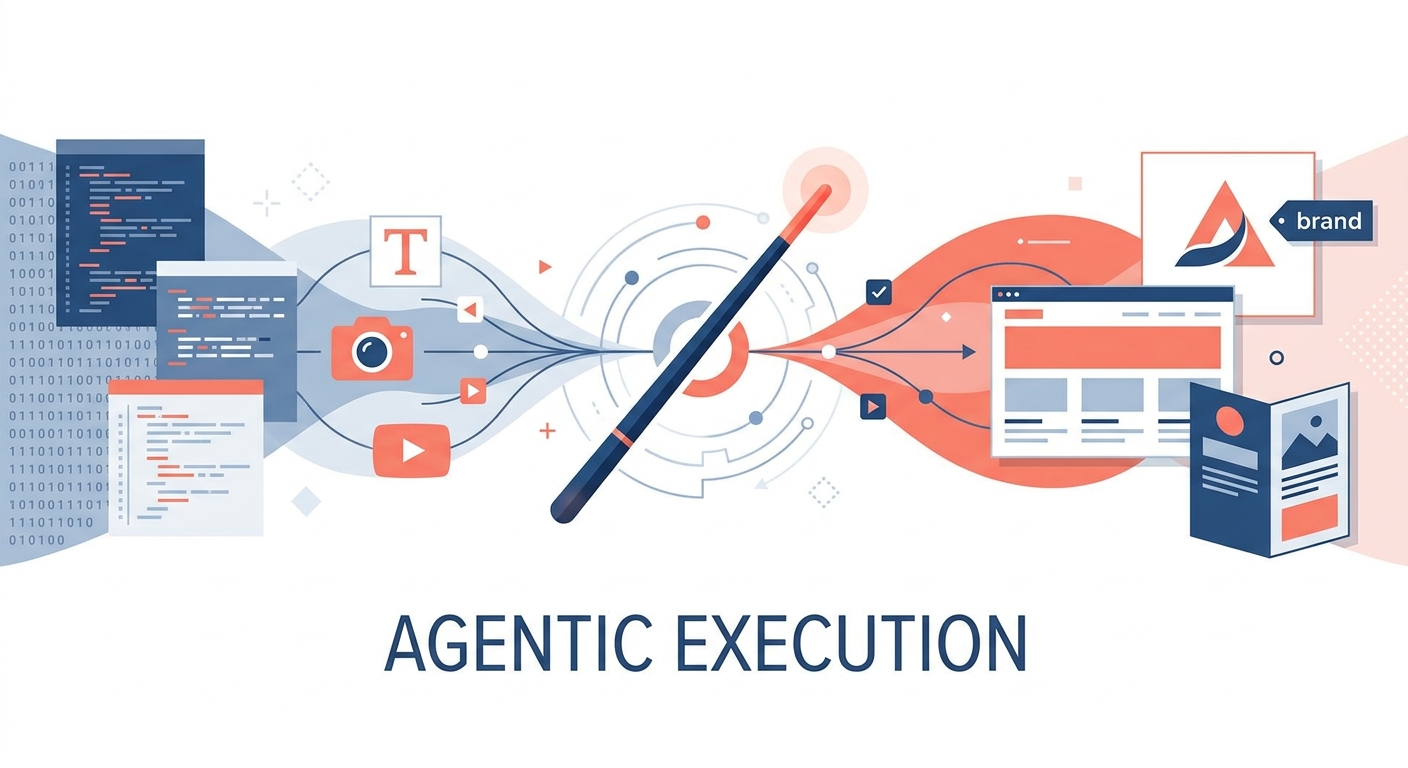
By 2026, asking whether your brand should use AI to create content is like asking if you should use electricity to light your office. The question isn't "if"—it’s how masterfully you can orchestrate high-velocity, high-fidelity output. We’ve sprinted past the era of novelty prompts. We’re now living in the age of "Agentic Execution."
In this world, AI systems don’t just take orders; they plan, execute, and iterate on complex campaigns with almost zero friction. The brands winning right now aren't just churning out content; they are solving the paradox of keeping human-grade authenticity at machine-level speeds. If you want to stay relevant, stop thinking like a manual creator. Start thinking like an AI orchestrator.
The old linear workflow—prompt, generate, edit, repeat—is effectively dead. It’s being replaced by autonomous loops. Stop treating AI like a static text-generation tool. Start treating it like a specialized agent capable of goal-setting and self-correction.
graph TD
    A[Goal Definition] --> B[Strategic Planning]
    B --> C{Agentic Workflow}
    C --> D[Autonomous Task Execution]
    D --> E[Iterative Refinement]
    E --> F[Human-in-the-Loop Review]
    F --> G{Approved?}
    G -- No --> D
    G -- Yes --> H[Final Asset Delivery]

    style C fill:#f9f9f9,stroke:#333,stroke-width:2px
    style F fill:#e1f5fe,stroke:#0277bd
Performance marketing is the ultimate proving ground for AI. By leveraging Meta Advantage+ performance data, brands are moving away from static ads and toward dynamic, self-optimizing creative ecosystems.
The "Dear [Name]" token is a relic. Today, AI-driven sentiment analysis allows brands to alter the entire tone of a message based on a recipient’s history. According to Persado AI marketing case studies, using machine learning to select the exact language that resonates with a specific customer leads to massive jumps in conversion.
The biggest hurdle for enterprise teams is the tension between volume and brand integrity. When you need to scale, you must rely on how to build a brand voice guidelines. These serve as the "guardrails" that keep your AI agents from sounding like a generic robot.
As AI content saturates the web, the "human touch" is the only thing separating your brand from the void of generic noise. We advocate for a rigorous editorial mandate. Our own content marketing services emphasize that while AI handles the structure, humans must inject the soul.
As highlighted in the Adobe Digital Trends 2026 report, synthetic media is drastically lowering the cost of high-production-value video.
Traditional SEO is dying. "Answer Engine Optimization" is the new reality.
To ensure quality, implement a strict, multi-step verification process before anything hits the public eye.
graph LR
    A[Input/Prompt] --> B[AI Draft Generation]
    B --> C[Automated Fact Check]
    C --> D[Brand Voice/Compliance Audit]
    D --> E[Human Editorial Approval]
    E --> F[Publish]

    style C fill:#fff3e0,stroke:#ef6c00
    style D fill:#fff3e0,stroke:#ef6c00
    style E fill:#e8f5e9,stroke:#2e7d32
Consistency requires a centralized "Source of Truth." House your brand guidelines, tone-of-voice descriptors, and "Golden Samples" in a custom GPT or a centralized knowledge base that all your AI agents reference. Never rely on the default settings of a tool; force it to adhere to your specific style manual.
AI won't replace humans, but humans who use AI will replace those who don't. The role is shifting from "Creator" to "Strategist and Editor." The emotional nuance, the ability to read a room, and the strategic vision required to build a brand are exclusively human traits. AI handles the heavy lifting; you provide the final, critical layer of judgment.
The primary risks are copyright liability, brand safety, and the "AI sameness" trap. If your content looks, sounds, and feels like every other AI-generated piece of content, you will vanish from search rankings and lose audience trust. You must prioritize original research, human perspective, and rigorous fact-checking to avoid these pitfalls.
Stop measuring vanity metrics like word count. Measure business-impact metrics: How much did your time-to-market drop? What was the reduction in CPA across your AI-optimized ad campaigns? By tracking conversion lift and the efficiency gains in your production pipeline, you can prove that your AI strategy is a genuine business driver.
Social media autopilot uses AI to plan, draft, schedule and publish posts. Learn how the loop works, platform AI rules, and where a human must stay in charge.
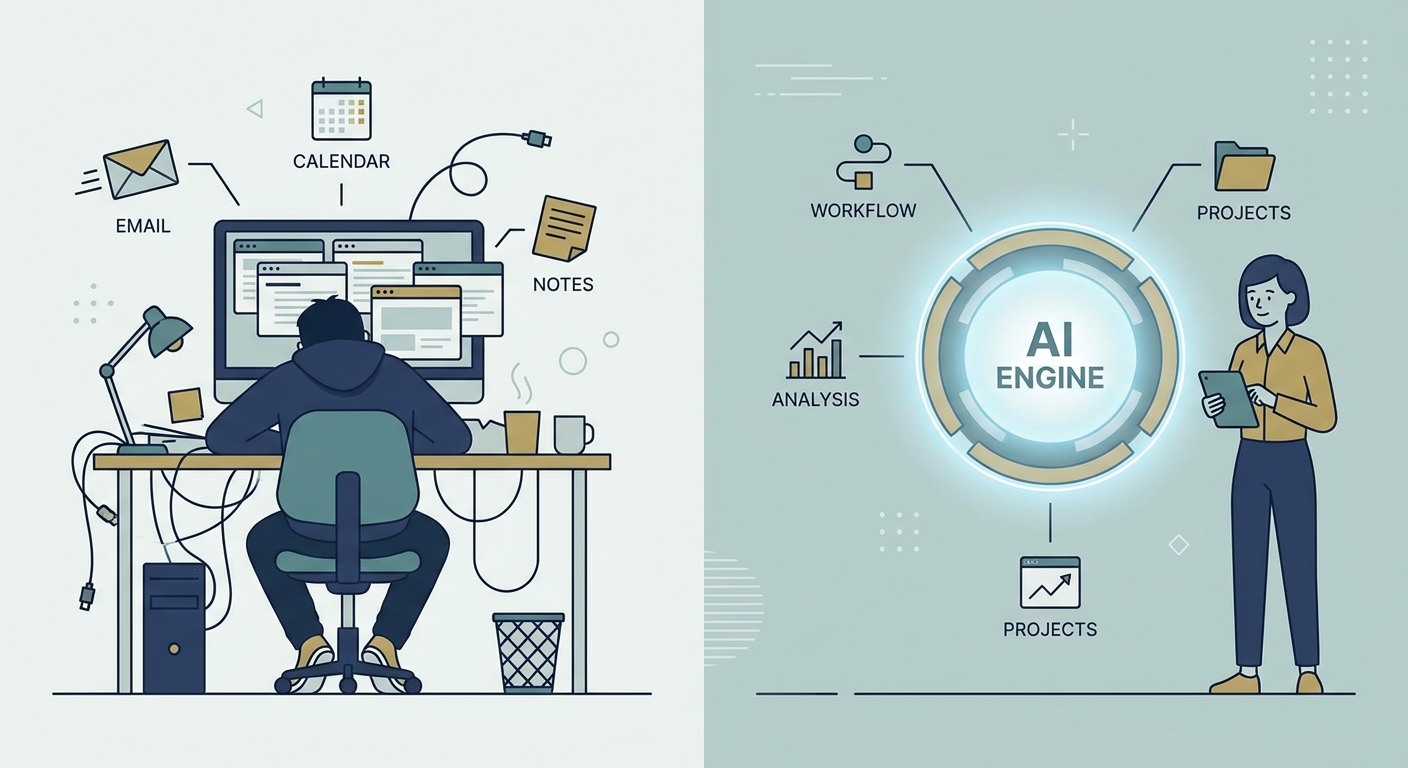
Stop tab-hopping. Learn how to choose the right AI content tools in 2026 by prioritizing agentic workflows, GEO strategies, and scalable content pipelines.
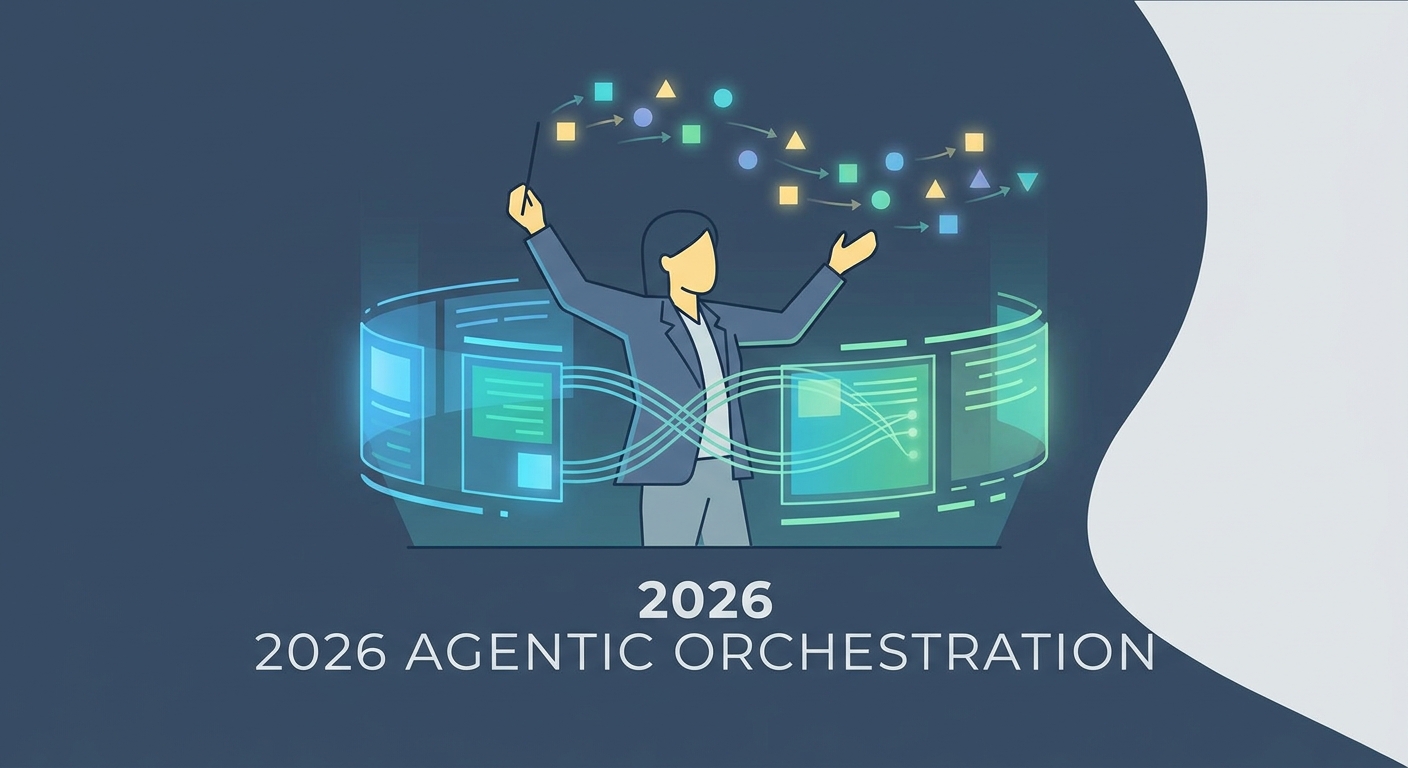
Stop using AI as a typewriter. Learn to build agentic workflows that scale high-authority content and beat synthetic mediocrity in 2026.
Social9 schedules your posts on 11 networks, and Autopilot can draft them in your brand voice for you to approve. Start on the free plan.
We use strictly necessary cookies to run this site. With your permission, we also use analytics cookies to understand how the site is used. We never use advertising cookies. See our Cookie Policy.