7 Best Social Media Marketing Tools to Automate Your Workflow in 2026

TL;DR
- ✓ Transition to agentic workflows to automate your entire social media content distribution process.
- ✓ Leverage AI-native tools to transform long-form content into platform-specific posts automatically.
- ✓ Implement autonomous social listening to prioritize customer engagement and crisis management effectively.
- ✓ Build an integrated marketing stack that connects social tools with your internal CRM systems.
In 2026, the "10X Marketer" isn't a buzzword; it’s the bare minimum for survival. The gap between the person manually copy-pasting posts for eight hours a day and the person running an autonomous AI ecosystem is now a canyon. If you’re still clicking "post" manually, you’re paying a massive tax on your own inefficiency.
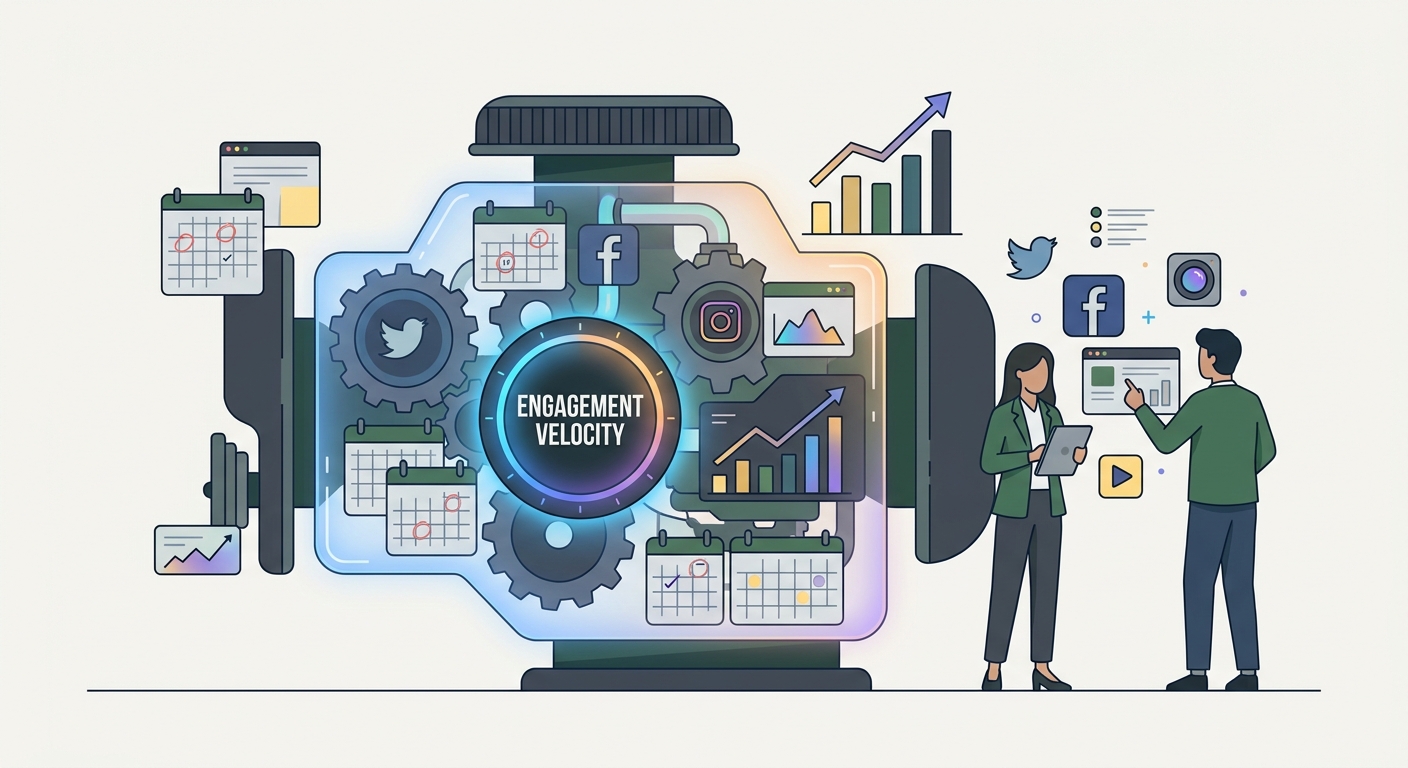
The modern workflow is about looping content creation, sentiment analysis, and cross-platform distribution into one self-sustaining machine.
Why the "10X Marketer" Era is Flipping the Script
We’ve outgrown simple scheduling software. The death of departmental silos is here. When your social tool lives in a vacuum—disconnected from your CRM or your help desk—you’re creating blind spots that kill your brand. By building a robust content foundation, you stop spamming the feed and start delivering actual value, right when your audience needs it.
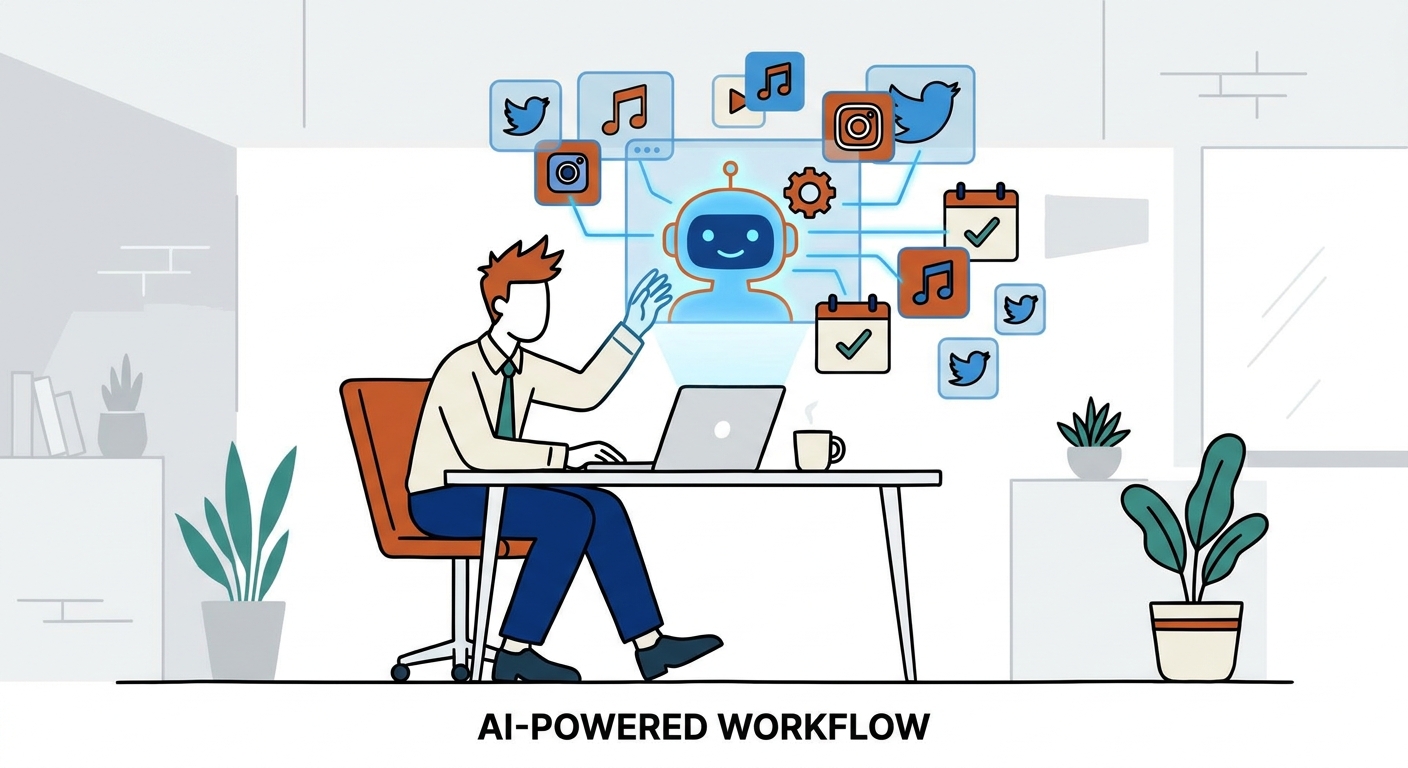
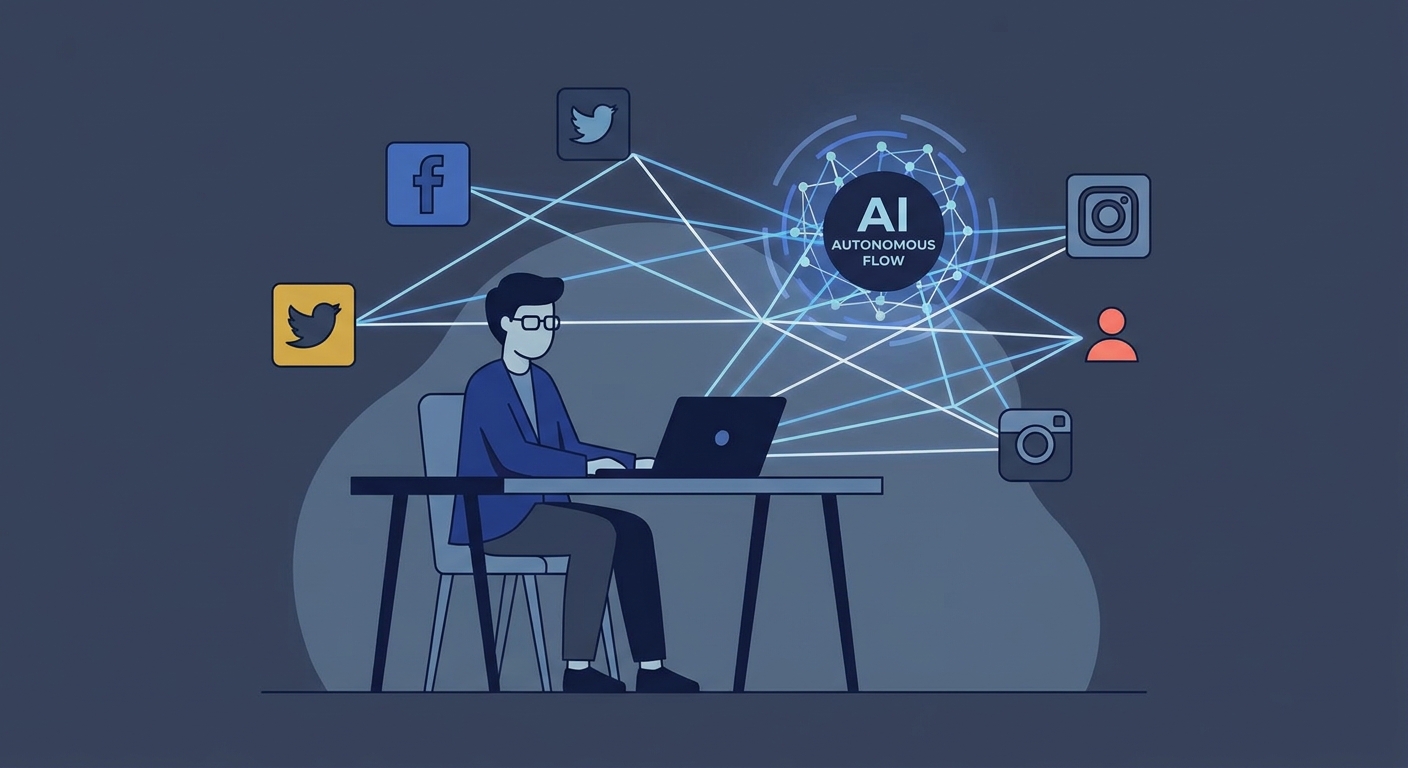
The shift for 2026? "Agentic" workflows. You aren't just telling a tool to hit "publish" at 9:00 AM. You’re tasking an AI agent to scout trends, digest your latest whitepaper, and spin it into tailored formats for LinkedIn, X, and TikTok. That’s not a tool. That’s a teammate.
What Can Modern Automation Actually Handle?
Forget the calendar. We’re talking about autonomous listening—AI crawling the web for brand mentions and triggering immediate responses. We’re talking about sentiment-based triage that prioritizes a customer’s angry tweet over a "nice post" comment. And, most importantly, smart cross-platform adaptation.
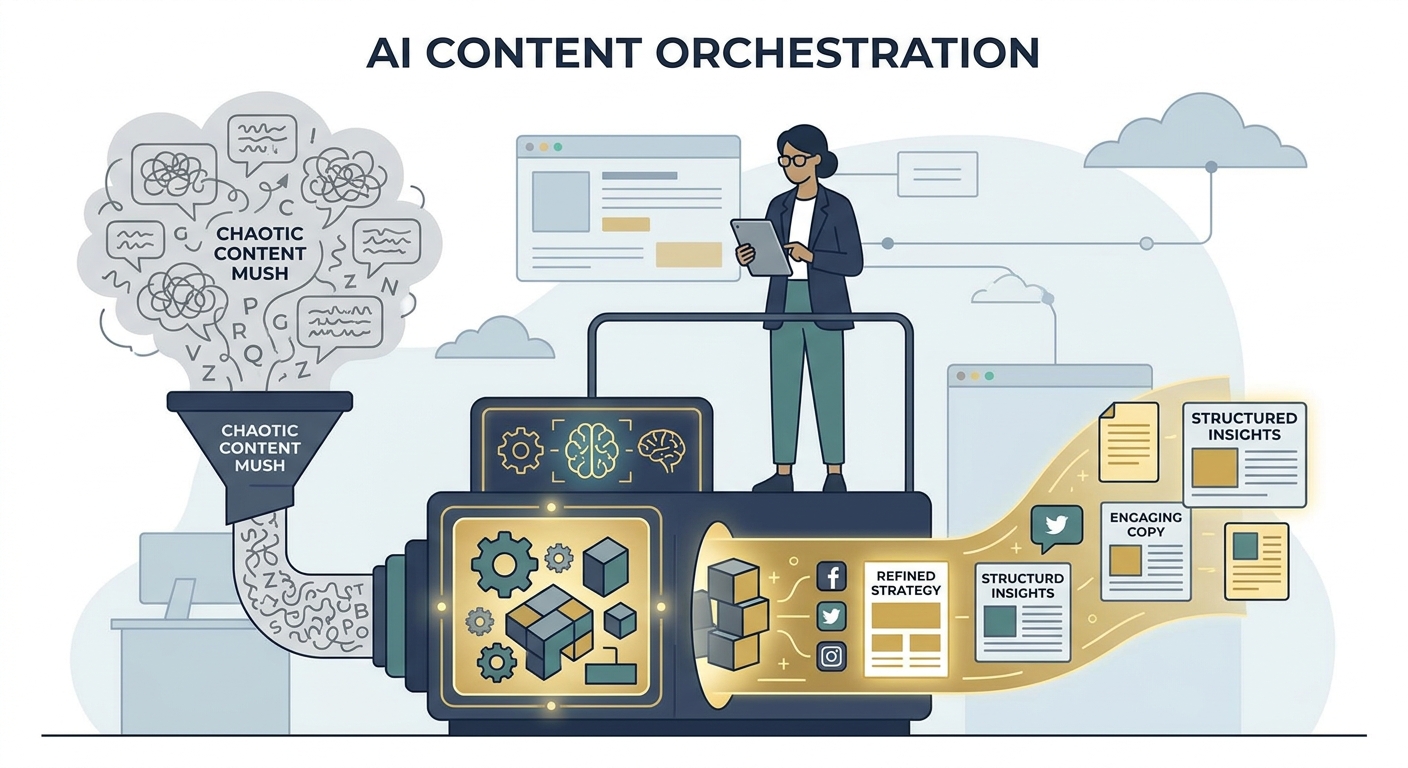
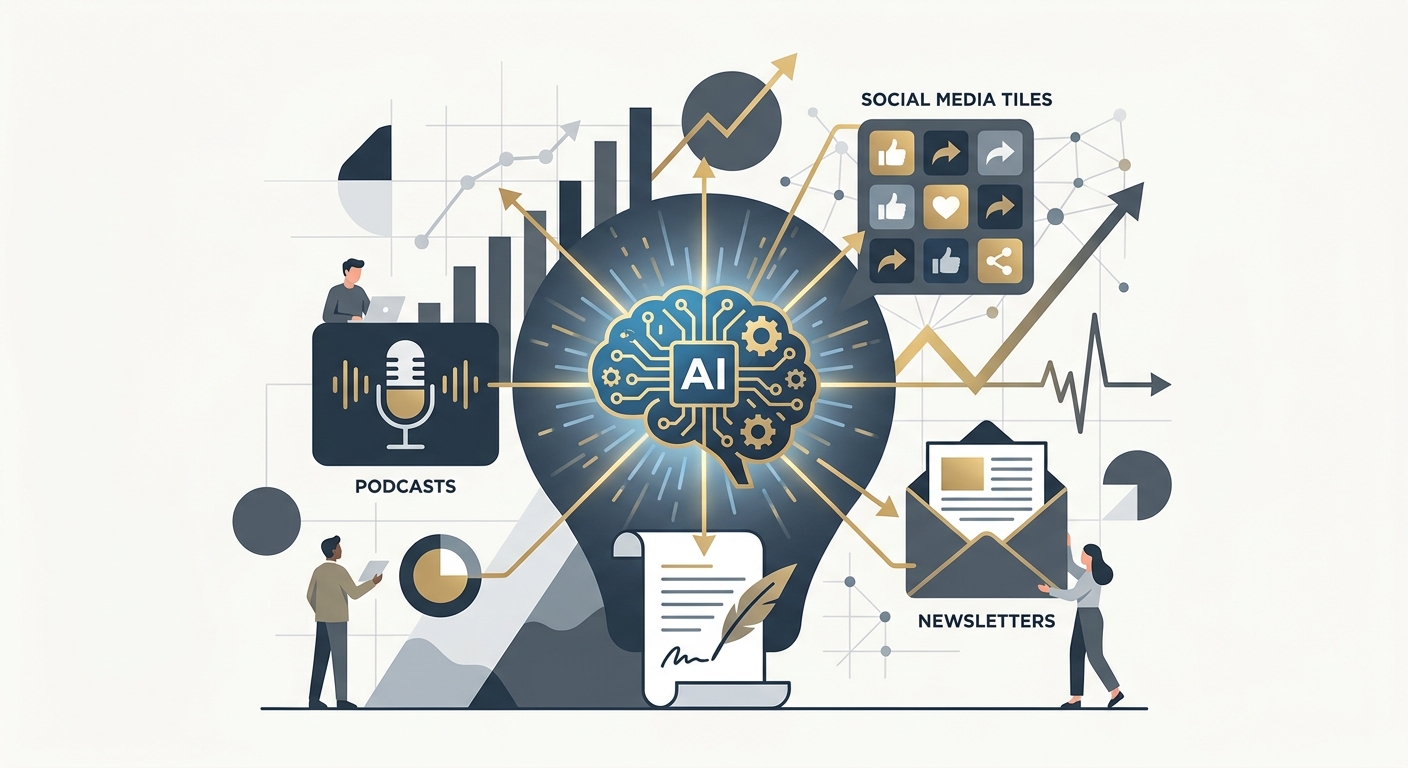
This "Content Repurposing Loop" is how you stay 24/7 without burning out. Feed one source—a long-form video or a deep-dive essay—into the agent, and your calendar populates in minutes.
How to Pick Your Automation Stack
The market is flooded with junk. When you’re shopping for a stack, look for depth. A tool that’s "easy to use" but refuses to talk to your internal database is just a future bottleneck. Before you commit, it’s worth understanding social media algorithm shifts in 2026 so you don't end up with a tool that just cross-posts the same generic slop to every platform.
The Top 7 Tools for 2026
1. The AI-Native Orchestrator
- Best for: Enterprise teams juggling multi-layered, chaotic campaigns.
- The Power Move: Natural language workflow builders. You describe the campaign in plain English, and the tool builds the execution plan.
- The Catch: It’s powerful, but you’ll need to learn how to prompt it properly.
- Use Case: A global firm launching a product and instantly localizing the social campaign into five languages.
2. The Cross-Platform Adapter
- Best for: Solo founders and personal brands who need to be everywhere.
- The Power Move: One-click adaptation. It knows LinkedIn needs a professional hook, X needs brevity, and Instagram needs a visual angle.
- The Catch: Sometimes the AI gets a little too robotic. Keep a human eye on the tone.
- Use Case: Turning a 30-minute podcast into a week’s worth of content in under fifteen minutes.
3. The Autonomous Listening Agent
- Best for: Brands that care deeply about reputation and community.
- The Power Move: Real-time trend detection. It spots industry shifts and triages DMs for support teams.
- The Catch: You have to "train" the AI on what counts as a crisis vs. a casual comment.
- Use Case: A hardware company catching a product bug on X and routing the complaint directly to Slack.
4. The Workflow Integration Hub
- Best for: Ops-heavy agencies that need social data to talk to the business.
- The Power Move: Low-code integration with things like Zapier or Gumloop for deep CRM syncing. You can learn more about the fundamentals of building AI automation workflows here.
- The Catch: Not "plug-and-play." You have to get your hands dirty with the logic.
- Use Case: Triggering a LinkedIn lead-nurture sequence the second a prospect comments on a high-value post.
5. The Visual AI Specialist
- Best for: Instagram and Pinterest-heavy lifestyle brands.
- The Power Move: Automated tag-mapping and image generation that hits platform specs without a designer.
- The Catch: Watch out for "brand drift"—make sure the AI stays on-brand visually.
- Use Case: Generating "shoppable" images from a product catalog automatically.
6. The Analytics & ROI Engine
- Best for: Hard-nosed CMOs who need to prove social isn't just a cost center.
- The Power Move: Predictive analytics. It tells you not just what happened, but what will work next.
- The Catch: You need historical data for it to actually learn.
- Use Case: Optimizing posting windows to match the actual decision-making cycles of B2B enterprise accounts.
7. The "Human-in-the-Loop" Scheduler
- Best for: Brands where one wrong post could be a PR nightmare.
- The Power Move: Collaborative, approval-based workflows. The AI does the heavy lifting, but you hold the keys.
- The Catch: It’s slower than pure automation.
- Use Case: A healthcare firm needing double-layered legal review on every post before it goes live.
Building Your First "Automation Recipe"
Don't overthink the tech. It’s just logic. Start with a trigger—say, a new blog post. Connect that to an AI agent tasked to summarize it, pull out three takeaways, and draft them for your platforms.
By keeping that approval stage, you get the speed of the machine and the soul of a human.
Are You Measuring Time or Just Vanity?
Likes are vanity. In 2026, the only metric that matters is operational efficiency. If you’re saving 20 hours a week, what are you doing with them? The winners are using that time for high-level strategy and actual community building—the stuff AI can't touch. Data from the State of Social Media 2026 Report confirms that the best brands use automation specifically to buy back time for human interaction.
Conclusion: Scale, Don't Soullessly Automate
Automation isn't about replacing your team; it's about freeing them. Offload the grunt work, and let your people focus on the one thing that will always beat an algorithm: genuine human connection. We have scaled our own presence using these exact tools, and the consistency, professionalism, and voice we’ve gained is night-and-day.
Frequently Asked Questions
Will using automation tools hurt my organic reach?
Not if you’re using them to assist, not replace, your strategy. Platforms hate low-quality, repetitive trash. If your AI-generated drafts are high-quality and native to the platform, you’re fine.
How do I keep my brand voice from sounding like a robot?
The secret is in the "System Prompt." Feed the tool your best-performing, most authentic content. It needs to learn your cadence, your vocabulary, and your attitude.
What’s the difference between a scheduler and an automation platform?
A scheduler is a calendar that sits there waiting for orders. An automation platform is an active participant that creates, adapts, and reacts to your environment in real-time.
Do I need to be a developer to set this up?
Hardly. If you can explain your process in clear, step-by-step English, you can build a sophisticated stack today. No coding required.