The Ultimate Guide to AI-Powered Content Creation for 2026

TL;DR
- ✓ Move beyond basic prompting to master complex agentic marketing workflows in 2026.
- ✓ Balance AI speed with human-centric brand strategy to avoid hollow automated content.
- ✓ Integrate AI into your marketing stack for autonomous content production and distribution.
- ✓ Use AI for data-driven synthesis while keeping brand vision and empathy human-led.
The "prompt-and-pray" era is officially dead.
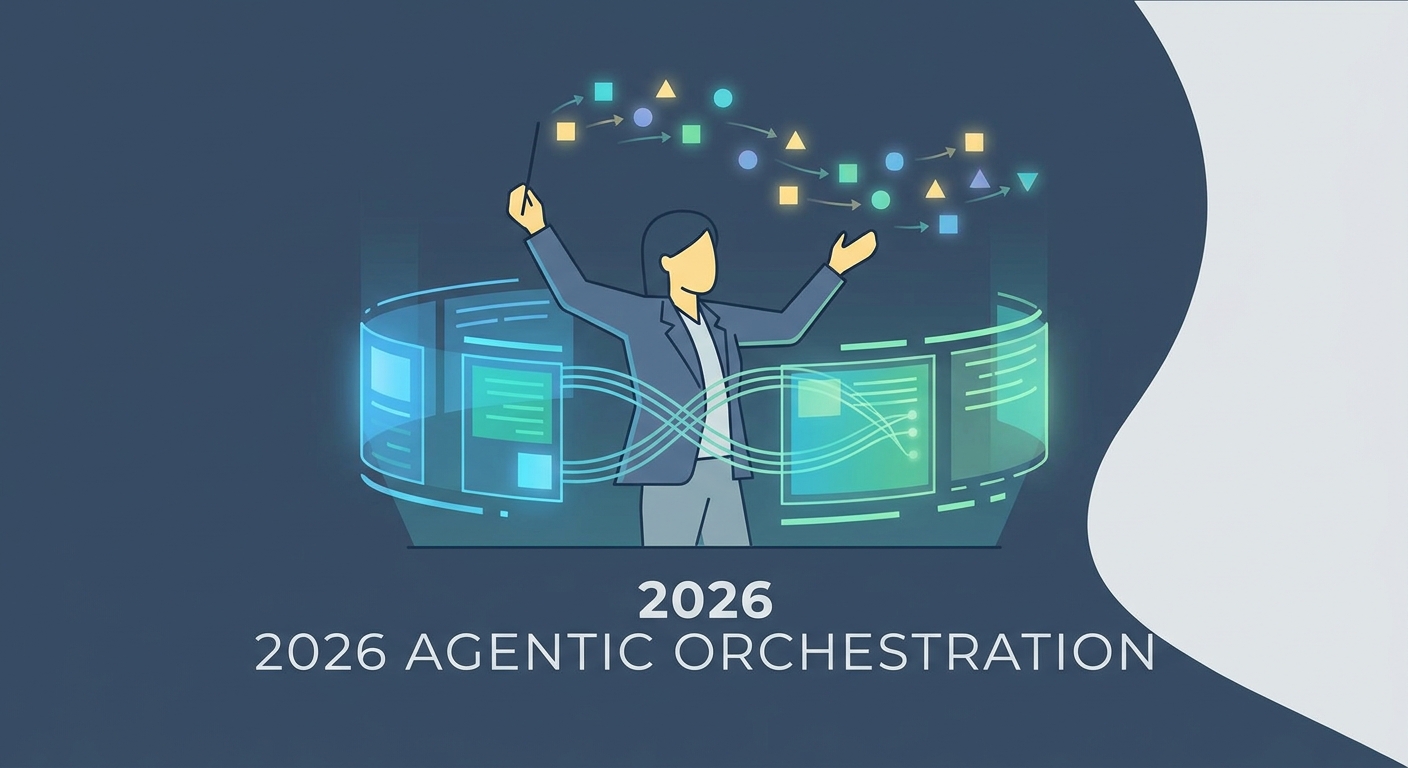
We’ve moved past the initial, wide-eyed shock of the ChatGPT experiment. We are now in a period of professional maturity. And here’s the truth: the winners of 2026 aren't the people using AI the most. They’re the ones orchestrating it the best.
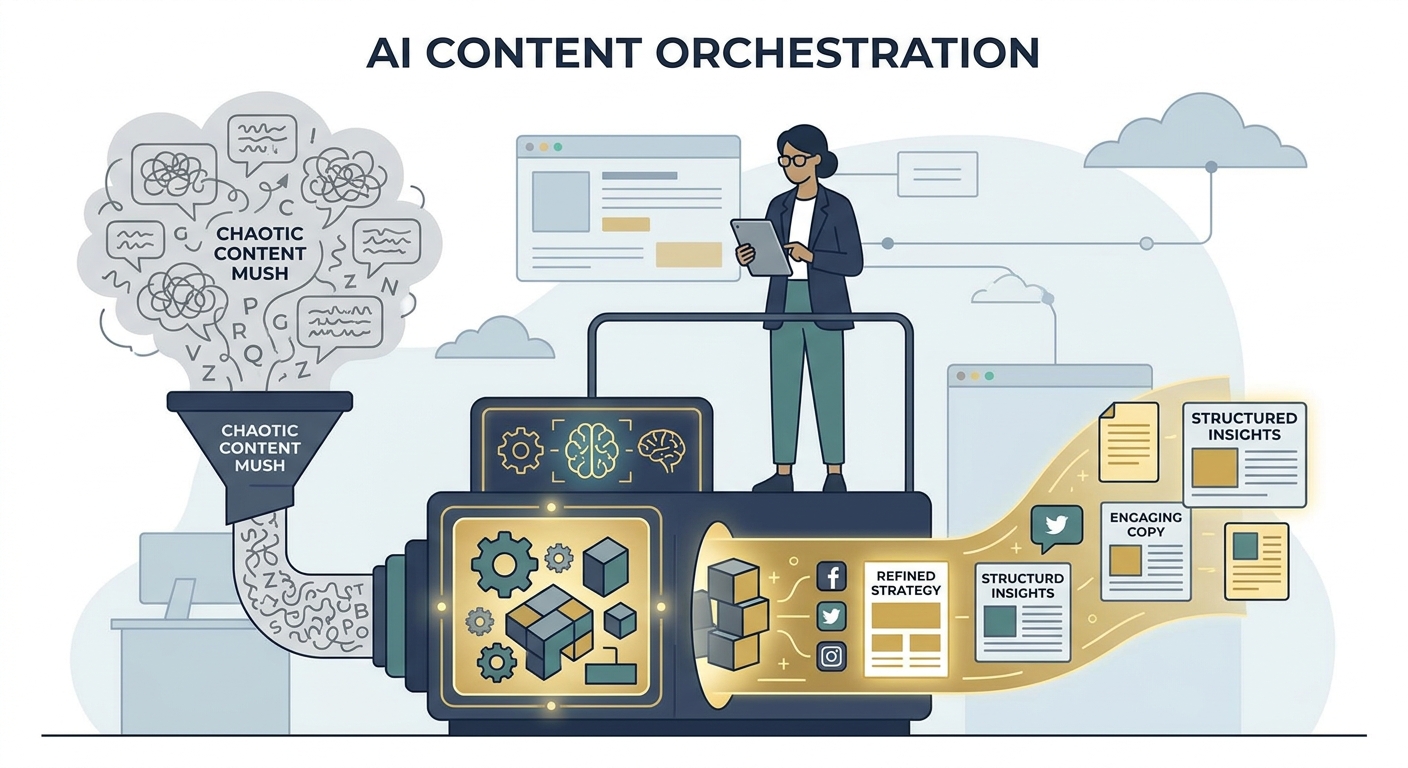
Today, the problem isn't a lack of content. It’s the rising tide of "AI mush"—that hollow, repetitive, flavorless sludge that screams I didn't care enough to write this myself. Your strategy needs to be simple: AI is the engine; your brand’s proprietary strategy is the steering wheel. If you haven't aligned your operations with a robust Content Marketing Strategy Framework, you're essentially driving a Ferrari with a blindfold on.
What Does the AI Landscape Actually Look Like in 2026?
The "one-off" tool mentality—where a marketer hops into a chat window, generates a blog post, and calls it a day—is a competitive disadvantage. It’s amateur hour. According to the latest CMI 2026 Trends Report, the organizations actually winning have shifted toward integrated ecosystems. AI sits at the center of their marketing stack, not on the periphery.
Let’s be brutal. AI is a master of synthesis, pattern recognition, and rapid formatting. It can comb through thousands of data points to find a narrative arc in seconds. But it is fundamentally incapable of strategic empathy. It doesn't have your team’s lived experience. It doesn't have a gut feeling.
| Feature | AI-Powered Capabilities | Human-Unique Value |
|---|---|---|
| Data Processing | High-speed synthesis & formatting | Strategic context & interpretation |
| Ideation | Pattern matching & trend spotting | Creative intuition & "wild" ideas |
| Content Creation | Scaling drafts & SEO optimization | Emotional resonance & storytelling |
| Strategy | Predictive modeling | Empathy & brand vision |
What is an "Agentic Workflow" and Why Does Your Team Need One?
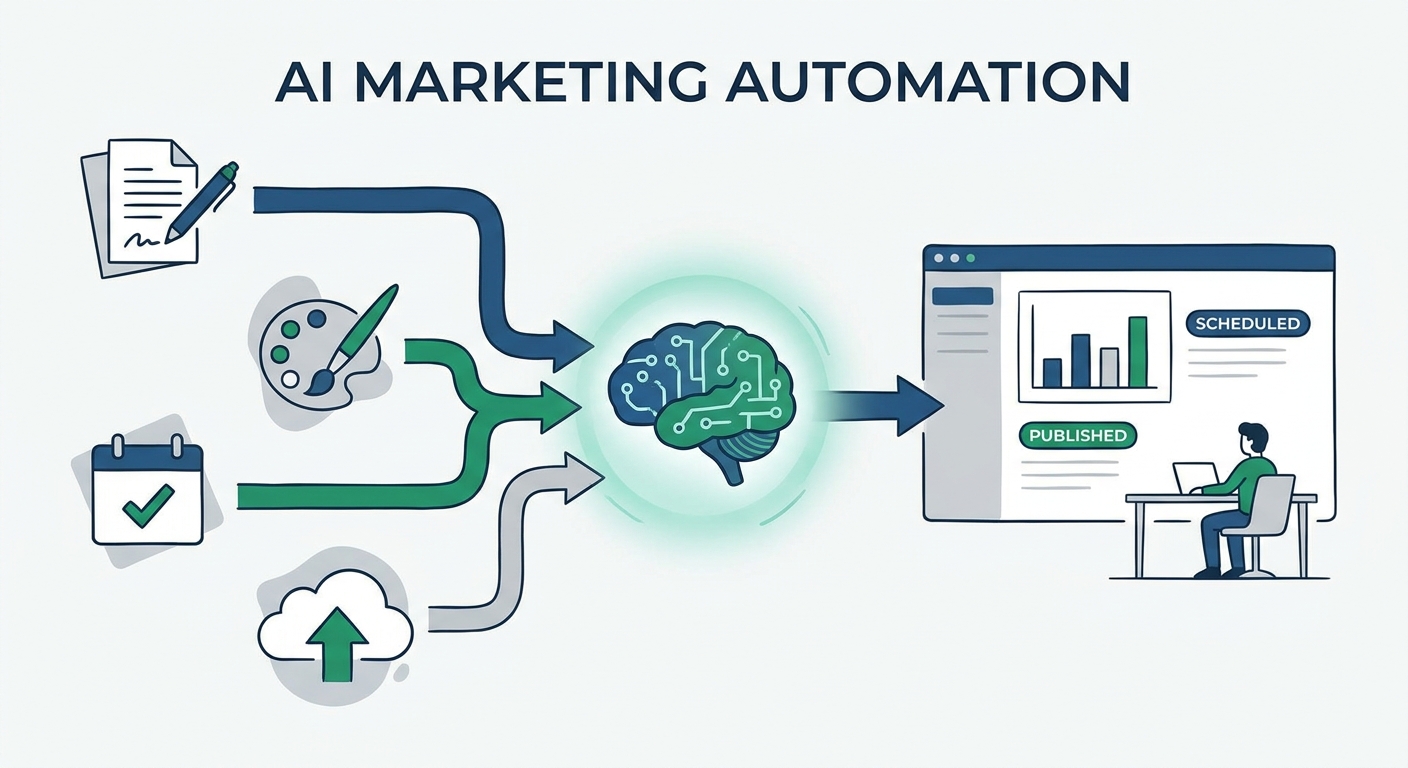
If you are still manually prompting tools for every single task, you are working too hard. The shift in 2026 is toward "Agentic Workflows." These are multi-step, autonomous systems where AI agents handle the heavy lifting of moving assets through a pipeline without you having to babysit them.
Think of it as a digital assembly line. You connect your LLMs to your CRM, your analytics dashboards, and your content management system. An agent doesn't just "write." It pulls the latest performance data, drafts the asset, checks it against your brand guidelines, and only flags it for human review when it hits a "high-stakes" threshold.
How Do You Maintain Brand Voice in an Automated World?
The biggest mistake teams make is treating "tone of voice" like a static prompt. In 2026, voice is a living, breathing asset. You must feed your agents your best-performing, human-written content as reference material—not just some generic style guide. If you want to master this, dig into our How to Build a Brand Voice Guide. Your agents shouldn't just mimic a tone; they should embody a perspective.
Perform an "Anti-AI" Audit every quarter. Take your recent AI-assisted output and look for the "generic markers": repetitive sentence structures, those flowery adjectives that mean nothing, and a total lack of specific, verifiable examples. If you can spot the machine, your audience can too.
How Can You Leverage "Valuable Friction" as a Differentiator?
As the web floods with AI-generated content, "perfect" content is becoming a liability. It’s too clean. Too predictable. Boring.
The gold standard for 2026 is "Valuable Friction." This means including human-led interviews, messy but brilliant original research, and counter-intuitive expert commentary that an AI could never synthesize from public data alone.
As noted in the Onclusive Marketing Trends 2026, audiences are gravitating toward voices that sound like they have skin in the game. Use AI for the rote work, then free up your human experts to do the one thing the machine can't: take a stand.
What Are the Practical Use Cases for AI-Driven Content?
AI isn't just for blogging anymore. By 2026, it’s about operational systems:
- SEO: We’ve moved beyond keyword stuffing. Agents now analyze search intent gaps and build content clusters that actually answer user questions rather than trying to game an algorithm.
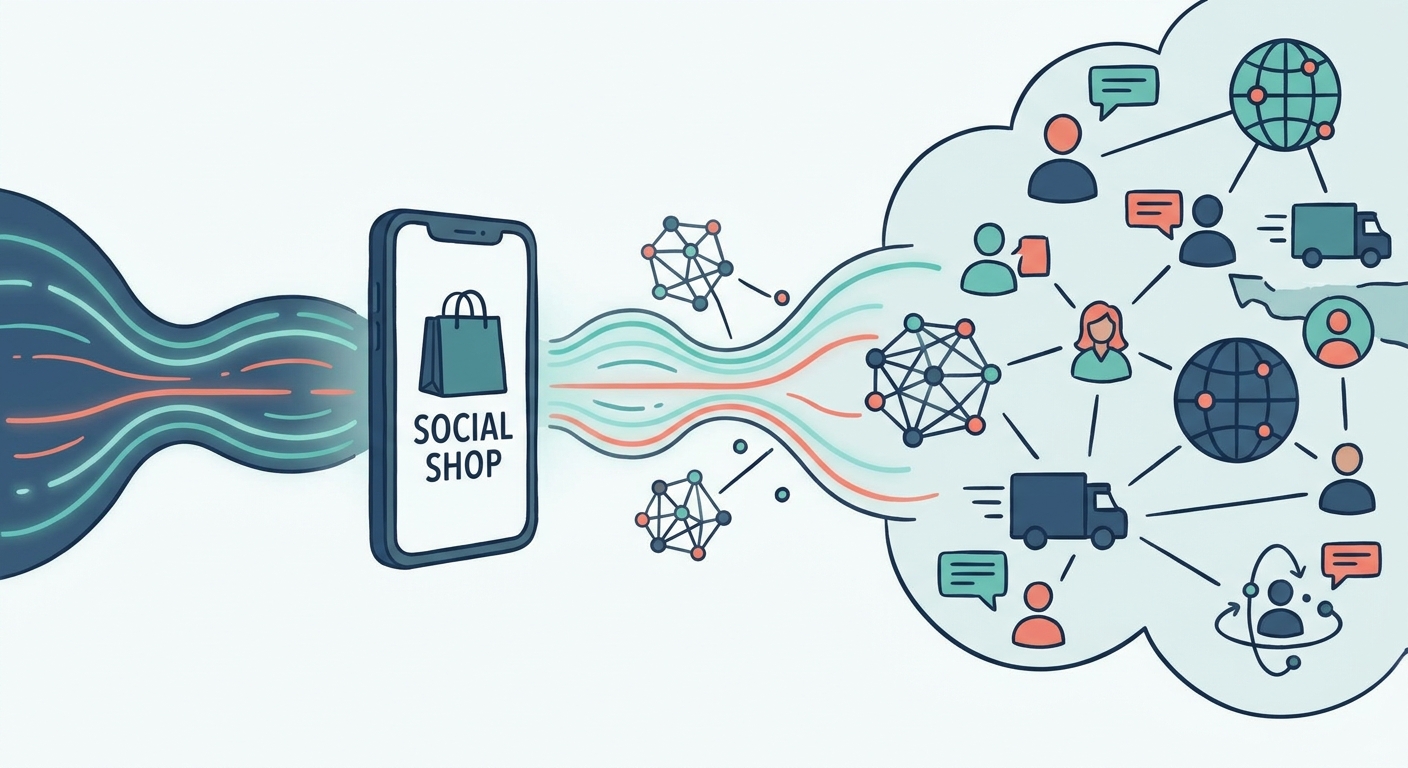
- Social: The rise of "Brand Agents" means your social presence is becoming interactive. These agents handle real-time community engagement, providing instant, brand-aligned answers to customer queries.
- Video: Synthetic media has reached a point of high-fidelity compliance. You can now produce personalized video content at scale—think individual product walkthroughs for thousands of leads—while maintaining strict brand standards.
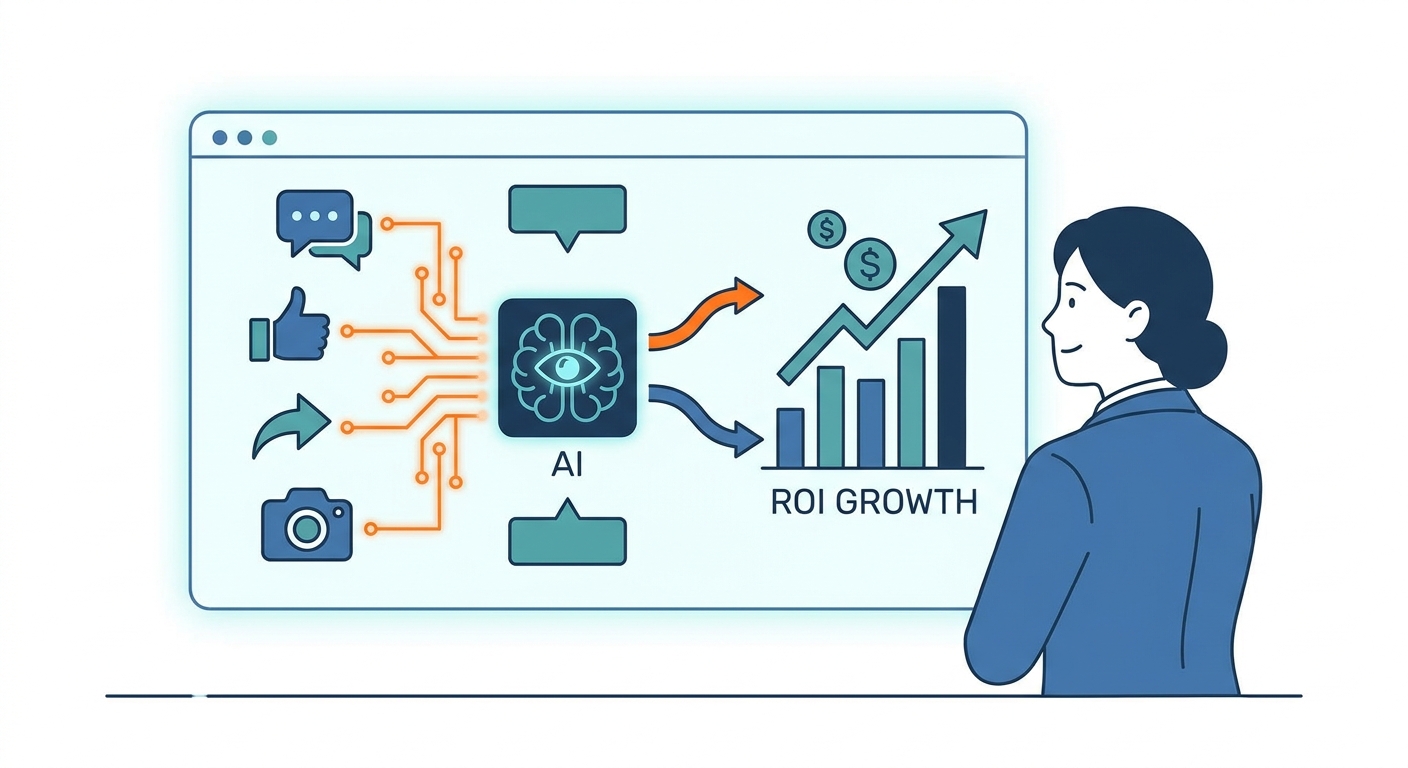
According to Typeface Content Marketing Statistics 2026, brands that leverage these integrated workflows report significantly higher engagement rates. Why? Because they’re finally delivering the right content to the right person at the right moment.
How Do You Future-Proof Your Content Team?
The job title "Content Creator" is fading. The role of the future is the "AI Orchestrator."
An orchestrator doesn't just write. They design systems. They manage the flow of data between agents. They ensure the ethical integrity of every piece of content that hits the web.
The essential skills for 2026 aren't just prompt engineering; they’re data literacy and AI ethics. You need to build a culture of "AI Normalization"—where the stigma of using these tools is replaced by a pride in how effectively your team can leverage them to produce work that’s actually superior.
What Are the Legal and Ethical Guardrails for 2026?
You are responsible for what your agents produce. As the legal landscape around copyright and synthetic media labeling tightens, you must have clear disclosure requirements.
Never feed proprietary customer data or trade secrets into public LLMs. Use enterprise-grade, private instances that keep your data within your own secure perimeter. Compliance isn't just about avoiding a lawsuit; it's about protecting the brand trust you’ve spent years building.
Frequently Asked Questions
How do I ensure my AI-generated content doesn't sound generic in 2026?
Stop using off-the-shelf prompts. Inject specific, proprietary data, real-world anecdotes, and human-led research into your workflows. If the AI doesn't have access to your unique "tribal knowledge," it will always default to the average.
What is an "agentic workflow" and why does my marketing team need it?
An agentic workflow is a multi-step, automated system where AI agents perform interconnected tasks—like researching, drafting, and checking for compliance—without manual intervention. You need it to move from reactive content production to proactive, scalable orchestration.
How do I balance AI efficiency with the need for authentic human connection?
Use AI for the "heavy lifting"—data aggregation, formatting, and drafting—so your humans can focus on the "high-friction" tasks: emotional storytelling, expert interviews, and strategic decision-making.
What are the biggest legal risks of using AI for content creation today?
The primary risks include copyright infringement from training data, the lack of ownership over AI-generated assets in certain jurisdictions, and data leakage if proprietary information is shared with public models.
Is AI going to replace my content marketing team in 2026?
No, but it will replace teams that refuse to adopt an "AI-first" mindset. The professionals who thrive will be those who pivot from being manual laborers of content to architects of AI-driven systems.