10 Best Social Media Analytics Tools to Supercharge Your Content Strategy in 2026

TL;DR
- ✓ Upgrade from native insights to agentic AI tools for actionable revenue-driving intelligence.
- ✓ Integrate social data directly into your CRM to eliminate marketing silos and performance gaps.
- ✓ Leverage automated anomaly detection to fix engagement drops before they impact your brand.
- ✓ Use advanced sentiment analysis to maintain authentic connections in an AI-saturated content landscape.
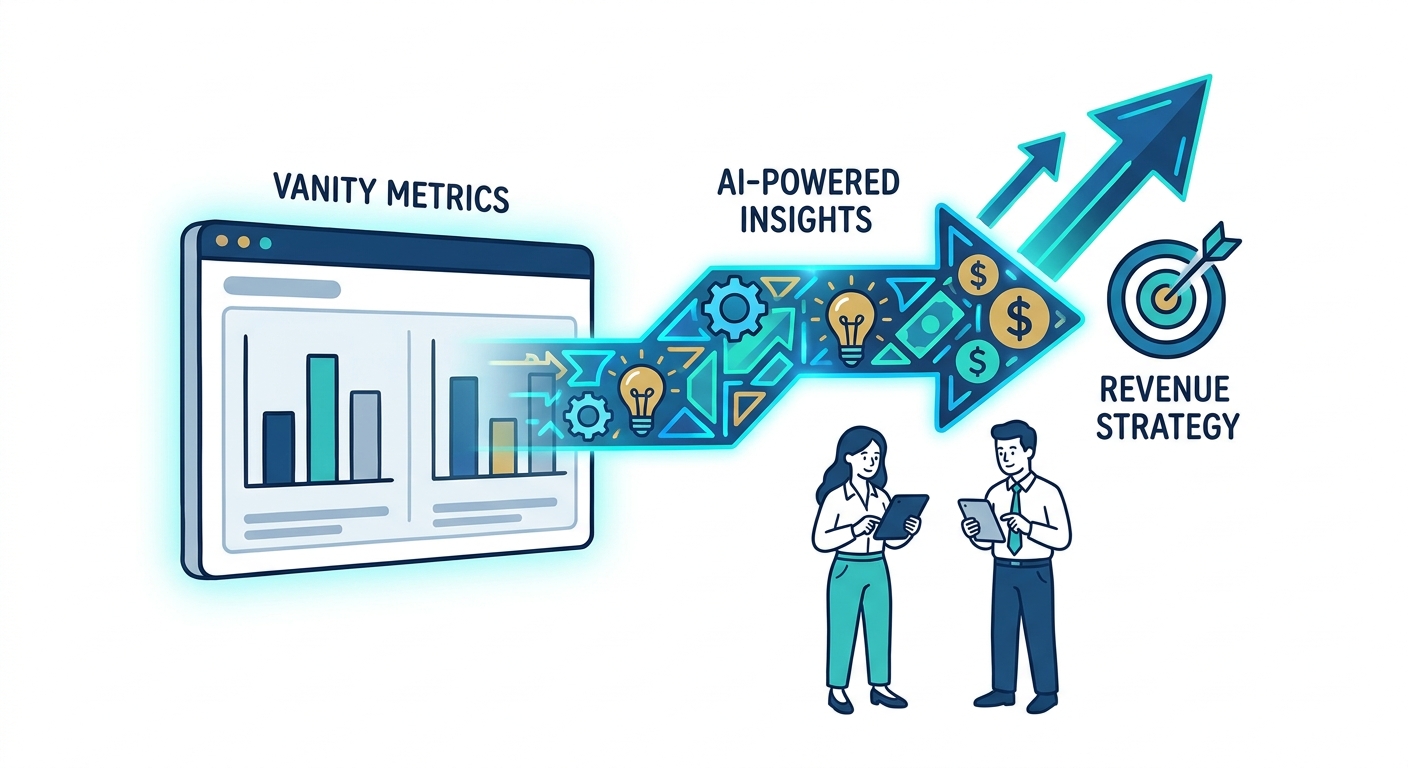
If you’re still showing off screenshots of native platform dashboards to justify your marketing budget, you’re flying blind. In 2026, the gap between "vanity metrics"—those hollow likes and views—and actual revenue isn't just a hurdle; it’s a massive, soul-crushing canyon.
The best social media analytics tools today don’t just record history. They use agentic AI to explain why something happened and, more importantly, what you should post next to actually move the needle. As highlighted in recent Social Media Marketing Statistics 2026, brands that fail to wire their cross-channel data into their broader marketing stack are bleeding 30% more leads than their data-savvy rivals. If you’re tired of the guessing game, it’s time to take a hard look at your stack using our Social Media Audit Checklist and pivot toward a unified, agentic strategy.
What Actually Makes an Analytics Tool "Supercharged" in 2026?
Manual CSV exports belong in a museum. A high-performance platform in 2026 must be "agentic"—meaning it acts like a smart, proactive member of your team. It doesn't just sit there waiting for you to click a button. It scans for anomalies, like a sudden engagement nosedive or a weird spike in sentiment-based traffic, and suggests fixes before you even notice there's a problem.
Then there’s the "Authenticity Score." With AI-generated fluff flooding every feed, audiences have developed a sixth sense for robotic, soulless content. Modern tools now analyze linguistic patterns and engagement depth to tell you exactly when your content is hitting a fatigue wall. Finally, the "Marketing Data Hub" mindset is non-negotiable. Social data is useless if it’s trapped in a silo; it needs to flow directly into your CRM.
When Have You Outgrown Native Insights?
Native insights from Instagram or TikTok are built to keep you on their app, not to grow your business. They wipe your data after 90 days, hide your cross-channel conversion paths, and offer zero competitive benchmarking. If you’re spending your Monday mornings stitching together spreadsheets just to see which campaign actually drove a demo request, you’ve outgrown native tools. Relying on them is a strategic gamble—you’re basically flying a plane with a dashboard that only shows your altitude, completely ignoring the fuel gauge and the navigation system.
The 10 Best Social Media Analytics Tools for 2026
1. Sprinklr (The Enterprise Powerhouse)
Sprinklr remains the gold standard for global organizations. Its "Agentic Factor" is its Unified-CXM AI, which processes billions of data points across 30+ channels. It’s built for complex CRM integrations, letting you map social interactions directly to customer lifetime value.
- Best For: Massive enterprises with global teams.
- Pricing Warning: It’s enterprise-grade, meaning high implementation costs and long onboarding.
2. Triple Whale (The Mid-Market Revenue Driver)
Triple Whale evolved from simple e-commerce analytics into a powerhouse for social attribution. It excels at "pixel-perfect" tracking, showing you precisely how a specific TikTok video helped nudge a customer through a multi-touch conversion path.
- Best For: D2C brands and mid-market companies obsessed with ROAS.
- Pricing Warning: It’s based on data volume; costs scale up as your traffic grows.
3. Metricool (The Creator/Small Team Specialist)
Metricool is the industry's best-kept secret for lean teams. It provides surprisingly deep trend prediction AI that helps you spot viral audio or topics before they hit the mainstream.
- Best For: Solo creators and agencies juggling multiple smaller accounts.
- Pricing Warning: It’s transparent, but you’ll hit a ceiling on advanced API reporting features pretty fast.
4. Brandwatch (The Social Listening Expert)
When it comes to sentiment analysis and crisis management, Brandwatch is the heavyweight champion. Its AI-driven "Consumer Intelligence" engine doesn't just count mentions; it actually understands the nuance of human language at scale.
- Best For: Brands in volatile industries like finance, healthcare, or politics.
- Pricing Warning: High barrier to entry; you’re paying for the massive depth of their historical data index.
5. Improvado (The Data-Warehouse Native)
Think of Improvado as the "pipes" of your marketing stack. It doesn't waste time on pretty dashboards; it extracts raw, normalized data from every social platform and dumps it straight into your Snowflake or BigQuery instance.
- Best For: Data-mature teams who want total control inside Tableau or Looker.
- Pricing Warning: Requires serious engineering time to set up and maintain.
6. Dash Hudson (The Agency Scaler)
Dash Hudson has mastered visual performance. Its "Vision" AI predicts how an image will perform before you hit 'publish,' making it a favorite for agency teams that need to justify creative choices to clients with slick, white-label reports.
- Best For: Visual-first brands and boutique creative agencies.
- Pricing Warning: Premium pricing that prioritizes high-end features over seat counts.
7. FeedHive (The AI-First Optimizer)
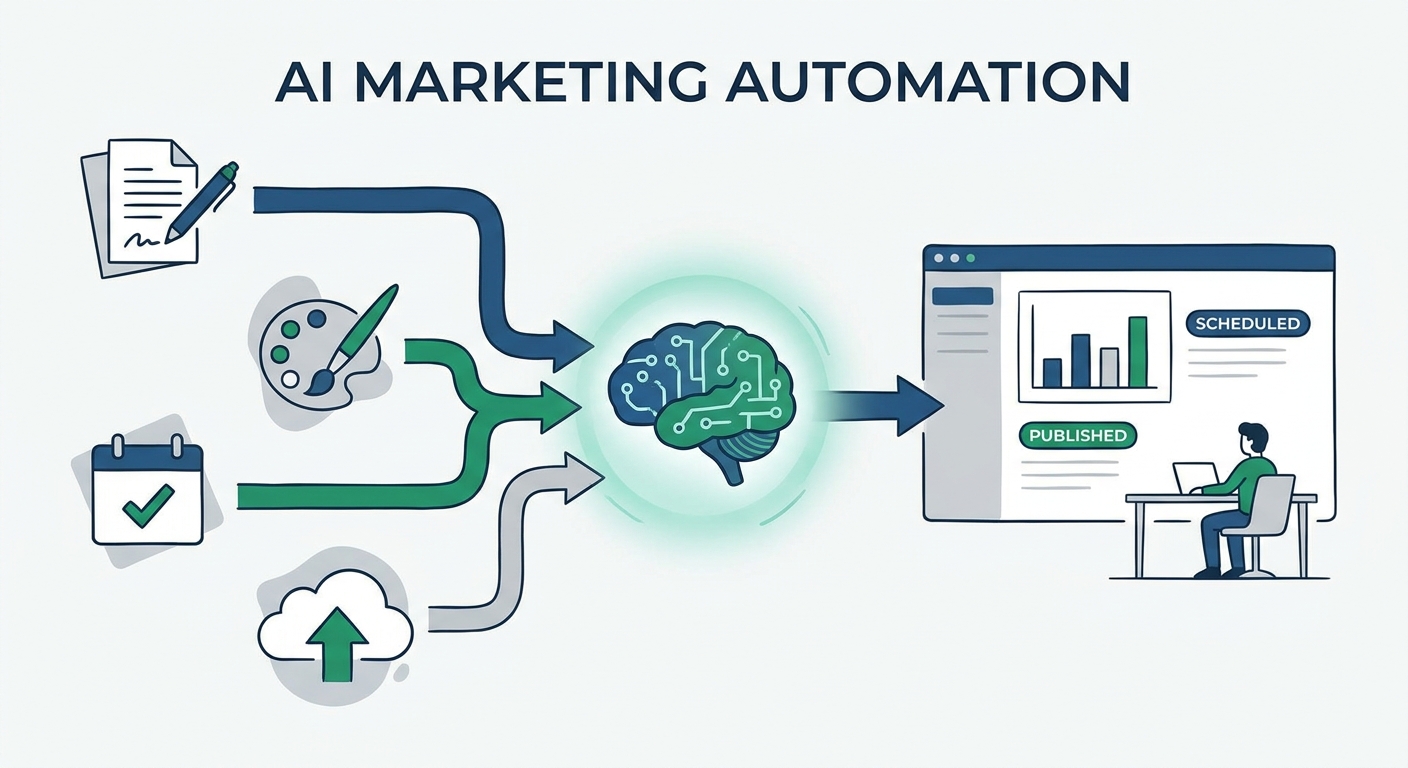
FeedHive uses machine learning to autonomously optimize your posting schedule based on when your specific audience is actually likely to convert—not just double-tap your photo. It’s essentially a self-driving social media manager.
- Best For: Small teams looking to offload the "when to post" mental load.
- Pricing Warning: Tiered pricing based on profiles—it can get pricey if you have a massive portfolio.
8. Rival IQ (The Cross-Platform Benchmarker)
Need to know exactly how your share-of-voice stacks up against your top three competitors? Rival IQ is the go-to. Its real-time benchmarking alerts are the fastest in the industry.
- Best For: CMOs who need competitive intelligence on demand.
- Pricing Warning: Seat-based pricing can be a headache for growing agencies.
9. Northbeam (The Social Commerce Specialist)
Northbeam is a beast at "conversion pathing." It helps you uncover the "assist" metrics—identifying which social posts are warming up leads that eventually convert through email or organic search.
- Best For: Performance marketers hyper-focused on attribution.
- Pricing Warning: Premium pricing for high-accuracy tracking.
10. Buffer (The Budget-Friendly All-Rounder)
Buffer has come a long way. While it started as a simple scheduling tool, its analytics suite is now robust enough for any company just starting to track real ROI.
- Best For: SMBs and startups on a tight budget.
- Pricing Warning: Very affordable, but it lacks the deep CRM integration of the enterprise heavyweights.
| Tool Name | Best For | Integration Depth | Pricing Transparency Score |
|---|---|---|---|
| Sprinklr | Global Scale | High | Low |
| Triple Whale | Attribution | High | Medium |
| Metricool | Trends | Low | High |
| Brandwatch | Sentiment | Medium | Medium |
| Improvado | Raw Data | Very High | Medium |
| Dash Hudson | Reporting | Medium | High |
| FeedHive | Automation | High | Low |
| Rival IQ | Competitive | Medium | Medium |
| Northbeam | Conversion | High | Medium |
| Buffer | ROI Basics | Low | High |
Avoiding the "Hidden Costs" of Analytics Software
Vendors love to hide the true cost of ownership. The most common trap is "API overage fees." Platforms like Instagram and LinkedIn charge for data access; if your tool passes those costs down to you, a quiet month of high traffic can suddenly blow up your budget. Also, think about your team's growth. Seat-based pricing is fine when you’re a team of two, but it becomes punitive as you scale. As noted in The State of AI in Marketing Report, brands that prioritize data-volume or flat-fee licensing models usually outperform those trapped in per-user cost structures.
Connecting Social Data to Real Business Revenue
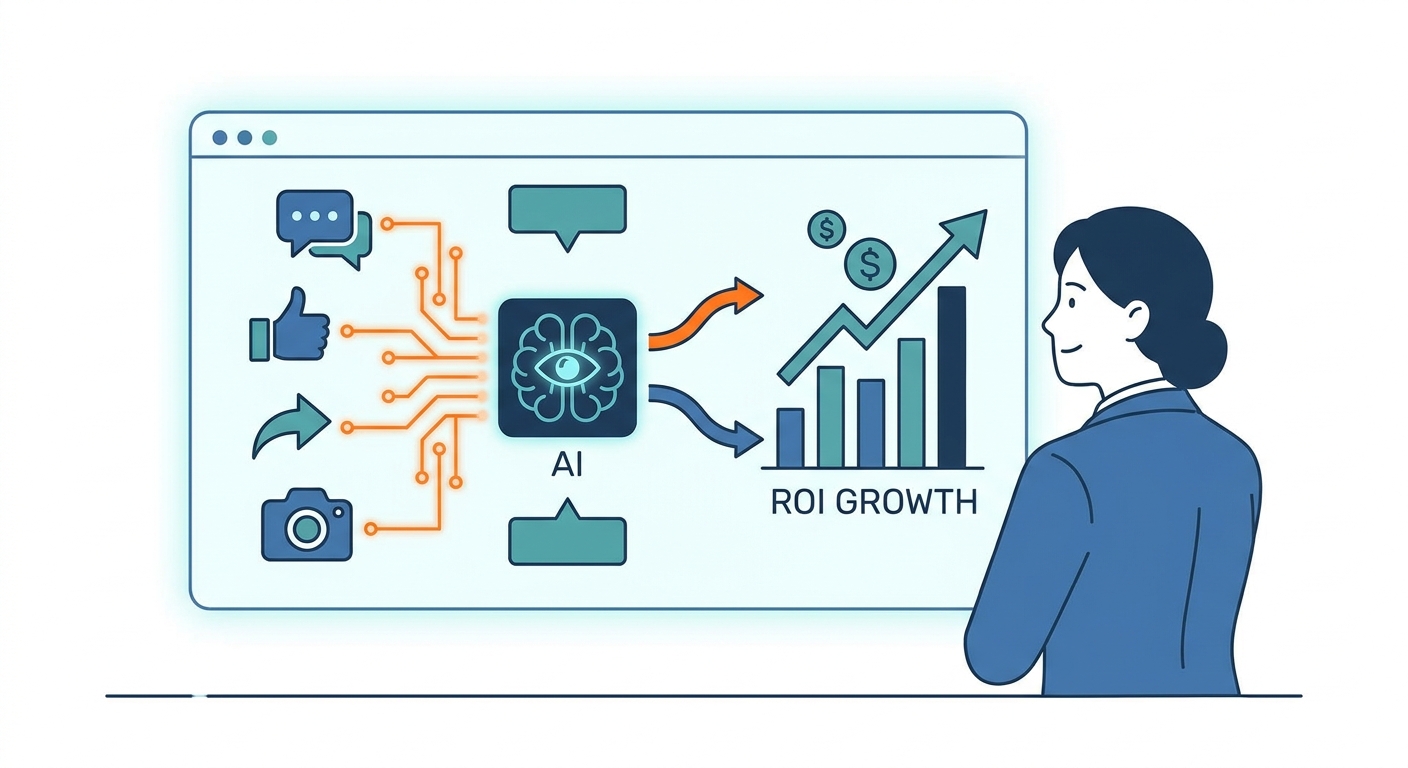
To prove the value of social media in 2026, stop talking about "engagement" and start talking about "social-to-lead" velocity. The goal is simple: integrate your social clicks with Google Analytics 4 and your CRM. When you can show stakeholders that "Post A" drove 400 clicks, which resulted in 12 SQLs (Sales Qualified Leads) in your CRM, the conversation changes. You aren't just the "social media person" anymore; you’re a revenue driver.
What Should You Ask Before You Buy?
Before you sign on the dotted line, grill them on these three points:
- "Does this tool allow for automated data exports to my existing Data Warehouse?" (If they say no, you’re buying a dead-end.)
- "How does the tool handle data privacy and compliance during social listening?" (Verify they are GDPR/CCPA compliant.)
- "Can I see a sample report that connects social metrics to revenue, or just engagement?" (If they can’t show you revenue attribution, walk away.)
Frequently Asked Questions
Are native platform analytics enough for my business in 2026?
They’re fine for vanity metrics, but they fail to provide the historical depth, cross-channel benchmarking, and CRM integration you need for a professional-grade strategy.
How can I prove the ROI of my social media strategy to stakeholders?
Focus on attribution. Use tracking parameters (UTMs) to connect social traffic to your CRM, and report on "social-to-lead" conversions rather than likes or shares.
What is the biggest mistake brands make with social media analytics?
The biggest mistake is focusing on engagement metrics that have zero correlation to business outcomes—creating "fluff" reports that fail to show how social media hits the bottom line.
Do I really need an enterprise tool like Sprinklr, or is a mid-market tool enough?
Unless you’re managing 50+ accounts, global crisis monitoring, and complex CRM syncs, a mid-market tool usually provides more agility and a better ROI for your team.
Conclusion: Choosing Your Analytics Partner for 2026
Your analytics stack is the backbone of your content strategy. If you choose a tool that only looks backward, you’ll always be playing defense. If you choose an agentic, integration-heavy tool, you’ll be able to predict trends and optimize for revenue. Audit your current setup, define your maturity level, and pick the tool that aligns with your bottom line. Don't wait for the next algorithm update to realize your data is lacking—start building your infrastructure today.